Open-Ended Toys vs. Single-Purpose Toys: Which Better Nurtures a Child’s Development?
Introduction
Walk into any toy store today, and you will be confronted by an overwhelming array of choices. On one shelf, you see colorful building blocks, a set of simple wooden rings, and a bin of plain clay. On the next, you find electronic talking dolls, battery-powered race cars that zoom along a fixed track, and puzzles with exactly one correct solution. These two categories—open-ended toys and single-purpose toys—represent fundamentally different philosophies about play and learning. Parents, educators, and child development experts have long debated which type is superior. The question “Which is better?” is deceptively simple. In truth, the answer depends on a child’s age, temperament, developmental stage, and the specific skills one hopes to cultivate. This article explores the strengths and limitations of both types of toys, examines their impact on creativity, problem-solving, and social development, and offers practical guidance for families seeking to make informed choices. Ultimately, the most enriching play environment is not an either/or proposition but a thoughtful balance that respects the unique needs of each child.
The Case for Open-Ended Toys: Cultivating Creativity and Adaptability
Open-ended toys are those that have no predetermined outcome or fixed set of instructions. A set of wooden blocks, a box of loose parts like pebbles and shells, modeling clay, a collection of scarves, or a simple doll’s house with minimal furniture all fall into this category. Their defining feature is that they can be used in countless ways, limited only by a child’s imagination. A single block can become a castle wall, a phone, a stepping stone, or a spaceship module within the span of a ten-minute play session. This flexibility is precisely what makes open-ended toys so powerful for cognitive development.
From a developmental psychology perspective, open-ended toys encourage divergent thinking—the ability to generate multiple solutions to a single problem. When a child builds a tower with blocks, she must constantly experiment with balance, weight distribution, and spatial relationships. If the tower falls, she tries a different arrangement. This trial-and-error process fosters resilience and a growth mindset. Research published in the journal *Early Childhood Education* found that children who had regular access to open-ended materials demonstrated higher levels of creative fluency and originality compared to peers who primarily played with single-purpose toys. Moreover, open-ended toys support symbolic play, a critical precursor to literacy and abstract reasoning. When a child uses a stick as a wand or a blanket as a cape, she is practicing the ability to represent one thing with another—a fundamental skill for understanding metaphors, numbers, and language.
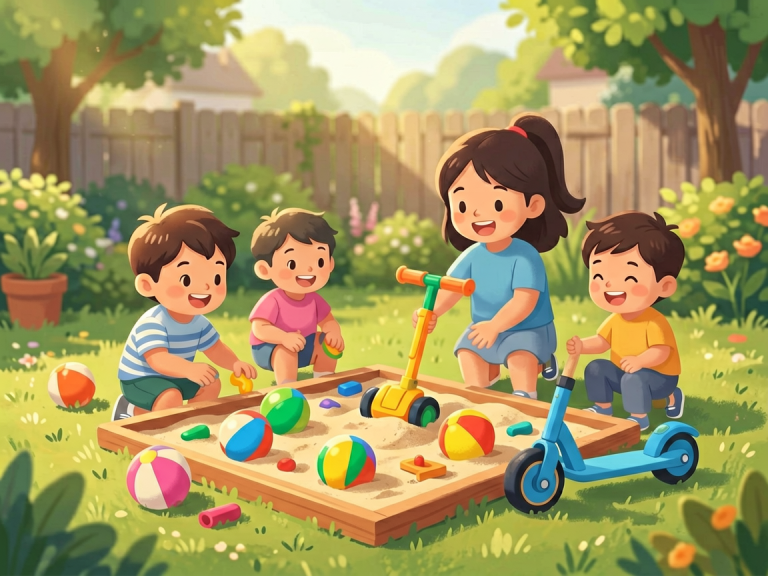
Another advantage of open-ended toys is their longevity. A child can play with a set of wooden blocks at age two by stacking them, at age five by building elaborate cities, and at age eight by engineering complex bridges. This adaptability means that open-ended toys grow with the child, offering new challenges as cognitive abilities expand. They also promote social skills when used in group settings. For example, a collection of cardboard boxes and fabric scraps can inspire cooperative play as children negotiate roles, share ideas, and collaborate to build a “spaceship” or a “castle.” In these moments, children learn to communicate, compromise, and respect others’ perspectives—skills that single-purpose toys rarely foster in the same depth.
However, open-ended toys are not without challenges. Some children, particularly those who are very young or who struggle with attention, may feel overwhelmed by too many possibilities. Without any guidance, they might wander aimlessly or become frustrated. Additionally, open-ended toys often require more active parental involvement to scaffold learning, especially in the early years. A child left alone with a pile of sticks and stones may not spontaneously engage in deep play; an observant adult can model possibilities and extend the play narrative. For busy parents, this can feel demanding.
The Appeal of Single-Purpose Toys: Focused Learning and Immediate Gratification
Single-purpose toys are designed for a specific function. A jigsaw puzzle has one correct arrangement; a toy cash register rings when buttons are pressed; a remote-controlled car moves forward, backward, and turns left or right. These toys provide clear goals and immediate feedback. For many children, this clarity is deeply satisfying. When a child successfully completes a puzzle, she experiences a tangible sense of accomplishment that reinforces perseverance and attention to detail. Single-purpose toys can be powerful tools for teaching discrete skills. For instance, shape-sorting toys help toddlers recognize geometric forms and practice hand-eye coordination. Alphabet puzzles introduce letter recognition. Musical instruments with fixed keys (like a xylophone with labeled notes) can teach cause and effect.
In an era of increasing concern about screen time, many parents turn to single-purpose toys as a way to offer structured, educational play. Toys that mimic adult tools—such as a plastic stethoscope, a toy kitchen with specific buttons, or a cash register that makes realistic sounds—can help children understand the world around them through role play. These toys provide a cultural framework that open-ended materials might lack. A child who plays with a toy doctor’s kit learns vocabulary (“stethoscope,” “blood pressure”) and social scripts (“How are you feeling today?”). Similarly, a simple train set with tracks that lock together in specific ways teaches cause-and-effect and spatial planning in a focused manner.
Another significant benefit of single-purpose toys is their ability to sustain attention in children who are easily distracted. The clear endpoint of a puzzle or the predictable action of a wind-up toy reduces cognitive load. For children with attention deficit hyperactivity disorder (ADHD) or sensory processing challenges, such toys can offer a calming, predictable routine. Moreover, single-purpose toys often come with clear instructions, which can build confidence in children who feel anxious about unstructured play. The success rate is high: the toy does what it is supposed to do, and the child feels competent.
Despite these strengths, single-purpose toys have notable limitations. Their novelty often wears off quickly. A child may play enthusiastically with a battery-operated singing robot for a week, but once the songs become repetitive and the actions are understood, the toy is discarded. This short engagement cycle can lead to a cycle of constant consumption, where children always want the newest, flashiest item. Furthermore, single-purpose toys can inadvertently suppress creativity. A toy cell phone that only makes ringtones and lights up leaves little room for imagination; the child cannot pretend it is anything other than a phone. Overreliance on these toys may train children to seek external rewards rather than generating their own ideas.
Developmental Impact Across Age Groups
The superiority of one toy type over the other shifts dramatically with age. For infants and toddlers (ages 0–2), sensory exploration is paramount. Single-purpose toys that rattle, squeak, or light up provide valuable feedback about cause and effect. However, open-ended toys like soft blocks, fabric squares, and stacking cups offer richer opportunities for grasping, mouthing, and understanding object permanence. At this stage, a healthy mix is advisable, with emphasis on safe, washable materials.
In the preschool years (ages 3–5), open-ended toys begin to shine. This is the golden age of imaginative play. Children at this stage benefit enormously from loose parts: cardboard tubes, bottle caps, pieces of felt, and natural objects. Such materials allow them to construct narratives and solve problems without prescribed answers. Yet single-purpose toys still play a role. A simple floor puzzle or a magnetic fishing game can build fine motor skills and patience. The key is to avoid overwhelming the environment with too many single-purpose items that dictate play.
For school-age children (ages 6–12), the distinction blurs. Open-ended toys like LEGO bricks, K’Nex, or magnetic tiles support STEM learning because children can engineer complex structures that follow physical laws. These toys also encourage iteration—a child builds a bridge, it collapses, and she redesigns it. Single-purpose toys in this age group can include science kits, coding robots, or board games with specific rules. These teach structured reasoning and turn-taking. The most effective approach is to offer both, allowing the child to choose based on mood and interest.
Cognitive and Social Benefits: A Balanced Perspective
Neither toy type is inherently superior; rather, they serve complementary functions. Open-ended toys build flexibility, creativity, and social negotiation. Single-purpose toys build focus, procedural knowledge, and skill mastery. The danger lies in extreme reliance on either. A child who plays only with open-ended toys may struggle with tasks that require following step-by-step instructions, such as assembling a model or learning a musical instrument through sheet music. Conversely, a child who plays only with single-purpose toys may have difficulty generating original ideas, tolerating ambiguity, or collaborating on open-ended projects.
Socially, open-ended toys offer distinct advantages. In a group of children, a pile of blankets and chairs becomes a fort, a castle, or a spaceship, requiring constant negotiation. Single-purpose toys, such as a board game with rules, also teach social skills, but the interactions are more structured and may leave less room for creativity. Research from the University of Cambridge suggests that children who engage in high-quality pretend play (often supported by open-ended materials) show stronger theory of mind and emotional regulation.
Practical Considerations for Parents: Cost, Space, and Play Value
From a practical standpoint, open-ended toys generally offer greater long-term value for money. A set of high-quality unit blocks can cost fifty dollars but last for a decade and be used by multiple children. In contrast, a single-purpose electronic toy often costs thirty dollars and breaks within a year or loses its appeal within months. Space is another factor: open-ended toys often require more storage but can be used in varied configurations. Many families find that a strategy of “70% open-ended, 30% single-purpose” works well. Rotating toys rather than having everything available at once can also prolong interest.
Parents should also consider their child’s temperament and any neurodivergent needs. A child with autism may find comfort in the predictability of a single-purpose toy like a spinning top or a shape sorter, while a highly imaginative, restless child may thrive on open-ended materials. Observing how a child naturally plays is more instructive than any broad recommendation.
Conclusion
The debate between open-ended and single-purpose toys is not a contest but a conversation about balance. There is no single “better” type; rather, what matters is whether a toy—whatever its design—engages a child, invites exploration, and supports the developmental tasks of its user. Open-ended toys excel at nurturing creativity, adaptability, and social cooperation, making them indispensable for holistic growth. Single-purpose toys provide structure, focus, and skill-specific learning, which are equally vital. The most effective play environments offer both, allowing children to move fluidly between structured challenges and free-form invention. As parents, educators, and caregivers, our role is not to choose one camp over the other but to curate a thoughtful, diverse collection that respects each child’s unique path of discovery. After all, the best toy is not the one with the most features or the most open-ended potential—it is the one that sparks a child’s curiosity, invites her to ask “what if,” and leaves room for her to take ownership of her own play. In that sense, the magic lies less in the toy itself and more in the child’s relationship with it.