Open-Ended Toys vs. Single-Purpose Toys: Which Shape a Child’s Future Better?
Introduction
In the golden age of digital entertainment and hyper-specialized educational products, parents and educators face a surprisingly old-fashioned yet profoundly important dilemma: what kind of toys should children play with? The toy industry today offers an overwhelming array of options, from flashy electronic gadgets that beep, buzz, and perform specific functions to simple wooden blocks, loose parts, and open-ended materials that require children to invent their own uses. This distinction—between open-ended toys and single-purpose toys—is not merely a matter of aesthetic preference; it cuts to the core of how children learn, think, and develop. As research in developmental psychology and neuroscience continues to accumulate, a clear picture emerges: open-ended toys, though often humbler in appearance, tend to offer far richer developmental benefits than their single-purpose counterparts. This article explores the fundamental differences between these two categories of playthings, examining their respective impacts on creativity, problem-solving, social interaction, emotional regulation, and long-term cognitive growth.
Defining the Two Categories
What Are Single-Purpose Toys?
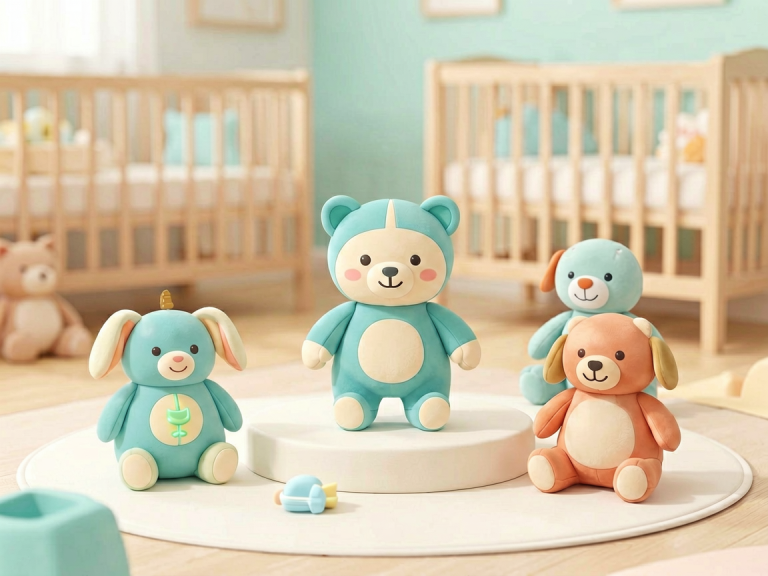
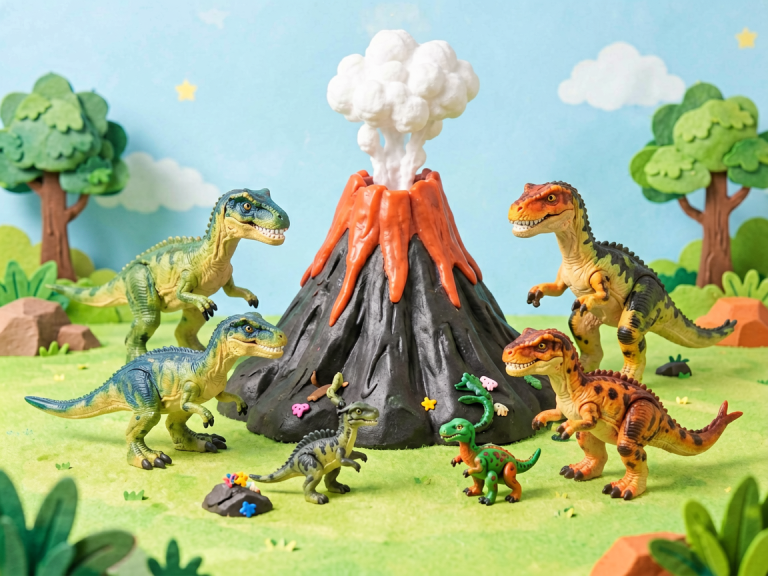
Single-purpose toys, as the name suggests, are designed to be used in one specific way. A battery-operated toy car that moves forward when a button is pressed, a plastic cash register that makes a “cha-ching” sound when a lever is pulled, or a shape-sorter that only accepts the correct geometric block into the corresponding hole—these are classic examples. Their primary appeal lies in their predictability and instant gratification. A child pressing a button and seeing a light flash or hearing a sound experiences a clear cause-and-effect relationship, which can be satisfying and even educational in limited contexts. However, the “single purpose” nature also imposes strict boundaries on how the toy can be used. Once the child has mastered the intended action—pressing the button, fitting the shape—the toy offers little room for further exploration. The play experience is essentially finite, and the child’s role is largely passive: the toy does the action, and the child merely triggers it.
What Are Open-Ended Toys?
Open-ended toys, by contrast, have no predetermined outcome or fixed function. A set of wooden blocks can become a tower, a castle, a bridge, a spaceship, or an abstract sculpture. A pile of fabric scraps can serve as a costume, a blanket for a doll, or a sail for a cardboard boat. A collection of stones, sticks, and pinecones can be sorted, counted, arranged into patterns, or used as pretend food. The defining characteristic of open-ended toys is that they invite—indeed, demand—the child’s active imagination, creativity, and problem-solving. There is no “right” way to play; there are only possibilities. This open-endedness aligns closely with what developmental psychologists call “divergent thinking,” the ability to generate multiple solutions to a given problem, which is a cornerstone of creativity. Moreover, open-ended toys grow with the child: a one-year-old might simply stack blocks, while a five-year-old might construct elaborate architectural designs, and an eight-year-old might use them to explore physics concepts like balance and leverage.
The Impact on Cognitive Development and Creativity
Divergent Thinking vs. Convergent Thinking
Perhaps the most significant difference between open-ended and single-purpose toys lies in the type of thinking they encourage. Single-purpose toys typically promote convergent thinking: there is one correct answer, one prescribed use, one expected outcome. This can be beneficial for learning specific skills, such as matching shapes or understanding cause-and-effect. However, when children spend the majority of their playtime with such toys, they may become accustomed to seeking single correct answers rather than exploring multiple possibilities. In contrast, open-ended toys are a playground for divergent thinking. A child given a set of magnetic tiles might build a house, but they might also decide to create a maze, a geometric pattern, or even a representation of a DNA helix after learning about biology at school. Each play session becomes a unique problem-solving exercise because the child must constantly ask: “What can I do with this?” rather than “What does this do?”
Research from the University of Cambridge and other institutions has shown that children who engage frequently with open-ended play materials perform better on tasks requiring creative problem-solving and flexible thinking. One classic study compared groups of children playing with different types of toys and then assessed their ability to generate novel uses for common objects. The group that had played with open-ended materials—such as clay, blocks, and loose parts—consistently produced more original ideas than those who had played with predefined, single-purpose toys. This suggests that the very nature of open-ended play trains the brain to see possibilities where others see only the obvious.
Cognitive Flexibility and Executive Function
Beyond creativity, open-ended toys also support the development of executive function skills, including cognitive flexibility, working memory, and inhibitory control. When a child builds a tower with blocks and it falls, they must adjust their strategy—a process that requires cognitive flexibility. They might try a wider base, lighter blocks on top, or a different stacking pattern. Each failure is a learning opportunity that strengthens problem-solving circuits in the brain. Single-purpose toys rarely offer such rich opportunities for adaptive thinking. An electronic toy that fails to work because the batteries are dead simply stops being interesting; there is no puzzle to solve, no strategy to revise. Moreover, open-ended play often involves sustained attention and self-directed goal setting. A child decides, “I will build a bridge that can support these toy cars,” and then works toward that goal, adjusting as needed. This kind of self-regulation is a foundational skill for academic success and emotional well-being.
Social and Emotional Development
Cooperative Play and Communication
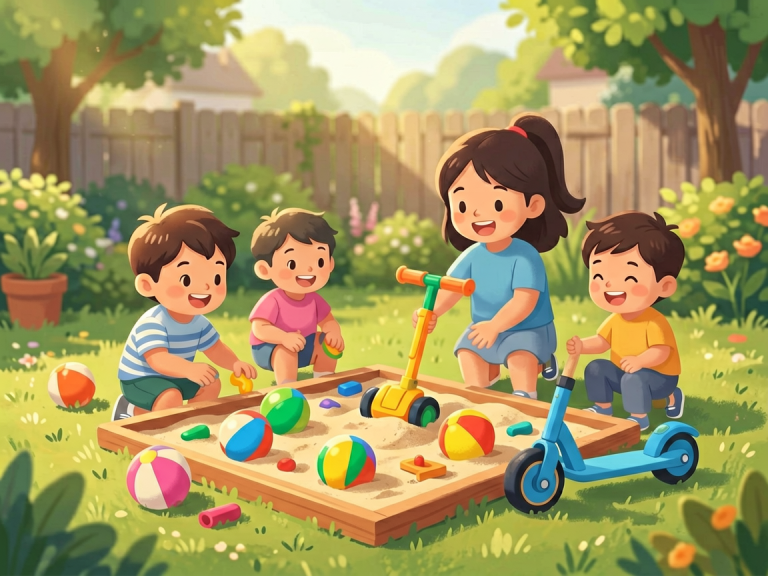
Open-ended toys naturally lend themselves to collaborative play. Two children with a set of wooden blocks must negotiate: “What should we build?” “I want a castle, but you want a train station.” “Maybe we can build a castle that is also a train station?” This negotiation involves language, compromise, perspective-taking, and shared creativity—all vital social skills. Single-purpose toys, on the other hand, often encourage parallel or solitary play. A child pushing a button on a toy that plays music or moves independently does not need—or even want—interference from others. While solitary play has its place, excessive reliance on such toys can limit opportunities for practicing social interaction. Furthermore, open-ended toys are highly inclusive: children of different ages, abilities, and backgrounds can play together because the toys do not require specific skills or knowledge. A younger child might contribute by handing blocks, while an older child designs the structure. This inclusive quality is rarely found in single-purpose toys, which often have age-specific features.
Emotional Regulation and Frustration Tolerance
Playing with open-ended toys also teaches children to manage frustration. When a block tower topples for the tenth time, the child experiences disappointment but must decide how to respond. Do they give up? Do they cry? Or do they try again with a new strategy? Over time, repeated experiences of failure and recovery build emotional resilience and a growth mindset—the belief that abilities can be developed through effort. Single-purpose toys, particularly electronic ones, often eliminate failure entirely. A toy that sings when you press a button never fails to sing. While this can be reassuring for very young children, it also deprives them of the valuable experience of persevering through difficulty. Moreover, open-ended play allows children to work at their own level of challenge. A child who is struggling can simplify their goal, while a child who is thriving can raise the bar. This self-regulation of challenge is a powerful tool for maintaining intrinsic motivation.
Economic and Environmental Considerations
Cost-Effectiveness Over Time
From a purely practical standpoint, open-ended toys often represent a far better investment than single-purpose toys. A single battery-operated toy that performs one specific function may cost $30 and hold a child’s attention for a few weeks before the novelty wears off. In contrast, a set of high-quality wooden blocks might cost twice as much but remain engaging for years, adapting to the child’s developmental stage. A toddler stacks them; a preschooler builds houses; an older child creates complex engineering projects. Loose parts like fabric, cardboard tubes, and natural objects cost little or nothing and can be combined in infinite ways. By allowing children to repurpose and reinvent, open-ended toys effectively become a lifetime of different toys wrapped into one. For families on a budget, this is a significant advantage. Additionally, because open-ended toys do not require batteries, software updates, or replacement parts, they are less prone to obsolescence and waste.
Environmental Sustainability
The environmental impact of toys is an increasingly urgent concern. Single-purpose toys, especially plastic electronic ones, are often made from non-renewable resources, contain toxic materials, and are difficult to recycle. When a child outgrows them, they typically end up in landfills. Open-ended toys, particularly those made from natural materials like wood, cotton, or metal, are more likely to be durable, repairable, and biodegradable. Furthermore, because they remain interesting for longer, they are less likely to be discarded quickly. The trend toward minimalism and conscious consumerism has led many parents to favor fewer, higher-quality, open-ended playthings over a mountain of disposable single-purpose toys. This shift not only reduces environmental harm but also teaches children the value of thoughtful consumption and creative re-use.
Practical Guidance for Parents and Educators
Choosing the Right Mix
This is not to say that single-purpose toys have no place in a child’s life. Certain single-purpose toys, such as puzzles, musical instruments, or simple cause-and-effect toys for infants, can offer valuable learning experiences. The key is balance. A child’s play environment should be dominated by open-ended materials—blocks, art supplies, dress-up clothes, sand, water, natural objects—while single-purpose toys are used sparingly as complementary tools. Parents can also look for hybrid toys: a train set that can be assembled in multiple configurations, for example, offers more openness than a single-track plastic train that only goes in circles.
Encouraging Open-Ended Play at Home
Creating a rich open-ended play environment does not require a large budget. Cardboard boxes, empty yogurt containers, fabric scraps, and sticks from the backyard can become treasured playthings. The adult’s role is not to direct the play but to provide the materials and then step back. Resistance may initially come from children accustomed to passive electronic entertainment, but with patience, most children rediscover the joy of creating their own worlds. Setting aside time for unstructured, screen-free play is essential. Educators, too, can incorporate open-ended materials into classrooms, using them for everything from math lessons (measuring, sorting, counting) to storytelling and science exploration.
Conclusion
In the debate between open-ended toys and single-purpose toys, the evidence is compelling: open-ended toys offer deeper, richer, and more enduring developmental benefits. They nurture creativity, cognitive flexibility, social cooperation, emotional resilience, and a love of learning that no app or battery-powered gadget can replicate. In a world that increasingly demands innovation, adaptability, and critical thinking, the humble block, the piece of string, and the empty box may be among the most powerful tools we can give our children. The next time you walk down the toy aisle, consider not just what the toy does, but what it invites your child to do. The best toys do not entertain; they inspire. They do not supply answers; they provoke questions. And they do not limit play; they set it free.