Beyond the Hype: The Best Toys Kids Actually Use (and Why They Keep Playing)
Introduction: The Toy Box Graveyard
Every parent knows the sinking feeling: a birthday or holiday passes, wrapping paper is swept away, and within a week, the shiny new toy sits abandoned in the corner of the playroom. Meanwhile, the cardboard box it came in becomes a spaceship, a castle, or a time machine. The disconnect between what adults buy and what children actually engage with is a well-documented phenomenon in child development research. The best toys for kids are not necessarily the most expensive, the most advertised, or the most technologically advanced. They are the toys that invite sustained, self-directed, and imaginative play—the kind that children return to day after day, not because they are told to, but because they are genuinely drawn to them.
This article explores the categories of toys that consistently pass the “actual use” test: open-ended building sets, classic physical games, sensory and creative materials, and thoughtfully designed STEM kits. Each category is examined through the lens of why children choose them, how they foster development, and what makes them endure long after the novelty wears off.
I. Open-Ended Building Toys: The Foundation of Endless Possibilities
When we ask parents and educators to name the one toy their kids never tire of, the answer is almost always building blocks—whether wooden unit blocks, LEGO bricks, magnetic tiles, or interlocking plastic rods. These toys share a crucial characteristic: they have no fixed outcome. A set of blocks can become a skyscraper in the morning, a bridge after lunch, and a rocket ship by bedtime.
Why do children actually use them? Because they offer agency. A child controls the creative process entirely. There is no right or wrong way to stack a block, and when a tower falls, the only consequence is a lesson in physics—and the motivation to try again. Research from the University of Delaware found that children who engage in frequent block play develop stronger spatial reasoning and mathematical thinking. But the real reason kids keep playing is emotional: building provides a safe space for trial and error. The satisfaction of “I made this myself” is powerful.
Key examples:
- Magnetic tiles (e.g., Magna-Tiles, PicassoTiles) – Their translucent colors and magnetic clicking sound enchant toddlers and school‑age children alike. They allow for 2D patterns and 3D structures, making them versatile for ages 1 to 8.
- Classic wooden unit blocks – The simple, unadorned rectangles, cylinders, and arches are the gold standard in Montessori and Waldorf education. They require no batteries, no instructions, and no screen.
- LEGO Classic bricks – While themed sets (Star Wars, Harry Potter) are popular, the core “Classic” boxes of random bricks are what drive genuine creativity. Children build their own worlds rather than following a manual.
II. Physical and Gross Motor Toys: Movement That Never Gets Old
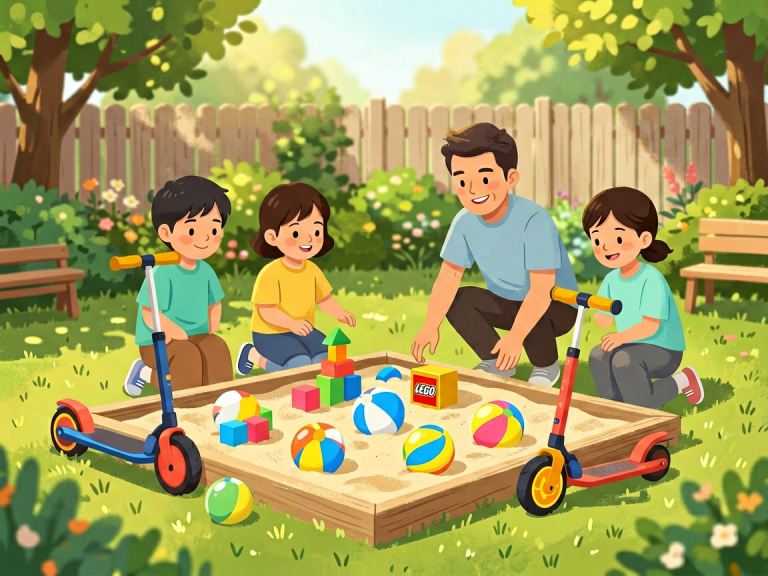
In an age of screens, the best toys for kids are often the ones that get them moving. Not every child loves organized sports, but nearly every child will engage with toys that integrate movement with fun. Think of ride‑on toys, balance bikes, jump ropes, scooters, and simple balls. These items are not complicated; they are instinctive.
A study published in *Pediatrics* highlighted that children who have access to balls, tricycles, and jumping equipment are more likely to meet daily physical activity recommendations. But the real-world observation is simpler: a child who receives a balance bike at age two will likely ride it for two years before transitioning to a pedal bike. The toy “grows” with the child because it respects their developmental pace. Similarly, a simple playground ball can be used for throwing, catching, kicking, bouncing, rolling—or inventing a brand‑new game with friends.
Why these toys beat flashy electronic alternatives? Because they involve the whole body. They build strength, coordination, and confidence. And they often require zero adult setup—a kid can grab a ball and run outside immediately.
Key examples:
- Balance bikes (e.g., Strider, Woom) – No pedals, no training wheels. Children learn steering and balance naturally.
- Jump ropes and hula hoops – Timeless, portable, and suitable for solo or group play.
- Foam‑core scooters or skateboards – Low‑cost options that encourage outdoor exploration.
III. Sensory and Creative Materials: The Messy, Wonderful Truth
Ask any early childhood educator about the “best toys kids actually use,” and they will likely point you to the art shelf and the sensory bin. Play‑dough, kinetic sand, water tables, finger paints, crayons, and modeling clay are not passive entertainment—they are tools for experimentation. Children use them to understand texture, cause and effect, color mixing, and self‑expression.
The reason these toys get heavy rotation is their adaptability. A blob of play‑dough can be a pancake, a snake, or a pizza depending on mood. Kinetic sand flows through fingers like a magic substance; it never dries out and never makes a mess that can’t be swept up. Water tables invite endless pouring, measuring, and sinking‑floating experiments. And none of these materials require a user manual.
Developmental psychologist Alison Gopnik, author of *The Gardener and the Carpenter*, argues that children are born explorers. Sensory toys feed that innate drive. They are the antithesis of a “closed” toy (like a battery‑operated singing plush that does one thing). Open sensory play supports fine motor skills, language development, and emotional regulation.
Key examples:
- Play‑dough (homemade or store‑bought) – Add simple tools like plastic knives, cookie cutters, and rolling pins to extend play.
- Kinetic sand – Holds shape, doesn’t stick to hands, and is deeply calming for many children.
- Washable markers, watercolor sets, and large sheets of paper – The simplest, most‑used art supplies.
IV. Thoughtful STEM Kits: Learning Disguised as Play
The keyword here is “thoughtful.” Not every STEM kit is actually used. Many sit unopened because they are too advanced, require adult supervision for every step, or yield a single uninteresting result. The best STEM toys for kids are those that invite tinkering without a predetermined “right answer.”
Take, for example, a magnetic building set (like Geomag) or a snap‑circuit kit (like Elenco’s Snap Circuits). These allow children to create light‑up fans, doorbells, and spinning motors—but they also allow failure. If a circuit doesn’t work, the child can troubleshoot. When a magnetic rod connects, there is a satisfying click. These toys engage logical thinking while feeling like a puzzle.
Another excellent category is coding toys without screens. Robot mice (such as Learning Resources’ Botley or Code & Go Robot Mouse) teach sequencing and problem‑solving through physical steps. Children lay out tiles or press buttons to guide the robot through a maze. Because the feedback is immediate and physical, kids stay engaged far longer than they would with a typical app.
Why they work: They respect the child’s capacity to explore. The best STEM toys are not overly packaged with flashy lights and sounds. They are simple, durable, and allow for open‑ended experimentation.
Key examples:
- Snap Circuits – Ages 5+. Build real electronic projects. No soldering needed.
- Geomag magnetic rods and panels – Combines building with physics.
- Botley the Coding Robot – Screen‑free, easy to use alone or with peers.
V. The Surprising Champion: Classic Board and Card Games
Perhaps the most underrated category is analog games. In a world of tablets and streaming, you might think board games are fading. Yet sales data and teacher anecdotes tell a different story: games like Uno, Checkers, Connect Four, Jenga, and cooperative games like Hoot Owl Hoot are used repeatedly by children of all ages.
Why? They provide structured social interaction. Unlike solitary screen time, a board game demands turn‑taking, strategy, patience, and sportsmanship. Young children love the repetition of game rules—they find comfort in predictability. Older children enjoy the competitive thrill. And parents? They actually participate, which strengthens family bonds.
The best board games for long‑term use are those with simple rules but variable outcomes. *Jenga* tests fine motor control and risk assessment. *Uno* teaches pattern recognition and number sense. *Candy Land* (for very young players) introduces color‑matching and following directions. These games don’t require batteries, and they don’t become obsolete. They are the same games grandparents played—and that is part of their magic.
Key examples:
- Uno – Ages 5+. Fast‑paced, portable, wildly replayable.
- Jenga – Ages 6+. Builds patience and dexterity.
- Connect Four – Ages 4+. Simple strategy game that siblings can enjoy together.
Conclusion: Less Is More, but Better Is Best
After examining countless playspaces, toy shelves, and childhood memories, the conclusion is clear: the best toys kids actually use are not the ones that do the most—they are the ones that allow the child to do the most. Open‑ended building materials, physical toys that invite movement, sensory art supplies, tinker‑friendly STEM kits, and classic tabletop games all share a common trait: they put the child in the driver’s seat. They do not dictate play; they enable it.
Parents who want to avoid the “toy graveyard” can do one simple thing: ask, “Will my child be able to use this toy in ten different ways?” If the answer is yes, it will likely be played with for years. If the answer is no—if the toy does one trick, requires a screen, or demands constant adult facilitation—it may bring a moment of joy but will soon gather dust.
The next time you walk into a store, skip the flashy electronic aisle. Head toward the blocks, the balls, the paints, and the simple games. That is where the real play lives. And that is where your child will actually be.
*(Word count: 1,208)*