The Art of Lasting Play: Durable Toys Under $50 That Stand the Test of Time
Introduction: Why Durability Matters More Than the Price Tag
In an age of fast fashion and disposable consumer goods, the children’s toy market is flooded with cheap plastic gadgets that break within weeks, if not days. Parents often find themselves stuck in a vicious cycle: buy a toy, it shatters, buy another, repeat. Meanwhile, the environmental cost of discarded toy waste continues to climb. But there is good news. A surprising number of high-quality, durable toys can still be found for under $50—if you know where to look. These are not just toys; they are investments in childhood. They withstand rough play, survive being dropped down stairs, endure outdoor mud puddles, and still look good enough to pass down to a younger sibling or even a neighbor. This article explores the best categories and specific examples of toys that truly last, all while staying within a reasonable budget. By focusing on materials, design philosophy, and timeless play value, we can reclaim the joy of toys that don’t quit.
The Foundation of Longevity: Material Matters
Before diving into specific toys, it is crucial to understand what makes a toy "last." The most durable toys share several traits: they are made from solid, non-toxic materials; they have no small, easily breakable parts that snap off; they are designed with simplicity rather than fragile electronics; and they encourage open-ended play that grows with the child. Wood, metal, high-density plastics, and natural fibers are your best friends. Avoid toys with thin, brittle plastic hinges, cheap stickers that peel immediately, or complicated electronic components that drain batteries and fail within months. Instead, look for toys that feel weighty in the hand, have smooth edges, and use mechanical or magnetic connections rather than glue. With this framework in mind, let us explore specific categories that consistently deliver quality under $50.
Classic Wooden Blocks: The Indestructible Foundations of Imagination
Wooden building blocks are perhaps the most timeless and durable toys ever created. A set of high-quality hardwood blocks, such as maple or beech, can survive decades of enthusiastic stacking, knocking down, chewing (by toddlers), and even accidental exposure to water if dried promptly. Major brands like Melissa & Doug offer a 100-piece set of solid wood blocks in a wooden crate for around $25–$30. These blocks have no paint chipping issues when properly finished with non-toxic lacquer, and they are heavy enough to feel substantial but not so heavy that a toddler cannot lift them. Unlike plastic blocks that can crack or warp, solid wood blocks can be sanded and re-oiled if they become rough. They also promote STEM skills—balance, geometry, spatial reasoning—without a single battery. For under $50, you can even find a larger set with different shapes (cylinders, arches, triangles) that will inspire children from ages 1 to 10. The only caveat: avoid cheap, splinter-prone pine or birch blocks from dollar stores. Invest in a reputable brand, and these blocks will outlast your child’s entire childhood.
LEGO Classic Bricks: The King of Interlocking Durability
Few toys have earned the reputation of lasting forever quite like LEGO. While licensed sets (Star Wars, Harry Potter) can easily exceed $50, the LEGO Classic line offers large boxes of basic bricks for well under that threshold. A 484-piece LEGO Classic Medium Creative Brick Box retails for around $35, and it contains a rainbow of colors plus some wheels, eyes, and special pieces. These bricks are injection-molded with remarkable precision, meaning they click together firmly and can be separated thousands of times without losing their clutch power. They survive being stepped on (though your foot may not), being tossed into a bin, and even being washed in a lingerie bag in the washing machine. LEGO bricks are also chemically compatible across generations—a brick from 1978 will still fit a brick made today. This means your child can inherit bricks from your own childhood or from a thrift store. Under $50, you cannot go wrong with a Classic box, and you can supplement it later with small sets or loose bricks from eBay. The open-ended nature ensures that a child can build a house today, a spaceship tomorrow, and a car next week—all without needing new pieces. Durability and creativity go hand in hand.
Die-Cast Metal Vehicles: For the Rough-and-Tumble Car Enthusiast
If you have a child who loves cars, trucks, and construction vehicles, avoid the cheap plastic models that shed wheels and crack upon rolling off a table. Instead, turn to die-cast metal toys. Brands like Matchbox, Hot Wheels, and especially the slightly larger “Corgi” or “Siku” lines (imported but widely available on Amazon) offer metal bodies with real axles and rubber tires. A five-pack of Hot Wheels basic cars costs around $6, and each car is a solid metal body with plastic chassis, but the metal can take a beating. For heavier-duty play, consider Siku’s die-cast trucks, which are scaled to about 1:50 and often feature working parts like tilting dump beds or articulated cranes. A Siku farm tractor or fire engine typically runs $15–$25. These toys survive being thrown on concrete, run over by a tricycle, and left in a sandbox. The paint may chip over many years, but that only adds character. For under $50, you can assemble a small fleet of metal vehicles that will outlast any plastic counterpart. Children can crash them, line them up, race them, and even take them in the bath (metal can rust if left wet, so dry them promptly). The weight and feel of die-cast metal give a satisfying heft that plastic simply cannot match.
Sturdy Board Games: Family Fun That Endures Decades
Board games are the epitome of a toy that lasts, provided the components are well-made. Many classic board games under $50 are boxed with thick cardboard boards, durable plastic pieces, and laminated cards. Games like “Catan: Junior” (around $35), “Ticket to Ride: First Journey” ($30), or the classic “Connect 4” ($15) are built to withstand hundreds of plays. The key is to avoid games with flimsy paper money or thin cardboard tokens that tear easily. Instead, look for games that use wooden pieces (like “Battleship” with plastic grids, or “Patchwork” with cardboard tiles that lock together). One standout is “Jenga” made from genuine hardwood blocks—the official Hasbro version uses precise-cut blocks that slide smoothly and can be stacked for years. For under $15, it is a phenomenal value. Another is “The Game of Life” (retro version around $25) with a sturdy plastic board and car pieces. Board games also teach patience, turn-taking, and strategy, and they can be played by children and adults alike. A well-cared-for board game can be passed down to grandchildren. Even if a piece goes missing, many companies offer replacement parts or you can improvise with a token from another game.
Outdoor Toys Built to Weather the Elements
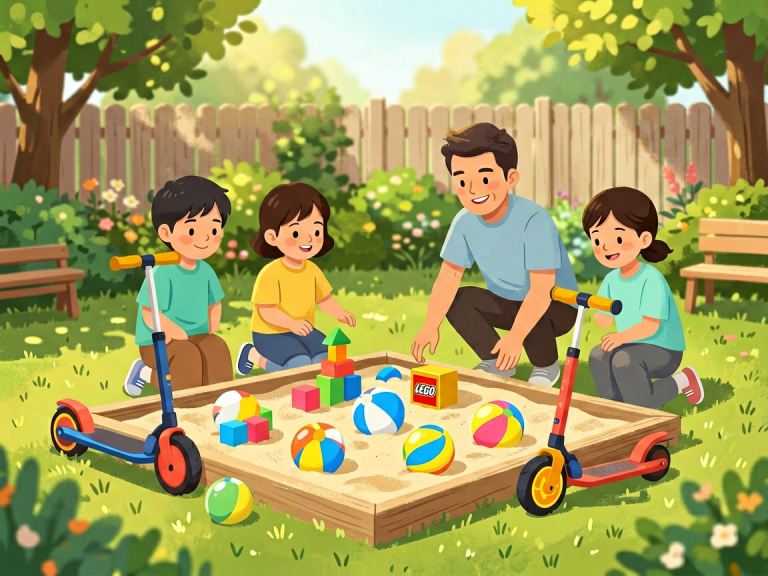
Outdoor play often destroys toys faster than indoor play, but several options under $50 are engineered to resist sun, rain, and mud. Consider a classic high-bounce rubber ball—not a cheap inflatable one, but a solid rubber playground ball from brands like Champion Sports (8-inch size around $10). These balls are vulcanized rubber, nearly indestructible, and can be kicked, thrown, and bounced on asphalt without deflating. Another example is a metal-ring badminton set with nylon shuttlecocks (around $25). The rackets have steel frames and nylon strings that do not break easily. For sand play, avoid thin plastic buckets that crack; instead, get a stainless steel sand shovel and a rubberized mold set (like “Hape’s” sand toy set, around $20, made from high-density food-grade plastic). For water play, a heavy-duty inflatable water slide under $50 is usually a bad bet (they puncture), but a simple durable spray nozzle attached to a garden hose (like the “Melissa & Doug Sunny Patch Seaside Splash” water toy, around $15) is a plastic piece that can last years. Also, consider a wooden kite with a nylon sail—the frame is bamboo or fiberglass, and the string is strong. For under $20, a kite provides endless outdoor joy and, if stored dry, can be reused for many seasons.
Art Supplies and Construction Kits: The Gift That Keeps on Creating
Not all toys are pre-assembled; sometimes the most lasting "toy" is a set of high-quality art supplies or construction kits that enable endless creation. A set of artist-grade colored pencils (like Prismacolor Scholar, 12-count around $15) or a tin of watercolor paints (like Crayola washable, $10) will outlast cheap crayons and markers that dry out. Pair them with a thick sketchbook of mixed-media paper (around $10) and you have a creativity kit under $35 that will survive travel, drops, and creative explosions. Similarly, a “Spirograph” set (the classic drawing toy with plastic gears, around $20) is made of sturdy enameled plastic and metal pins—it has been around since the 1960s and still works. For construction, consider a “Straws and Connectors” kit (like “Strawbees” or “Brain Flakes”), which uses flexible plastic straws and snap-on joints. These can build structures that are surprisingly strong, and the pieces are nearly indestructible. A 600-piece Brain Flakes set is around $20 and can be washed in a laundry bag. The only limit is imagination.
How to Choose: Practical Tips for Parents
When shopping for durable toys under $50, keep these guidelines in mind. First, check the material composition on the label or packaging—avoid words like “thin plastic” or “polystyrene.” Instead, look for “wood,” “metal,” “nylon,” “ABS plastic” (a tough polymer). Second, read reviews that mention durability specifically: “Still works after three years,” “Survived being dropped off the balcony,” “Pieces are still tight.” Third, avoid toys with a high number of small, detachable parts if you have a child under 3—not only for safety but because those parts get lost easily and then the toy is incomplete. Fourth, consider open-ended toys that do not have a single purpose: building sets, balls, blocks, art supplies. These adapt as the child grows. Finally, remember that a toy’s longevity often depends on how it is stored. Keep wooden toys away from moisture, metal toys from saltwater, and board games in a dry closet. With care, these toys can last for decades.
Conclusion: Investing in Memories, Not Disposable Distractions
It is a common misconception that durability comes with a high price tag. In reality, some of the most indestructible toys on the market cost well under $50. From classic wooden blocks and LEGO bricks to die-cast cars and sturdy board games, these toys are designed to be played with, not thrown away. They teach children the value of care and craftsmanship, and they reduce the endless waste that plagues our modern world. When you choose a toy that lasts, you are not just saving money in the long run—you are giving your child the gift of consistent, reliable companionship. The toy that will still be in the toy box when they are ten, the one they will remember fondly as adults, the one that can be passed to the next generation. That is the true definition of value. Next time you are browsing the aisles or scrolling online, look past the flashy lights and thin plastic. Seek out the solid wood, the interlocking brick, the metal body, the thick cardboard. Your child—and the planet—will thank you.