Beyond the Glow: Why Screen-Free Toys Are Essential for 9-Year-Olds and What to Choose
Introduction: The Digital Dilemma
At nine years old, children stand at a fascinating crossroads of development. They are no longer toddlers easily entertained by simple rattles, nor are they teenagers absorbed in social media. They possess a growing capacity for abstract thinking, a hunger for complex problem-solving, and a blossoming social awareness—yet they still crave the joy of hands-on play. In an era where tablets, smartphones, and video game consoles dominate children's leisure time, the concept of screen-free toys might seem almost nostalgic, even radical. But for 9-year-olds, stepping away from the glow of a screen is not a step backward; it is a leap forward into deeper learning, genuine creativity, and meaningful human connection. This article explores why screen-free toys are critical at this age, and offers a comprehensive guide to choosing the best options that will engage, challenge, and delight a 9-year-old without a single pixel.
The Critical Need for Unplugged Play at Age Nine
Cognitive Development and Attention Span
Research in developmental psychology has consistently shown that excessive screen time can impair a child's ability to sustain attention, delay gratification, and engage in deep, uninterrupted thought. At nine, children are developing executive function skills—planning, organizing, self-monitoring, and flexible thinking. Screen-based entertainment, with its rapid scene changes, instant rewards, and endless novelty, can actually train the brain to expect constant stimulation, making it harder for children to concentrate on slower, more demanding tasks like reading or solving a multi-step puzzle. Screen-free toys, by contrast, demand patience. A complex LEGO set, a challenging jigsaw puzzle, or a strategy board game requires the child to hold multiple steps in mind, anticipate outcomes, and persist through frustration. This type of play is not merely fun—it is a workout for the prefrontal cortex.
Social and Emotional Growth
Nine-year-olds are acutely aware of peer relationships. They are learning to negotiate, cooperate, and handle winning and losing gracefully. Digital games, especially those played alone or with anonymous online opponents, often lack the rich social feedback of face-to-face interaction. Screen-free toys, particularly board games, collaborative building sets, and outdoor play equipment, force children to read facial expressions, take turns, voice disagreements, and share triumphs. A game of *Settlers of Catan* or a collaborative marble run teaches compromise and joint problem-solving in a way that no app can replicate. Moreover, without the dopamine-driven rewards of a screen, children learn to find satisfaction in the process itself—the joy of building, the pride of solving a riddle, the laughter shared with a friend.
Physical Health and Sensory Integration
At nine, many children are already spending six to eight hours a day in front of screens for school and leisure, contributing to rising rates of myopia, poor posture, and disrupted sleep. Screen-free toys that involve movement—such as a slackline, a bike, or a construction kit that requires standing and reaching—promote gross motor skills and body awareness. Even quieter toys like modeling clay, knitting kits, or wooden marble runs engage fine motor skills and provide rich tactile feedback that screens simply cannot offer. The sensory experience of feeling the weight of a wooden block, the texture of wool yarn, or the resistance of a spring mechanism is integral to healthy neural development. A nine-year-old who regularly engages with physical materials develops a more integrated sense of their own body and the physical world.
Categories of Screen-Free Toys That Captivate a 9-Year-Old
1. Advanced Construction and Engineering Kits
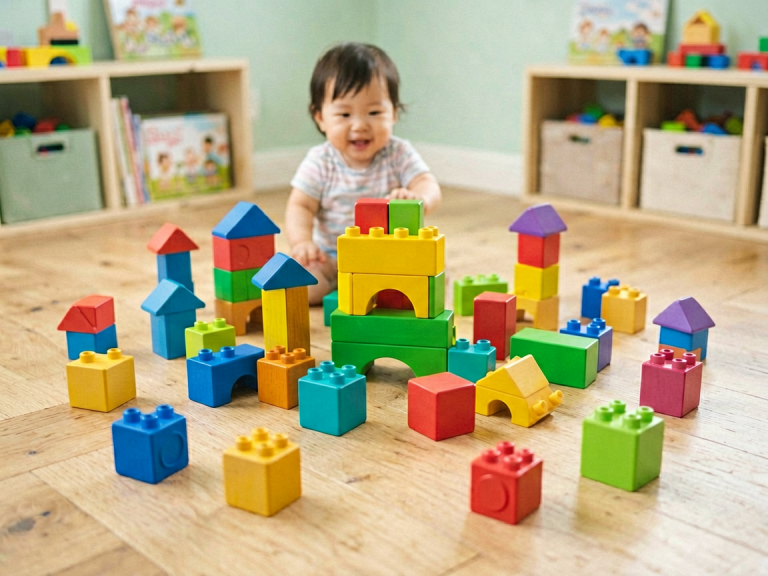
Nine-year-olds are natural engineers. They love systems, mechanisms, and the satisfaction of making something that actually works. Look for kits that go beyond simple bricks. LEGO Technic sets, for instance, introduce gears, axles, and pneumatic systems—all without a single battery. The child builds a crane that actually lifts, a car with working steering, or a helicopter with rotating blades. Similarly, K’NEX or Meccano sets allow for more varied structural designs. For a truly screen-free experience, avoid any kit that requires a smartphone app for instructions; instead, opt for paper manuals that train spatial reasoning. Another excellent option is Marble Run sets with complex tracks, loops, and switches—they combine physics principles with trial-and-error problem solving. A nine-year-old can spend hours adjusting the angle of a ramp or the height of a funnel to get the marble to complete the course. These toys teach cause and effect, patience, and iterative design.
2. Strategy Board Games and Logic Puzzles
By age nine, children can handle board games with moderate complexity. Catan Junior, Azul, Carcassonne, and Ticket to Ride: First Journey are excellent choices that require planning, resource management, and adaptive strategy. Unlike many digital games, board games force players to wait for their turn, observe opponents' moves, and adjust their strategy in real time. They also encourage conversation—negotiating trades, celebrating clever moves, and sometimes sulking over a lost round, which is a valuable emotional learning experience. For solo play, logic puzzles like Rush Hour, Gravity Maze, or Kanoodle are superb for developing spatial reasoning and deductive thinking. These puzzles offer a satisfying sense of achievement when solved, and they can be replayed many times with increasing difficulty. The key is to choose games that are challenging but not frustrating—games that allow the child to gradually build mastery.
3. Creative Arts and Craft Kits
At nine, children often have a strong desire to create something original. Screen-free art supplies that allow for open-ended exploration are invaluable. Consider pottery wheels with air-dry clay, weaving looms, embroidery kits, or wood-burning tools (with adult supervision). Friendship bracelet kits and beadwork sets are also popular because they produce wearable art that can be shared with friends. Unlike digital drawing apps, physical crafts require hand-eye coordination, patience, and the acceptance of imperfection—a lumpy clay pot is far more meaningful than a perfectly rendered digital image. Additionally, science-meets-art kits like crystal-growing sets or sun-print paper combine creativity with discovery. The act of making something tangible, something that can be touched, gifted, or displayed, builds a child's sense of agency and pride.
4. Outdoor and Active Play Equipment
Physical play is not just about exercise—it is about risk assessment, spatial awareness, and social bonding. A high-quality jump rope, slackline, frisbee, or badminton set can turn a backyard into an arena of endless fun. For more structured play, consider a bicycle or scooter (with a helmet!), a skateboard, or rollerblades. At nine, children are developmentally ready to learn tricks, practice balance, and set personal goals. Outdoor building toys, such as giant wooden blocks or a fort-building kit, encourage collaborative construction and imaginative role-play. Water play, even in a simple sprinkler or with water balloons, offers sensory joy and cooperative games. The key is to provide equipment that is slightly challenging but not dangerous, allowing the child to experience the thrill of progress.
5. Science and Discovery Kits
The nine-year-old brain is a sponge for "why" and "how." Screen-free science kits that involve real experiments—mixing chemicals, growing crystals, building simple circuits, or dissecting owl pellets—feed that curiosity. Snap Circuits (without computer interface), microscope kits with prepared slides, rock and mineral sets, or weather station kits turn the child into a junior scientist. The value of these toys lies in their unpredictability: the experiment might fail, requiring the child to troubleshoot. This process teaches scientific thinking far more effectively than any virtual simulation. Similarly, nature identification guides paired with a magnifying glass or binoculars encourage outdoor exploration and classification. A nine-year-old who learns to identify birds, trees, or constellations develops a lifelong appreciation for the natural world.
How to Choose and Encourage Screen-Free Play
Align with the Child's Interests
The best screen-free toy is one that the child actually wants to use. If your nine-year-old is fascinated by dinosaurs, a high-quality fossil excavation kit or a model skeleton puzzle will engage them far more than a generic building set. If they love stories, consider a choose-your-own-adventure book or a storytelling card game like *Rory's Story Cubes*. Observe what they talk about, what they draw, what they watch with wonder—then find a physical toy that connects to that passion.
Resist the Urge to Over-Explain
Screen-free toys often require some initial guidance, but children benefit from figuring things out on their own. When you hand them a complex puzzle, resist the temptation to show them the solution. Instead, ask guiding questions: "What do you think would happen if you put this piece here?" or "What are you trying to make?" This builds frustration tolerance and independent problem-solving. Also, allow for messes. Clay on the table, glue on the fingers, and scattered puzzle pieces are signs of deep engagement—not chaos.
Create a Screen-Free Sanctuary
Designate times and spaces where screens are simply not an option. The dining table during family game night, the backyard after dinner, the living room floor with a massive jigsaw puzzle—these become sacred zones of unplugged connection. Model this behavior as a parent; if you scroll through your phone while they build a LEGO tower, the message is mixed. Instead, sit with them, ask questions, marvel at their creations. Your genuine interest is the most powerful motivator of all.
Conclusion: The Gift of Depth
In a world that clamors for children's attention through glowing rectangles, offering a screen-free toy is not just a gift—it is an invitation. It says, "Come, slow down. Feel the weight of this block. Hear the click of this gear. See the unfurling of your own idea made real." For a nine-year-old, who is old enough to grasp complexity yet still young enough to believe in magic, these toys are not substitutes for digital entertainment. They are gateways to something deeper: patience, creativity, collaboration, and the quiet satisfaction of making something with your own two hands. In the end, the best screen-free toy is the one that makes a child forget that a screen ever existed. And in that forgetting, they remember what play truly is—free, joyful, and entirely their own.