The Power of Play: Selecting the Best Learning Toys for 9-Year-Olds
Introduction
At the age of nine, children stand at a fascinating crossroads of development. They have outgrown the simple, sensory-driven toys of early childhood, yet they have not fully entered the complex, abstract world of adolescence. This is a golden age for learning—a time when curiosity is still boundless, reasoning skills are rapidly expanding, and social awareness deepens. The right learning toys can channel this energy into meaningful growth, turning play into a powerful vehicle for acquiring knowledge, honing critical thinking, and building emotional resilience. But with the toy market flooded with gadgets, screens, and flashy distractions, how do parents and educators choose truly effective learning toys for 9-year-olds? This article explores the unique developmental needs of this age group, categorizes the most impactful types of educational toys, and provides practical guidance for making informed selections that will inspire rather than overwhelm.
Why Age 9 Matters: A Developmental Snapshot
To understand which learning toys work best, it is essential to first grasp what is happening inside a nine-year-old’s mind and body. Cognitively, children at this stage begin to move from concrete operational thinking toward more abstract reasoning. They can follow multi-step instructions, understand cause and effect in complex systems, and engage in logical problem-solving. However, they still benefit greatly from hands-on, tangible experiences that make abstract concepts visible.
Socially, friendships become more nuanced. Cooperation, negotiation, and competition all play important roles. Nine-year-olds are capable of working in teams, but they also crave individual mastery and recognition. Emotionally, they are developing a stronger sense of self and can experience frustration more intensely when challenges exceed their abilities. Therefore, the ideal learning toy should strike a balance: challenging enough to stretch their minds, yet rewarding enough to sustain motivation.
Physically, fine motor skills are well-developed, allowing for intricate assembly tasks, detailed drawing, and precise manipulation of small parts. Meanwhile, gross motor coordination continues to improve, making active games and construction projects equally valuable. A thoughtful selection of learning toys addresses all these dimensions—cognitive, social, emotional, and physical—rather than focusing solely on “academic” outcomes.
Categories of Effective Learning Toys for Nine-Year-Olds
1. STEM and Engineering Kits: Building Minds One Project at a Time
STEM (Science, Technology, Engineering, and Mathematics) toys remain a cornerstone for this age group. However, the best ones go beyond simple snap-together blocks. Kits that introduce basic principles of mechanics, electricity, and coding ignite a passion for discovery. For instance, a solar-powered robot kit that requires assembling gears, motors, and solar panels not only teaches renewable energy concepts but also trains patience and following sequential instructions. Similarly, coding toys like programmable robots (e.g., simple versions of LEGO Boost or Sphero) allow children to see the immediate results of their logic. Debugging a line of code becomes a playful puzzle, not a tedious assignment.
What makes these toys especially effective for nine-year-olds is the opportunity for iterative failure and success. When a robot doesn’t move as intended, the child must analyze why—was the gear misaligned? Did the code have a missing loop? This process mirrors real scientific inquiry. Moreover, many STEM kits now offer companion apps or expansion packs, allowing the toy to grow with the child’s skill level, preventing boredom.
2. Strategy Games and Puzzles: Sharpening the Logical Toolbox
Board games and puzzles are often underestimated as learning tools, yet for nine-year-olds, they are invaluable. Games that require resource management, prediction, and flexible thinking, such as *Settlers of Catan Junior*, *Ticket to Ride*, or *Rush Hour*, directly exercise executive function skills. Unlike passive screen time, these games demand active decision-making under social pressure. A child must weigh immediate gains against long-term strategy, read opponents’ intentions, and adapt when plans fail.
Puzzles, too, evolve at this age. Jigsaw puzzles with 500 to 1000 pieces challenge spatial reasoning and visual memory. More importantly, logic puzzles—like Sudoku, crosswords, or pattern-recognition puzzles—train working memory and cognitive flexibility. Three-dimensional puzzles, such as wooden brain teasers or metal disentanglement puzzles, add a tactile element that reinforces abstract thinking. The beauty of these toys is that they require no batteries, no screens, and no Wi-Fi. They invite focused, quiet concentration, a skill increasingly rare in a distracted world.
3. Creative and Artistic Exploration: The Science of Self-Expression
Learning is not limited to logic and numbers. Creativity toys—such as advanced art kits, calligraphy sets, stop-motion animation stations, or music composition tools—foster divergent thinking and emotional intelligence. For a nine-year-old, the ability to plan a short animated film, mix watercolors to achieve a specific shade, or compose a simple melody builds self-efficacy and innovation. These activities also integrate learning across disciplines: stop-motion requires storyboarding (writing), timing (math), and persistence (character).
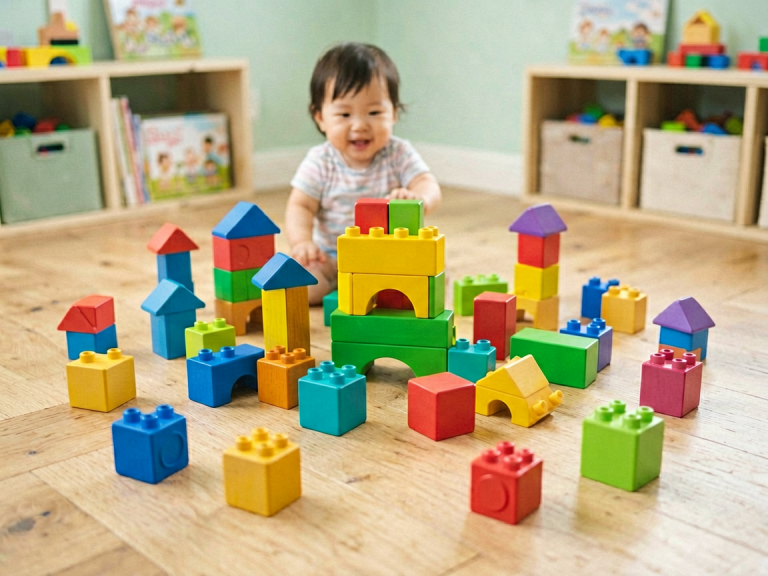
Sophisticated building sets like magnetic tiles or architectural model kits blend creativity with structural engineering. A child designing a bridge or a castle must consider balance, symmetry, and material strength—applying physics concepts unconsciously. Furthermore, creative toys provide a healthy outlet for processing complex emotions. When a child creates a comic strip about a conflict at school or paints a landscape that expresses a mood, they are developing emotional literacy—a critical, often overlooked component of learning.
4. Language and Communication Toys: Expanding Horizons Through Words
Nine-year-olds are typically fluent readers, but they can still benefit enormously from toys that build vocabulary, storytelling, and foreign language skills. Interactive word games like *Bananagrams*, *Scrabble Junior*, or *Story Cubes* encourage playful competition with language. Story cubes, in particular, are powerful: rolling dice with pictures and weaving a coherent narrative from random images exercises creativity, sequencing, and oral expression.
For children learning a second language, there are now interactive board games and card sets designed specifically for practice. Matching games, conversation starters, and apps that incorporate physical cards make language acquisition feel like a game rather than a drill. Additionally, classic toys like typewriters or printing press kits—yes, they still exist—give children a tactile experience of producing written works, linking the physical act of writing with the joy of creation.
5. Outdoor and Physical Learning Toys: The Body as a Classroom
Learning is not confined to the tabletop. For the energetic nine-year-old, outdoor toys that incorporate mathematics, science, or strategy can be transformative. Consider a giant protractor for measuring angles in the backyard, a kite that teaches aerodynamics, or a geocaching kit that combines GPS navigation with treasure hunting. Simple tools like a compass, a butterfly net, and a magnifying glass turn a walk in the park into a field biology lesson.
Sports equipment that encourages structured play—like a basketball hoop with a scoreboard—can also teach statistics and probability. A child tracking free-throw percentages is inadvertently practicing division and data analysis. More importantly, physical play releases endorphins and reduces stress, which enhances overall cognitive function. Learning toys that get kids moving are not a distraction from academics; they are a catalyst for better learning.
Benefits Beyond Academics: The Hidden Curriculum
The most profound advantages of well-chosen learning toys for nine-year-olds extend far beyond test scores. First, these toys foster grit and resilience. When a child spends an hour building a marble run only to discover the marbles fall off halfway, they learn to troubleshoot and persist. This emotional regulation is a stronger predictor of future success than IQ.
Second, they encourage self-directed learning. Unlike school assignments, play is autonomous. The child chooses the toy, sets the goal, and determines the pace. This ownership cultivates intrinsic motivation, curiosity, and a growth mindset. A child who discovers they love chemistry through a crystal-growing kit may independently seek out more information, sparking a lifelong interest.
Third, many learning toys promote social collaboration. Board games teach turn-taking, grace in losing, and negotiation. Building a large structure with a friend requires communication, compromise, and shared decision-making. These soft skills—sometimes called “the hidden curriculum”—are increasingly valued in the modern workplace and in healthy relationships.
Finally, learning toys can bridge the gap between screen and real world. In an era of digital saturation, a physical object that requires hands-on manipulation provides a crucial counterbalance. It grounds the child in reality, improves focus, and reduces the mental fatigue associated with constant screen switching.
How to Choose the Right Toy: A Practical Guide for Parents
Given the vast array of options, how can a parent or educator make wise choices? The following criteria serve as a useful checklist:
- Match the child’s current interests, not your own nostalgia. If a nine-year-old is obsessed with outer space, a rocket-building kit will be far more engaging than a history-themed puzzle. Observe what they talk about, draw, and daydream about.
- Look for open-ended possibilities. Toys that allow for multiple outcomes—like a set of magnetic tiles or a coding kit with endless variations—provide long-term value. Single-purpose toys (e.g., a pre-assembled plastic toy) are quickly discarded.
- Check for scaffolding. The toy should support gradual complexity. A good learning toy comes with beginner, intermediate, and advanced challenges, either through instructions or natural evolution of play.
- Prioritize quality over quantity. One excellent building set that lasts for years surpasses a closet full of flimsy, trend-driven items. Durable materials, clear instructions, and safety certifications are non-negotiable.
- Involve the child in the selection process. Autonomy is key. Take them to a toy store or browse online together, discussing what looks fun and why. When a child feels ownership over the choice, engagement skyrockets.
- Consider the social context. Does the toy work well with siblings or friends? Cooperative games can strengthen family bonds, while solo puzzles allow for quiet reflection. Balance both types in the toy collection.
Conclusion
Learning toys for nine-year-olds are not merely diversions—they are tools that shape how a child thinks, feels, and relates to the world. From STEM kits that teach engineering principles to board games that hone strategic thinking, each toy offers a unique doorway to growth. The key is to select toys that respect the child’s developmental stage, spark genuine curiosity, and provide a blend of challenge and joy. In doing so, we transform play from a passive pastime into an active, lifelong love of learning. So the next time you search for the perfect gift, remember: the best learning toy is one that makes a nine-year-old forget they are learning at all.