Beyond Fun: The Best Learning Toys That Shape Growing Minds
Introduction: Why Learning Toys Matter More Than Ever
In an age where screens dominate children’s attention, the humble toy has quietly undergone a revolution. No longer just colorful distractions, today’s best learning toys are meticulously designed tools that nurture cognitive development, fine motor skills, social‑emotional intelligence, and creative problem‑solving. The right toy does not merely entertain—it challenges, inspires, and adapts to a child’s evolving abilities. Yet with an overwhelming flood of options on store shelves and online marketplaces, parents and educators often struggle to separate genuine learning tools from fleeting fads. This article explores the most effective learning toys for kids, categorized by developmental stage and core skill sets, offering evidence‑based guidance to help you choose toys that grow with your child rather than gather dust.
1. Building Blocks and Construction Sets: The Foundation of STEM Thinking
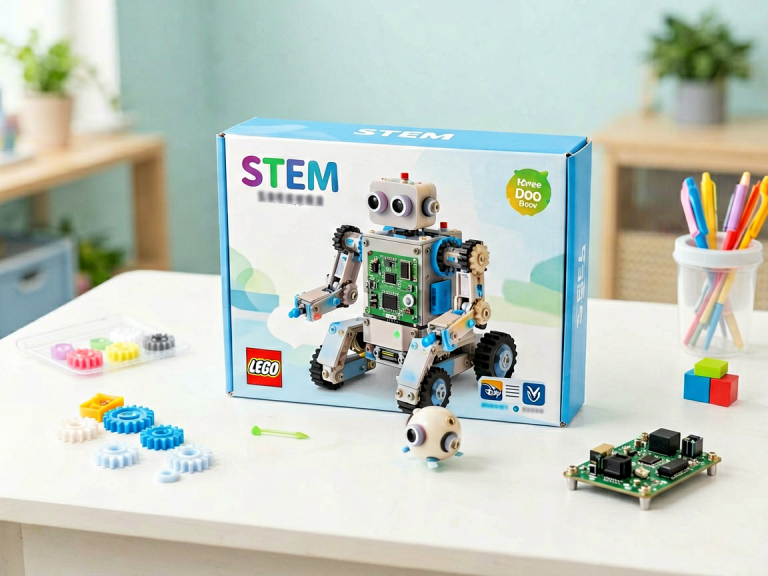
No list of learning toys is complete without building blocks. From classic wooden unit blocks to sophisticated magnetic tiles and interlocking plastic bricks, construction toys remain unparalleled for developing spatial reasoning, early engineering concepts, and persistence. When a child stacks blocks and watches them tumble, they learn gravity, balance, and cause‑effect relationships. More advanced sets like LEGO Technic or Magformers introduce gears, levers, and magnetism, turning play into hands‑on physics lessons.
Why they work: These toys encourage open‑ended play—there is no single “right” answer. Children must plan, estimate, and revise their designs, building resilience along with towers. For toddlers, large, lightweight blocks improve hand‑eye coordination and grip strength. For older children, themed construction kits (such as building a replica of the Taj Mahal or a working crane) teach following multi‑step instructions while allowing customization. Research in developmental psychology consistently links block play with later mathematical achievement, especially in geometry and measurement.
Key recommendation: Look for sets that offer both guided challenges (like instruction booklets) and free‑build opportunities. Brands like Grimm’s, Magna‑Tiles, and LEGO Education are excellent starting points.
2. Puzzles for Every Age: Training the Brain to See Patterns
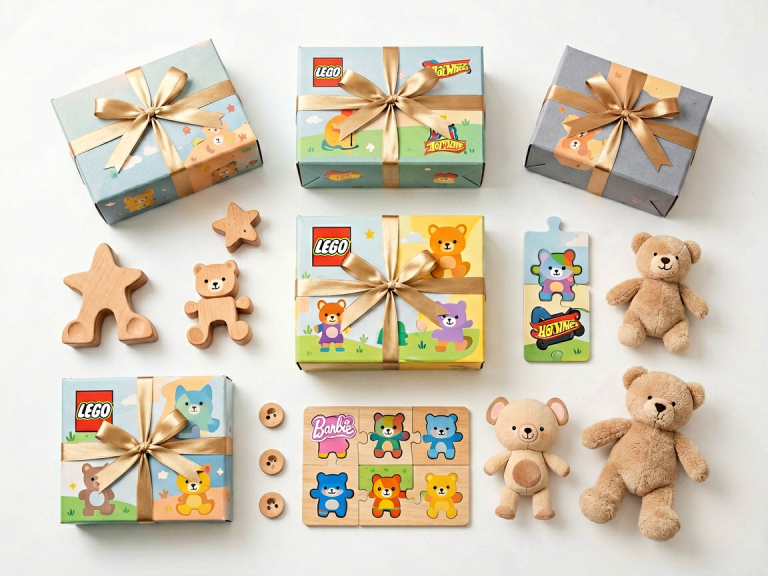
Puzzles are deceptively simple learning tools. A 2‑year‑old matching a chunky wooden shape to its corresponding hole is performing the same cognitive operation as a 9‑year‑old assembling a 500‑piece landscape: pattern recognition, spatial visualization, and logical deduction. The best puzzles progress in difficulty and complexity alongside a child’s growing brain.
For toddlers (ages 1–3): Knob puzzles with large, easy‑grip pieces promote fine motor precision and object permanence. Jigsaw puzzles with just 2–4 pieces introduce the concept of parts making a whole. For preschoolers (ages 3–5): Floor puzzles with 12–48 pieces encourage cooperative play and narrative thinking (e.g., a farm scene where children can talk about animals and sounds). For school‑age children (6+): 3D puzzles (like a globe or a dinosaur skeleton) blend geography or biology with engineering. Logic puzzles such as Sudoku or tangrams take the concept into pure abstract reasoning.
Why they work: Puzzles strengthen working memory and attention span. They require children to hold multiple visual details in mind while systematically testing solutions. Moreover, completing a puzzle delivers a natural dopamine reward, building intrinsic motivation to tackle challenges—a skill far more valuable than any specific piece of knowledge.
3. Art and Creative Expression: Where Imagination Meets Skill
Learning toys are not limited to science and math. Art supplies—when chosen thoughtfully—are powerful tools for cognitive and emotional development. The best creative toys do not direct children to produce a predetermined outcome; instead, they provide the media and encourage exploration.
Examples of high‑impact creative toys:
- Water‑based markers and dot‑a‑dot art sets allow toddlers to practice grip and color recognition without messy clean‑up.
- Modeling clay or air‑dry foam strengthens hand muscles essential for later handwriting. Rolling, pinching, and sculpting also provide sensory input that calms anxious children.
- Story cubes (dice with pictures) or blank board books transform toy time into narrative building. A child who rolls a frog, a castle, and a key must invent a story connecting them—a precursor to advanced literacy and verbal fluency.
- Music‑making tools: Simple xylophones, shakers, or harmonicas teach rhythm, pattern, and auditory discrimination. Studies show that early musical play correlates with improved language processing and mathematical thinking.
Why they work: Creative toys allow for emotional regulation. A child who is frustrated can smash clay, scribble fiercely, or bang a drum—all socially acceptable alternatives to tantrums. They also teach the “process vs. product” mindset: the joy of mixing colors or experimenting with textures is often more valuable than the finished artwork.
4. Strategy Games and Cooperative Play: Social‑Emotional Growth in Action
The best learning toys for social development are not solo activities; they require two or more players. Strategy board games like *Hoot Owl Hoot* (which teaches collaboration), *Catan Junior* (resource management and negotiation), or *Dinosaur Escape* (cooperative memory) help children practice turn‑taking, empathy, and graceful losing. Unlike flashcards or apps, these toys create real‑time social stakes.
What makes them “learning toys”? A cooperative game where everyone wins or loses together reduces competitive anxiety and fosters teamwork. Children learn to communicate plans, adapt when a plan fails, and support teammates. Even classic competitive games like *Checkers* or *Qwirkle* teach forward thinking and impulse control—you cannot move your piece until you consider the opponent’s potential move.
For younger children (ages 3–5): Look for games with no reading required, such as *The Sneaky, Snacky Squirrel Game* (fine motor skills plus color matching with a competitive element). For elementary ages, *Rush Hour* (traffic jam logic) can be played solo or collaboratively.
Why they work: Social learning toys address the “whole child.” Emotional intelligence—the ability to read facial expressions, negotiate, and handle disappointment—is a stronger predictor of adult success than IQ. By embedding these lessons in play, children absorb them without stress or lectures.
5. Science and Discovery Kits: Cultivating a Questioning Mind
For children aged 5 and up, nothing inspires wonder like a well‑designed science kit. The key is to avoid kits that are purely “reaction‑based” (e.g., mixing vinegar and baking soda for a single wow moment) and instead seek those that encourage systematic observation.
Top picks: Telescopes for basic astronomy; ant farms or butterfly garden habitats for biology; coding robots like Botley (no screen needed) or KIBO (using wooden blocks to program a robot) for computational thinking. For chemistry, a set of non‑toxic indicators that change color with household acids and bases teaches the scientific method: hypothesis, experiment, observation, conclusion.
Why they work: Discovery kits teach that failure is data. When a plant doesn’t grow or a robot doesn’t follow the code, a child learns to ask “why?” and try again. This mindset is far more valuable than any specific fact. Moreover, these toys often bridge the gap between solitary and social play—children love showing their parents a chemical reaction or demonstrating their robot’s movement.
6. Language and Literacy Toys: Beyond Phonics Flashcards
Learning toys for reading and writing should feel like play, not drill. Magnetic alphabet letters that stick to a fridge or a whiteboard allow children to form words spontaneously. Storybook sets with accompanying puppets or felt characters bring narratives to life. For older children, typewriter‑style keyboards (like the *Little Tikes Story Dream Machine*) make writing physically satisfying and less daunting than handwriting.
Why they work: Kinesthetic learning—touching, moving, and seeing letters—activates multiple brain pathways simultaneously. A child who arranges magnetic letters to spell “CAT” and then adds a tail to make “CART” is practicing phonics and spelling in a low‑pressure environment. Puppets and props build vocabulary and comprehension because children must narrate actions.
Conclusion: Choosing Toys That Grow with Your Child
The best learning toys for kids share a common thread: they offer open‑ended possibilities that adapt to a child’s abilities. A single set of high‑quality blocks can be used by a 1‑year‑old to stack and knock down, a 4‑year‑old to build a zoo, and an 8‑year‑old to create a marble run with inclined planes—all while learning physics, planning, and creativity. When selecting toys, prioritize durability, safety (check for non‑toxic materials and small‑part warnings), and the potential for multiple uses.
Avoid toys that do the thinking for the child—battery‑operated items that light up and talk without requiring input are entertainment, not learning tools. Instead, look for toys that ask “What happens next?” rather than “Press this button.” The best investment you can make is not the most expensive gadget but the one that invites a child to return to it again and again, each time discovering something new about the world—and about themselves.