The Best Hands-On Learning Toys for Kids: Building Skills Through Play
In an age dominated by screens and passive entertainment, the value of hands-on learning toys has never been greater. Unlike digital apps that offer instant gratification, physical toys that require children to touch, manipulate, build, and experiment engage multiple senses and foster cognitive development in profound ways. Research in child development consistently shows that kinesthetic learning—learning through physical activity—strengthens neural connections, improves problem-solving abilities, and nurtures creativity. The best hands-on learning toys for kids do more than just occupy time; they transform play into a laboratory for real-world skills. From constructing towering skyscrapers to mixing colorful potions, these toys invite children to become architects, scientists, artists, and engineers. This article explores the most effective categories of hands-on learning toys, explaining why each deserves a place in your child’s toy box and how they contribute to essential developmental milestones.
Construction Toys: Building Foundations for STEM
Construction toys are the undisputed champions of hands-on learning. They teach spatial reasoning, cause and effect, and basic physics principles—all while children are blissfully unaware they are learning. Classic building blocks like wooden unit blocks allow toddlers to explore balance and gravity by stacking and toppling. As children grow, more sophisticated systems like LEGO bricks, magnetic tiles, and interlocking gears expand the possibilities.
Magna-Tiles, for instance, are translucent magnetic shapes that snap together effortlessly. A three-year-old can create a simple cube, while a seven-year-old might engineer a geodesic dome. The magnetic connection provides instant feedback: too much weight on one side and the structure collapses, teaching structural integrity through trial and error. Similarly, LEGO Technic sets introduce gears, axles, and pulleys, allowing older children to build motorized vehicles that actually move. These experiences plant seeds for future STEM careers. According to a study from Purdue University, children who engage with construction play show higher performance in mathematics and spatial visualization tests. The key is open-endedness: unlike a puzzle with one solution, construction toys encourage multiple outcomes, fostering divergent thinking. Parents should look for sets that grow with the child—basic bricks for free building and themed kits for guided challenges.
Science Kits: Igniting Curiosity Through Experiments
Nothing sparks a child’s natural curiosity like a hands-on science kit that lets them become a mad scientist in their own kitchen. These kits transform abstract concepts into tangible results. A chemistry set with test tubes, baking soda, and vinegar allows a child to witness a chemical reaction fizz and overflow. A crystal-growing kit shows how molecules arrange themselves into geometric shapes over days, teaching patience and observation. The best science kits for kids balance safety with genuine discovery.
Take Snap Circuits, for example. This award-winning toy uses modular electronic components that snap onto a plastic grid. No soldering required. A child can build a working doorbell, a light-sensitive alarm, or even a simple radio. When they connect a wire incorrectly and the bulb doesn’t light, they learn to troubleshoot—a skill far more valuable than memorizing a formula. Similarly, Thames & Kosmos kits offer age-appropriate experiments in biology, physics, and engineering. For younger children, a simple magnet set or a water play kit can introduce concepts of attraction, repulsion, and fluid dynamics. The beauty of science kits is that they make mistakes acceptable. A failed experiment is not a failure but a learning opportunity. As the famous educator Maria Montessori said, “Play is the work of the child.” Science kits make that work exciting and memorable.
Art and Craft Sets: Fostering Creativity and Fine Motor Skills
While STEM skills are critical, creativity and fine motor development are equally important. Hands-on art and craft toys allow children to express themselves while improving dexterity, hand-eye coordination, and planning skills. From modeling clay to sewing kits, these toys engage young minds in a different kind of problem-solving: how to turn a vision into a physical creation.
Play-Doh is a perennial favorite for toddlers. Squeezing, rolling, and cutting the soft dough strengthens the small muscles in the hands that are essential for writing later. As children progress, they can use tools like shape cutters, extruders, and rollers to create more complex designs. For older kids, a jewelry-making kit with beads and elastic cord teaches pattern recognition and symmetry. A simple embroidery or cross-stitch set introduces threading needles and following a pattern—activities that require focused attention and patience. Painting sets with watercolors or tempera paints encourage color mixing and brush control. The open-ended nature of art toys means there is no right or wrong outcome, which builds confidence and self-expression. According to the American Academy of Pediatrics, creative play reduces stress and enhances emotional regulation. When a child molds a lump of clay into a lopsidered pot, they are not just making art—they are learning to persevere through frustration and take pride in their own work.
Puzzles and Board Games: Problem-Solving and Social Learning
Puzzles and board games may seem old-fashioned, but they are among the most effective hands-on learning tools for developing logical thinking, memory, and social skills. A jigsaw puzzle requires a child to recognize shapes, match colors, and understand how parts fit into a whole. A 24-piece puzzle for a four-year-old builds spatial awareness; a 500-piece puzzle for a ten-year-old teaches systematic sorting and patience. The tactile experience of picking up a piece, rotating it, and feeling the click when it fits is deeply satisfying and reinforces learning through physical action.
Board games add a social dimension. Games like “Candy Land” teach turn-taking and following rules, while “Connect Four” introduces strategy and pattern recognition. More complex games like “Settlers of Catan” (adapted for kids) involve resource management, negotiation, and planning. Even simple card games like “Go Fish” improve memory and number recognition. The key is that these games require physical components—cards, dice, tokens, boards—that children manipulate with their hands. This multisensory engagement increases retention compared to digital versions. Moreover, playing together as a family strengthens bonds and provides opportunities for parents to model good sportsmanship. In a world where many interactions happen online, board games offer a precious chance for face-to-face communication and cooperative problem-solving.
Sensory Play: Engaging Multiple Senses
For younger children especially, sensory play toys are foundational for brain development. These toys stimulate touch, sight, sound, and even smell, helping children make sense of the world. Sensory bins filled with rice, sand, or water beads allow children to scoop, pour, and sift, developing fine motor skills and introducing concepts like volume and texture. A kinetic sand set is a particularly wonderful hands-on toy: it sticks together like wet sand but feels dry, offering a unique tactile experience. Children can mold it into shapes, cut it with plastic knives, and build sandcastles indoors without the mess of real sand.
Water play tables or water beads provide similar benefits. Pouring water from one container to another teaches measurement and cause and effect. Adding sponges, funnels, and boats extends the learning. For auditory stimulation, musical instruments like xylophones, tambourines, and shakers teach rhythm and cause and effect (shaking makes sound). Sensory play also has calming effects for children who are easily overwhelmed. It encourages focused, independent play and can be especially beneficial for children with sensory processing differences. The best part is that many sensory toys are inexpensive and can be made at home—rice, pasta, shaving cream, and homemade play dough are all excellent options. The key is to allow children to explore without a specific goal, letting their curiosity guide them.
Coding and Robotics Toys: Introducing Technology Early
In the 21st century, digital literacy is as important as reading and writing. But the best way to introduce coding to children is not through a screen—it is through hands-on robotics toys that let them see the immediate results of their commands. These toys teach sequencing, logic, and debugging in a tangible, engaging way.
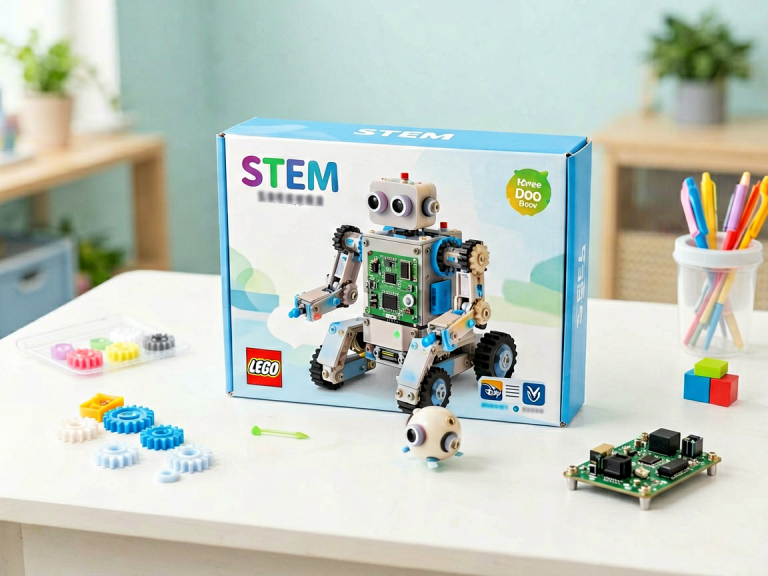
Botley the Coding Robot is a perfect example for ages five and up. Children program Botley by pressing buttons on the robot itself—no app or tablet required. They can sequence up to 80 steps, teaching the concept of algorithms. When Botley rolls into a wall instead of turning, the child must debug their code and try again. Similarly, Osmo’s interactive learning system uses physical pieces that interact with an iPad, bridging the gap between hands-on and digital play. For older children, LEGO Boost or LEGO Spike Prime kits allow them to build a robot and then program it using a simple drag-and-drop interface. These toys demystify technology and show children that they can be creators, not just consumers, of digital experiences. They also teach perseverance: a robot that doesn’t move correctly is a problem to be solved, not a source of frustration. Studies show that early exposure to coding concepts through hands-on play increases interest in STEM fields, especially among girls and underrepresented groups.
Conclusion: Choosing the Right Toys for Your Child
When selecting hands-on learning toys, the most important factor is not the price or the brand, but the toy’s potential for open-ended, active play. The best toys are those that do not do the work for the child. A remote-control car that simply zooms forward at the push of a button offers little learning; a snap-together car kit that the child builds and then redesigns offers endless opportunities. Look for toys that encourage experimentation, allow for mistakes, and grow with the child’s abilities. Rotate toys to keep them fresh, and most importantly, play alongside your child. Ask questions like “What happens if you try this?” or “How could we make it stronger?” Your involvement amplifies the learning.
In summary, the best hands-on learning toys for kids span a wide range: construction sets that build spatial skills, science kits that spark curiosity, art supplies that nurture creativity, puzzles that sharpen logic, sensory bins that engage the body, and coding robots that introduce technology. Each category contributes uniquely to a child’s holistic development. By investing in these toys—and more importantly, in the time to play with them—you are giving your child the tools to become a confident, curious, and capable learner for life. In a world that increasingly values innovation and problem-solving, hands-on play remains the most natural and joyful way to prepare for the future.