The Toys That Survive: What Preschoolers Actually Play With (And Why It Matters)
Word count: 1,047
—
Introduction: The Graveyard of “Educational” Toys
Every parent knows the scene: a birthday party ends, the wrapping paper settles, and within a week, half the gifts are collecting dust in a corner. The light-up alphabet mat sits untouched. The “montessori-inspired” shape sorter gets dumped once, then ignored. Meanwhile, the same cardboard box from last month’s online delivery has become a spaceship, a castle, a bus, and a time machine. For preschool educators and child development specialists, this is not a mystery—it is a data point. The toys that preschoolers actually *use* share a set of distinct characteristics: they are open-ended, sensory-rich, socially flexible, and forgiving of failure. This article explores the real-life play patterns of children aged three to five, identifies the categories of toys that earn sustained engagement, and explains why understanding these preferences matters for parents, teachers, and toy designers alike.
—
The Anatomy of a “Used” Toy: Open-Endedness Over Specificity
The single most important feature of toys that preschoolers actually reach for—day after day, week after week—is open-endedness. A toy with a predetermined outcome (press this button, hear a song; fit the triangle block, earn a satisfying click) has a limited play life. Once the novelty fades, so does the child’s interest. In contrast, toys that impose no single “correct” use invite children to project their own narratives, experiment with physics, and explore social roles.
Take building blocks as a prime example. Whether made of wood, magnetic tiles, or simple cardboard bricks, blocks never get old because they never tell the child what to do. A set of wooden unit blocks can become a bridge at 9 a.m., a fortress at noon, and a zoo for stuffed animals by 3 p.m. In a 2019 observational study published in *Early Childhood Education Journal*, researchers found that children in free-play settings spent an average of 22 minutes continuously engaged with block play—compared to just 6 minutes with electronic toys that required a specific response. The reason is cognitive: open-ended toys activate divergent thinking, requiring children to generate possibilities rather than simply recall procedures.
Another category that fits this principle is loose parts—collections of natural or recycled objects such as pinecones, bottle caps, fabric scraps, and cardboard tubes. In many progressive preschools (including the famous Reggio Emilia programs in Italy), loose parts are the backbone of the classroom. A child might use a piece of driftwood as a phone, a ramp for a marble, or a magic wand. The toy “says” nothing—and that silence invites the child’s own voice. Preschoolers who have access to loose parts show higher levels of sustained attention, more complex language during play, and greater willingness to collaborate with peers.
—
The Quiet Winners: Art Supplies, Sand, Water, and Dough
If you walk into any preschool classroom that has been running for more than three years, you will notice something: the shelves that are most chaotic, most stained, most rearranged, are not the ones labeled “STEM toys.” They are the ones holding washable markers, finger paints, play dough, sand tables, and water bins. These play materials are overwhelmingly messy, and that mess is precisely the point.
Art supplies and sensory media offer what psychologist Alison Gopnik calls “the joy of causation.” A child squeezes yellow paint, adds a drop of blue, and watches green appear—that is a small, repeatable, deeply satisfying experiment. The toy (or medium) is active and responsive without being scripted. Furthermore, these materials tolerate “mistakes” beautifully. You cannot crash a paintbrush; you cannot break play dough; you cannot program a sand table to give you the wrong answer. This low-stakes environment is critical for preschoolers, who are still developing emotional regulation and frustration tolerance.
A 2020 survey conducted by the Toy Association found that among parents of three-to-five-year-olds, the toy category with the highest reported “daily use” was neither electronic nor themed—it was modeling compounds (play dough, clay, kinetic sand). Over 68% of parents said their child used these at least once a day. Compare that to battery-operated toys: only 22% reported daily use, and most of those were simple push-button vehicles or musical instruments. The implication is clear: preschoolers crave tactile feedback and the freedom to manipulate their environment, not passive stimulation.
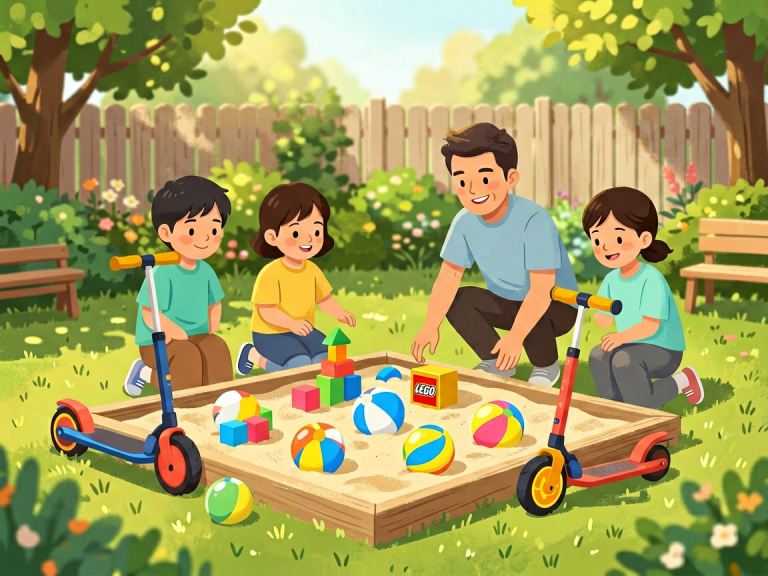
Water play is another underrated champion. A simple basin with cups, funnels, and scoops can occupy a four-year-old for 45 minutes. Why? Because water is unpredictable. It flows, splashes, ripples, and resists. Every pour is a mini-lesson in volume, gravity, and fine-motor control. Sand operates similarly: children dig, sift, mold, and collapse structures, learning physics through their hands. These are not “special” toys; they are primal materials. And they work.
—
Social Catalysts: Toys That Invite Two (or More) Children
Preschool is, above all, a period of intense social development. The toys that survive the longest are those that naturally encourage cooperative play. A single-player iPad game may hold a child’s attention for a while, but it isolates them. In contrast, a set of plastic animals, a train track, or a simple ball will inevitably draw a second child in.
Dramatic play props are arguably the most social category of all. A toy kitchen, a doctor’s kit, a collection of dress-up clothes—these serve as props for elaborate role-playing scenarios. When two preschoolers play “restaurant,” they negotiate roles: who is the chef, who is the customer, what is on the menu. They practice turn-taking, compromise, and narrative building. They also learn to read non-verbal cues. A child who picks up a plastic stethoscope is implicitly saying, “Now I am the doctor, and you should be the patient.” The toy acts as a communication scaffold.
A less obvious but equally powerful social toy is the simple ball. Not a soccer ball with rules, but a soft, light ball that can be rolled between two children. Roll-and-catch games are among the first cooperative activities that young children master. The ball is not just an object; it is an invitation to synchronize movements, to anticipate another person’s actions, and to repair breakdowns (when the ball rolls away, both children have to collaborate to retrieve it). In a preschool setting, a ball can facilitate play between children who may not even share a common language—a frequent reality in diverse communities.
—
Why “Educational” Labels Can Mislead Parents
One of the great ironies of the toy industry is that many products marketed explicitly as “educational” for preschoolers are among the least used. The parent is sold on the promise of early literacy or math readiness; the child is sold on flashing lights and app connectivity. But the educational value of such toys is often shallow. A study from the University of California, Riverside, compared children’s language use when playing with electronic toys versus traditional ones. The result: children produced significantly fewer words and fewer back-and-forth conversational exchanges with electronic toys. Traditional toys—blocks, puzzles, vehicles—prompted richer verbal interaction between child and adult.
The most effective educational toys for preschoolers are those that teach through the child’s own actions, not through a screen or a speaker. A simple set of wooden dominoes teaches cause and effect, spatial reasoning, and patience better than any app. A magnetic fishing game teaches hand-eye coordination. A set of nesting cups teaches size seriation. These toys do not need to speak; they teach by being used.
Parents should therefore shift their buying criteria. Instead of asking, “Will this toy teach my child the alphabet?” ask, “Will my child still want to play with this in three months?” The answer usually points to simplicity, durability, and openness. The toys that survive are not the smart toys—they are the toys that make the child feel smart.
—
Conclusion: Less Is More, But More of the Right Stuff
The preschool years are a time of explosive growth, and the right toys can fuel that growth. But “right” does not mean expensive, electronic, or trendy. The toys that preschoolers actually use are humble. They are blocks, dough, sand, water, balls, and dress-up clothes. They are collections of random objects. They are tools for making, pretending, and connecting.
For parents overwhelmed by shelves of choices, the message is liberating: you do not need to buy the newest innovation. You need a few good, open-ended materials, a willingness to tolerate mess, and the understanding that when a child ignores a toy, it is often the toy’s fault, not the child’s. By cutting through the noise and focusing on what actually works, we can give preschoolers the gift of deep, joyful, meaningful play—the kind that builds brains and bonds alike.