Top STEM Toys for 3-Year-Olds: Building the Foundation for a Lifetime of Curiosity
Introduction: Why STEM Matters Even at Age Three
At three, children are natural-born scientists. They ask "why" about everything, they love to take things apart, and they are endlessly fascinated by how the world works. STEM—an acronym for Science, Technology, Engineering, and Mathematics—is not a formal curriculum for toddlers; it is a way of thinking. For a three-year-old, STEM means stacking blocks to see how high they can go (engineering), mixing water and sand (science), sorting shapes (mathematics), and pressing buttons to make a light flash (technology). The best STEM toys for this age do not require reading, screens, or adult supervision. Instead, they invite open-ended exploration, fine-motor practice, and cause-and-effect learning. Choosing the right toys can spark a lifelong love for discovery. Below, I explore the most effective, safe, and engaging STEM toys for three-year-olds, organized by the core skills they develop.
Engineering and Construction Toys: The Art of Building and Balancing
Magnetic Tiles: A Gateway to Spatial Reasoning
Magnetic building tiles, such as Magna-Tiles or Picasso Tiles, are arguably the gold standard for toddler STEM play. These translucent plastic shapes with embedded magnets snap together effortlessly, allowing young hands to construct towers, houses, animals, and abstract sculptures. For a three-year-old, the immediate reward is the satisfying click when two tiles connect. But the deeper learning is immense. Children experiment with balance, symmetry, and structural integrity. Why does a tall tower fall? Because the base is too narrow. How can I make a square into a triangle? By connecting four tiles differently. The magnets provide just enough resistance to reinforce fine-motor control without causing frustration. Over time, children learn to plan—"I need two squares for the bottom, then a triangle on top." This is early engineering design.
Large Interlocking Blocks: Big Hands, Big Ideas
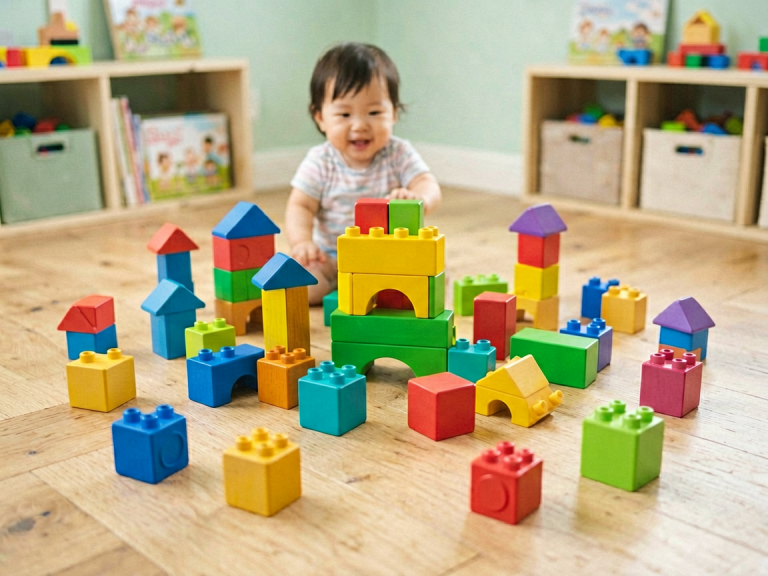
Classic large interlocking blocks—like Duplo or Mega Bloks—are perfect for three-year-olds who still put things in their mouths (though these are too large to swallow). The act of pressing two blocks together requires hand strength and coordination, and pulling them apart builds finger dexterity. But the real STEM value lies in open-ended creation. A child can build a tower, a bridge, a car, or a castle. Each structure forces them to consider weight distribution: why does the bridge sag in the middle? Because I need a pillar underneath. These blocks also introduce early math concepts: counting the number of studs, comparing lengths, and recognizing patterns. A parent can ask, "Can you make a tower with five blocks?" or "What happens if we put the big block on top of the small one?" The trial-and-error process is pure scientific method.
Sensory and Science Discovery Toys: Hands-On Experiments
Water and Sand Play Tables: Physics in a Tub
A simple water table or sand table is a powerhouse of STEM learning. Three-year-olds can pour, scoop, measure, and observe. When water flows from a cup into a funnel, they see gravity and fluid dynamics in action. When sand is wet, it holds its shape; when dry, it crumbles. This teaches states of matter. Add floating and sinking toys: a rubber duck floats, a rock sinks. Why? The child begins to hypothesize. "Heavy things sink, light things float." Then they test a wooden block—it floats even though it’s heavy. They revise their hypothesis: "Maybe it depends on the shape, too." This is authentic scientific reasoning. Look for water tables that include scoops, cups, sieves, and water wheels. The spinning water wheel demonstrates how moving water can do work—a nascent understanding of energy transfer.
Simple Science Kits for Toddlers: First Reactions
There are now safe, toddler-friendly science kits designed for ages three and up. These are not chemistry sets with dangerous chemicals; rather, they include materials like baking soda, vinegar, food coloring, and droppers. With adult supervision, a three-year-old can drop vinegar onto baking soda and watch it fizz. This is a chemical reaction! They learn that mixing two things can create a third thing—a fundamental concept. Other kits focus on magnetism (chasing metal objects with a wand) or color mixing (using pipettes to create new colors from primary ones). The key is that the child is the experimenter, not just a spectator. They choose the amounts, they observe the results, and they ask for more. This builds a positive association with experimentation.
Technology and Coding Toys (Without Screens)
Simple Coding Robots: Cause and Effect with a Twist
Technology for three-year-olds should be tangible and screen-free. Toys like the Fisher-Price Code-a-Pillar or Learning Resources Botley the Coding Robot Action Challenge are excellent. The Code-a-Pillar is a segmented caterpillar whose each section is a command—go forward, turn left, turn right, make a sound. A child attaches the segments in a sequence, then presses the start button. The caterpillar follows the program. The child sees immediately that their sequence determines the path. If the caterpillar hits a wall, they change the order. This is the essence of coding: sequencing, debugging, and logical thinking. For a three-year-old, it’s pure delight. They don’t know they are learning; they are just playing with a bug that moves.
Light-Up and Sound Toys: Exploring Inputs and Outputs
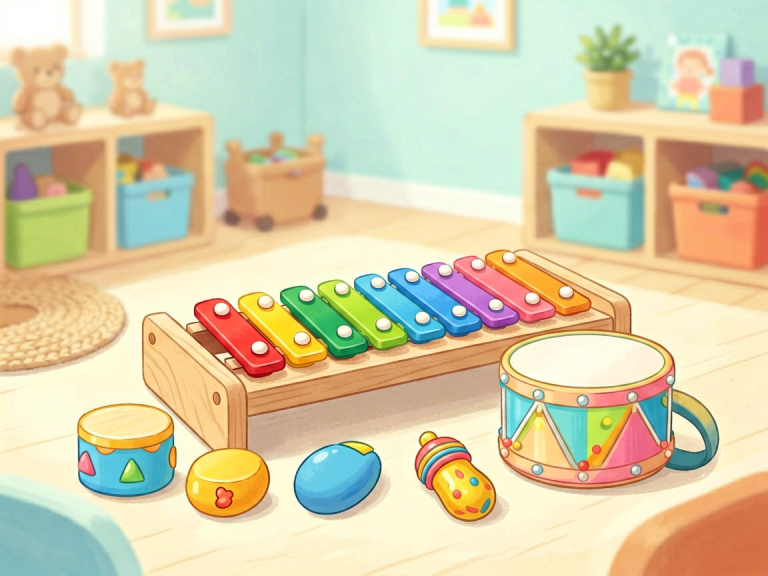
Any toy that responds to touch, motion, or voice teaches the concept of input and output. Consider a set of LED building blocks that light up when connected in a circuit, or a simple piano mat where stepping on a key produces a note. These toys show that actions have predictable consequences. A three-year-old learns that pressing a button (input) causes a light to flash (output). They begin to anticipate outcomes. Some toys allow them to change the output—for example, a toy remote control car that speeds up when you push harder. This introduces the idea of variables. The most engaging toys in this category are those with multiple modes: tap for one color, shake for a different effect. The child experiments to discover all the possibilities.
Mathematics and Logic Toys: Counting, Sorting, and Patterns
Counting Bears and Sorting Cups: Early Number Sense
A simple set of colorful counting bears with sorting cups, tweezers, and dice can provide hours of mathematical play. At three, most children can count to ten by rote, but they need concrete objects to understand what "three" means. By placing three bears into a cup, they directly connect the numeral with a quantity. Sorting by color teaches classification—a foundational math skill. Using the tweezers to pick up bears builds fine-motor control and hand-eye coordination. Parents can expand the play: "Put the red bears in the red cup. How many red bears are there? Now put one more. How many now?" This is addition without abstract symbols. Also, pattern strips: red, blue, red, blue. The child predicts what comes next. Patterns are the language of mathematics.
Shape Sorters and Puzzle Boards: Geometry for Beginners
Classic shape sorting toys never go out of style. A box with cutouts for a circle, square, triangle, and star—the child must match the shape to the hole. This teaches shape recognition, rotation, and spatial relationships. A three-year-old learns that a square cannot fit through a round hole; they must rotate the triangle to match the orientation. More advanced versions include nesting blocks or graduated cylinders (like the Montessori Pink Tower). These introduce size comparison: big, bigger, biggest. Stacking rings from largest to smallest teaches seriation. All of these are pre-math skills that build logic and problem-solving.
What to Look For When Choosing STEM Toys for Three-Year-Olds
Safety is paramount. Ensure toys have no small parts that can be swallowed, are made of non-toxic materials, and have no sharp edges. Look for open-ended toys rather than ones with a single correct answer; children learn more when they can explore multiple outcomes. Avoid toys that require batteries unless the interaction is simple and direct. Also, consider durability: three-year-olds are rough on toys. Hardy plastic, washable materials, and simple mechanisms last longer. Finally, follow the child’s lead. The best toy is one that the child returns to again and again, each time finding a new way to play. STEM is not about teaching facts; it is about nurturing a mindset of curiosity, resilience, and creativity.
Conclusion: Play Is the Curriculum
The best STEM toys for three-year-olds are not fancy, expensive, or electronic. They are the toys that turn a child into a scientist: building a tower and watching it fall, mixing colors and making a mess, figuring out how a button makes a light turn on. At this age, every moment is a learning moment. A cardboard box can be a rocket ship. A puddle can be an ocean. The role of a good toy is to invite wonder and challenge within reach. By providing the right tools—magnetic tiles, water tables, sorting bears, simple coding bots—you are not just giving a gift. You are planting a seed. That seed, watered by play, will grow into a child who loves to ask questions, test hypotheses, and solve problems. And that is the foundation of all future success in STEM and beyond.