The Ultimate Guide to the Best Educational Toys for 3-Year-Olds: Nurturing Growth Through Play
Introduction
At age three, children are in a remarkable phase of development. Their cognitive abilities are expanding rapidly, language skills are flowering, and they are beginning to understand the world around them through imitation, exploration, and imaginative play. Choosing the right toys at this stage is not merely about entertainment—it is about providing tools that support fine motor development, problem-solving, social interaction, and early academic concepts. The best educational toys for 3-year-olds are those that strike a perfect balance between fun and learning, encouraging curiosity while respecting a child’s natural attention span. This article delves into the most effective categories of educational toys for this age group, explaining why they work and offering practical recommendations to help parents and caregivers make informed choices.
Why Educational Toys Matter for Three-Year-Olds
The preschool years are often called the “golden window” for brain development. By age three, a child’s brain has reached about 80% of its adult weight, and neural connections are being formed at an astonishing rate. During this period, play is the primary vehicle for learning. Educational toys are specifically designed to stimulate these connections by presenting challenges that are just slightly above a child’s current ability level—a concept known as the “zone of proximal development.” For instance, a simple wooden puzzle teaches spatial reasoning and hand-eye coordination, while a set of magnetic tiles introduces basic principles of geometry and balance. Unlike passive entertainment such as screens, these toys require active engagement, which strengthens memory, attention, and executive function. Moreover, high-quality educational toys often encourage social skills when used with peers or adults, teaching turn-taking, negotiation, and cooperation. Therefore, investing in thoughtfully chosen toys is one of the most effective ways to support holistic development at this tender age.
Building Blocks and Construction Sets: The Foundation of Creativity
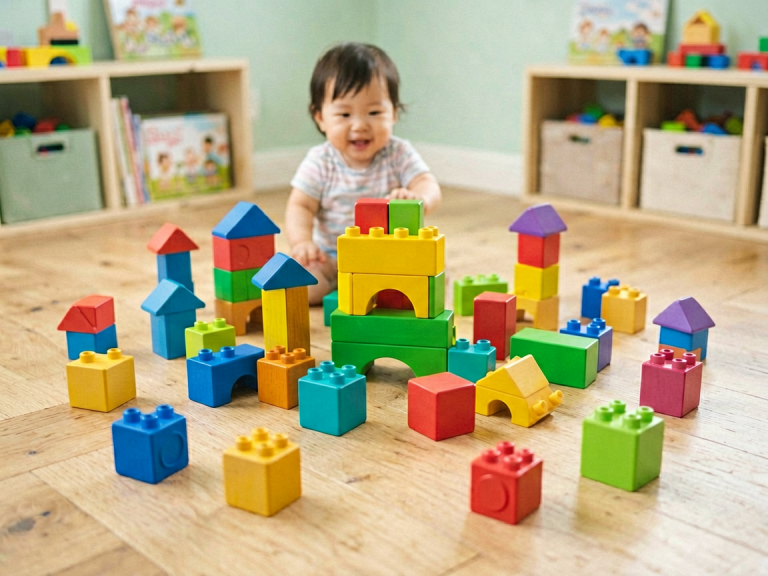
One of the most timeless categories of educational toys for three-year-olds is building blocks. Whether they are classic wooden blocks, interlocking plastic bricks, or magnetic tiles, construction toys offer endless opportunities for learning. As children stack, balance, and connect pieces, they develop fine motor skills and hand strength. More importantly, they learn cause and effect: a tower that is too tall will topple, and a base that is too narrow cannot support weight. This trial-and-error process fosters resilience and problem-solving. For three-year-olds, look for sets that are large enough to avoid choking hazards and that include a variety of shapes and colors. Magnetic tiles, for example, are particularly beneficial because they allow children to build three-dimensional structures with ease, introducing early concepts of magnetism and symmetry. Furthermore, building toys encourage imaginative play—a child might construct a castle for a toy princess or a garage for a tiny car, thereby weaving storytelling into their physical creations. Recommended products include Melissa & Doug’s wooden unit blocks sets or Magna-Tiles, which are durable and safe for little hands.
Puzzles and Shape Sorters: Sharpening Cognitive Skills
Puzzles are a staple of early childhood education for good reason. For a three-year-old, jigsaw puzzles with four to twelve large pieces are ideal. They teach pattern recognition, spatial awareness, and patience. When a child tries to fit a puzzle piece into its correct spot, they are practicing visual discrimination and memory. Similarly, shape sorters—classic toys where a child inserts blocks into corresponding holes—help with matching, sorting, and logical reasoning. These toys also introduce vocabulary: “circle,” “square,” “triangle,” and “star.” To maximize educational value, choose puzzles that reflect the child’s interests, such as animals, vehicles, or favorite characters. Wooden puzzles with chunky pieces are easier for small hands to grasp, and those with pegs provide added control. For a more advanced option, consider sequencing puzzles that depict a progression, like a butterfly’s life cycle or a seed growing into a flower. These not only build cognitive skills but also teach basic science concepts. Brands like Hape and The Learning Journey offer excellent, child-safe options.
Art Supplies and Creative Materials: Encouraging Self-Expression
Three-year-olds are naturally drawn to making marks and creating. Art supplies are among the most powerful educational toys because they support fine motor development, color recognition, and emotional expression. Crayons, washable markers, finger paints, play dough, and child-safe scissors are all wonderful choices. When a child draws a scribble that they later call “Mommy,” they are engaging in symbolic thinking—an essential precursor to reading and writing. Play dough, in particular, strengthens hand muscles through squeezing, rolling, and shaping, which later helps with handwriting. To make art time truly educational, provide open-ended materials rather than coloring books with pre-drawn lines. A large sheet of paper and a set of non-toxic paints allow a child to experiment freely, mixing colors and discovering that blue and yellow make green. Additionally, including tools like stamps, stencils, and rollers adds texture and complexity. Parents should remember that the process matters more than the product; the goal is exploration, not a perfect picture. Crayola’s washable products and Learning Resources’ play dough tools are reliable choices that withstand enthusiastic use.
Role-Play and Pretend Play Sets: Building Social and Language Skills
Imaginative play reaches new heights at age three. Children love to imitate adults, and toys that facilitate role-play—such as play kitchens, doctor kits, tool benches, and dollhouses—are immensely valuable. These toys encourage language development as children narrate their actions (“I am making soup for the baby”), practice social scripts, and learn empathy by caring for a doll or stuffed animal. When children engage in pretend play with peers or siblings, they must negotiate roles, share props, and resolve conflicts, which builds crucial social-emotional skills. For example, a simple wooden food set and a play kitchen can teach early math concepts through counting plates, setting the table, and sorting fruits and vegetables. A doctor’s kit introduces vocabulary like “stethoscope,” “thermometer,” and “bandage,” while also helping children overcome fears of medical visits. Look for realistic but safe accessories—avoid tiny parts that could be swallowed. Melissa & Doug’s wooden pretend play sets are widely praised for their durability and educational value. Role-play also allows children to process their own experiences, making it a therapeutic activity as well.
Musical Instruments: Stimulating Auditory and Motor Development
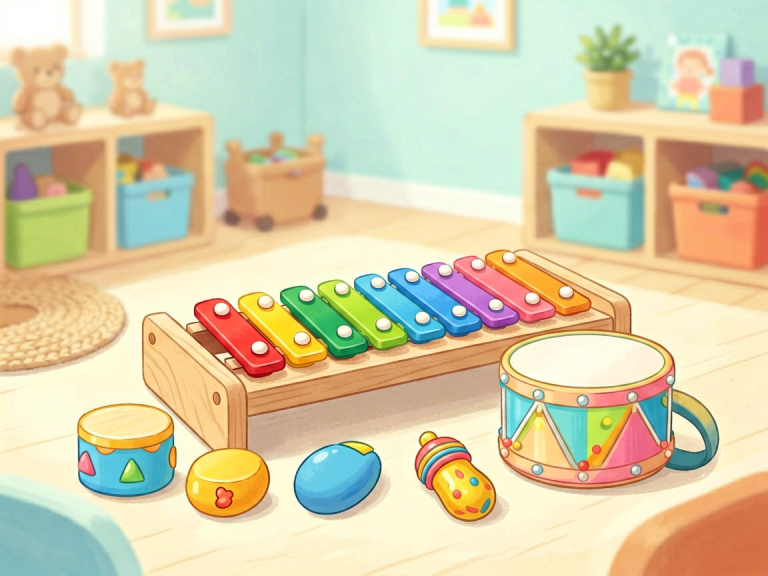
Music is a universal language, and for three-year-olds, musical toys offer profound benefits. Simple instruments like tambourines, maracas, xylophones, and drums help children develop rhythm, auditory discrimination, and coordination. When a child shakes a maraca in time with a song, they are practicing motor planning and timing. Xylophones, in particular, introduce the concept of pitch and sequence—hitting the bars from low to high creates a melody. Moreover, musical play supports language development through songs and rhymes. Singing along with instruments encourages memory and vocabulary. For a more structured experience, consider instruments that require fine motor skills, such as a small keyboard or a set of handbells. Parents can also create simple homemade instruments, like rice-filled containers, to teach that sounds come from vibration. Importantly, musical toys should be age-appropriate in volume—avoid anything that could harm a child’s hearing. Brands like Hohner Kids and B. Toys produce well-tuned, colorful instruments that withstand rough handling.
Active and Gross Motor Toys: Promoting Physical Health
Three-year-olds have boundless energy, and educational toys that channel that energy into purposeful movement are essential. Tricycles, balance bikes, push toys, and climbing structures help develop gross motor skills—large muscle movements that are the foundation for later athletic abilities. Balance bikes, in particular, teach a child how to steer, coast, and balance without the complication of pedals, making the transition to a bicycle smoother. For indoor play, consider foam blocks for building obstacle courses, or a small trampoline with a safety handle. These toys improve coordination, strength, and spatial awareness. Additionally, games that involve throwing and catching a soft ball help with hand-eye coordination. Even simple activities like hopping on one foot or walking along a low balance beam can be presented as a playful challenge. Look for sturdy, stable equipment that matches the child’s size. Active play also releases energy that improves focus during quieter educational activities, making it a vital component of a balanced toy collection.
How to Choose the Best Educational Toys for Your Three-Year-Old
With so many options available, selecting the right toys can feel overwhelming. Start by considering your child’s individual interests and developmental stage. A child who loves building might thrive with magnetic tiles, while a social child might prefer a play kitchen. Safety is paramount: ensure all toys are made of non-toxic materials, have no sharp edges, and meet ASTM or CPSC standards. Avoid toys with small parts that could be a choking hazard—a good rule of thumb is that any part smaller than a 35mm film canister is too small. Durability matters too; three-year-olds are not gentle, so choose toys that can withstand being dropped, thrown, or chewed. Look for open-ended toys that can be used in multiple ways rather than single-purpose gadgets. For example, a set of wooden blocks can be used for stacking, sorting, counting, and building, while a battery-operated toy that only makes one sound quickly loses its appeal. Finally, remember that the best educational toy is one that a parent or caregiver plays with alongside the child. Guided interaction—asking questions, modeling language, and celebrating achievements—multiplies the learning potential of any toy.
Conclusion
The best educational toys for three-year-olds are not necessarily the most expensive or the most technologically advanced. They are the ones that invite active participation, stimulate multiple senses, and grow with the child. From building blocks that teach physics to art supplies that unleash creativity, each category serves a distinct purpose in fostering cognitive, physical, social, and emotional development. By choosing wisely and engaging with your child during play, you are laying a strong foundation for a lifelong love of learning. Remember that at three, play is not a break from learning—it is learning itself. So, fill your home with toys that inspire curiosity, encourage exploration, and, above all, bring joy.