The Ultimate Guide to the Best Toys for 4-Year-Olds: Sparking Imagination, Learning, and Growth
Introduction
At age four, children are in a magical phase of development. They have left toddlerhood behind and are stepping into a world of more complex play, longer attention spans, and rapidly expanding language and social skills. They ask endless “why” questions, love to imitate adults, and are eager to test their physical and mental limits. Choosing the right toys for a four-year-old is not just about keeping them busy—it’s about providing tools that nurture creativity, build problem-solving abilities, strengthen motor skills, and encourage emotional and social growth. The best toys for this age group are open-ended, safe, and engaging enough to hold a child’s interest while still allowing for unstructured exploration. In this guide, we will explore seven categories of exceptional toys, each carefully selected to support different areas of a four-year-old’s development. Whether you are a parent, a grandparent, or a caregiver, these recommendations will help you make informed decisions that bring joy and learning into a child’s everyday play.
—
1. Building Blocks and Construction Sets: Foundations of Creativity and Problem-Solving
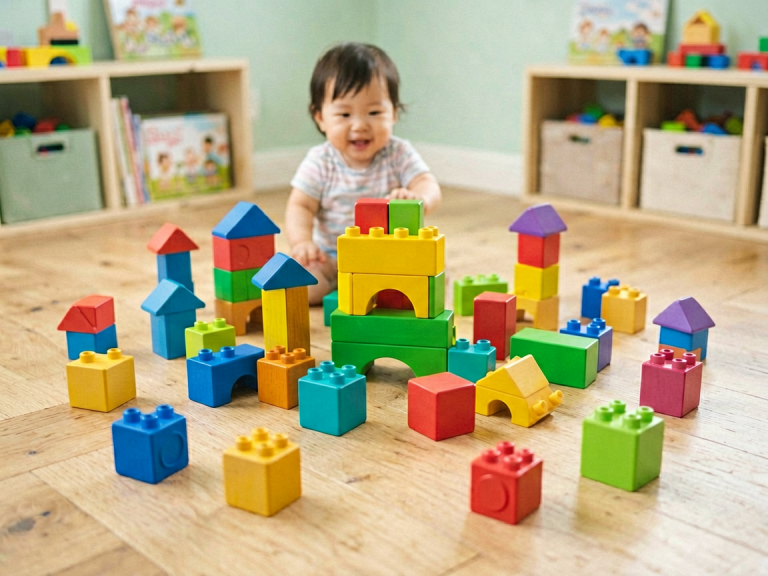
Building blocks remain a timeless favorite for four-year-olds, and for good reason. At this stage, children begin to understand concepts like balance, symmetry, and cause and effect. Classic wooden blocks—like those from Melissa & Doug or Hape—are excellent because they come in a variety of shapes and sizes, allowing children to build towers, bridges, houses, and even imaginary castles. The tactile experience of stacking, balancing, and knocking down blocks strengthens fine motor skills and hand-eye coordination.
For a more structured challenge, consider oversized interlocking bricks such as LEGO Duplo. These are larger than standard LEGO bricks, making them safe and easy for small hands. Four-year-olds can follow simple pictorial instructions to build a truck or a farm, or they can invent their own creations. This process teaches patience, spatial reasoning, and the ability to persist through frustration when a tower collapses. Building sets also encourage collaborative play—two or three children can work together to build a city, practicing negotiation and sharing. Moreover, when children use blocks to represent real-world objects (like a block as a phone or a bridge), they engage in symbolic thinking, a cognitive milestone crucial for later literacy and math.
—
2. Pretend Play and Role-Playing Toys: Nurturing Social Skills and Imagination
Four-year-olds thrive on imaginative play. They love to dress up as firefighters, doctors, chefs, or superheroes. Pretend play toys are not just fun; they are essential for developing empathy, language, and social understanding. A realistic play kitchen with pots, pans, and plastic food allows a child to mimic cooking and serving, practicing sequencing (first wash the vegetables, then chop, then cook) and conversational skills as they “order” and “serve” meals to family members or stuffed animals.
Doctor’s kits, tool benches, and cash registers are equally valuable. When a child pretends to examine a teddy bear with a stethoscope or uses a toy screwdriver to fix a chair, they are making sense of the adult world around them. This type of play also helps children process their own experiences—for example, a trip to the pediatrician can be less frightening when they can reenact it with a toy kit. Look for high-quality sets that include multiple accessories (e.g., a vet kit with bandages, syringe, and thermometer) because variety extends the play’s lifespan. Additionally, puppets and dollhouses encourage narrative thinking: a child might create a story about a family of bears going on a picnic, which builds vocabulary and storytelling ability.
—
3. Art and Craft Supplies: Encouraging Self-Expression and Fine Motor Development
At age four, children’s fine motor skills are blossoming. They can hold a crayon with a more mature grip, cut along a simple line with child-safe scissors, and string large beads. Art supplies are perfect for harnessing this development while also allowing emotional expression. A simple set of washable markers, a stack of plain paper, and a pair of safety scissors can keep a child engaged for hours. However, to truly maximize the benefits, consider offering a variety of materials: colored construction paper, glue sticks, googly eyes, pipe cleaners, and watercolor paints.
Open-ended art projects—like painting a rock to look like a ladybug or creating a collage from magazine clippings—teach decision-making and creativity. There is no “right” way to do art, which builds confidence. For more structured activities, look for activity books that feature mazes, dot-to-dot puzzles, and simple tracing exercises—these improve pencil control and hand strength, preparing a child for writing in kindergarten. Play-Doh and other modeling compounds are also fantastic. Squeezing, rolling, and shaping dough strengthens the small muscles in the hands and wrists, and when a child makes a “snake” or a “ball,” they are learning about texture and volume. Always choose non-toxic, washable materials to ensure safety and easy cleanup.
—
4. Puzzles and Board Games: Sharpening Cognitive Abilities and Patience
Puzzles are excellent for developing logical thinking, visual perception, and concentration. A four-year-old can typically handle puzzles with 12 to 24 pieces, though some advanced children may enjoy 48-piece puzzles. Floor puzzles with large pieces are especially good because they allow for collaborative play on the carpet. Look for puzzles featuring favorite characters (e.g., Peppa Pig, Paw Patrol) or topics like animals, dinosaurs, or maps; the familiarity adds motivation. When a child works on a puzzle, they learn to sort by color and shape, make predictions (“This piece looks like it belongs in the corner”), and experience the satisfaction of completing a task.
Simple board games are another wonderful choice. Games like “Hi Ho! Cherry-O,” “Candy Land,” or “The Sneaky, Snacky Squirrel Game” teach turn-taking, following rules, and handling winning and losing gracefully. These games often incorporate counting, color matching, and basic strategy. For a two-player option, consider “Memory” matching games, which boost short-term memory and attention to detail. Playing board games with a parent or sibling also provides valuable social bonding time, and the structured nature of games helps children learn to manage impulses and wait for their turn—a crucial skill for school readiness.
—
5. Outdoor and Active Toys: Promoting Physical Health and Coordination
Four-year-olds have boundless energy, and outdoor play is essential for their physical development. The best active toys for this age encourage running, jumping, balancing, and gross motor coordination. A tricycle or balance bike is a classic choice—pedaling strengthens leg muscles, and steering improves spatial awareness. Balance bikes, in particular, help children develop a sense of equilibrium before transitioning to a pedal bike. If space allows, a small plastic slide or a mini trampoline (with a safety handle) can provide hours of joyful exercise.
For group play, consider a set of plastic bowling pins and a lightweight ball, or a simple soccer goal with a soft ball. These toys teach aim, coordination, and the basics of team sports without the pressure of competition. A sandbox with shovels, buckets, and molds is also highly recommended. Digging, pouring, and building sandcastles engage the entire body and provide sensory stimulation. Water toys—like a small sprinkler or water table—are perfect for warm weather and encourage cooperative play. Always supervise outdoor play and ensure that toys are made of durable, weather-resistant materials.
—
6. STEM and Educational Toys: Introducing Early Science and Math Concepts
While four-year-olds are naturally curious about how things work, STEM (Science, Technology, Engineering, Math) toys can channel that curiosity in productive ways. Simple magnetic building sets, like Magna-Tiles, allow children to construct 3D shapes and explore concepts of magnetism, geometry, and balance. The translucent, colorful tiles are visually appealing and easy to connect, making them a favorite in many preschool classrooms.
Another excellent option is a beginner’s microscope or a bug-catching kit. Children can examine leaves, feathers, or small insects, developing observation skills and vocabulary. For math, consider counting bears, pattern blocks, or abacuses. These tools let children sort by color and size, count up to 20 or more, and create repeating patterns—all foundational skills for arithmetic. There are also countless science experiment kits designed for preschoolers, such as making “fizzing” baking soda volcanoes or growing crystals. These activities teach cause and effect while making learning feel like magic. The key is to choose toys that are safe, use non-toxic materials, and require adult supervision for the most meaningful learning experience.
—
7. Musical Instruments: Cultivating Rhythm and Sensory Awareness
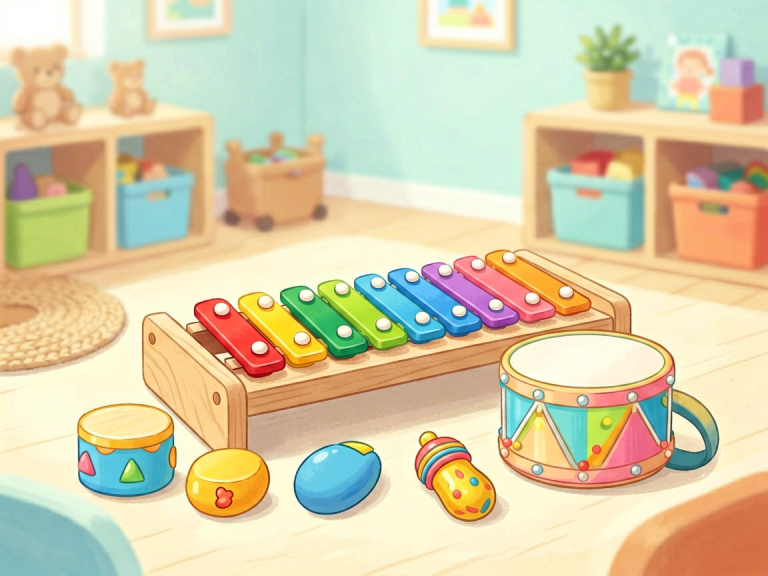
Music is a powerful tool for brain development. At age four, children can keep a simple beat, recognize familiar melodies, and even create their own songs. Musical toys like tambourines, maracas, xylophones, and small drums allow children to experiment with sound and rhythm. Playing an instrument improves auditory discrimination—the ability to distinguish different sounds—which is linked to reading readiness.
A simple set of hand bells or a child-sized keyboard with different instrument sounds can inspire endless creativity. For a more structured experience, consider a karaoke microphone that records voices, or a set of rhythm sticks. Making music with others—even just banging a drum while a parent claps—teaches turn-taking and listening. Additionally, musical toys often involve counting beats or following simple patterns, reinforcing math concepts. Look for instruments that are durable and produce pleasant (not overly loud or harsh) tones. Avoid small parts that could pose a choking hazard, and always supervise play with instruments that have strings or small accessories.
—
Conclusion
Selecting the best toys for a four-year-old is about more than just buying the latest trend. It is about understanding the developmental milestones of this age—the blossoming imagination, the hunger for independence, the need for physical activity, and the desire to make sense of the world through play. The toys highlighted in this guide—building blocks, pretend play kits, art supplies, puzzles, outdoor equipment, STEM tools, and musical instruments—each serve a unique purpose in supporting cognitive, social, emotional, and physical growth.
Remember that the best toy is one that a child returns to again and again, that sparks wonder, and that allows them to be the driver of their own play. Avoid toys that are overly electronic or passive; instead, prioritize open-ended, interactive options that invite creativity and problem-solving. Whether you are buying a birthday gift, a holiday present, or just something special for a rainy day, these recommendations will help you invest in a child’s development in the most joyful way possible. After all, play is a child’s work, and the right toy makes that work both meaningful and fun.