The Ultimate Guide to Safe Toys for 3-Year-Olds: Balancing Fun, Development, and Risk Prevention
Introduction: Why Toy Safety Matters More Than Ever at Age Three
At three years old, children are in a golden age of exploration. Their motor skills are rapidly improving—they can run, jump, climb, and manipulate small objects with increasing dexterity. Their cognitive abilities are blossoming: they ask endless “why” questions, engage in pretend play, and begin to understand cause and effect. Yet their judgment remains immature. A three-year-old might put a toy in their mouth out of curiosity, throw a block at a sibling in frustration, or try to dismantle a plastic car with their teeth. This combination of advanced physical capability and limited risk awareness makes toy safety a paramount concern for parents, caregivers, and educators.
The consequences of choosing unsafe toys can be severe: choking, strangulation, poisoning, cuts, bruises, or long-term developmental setbacks from exposure to toxic materials. According to the U.S. Consumer Product Safety Commission, thousands of toy-related injuries occur each year among children aged three and under, with choking being the leading cause of death in this age group. Therefore, selecting safe toys for three-year-olds is not merely a matter of convenience—it is an essential act of protection. This article provides a comprehensive, evidence-based guide to identifying, evaluating, and choosing toys that are both safe and developmentally appropriate for a three-year-old child. We will examine material safety, design considerations, potential hazards, age labeling, and practical shopping tips, all organized under clear subheadings for easy reference.
1. Understanding the Developmental Profile of a Three-Year-Old
Before diving into toy specifications, it is crucial to understand what a three-year-old can and cannot do. This age is characterized by:
- Fine motor advances: They can use crayons, build towers with small blocks (but not tiny LEGO bricks), and turn pages of a book. However, their pincer grasp is still developing, so very small objects remain a choking risk.
- Gross motor enthusiasm: They can pedal a tricycle, kick a ball, and balance on one foot for a few seconds. Toys that encourage movement—ride-ons, push toys, large balls—are popular, but they must be stable and free of sharp edges.
- Oral exploration: Most three-year-olds have outgrown the constant mouthing of objects that toddlers exhibit, but they still occasionally put things in their mouths, especially when tired, stressed, or curious about texture. Thus, any toy that can fit through a toilet paper roll (approximately 1.75 inches in diameter) is considered a choking hazard.
- Imagination and imitation: They love dress-up, play kitchens, doctor kits, and dolls. These toys should have no small parts that can detach (e.g., buttons on a doll’s dress, tiny plastic food items).
- Limited impulse control: They may run with a toy, throw it, or hit another child. Toys must be durable enough to withstand rough handling without breaking into sharp pieces.
Understanding these traits helps us filter out obvious dangers before we even read labels.
2. Material Safety: What to Look For and What to Avoid
The physical composition of a toy is the first line of defense. For three-year-olds, the following materials are generally safe:
a. Natural and Hypoallergenic Materials
Wood is a classic choice—solid, non-toxic if finished with water-based paints or natural oils. Look for toys made from sustainably sourced hardwoods like beech or maple, with smooth, splinter-free surfaces. Avoid painted wood that chips easily; the paint should be lead-free and certified by standards such as ASTM F963 (American) or EN71 (European). BPA-free, phthalate-free plastic is also acceptable, especially when the plastic is thick and not easily cracked. Silicone food-grade toys (e.g., stacking cups, teething rings) are soft, non-toxic, and easy to clean.
b. Toxic Chemicals to Avoid
Phthalates (often found in soft vinyl), lead (in paint or metal parts), cadmium, and bisphenol A (BPA) are known endocrine disruptors and neurotoxins. Three-year-olds are particularly vulnerable because their brains and organs are still developing. Always check that plastic toys are labeled “BPA-free” and “phthalate-free.” Avoid any toy that smells strongly of chemicals, like cheap rubber or some imported plastics, as this may indicate off-gassing of volatile organic compounds (VOCs). Fabrics should be flame-retardant-free and washed before first use to remove formaldehyde residues from manufacturing.
c. Recycled and Eco-Friendly Options
Many parents prefer eco-friendly toys made from recycled cardboard, organic cotton, or natural rubber. These are often safe, but you must still verify that dyes used are non-toxic and that cardboard is not treated with fungicides. For example, a cardboard playhouse should have rounded corners and be printed with soy-based inks.
3. Size and Shape: The Choking and Suffocation Danger Zone
The most critical safety rule for any toy given to a child under three is the “no small parts” rule. However, the definition of “small” changes with age. For a three-year-old, the standard is more lenient than for a one-year-old, but still strict. Use the small-parts test cylinder (also known as a choke tube) available at many toy stores: if a toy or any detachable part fits entirely inside the cylinder, it is a choking hazard. Common offenders include:
- Marbles and beads (unless part of a securely closed container)
- Small game pieces (e.g., dice, pawns)
- Eyes or noses of stuffed animals (must be embroidered or securely sewn)
- Miniature toy food items (e.g., plastic apple slices, tiny peas)
- Button batteries (these are extremely dangerous; any toy containing them must have a screw-secured compartment)
Additionally, toys should not be small enough to be swallowed whole. Balls with a diameter smaller than 1.75 inches (4.4 cm) are risky. Similarly, toys that can be compressed into a small shape, like some foam or rubber items, can still cause airway obstruction.
4. Design and Construction: Avoiding Cuts, Pinches, and Strangulation
A safe toy for a three-year-old must be robustly constructed. Consider these design features:
a. Edges and Points
All edges should be rounded or sanded smooth. No sharp corners, protruding nails, or metal splinters. Plastic toys should have no burrs or rough seams. Inspect the toy with your fingers—run them along every edge. If you feel a sharp spot, it can cut a child’s skin.
b. Pivot Points and Hinges
Moving parts—doors on a play oven, wheels on a toy car, jointed limbs on a doll—should have no gaps that can pinch a finger. Hinges should be covered or designed so that the gap is less than 5 mm when closed. Watch for scissors-style mechanisms (e.g., some toy tools) that can trap skin.
c. Strings, Cords, and Ribbons
Strangulation is a real risk for children aged three and under. Any cord, string, or ribbon attached to a toy should be no longer than 12 inches (30 cm). Avoid toys with loops (e.g., pull-along animals with long cords) unless the loop is designed to break away under tension. Drawstrings on costumes or dress-up capes must be short or replaced with Velcro snaps. Also beware of toy telephones with long coiled cords; these can wrap around a neck.
d. Stability and Balance
Ride-on toys (tricycles, scooters, rocking horses) should have a wide base to prevent tipping. The seat height should allow the child’s feet to touch the ground. For push-toys, ensure the handle is securely attached and won’t detach when leaned on. Battery-powered ride-ons are not recommended for this age due to speed and instability.
5. Age Labeling: Why “3+” Matters (and When It Doesn’t)
Toy manufacturers are required to label products with age recommendations. For three-year-olds, you’ll often see “Ages 3 and up.” This labeling is based on both safety and developmental appropriateness. But be wary: some toys labeled “3+” still contain small parts that are hazardous for children who still mouth objects. For example, a board game with small tokens may have a “3+” label but also a choke warning. Read the back of the box carefully for explicit warnings like “CHOKING HAZARD—Small parts. Not for children under 3 yrs.” If you see this, it means the toy passes the official small-parts test for age 3, but that test assumes the child no longer puts things in their mouth. If your child still mouths items frequently, you might want to wait until closer to age 4.
Conversely, some toys labeled “18 months+” or “2+” may be too simple for a three-year-old, but that doesn’t mean they are unsafe. The key is to look for the absence of hazard warnings rather than the exact age number.
6. Specific Toy Categories and Their Safety Considerations
Let’s examine common toy types and the unique risks they pose to three-year-olds.
a. Building Blocks and Construction Toys
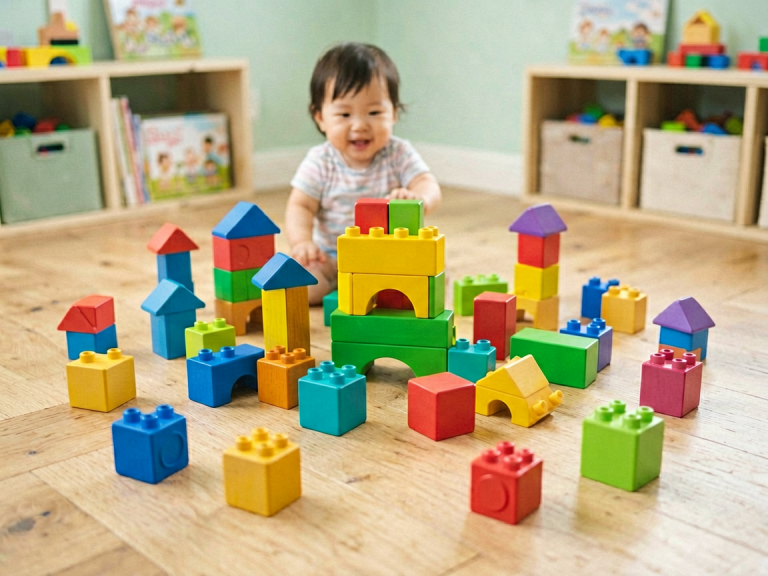
Large wooden blocks (e.g., unit blocks) are excellent. However, avoid magnetic building sets that contain very small magnets. If a child swallows two magnets, they can attract each other through intestinal walls, causing perforations. Stick to blocks that are at least 2 inches in any dimension. Plastic interlocking bricks (like Mega Bloks Junior) are safe because they are large and have no sharp edges.
b. Arts and Crafts Supplies
Crayons should be non-toxic, labeled “ASTM D-4236” (non-toxic). Markers should be washable and have ventilated caps (caps must have air holes to prevent suffocation if swallowed). Play-Doh is generally safe, but supervise to prevent eating large amounts (can cause stomach blockage). Glue should be non-toxic and water-based. Avoid glitter glue with tiny glitter particles that can get into eyes or lungs.
c. Musical Instruments
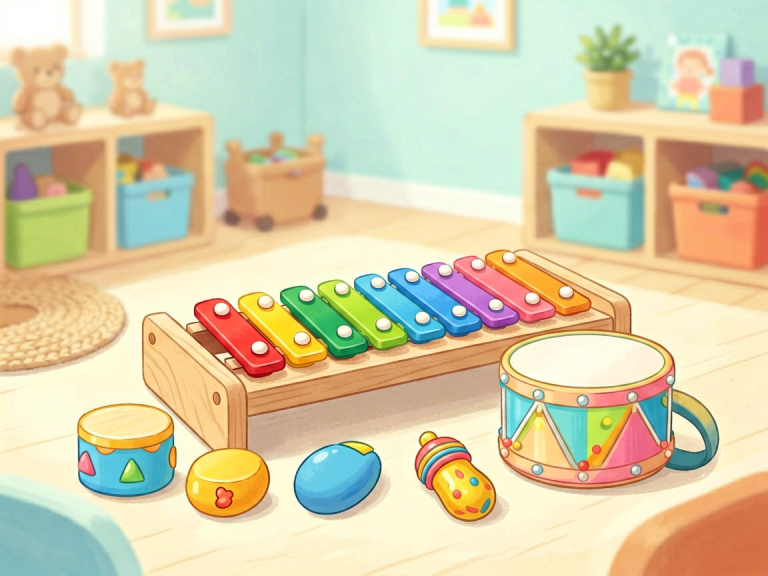
Simple instruments like maracas, tambourines, and xylophones are great, but ensure they don’t have small loose parts. Maracas may come with loose beads inside a sealed chamber—that’s fine if the chamber is securely sealed. Avoid whistles or noisemakers that produce very loud sounds (above 85 decibels) which can damage hearing. Drumsticks should be short and lightweight with padded ends.
d. Ride-On and Outdoor Toys
Tricycles should have low center of gravity and non-slip pedals. Helmets are mandatory for any wheeled toy. Sandbox toys (buckets, shovels) should be made of non-breakable plastic with no sharp edges. Avoid trampolines altogether for this age; even mini-trampolines pose fracture and fall risks.
e. Stuffed Animals and Dolls
Stuffed toys should have embroidered eyes and noses, not plastic or button ones. Wash all stuffed toys before giving them to a child, as some may contain chemical flame retardants or dust mites. Check for loose seams. Avoid beanbag-type stuffed toys that use polystyrene pellets; if the seam breaks, the child may ingest the pellets.
7. Certification and Safety Labels: Your Quick Reference
When shopping, look for these marks on packaging:
- ASTM F963 (USA): Standard Consumer Safety Specification for Toy Safety.
- EN71 (Europe): European Toy Safety Standard.
- CPSC (USA) compliance mark.
- CE (Europe): Indicates conformity with health, safety, and environmental standards.
- GREENGUARD GOLD: Low chemical emissions.
- Oeko-Tex Standard 100: For fabric toys, ensures no harmful substances.
Avoid toys that lack any certification or are sold by unknown brands with no address or customer service. A cheap toy from a dollar store may contain high levels of lead or phthalates.
8. Practical Tips for Parents and Caregivers
Even the safest toy can become dangerous if misused. Here are action steps:
- Inspect toys weekly. Look for cracks, splinters, loose parts, frayed cords, or peeling paint. Discard any damaged toy immediately.
- Rotate toys. Giving a child only a few toys at a time reduces the chance of breakage and maintains novelty. Store unused toys in sealed containers so dust doesn’t accumulate.
- Teach children how to use toys. Show them that ride-ons are for riding, not for throwing. Remind them not to put toys in their mouths.
- Supervise. No toy is absolutely safe under all circumstances. Active supervision, especially during play with new toys, is irreplaceable.
- Check recalls. Register your toys with the manufacturer to receive recall notifications. You can also visit the CPSC website (www.cpsc.gov) to search for current recalls.
9. Conclusion: Safe Play Builds Confident Learners
Choosing safe toys for a three-year-old is a responsibility that blends science, vigilance, and common sense. The best toys are not necessarily the most expensive or the most high-tech; they are those that stimulate a child’s natural curiosity without exposing them to avoidable risk. A well-chosen wooden puzzle, a set of sturdy stacking cups, a tricycle with a wide base, or a collection of smooth, non-toxic crayons can provide hours of joy and learning while keeping a child protected.
Remember that safety is not about wrapping children in cotton wool—it is about creating an environment where they can push boundaries, test their skills, and make mistakes without permanent harm. By applying the criteria outlined in this guide—material safety, appropriate size, robust design, proper labeling, and diligent supervision—you can ensure that playtime remains the wonderfully enriching experience it should be. After all, a child who feels safe is a child who dares to explore, and a child who explores is a child who grows.