The Timeless Value of Screen-Free, Age-Appropriate Toys: Nurturing Development in a Digital Age
In an era where tablets, smartphones, and interactive screens dominate children's playrooms, the concept of screen-free, age-appropriate toys might seem almost retrograde. Yet a growing body of research in child development, neuroscience, and early education consistently underscores a simple truth: the most powerful learning tools for young minds are often those that require neither batteries nor pixels. This article explores why screen-free toys remain indispensable, how to match them to a child’s developmental stage, and what tangible benefits they offer for cognitive, physical, and emotional growth.
Why Screen-Free Toys Matter
The allure of digital entertainment is undeniable. Touchscreens respond instantly, apps reward with bright animations, and parents often use screens as convenient pacifiers. However, the American Academy of Pediatrics strongly advises limiting screen time for children under two years old and maintaining careful boundaries for older children. The reason is not technophobia but neuroscience.
Screen-based play is largely passive. Even interactive apps tend to channel a child’s attention into predetermined outcomes, leaving little room for open-ended exploration. In contrast, screen-free toys—blocks, dolls, clay, puzzles, art supplies—invite active, hands-on engagement. When a child stacks wooden blocks and watches them tumble, they are not just playing; they are experimenting with gravity, balance, and cause-and-effect relationships. When they manipulate clay, they strengthen fine motor skills and express imagination without the constraints of a digital interface.
Moreover, screen-free toys foster deeper concentration. The constant notifications and quick feedback loops of digital devices can fragment attention spans. Physical toys, by their nature, require sustained focus—a child must plan, adjust, and persist. This quality is increasingly precious in a world of endless distractions.
Understanding Age Appropriateness: From Infants to Tweens
One of the most common mistakes parents make is offering toys that are either too simple or too complex for a child’s developmental stage. Age-appropriate toys are not about labeling but about matching the toy’s demands to the child’s current abilities and interests. Here is a breakdown by major developmental periods.
Infants (0–12 Months): Sensory Exploration and Cause and Effect
For babies, the world is a symphony of sensations. The best screen-free toys for this stage engage sight, sound, touch, and even taste (safely). Soft rattles, crinkle cloth books, textured teethers, and unbreakable mirrors are ideal. A simple wooden ring on a string teaches grasping and tracking. At this age, toys should be free of small parts and made from non-toxic materials. The goal is not to stimulate excessively but to provide safe, repetitive experiences that build neural connections.
Toddlers (1–3 Years): Gross Motor Skills and Imaginative Play
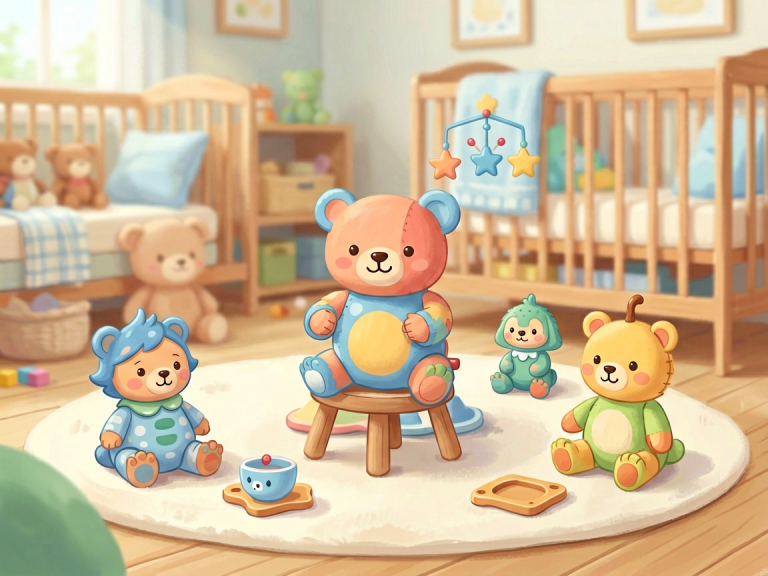
Toddlers are on the move. They need toys that support walking, climbing, pushing, and pulling. A sturdy wooden push wagon, large building blocks, and simple shape sorters are excellent choices. This is also the golden age of pretend play. A toy kitchen with plastic vegetables, a set of stuffed animals, or a simple doll allows toddlers to imitate the adult world they observe. Avoid toys with complicated rules or tiny pieces that could be choking hazards. Open-ended toys—like a set of nesting cups—can serve dozens of purposes, from stacking to scooping to pretending.
Preschoolers (3–5 Years): Language, Social Skills, and Problem Solving
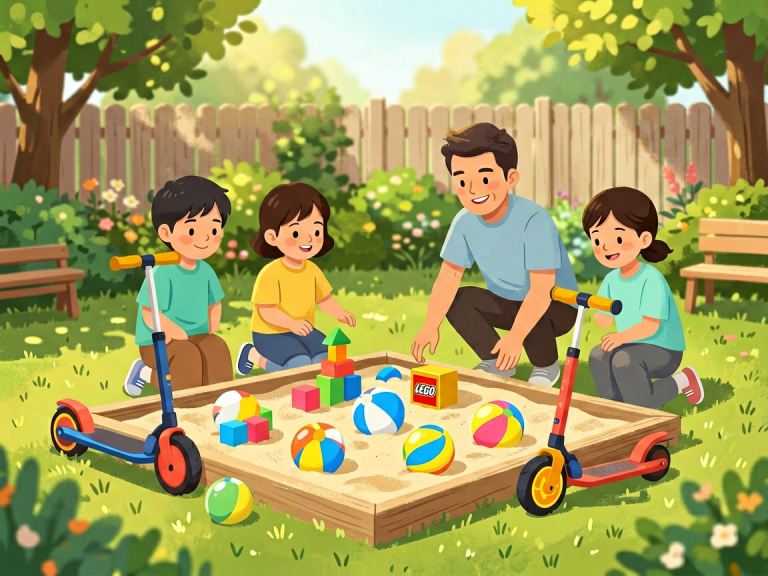
Preschoolers are bursting with questions and creativity. Screen-free toys should channel this energy into cooperative play and logical thinking. Puzzles with 12 to 24 pieces gradually increase in difficulty. Construction sets like oversized LEGO Duplo or magnetic tiles let children design structures and solve spatial problems. Art supplies—crayons, washable markers, play dough, scissors with safety blades—foster self-expression. Board games like Candy Land or simple matching games teach turn-taking, patience, and following rules. At this stage, toys that involve multiple children encourage social negotiation and language growth.
School-Age Children (6–12 Years): Complex Thinking and Mastery
Older children crave challenge and authenticity. Screen-free toys should allow them to develop skills that feel meaningful. Classic options include advanced construction sets (e.g., K’Nex, Meccano), science kits for simple chemistry experiments, strategy board games (e.g., chess, Settlers of Catan), and craft kits for sewing, knitting, or model-building. Books, of course, are the ultimate screen-free toy. For tweens (9–12 years), consider toys that bridge to real-world interests: a telescope for astronomy lovers, a woodworking kit, or a set of high-quality art markers. The key is avoiding toys that feel childish or condescending.
The Developmental Benefits: Cognitive, Physical, and Social-Emotional
Screen-free, age-appropriate toys deliver a trifecta of benefits that digital alternatives simply cannot replicate.
Cognitive Development
When a child manipulates physical objects, they engage multiple brain regions simultaneously. Building a tower requires spatial awareness, planning, and working memory. Completing a puzzle strengthens pattern recognition and logical sequencing. Role-playing with dolls or action figures involves narrative thinking and theory of mind—understanding that others have different thoughts and feelings. These cognitive processes are deeper and more durable than those activated by tapping a screen, where the program does most of the thinking.
Physical Development
Screen-free toys are inherently active. A toddler pushing a cart practices gross motor coordination. A preschooler using a scissors develops hand-eye coordination and the fine motor control needed later for writing. A seven-year-old building with interlocking bricks exercises bilateral coordination—using both hands in complementary ways. In an age of rising childhood obesity and declining physical fitness, encouraging movement through play is critical. Even quiet activities like drawing involve controlled hand movements that digital stylus use cannot fully replicate.
Social-Emotional Development
Perhaps the most underappreciated benefit is emotional. Screen-free toys often encourage cooperative play. Two children negotiating over blocks must share, compromise, and communicate. A child who fails to complete a puzzle learns to manage frustration and try again. A doll or stuffed animal becomes a confidant for processing feelings. These experiences build resilience, empathy, and self-regulation. In contrast, digital play is often solitary or competitive in ways that can increase anxiety. The physical presence of a toy—its texture, weight, and warmth—also provides sensory comfort that a glowing screen cannot.
Choosing the Right Toys: A Practical Guide for Parents
Given the overwhelming array of options, how can parents make wise choices? Here is a checklist.
1. Prioritize open-endedness. The best toys are those that can be used in multiple ways. A set of wooden blocks can become a castle, a garage, a bridge, or a counting tool. A box of fabric scraps can become costumes for a whole kingdom. Avoid toys with a single, narrow function.
2. Consider quality and safety. Look for natural materials like wood, cotton, and non-toxic paints. Check for smooth edges, sturdy construction, and certification from safety standards (e.g., ASTM, CE). Cheap plastic toys often break easily and may contain harmful chemicals.
3. Observe your child. What activities capture their attention? A child who loves sorting may enjoy a rainbow-colored abacus; a child who loves movement may prefer a balance bike. Follow their lead rather than buying the most popular or educational-looking toy.
4. Limit quantity. Research by Dr. Kathy Hirsh-Pasek at Temple University suggests that children with fewer toys engage more deeply in play. A crowded toy box can overwhelm. Rotate toys every few weeks to keep novelty alive.
5. Resist the “smart toy” trend. Many so-called “smart” toys include screens, voice commands, or app connectivity. These often undermine the very benefits of screen-free play by adding digital distractions. A simple, silent set of wooden letters teaches just as much as a talking alphabet toy—and often more, because the child has to think, not just respond.
Conclusion: Reclaiming the Joy of Real Play
In a culture that equates “educational” with “digital,” choosing screen-free, age-appropriate toys is a quiet act of rebellion. It requires intention, patience, and sometimes the courage to let a child be bored. Yet boredom is the mother of invention. Give a child a cardboard box, a set of crayons, and a few blocks, and they will create worlds far richer than any app. They will learn not only facts and skills but also how to learn—how to persist, imagine, cooperate, and find joy in the tangible.
As parents and educators, we must remember: a child’s most important task is not to master a tablet but to master the art of being human. And the tools for that task have been around for millennia. They are called toys—simple, real, and wonderfully screen-free.