The Essential Guide to Age-Appropriate Toys for Toddlers: Nurturing Development Through Play
Play is the language of childhood, and for toddlers—those curious explorers aged one to three—the right toys are more than mere distractions; they are tools for cognitive, physical, social, and emotional growth. Choosing age-appropriate toys, however, is not always intuitive. A toy that fascinates a six-month-old may frustrate a two-year-old, while a toy designed for preschoolers can pose safety hazards or fail to engage a toddler’s developing mind. This article delves into the principles of selecting toys that match a toddler’s evolving abilities, offering practical guidance for parents, caregivers, and educators. By understanding developmental milestones and the purpose behind each plaything, we can turn every moment of play into a rich learning experience.
Why Age Appropriateness Matters in Toddler Play
Toddlers are not miniature adults; they are rapidly developing individuals with specific sensory, motor, and cognitive needs. An age-appropriate toy respects these needs by offering the right level of challenge—not so easy that it bores, and not so difficult that it overwhelms. When a toy aligns with a child’s current developmental stage, it promotes:
- Safe exploration: Toys with small parts can be choking hazards for toddlers who still mouth objects. Age labeling ensures that materials, sizes, and construction meet safety standards for young children.
- Skill reinforcement: A toy that encourages stacking, sorting, or matching helps a toddler practice fine motor control and problem-solving at a time when these skills are just emerging.
- Frustration-free engagement: If a puzzle has too many pieces or a shape sorter requires too much precision, a toddler may give up or become upset. The right difficulty fosters persistence and confidence.
- Language and social development: Toys that invite interaction—like simple board games or pretend-play sets—help toddlers practice turn-taking, vocabulary, and emotional regulation.
Ignoring age appropriateness can lead to missed developmental opportunities or, worse, accidents. For instance, a toy with batteries accessible to a toddler could be a choking or poisoning risk. Therefore, understanding the nuances of age ratings (which are based on child development research, not just marketing) is the first step in creating a safe and stimulating play environment.
Understanding Toddler Developmental Milestones
To choose toys wisely, one must first appreciate the rapid changes occurring during the toddler years. Development is not uniform; it unfolds in overlapping domains. However, general milestones provide a framework for toy selection.
12–18 Months: The Sensorimotor Stage Moves Forward
At this stage, toddlers are transitioning from reflexive actions to intentional movements. They can walk with support, pick up small objects with a pincer grasp, and understand simple cause-and-effect relationships. Key developmental focuses include:
- Gross motor skills: Walking, climbing, pushing, and pulling.
- Fine motor skills: Grasping, releasing, and transferring objects.
- Sensory exploration: Mouthing, shaking, banging, and dropping items to understand their properties.
- Object permanence: The understanding that objects continue to exist even when out of sight.
Appropriate toy examples: Soft blocks for stacking and knocking down; large wooden cars to push; textured balls for rolling; simple nesting cups; board books with bright pictures; and activity tables with buttons, levers, and mirrors.
18–24 Months: The Rise of Language and Imagination
Language explodes during this period, with most toddlers saying 20–50 words and beginning to combine two words. They also engage in simple pretend play, imitating daily routines like feeding a doll or talking on a phone. Fine motor skills improve, allowing for more precise manipulation. Key focuses:
- Language and communication: Naming objects, following simple commands, and using gestures.
- Symbolic thinking: Using one object to represent another (e.g., a block as a car).
- Parallel play: Playing alongside peers but not yet interacting cooperatively.
- Balance and coordination: Running, kicking a ball, and climbing low furniture.
Appropriate toy examples: Simple puzzles with large knobs; shape sorters with three or four basic shapes; push-and-pull toys (e.g., a wagon or a pull-along duck); dolls with simple clothing; toy telephones; chunky crayons for scribbling; and musical instruments like maracas or a small drum.
24–36 Months: The Age of “Me Do It”
By age two, toddlers become fiercely independent and often insist on doing things themselves. Their attention spans lengthen slightly, and they can engage in more complex pretend play with themes (e.g., cooking, shopping, or caring for a baby). They begin to understand basic rules and can follow two-step instructions. Key focuses:
- Cognitive development: Sorting by color or size, counting to three, recognizing familiar objects in books.
- Social-emotional growth: Expressing a range of emotions, developing empathy, and engaging in cooperative play with guidance.
- Fine motor mastery: Using spoons, turning pages one at a time, and building towers of six or more blocks.
- Imagination and creativity: Creating elaborate scenarios and using props to extend play.
Appropriate toy examples: Playsets (e.g., farm, kitchen, or doctor’s kit); large Lego Duplo blocks; simple board games like matching or memory games; play dough with safe tools; tricycles or balance bikes; dress-up clothes and accessories; sturdy wooden trains with tracks; and art supplies like washable markers, safety scissors, and glue sticks.
Categories of Age-Appropriate Toys for Toddlers
While individual toys vary, they generally fall into categories that serve distinct developmental purposes. Understanding these categories helps caregivers curate a balanced toy collection.
1. Sensory and Exploratory Toys
These toys stimulate a toddler’s senses—touch, sight, sound, and even smell—and encourage discovery. Examples include:
- Textured balls: Rubber, fabric, or bumpy surfaces.
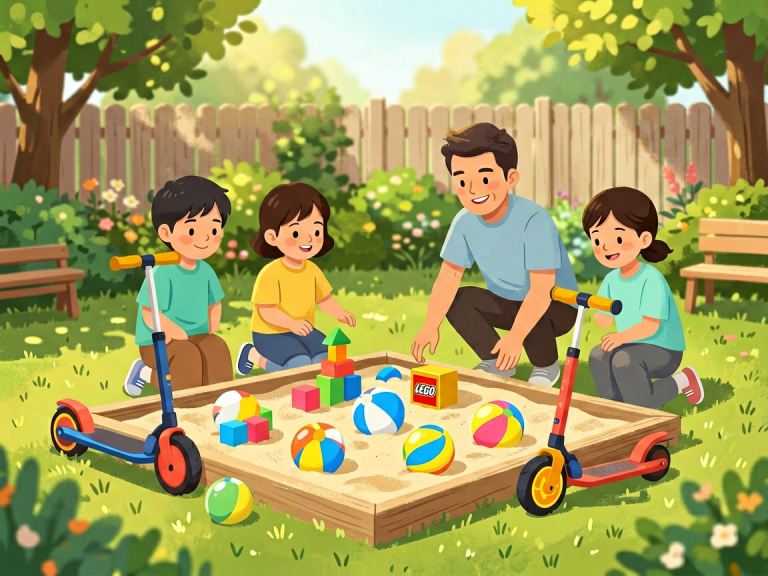
- Water and sand tables: With cups, scoops, and molds.
- Light-up toys: That flash or change colors when pressed.
- Sound-making toys: Rattles, bells, or crinkle paper.
Sensory toys are especially important for toddlers because the brain is still forming neural connections through sensory input. They also support calming and focus, making them useful for emotional regulation.
2. Gross Motor Toys
Physical activity is crucial for growing muscles and coordination. Gross motor toys encourage movement and include:
- Ride-on cars and scooters: That propel using feet.
- Climbing structures: Small slides, foam blocks, or soft tunnels.
- Balls of various sizes: For rolling, throwing, and kicking.
- Tunnels and tents: For crawling and hiding.
These toys help toddlers build strength, balance, and spatial awareness. They also provide an outlet for the seemingly endless energy that characterizes early childhood.
3. Construction and Building Toys
Building toys teach spatial reasoning, cause and effect, and problem-solving. For toddlers, the best options are those with large pieces that are easy to grip:
- Mega Bloks or Duplo: Larger than standard Lego, safe for small hands.
- Magnetic building tiles: Transparent, colorful, and easy to connect.
- Wooden unit blocks: Classic, versatile, and durable.
Through stacking and balancing, toddlers learn about gravity, symmetry, and structural stability—all while exercising fine motor control.
4. Pretend Play and Role-Playing Toys
Imagination blossoms during the toddler years, and pretend play lays the foundation for social skills, language, and emotional understanding. Key options:
- Play kitchens with pots, pans, and plastic food: Encourage imitation of adult routines.
- Doctor’s kits: With stethoscopes, bandages, and syringes (no needles).
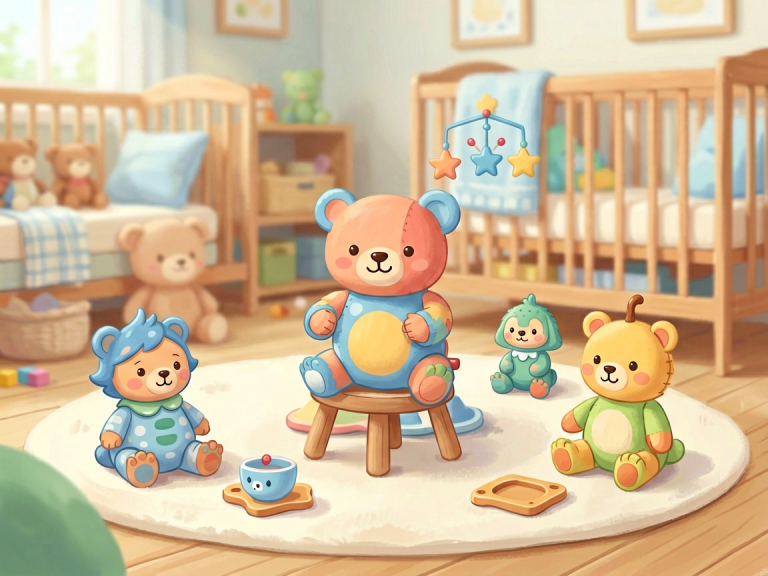
- Dolls and stuffed animals with accessories: Bottles, blankets, and clothes.
- Tool sets: Plastic hammers, screwdrivers, and workbenches.
Pretend play allows toddlers to process their experiences—like visiting the dentist or helping mom cook—and to experiment with different roles and emotions in a safe environment.
5. Language and Literacy Toys
From board books to simple games, these toys support vocabulary growth and pre-reading skills:
- Board books with thick pages: Featuring photographs or simple illustrations.
- Storytelling puppets: That encourage dialog and narrative.
- Alphabet puzzles or magnetic letters: Focusing on recognition, not memorization.
- Interactive books with flaps, sounds, or textures.
Reading together with a toddler is one of the most effective ways to build language, but self-directed play with letter-related toys also reinforces learning.
Safety First: Critical Considerations for Toy Selection
Age-appropriate does not only mean developmentally suitable; it also means safe. The American Academy of Pediatrics and the Consumer Product Safety Commission provide clear guidelines. Here are non-negotiable safety rules for toddler toys:
- No small parts: Any toy with pieces smaller than a toilet paper roll core is a choking hazard for children under three. Use a small-parts tester if unsure.
- Avoid strings and cords longer than 12 inches: These pose strangulation risks, especially around cribs or playpens.
- Check for sharp edges, points, and loose components: Toddlers will bite, drop, and throw toys—they need to withstand abuse without breaking into hazardous pieces.
- Choose nontoxic materials: Look for labels such as “ASTM D-4236” (for art materials) or “lead-free paint” certification. Avoid toys that smell strongly of chemicals.
- Battery compartments: Must be secured with screws so toddlers cannot access batteries, which are choking and poisoning hazards.
- Age labeling is a starting point: Manufacturers test toys with typical children of that age, but always consider your child’s individual abilities. If a two-year-old still mouths everything, avoid toys meant for three-year-olds that have small parts.
Additionally, be mindful of electronic toys: while some provide valuable learning, excessive screen time or overstimulating lights and sounds can hinder creative play. The best toys often require little more than the child’s own imagination.
Practical Tips for Parents and Caregivers
Choosing age-appropriate toys doesn’t require a degree in child development. Here are actionable strategies to simplify the process:
- Observe your child: Notice what they are currently fascinated by—do they love stacking containers? Opening and closing doors? Mimicking your phone use? Choose toys that extend those interests.
- Rotate toys: Toddlers quickly lose interest in a static collection. Rotate a few toys every week to keep novelty alive without overwhelming (or over-spending).
- Prioritize open-ended toys: Blocks, dolls, play dough, and art supplies can be used in countless ways. They grow with the child and adapt to changing abilities.
- Avoid excessive batteries: Simple mechanical toys (like a simple wind-up car) often engage more creativity than a flashing, singing robot that dictates play.
- Consider second-hand and DIY options: Many high-quality toys are available used; just check for safety recalls. A recycled cardboard box becomes a rocket ship, a castle, or a car—the ultimate open-ended toy.
- Balance solo and social play: Provide toys that can be used alone (puzzles, books) and those that encourage interaction (board games, ball games) to develop both independence and cooperation.
- Respect the “zone of proximal development”: The best toy challenges just beyond the child’s current mastery. For a child who can stack three blocks, offer a set that allows stacking five; for one who can sort circles, add squares.
Conclusion: Play as the Engine of Growth
Toys are the tools of childhood’s most important work: play. For toddlers, every rattle shaken, block stacked, and doll cuddled builds a foundation for future learning, relationships, and well-being. Age-appropriate toys are not luxury items; they are investments in development. By matching toys to a child’s motor, cognitive, and emotional abilities, we honor their unique pace of growth and respect their safety.
As caregivers, we do not need to buy every trending toy. What matters most is thoughtful selection—a few well-chosen items that invite exploration, encourage problem-solving, and spark joy. When we watch a toddler concentrate on fitting a shape into a sorter or laugh while rolling a ball back and forth, we witness the profound learning that occurs in these seemingly simple moments. The right toy, at the right time, can ignite a lifelong love of learning. Choose wisely, play wholeheartedly, and let the toddler’s natural curiosity lead the way.