The Art of Play: Selecting Age-Appropriate Toys Under $25 That Nurture Growth and Imagination
Introduction: Why Age-Appropriate Toys Matter More Than Price Tags
In a world where children's toy aisles are overflowing with flashing lights, robotic voices, and ever-increasing price tags, parents often find themselves caught between the desire to provide enriching play experiences and the practical constraints of a budget. The good news is that meaningful play does not require a hefty investment. In fact, some of the most developmentally beneficial toys cost less than a family dinner out. The key lies not in how much a toy costs, but in how well it matches a child's developmental stage, interests, and innate curiosity. Age-appropriate toys under $25 are not merely inexpensive alternatives; they are intentional tools that can spark creativity, build cognitive skills, foster social-emotional growth, and provide hours of engaging, screen-free entertainment. This article explores the philosophy behind choosing toys that fit both a child's age and a parent's wallet, and offers concrete, budget-friendly recommendations across different developmental stages.
Understanding Developmental Stages: The Foundation of Smart Toy Selection
Infants and Toddlers (0–2 Years): Sensory Exploration and Motor Development
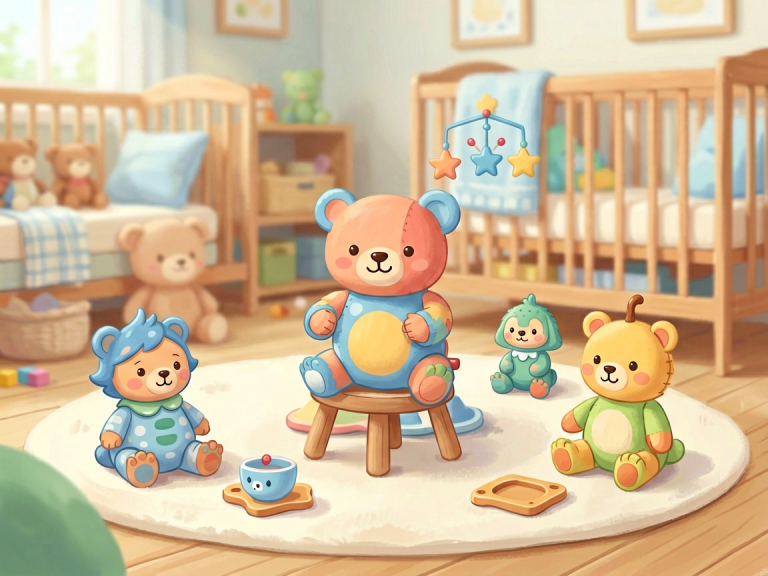
During the first two years of life, children experience rapid brain development. Their primary mode of learning is through their senses—tasting, touching, seeing, hearing, and smelling. Toys for this age group should prioritize safety, simplicity, and sensory stimulation. At this stage, the best toys under $25 are those that encourage grasping, shaking, stacking, and mouthing (with non-toxic materials). Soft fabric books with crinkly pages, wooden rattles, silicone teethers, and simple nesting cups all fall within this budget and provide essential sensory input. Educational research consistently shows that open-ended toys—those that can be used in multiple ways—are superior to single-function electronic gadgets. For example, a set of colorful, BPA-free stacking rings can teach cause and effect, hand-eye coordination, and even early concepts of size and color, all for well under $25.
Preschoolers (3–5 Years): Imaginative Play and Foundational Skills
Preschool years are a golden age for pretend play. Children at this stage begin to understand symbolic thinking—using one object to represent another—which is the foundation of language, creativity, and problem-solving. Age-appropriate toys for preschoolers under $25 should encourage role-playing, storytelling, and basic fine motor skills. Simple wooden train sets, play food and kitchen accessories, animal figurines, and dress-up items like capes or hats can all be found within this price range. Notably, magnetic building tiles have become a staple in many households; while some sets are expensive, smaller starter packs often retail for around $20, offering magnetic connections that teach geometry, balance, and spatial reasoning. Another excellent choice is modeling clay or Play-Doh, which allows children to sculpt, squish, and create, simultaneously building hand strength and imaginative scenarios. The simplicity of these toys belies their profound developmental impact—they require children to invent their own narratives rather than passively following a screen.
Early School Age (6–8 Years): Logical Thinking and Social Cooperation
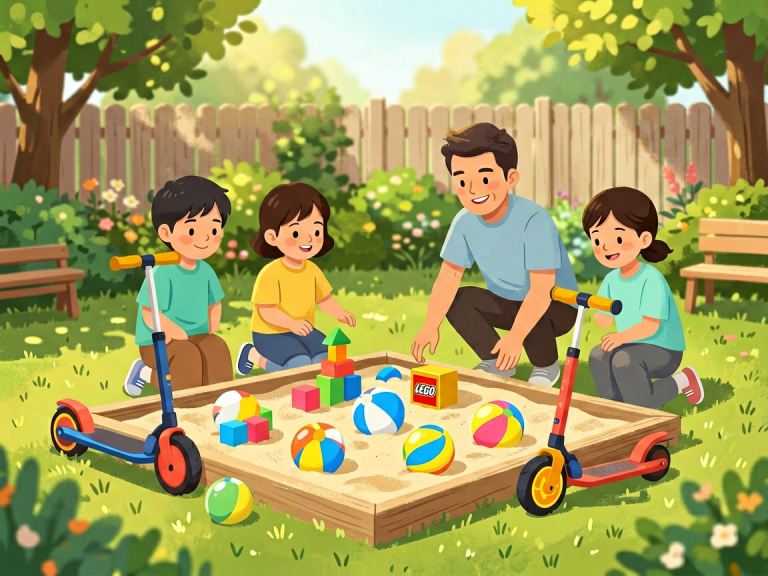
As children enter elementary school, their cognitive abilities expand to include more complex logical reasoning, understanding of rules, and interest in cooperative play. Toys in this category should challenge their growing minds while still being affordable. Board games are a classic choice, and many high-quality games cost less than $25. Games like "Outfoxed," "The Sneaky, Snacky Squirrel Game," or "Zingo" encourage turn-taking, strategy, and early math or reading skills. Science kits, such as a small crystal-growing set or a simple volcano experiment, often fall under the $25 mark and satisfy the natural curiosity of this age group. Construction toys like LEGO Classic sets (the small boxes, not the licensed themes) offer limitless building possibilities without breaking the bank. Importantly, these toys encourage persistence and problem-solving—children learn that a tower will fall if not balanced, and they must adapt their plans. The social element is equally vital; playing board games or building together teaches negotiation, patience, and handling both winning and losing gracefully.
Tweens (9–12 Years): Independent Projects and Tech-Free Creativity
The pre-teen years can be tricky for toy selection. Many children begin to drift toward screens, yet they still crave hands, creative outlets. Age-appropriate toys under $25 for this age group should feel sophisticated enough not to be dismissed as "babyish," but should also provide genuine engagement. Craft kits are an excellent option; friendship bracelet making sets, knitting looms, or origami paper packs offer quiet, focused activity that boosts fine motor skills and patience. Strategy card games like "Codenames" or "Sushi Go!" are compact, cheap, and promote critical thinking and vocabulary expansion. For the budding scientist, a dissection kit or a simple electronics snap circuit set (introductory version) can be found within budget and introduce basic STEM concepts without requiring a college-level budget. Another underappreciated category is puzzles—a 500-piece jigsaw puzzle costs around $15 and teaches spatial awareness, persistence, and pattern recognition. Moreover, the sense of accomplishment upon completion is invaluable for self-esteem.
Practical Considerations: Safety, Durability, and Longevity
Material Safety and Certification
When shopping for age-appropriate toys under $25, it is tempting to gravitate toward the cheapest option. However, price should not come at the expense of safety. Parents should look for toys made from non-toxic materials, especially for younger children who may put toys in their mouths. Labels such as ASTM (American Society for Testing and Materials) or CE (Conformité Européenne) indicate that the toy meets safety standards. Wooden toys, if well-made, are often safer than cheap plastics that may contain phthalates or lead. Silicone is a safe alternative for teething toys. Fabric toys should be machine-washable. Fortunately, many affordable brands prioritize safety; for example, the popular company Melissa & Doug produces wooden puzzles and playsets that regularly retail under $25 and are rigorously tested.
Durability and Open-Endedness
A truly age-appropriate toy is one that withstands the test of time—both physically and developmentally. A toy that is used for a few weeks and then discarded is not a good value, even at $25. The most cost-effective toys are open-ended: they can be used in multiple ways across different ages. A set of wooden blocks, for instance, is suitable for a one-year-old learning to stack, a three-year-old building towers, a five-year-old creating cities, and an eight-year-old constructing complex structures for storytelling. Similarly, a set of simple action figures or dolls can evolve from basic role-play to elaborate narratives over years. When selecting toys, prioritize quality over quantity. A single, well-constructed toy that sparks creativity is far better than a bin of cheap, broken plastic pieces.
Budget-Friendly Strategies: Where and How to Shop
Thrift Stores, Garage Sales, and Online Marketplaces
Finding age-appropriate toys under $25 is often easier when parents think beyond big-box retailers. Second-hand markets are treasure troves. Thrift stores and garage sales frequently have high-quality wooden toys, puzzles, and board games for a fraction of their original price. Online platforms like Facebook Marketplace or local Buy Nothing groups allow families to pass along toys their children have outgrown. With a little patience and a watchful eye, one can score Montessori-style toys, classic LEGO sets, or nearly new board games for under $10. The key is to inspect toys for safety: check for loose parts, sharp edges, or worn-out batteries in electronic toys. A quick sanitization with a mild soap solution ensures cleanliness.
Seasonal Sales and Subscription Alternatives
Retailers often discount toys during holiday seasons, back-to-school sales, or Prime Day events. Setting price alerts on apps like CamelCamelCamel for specific toys can help parents snag deals. Additionally, toy subscription services—while not a single purchase—often send curated, age-appropriate toys for a monthly fee that averages under $25 per box. Services like Lovevery or KiwiCo are well-regarded, though they may be slightly above the per-item budget. However, the concept of paying for a thoughtfully curated toy each month can be a strategy to ensure continuous developmental stimulation without overspending.
The Ultimate Goal: Fostering Connection, Not Consumption
In the rush to provide the perfect toy, parents sometimes forget that the most valuable component of play is the human connection. An age-appropriate toy under $25 is a tool, but its potential is unlocked when a parent, sibling, or caregiver engages with the child. A simple set of crayons and paper becomes a masterpiece when a parent sits down to draw alongside. A board game becomes a family tradition. Building blocks become stories shared between siblings. The price tag is irrelevant if the toy sits unused in a corner. Therefore, the best age-appropriate toy is one that invites interaction—not just between child and object, but between child and world. In a culture that often equates spending with love, it is liberating to realize that a $10 set of wooden nesting dolls, when used with intention and presence, can teach more about size, sequencing, and wonder than a $200 tablet ever could.
Conclusion: Smart Choices, Rich Play
Choosing age-appropriate toys under $25 is not an act of frugality; it is an act of mindful parenting. It requires understanding child development, knowing what sparks a particular child’s curiosity, and resisting the marketing hype that suggests more money equals more value. From sensory toys for infants to strategy games for tweens, there exists a rich landscape of affordable playthings that educate, inspire, and delight. By focusing on open-endedness, safety, and developmental alignment, parents can build a toy collection that grows with their child and fills the home with laughter, creativity, and joy—all without straining the budget. After all, the best toys are not the ones that cost the most, but the ones that invite the most imagination, persistence, and love. And those are available to every family, regardless of income, at any store—if only we know what to look for.