The Power of Play: Selecting the Best Learning Toys for 4-Year-Olds
Introduction
At the age of four, children stand at a remarkable crossroads of development. Their curiosity has blossomed into a relentless “why?” phase, their vocabulary is exploding, and their motor skills are sharpening by the day. This is the golden window for intentional play—play that is not merely entertaining but deeply educational. Learning toys for 4-year-olds are not just colourful distractions; they are carefully designed tools that foster cognitive growth, language acquisition, social skills, and emotional resilience. However, with a market flooded with options, parents and educators often face the challenge of distinguishing genuine learning aids from fleeting fads. This article explores the key categories of learning toys for this age group, explains their developmental benefits, and offers practical guidance for making informed choices. By understanding how a four-year-old’s brain works—and what kind of play best stimulates it—we can turn every giggle, every failed tower, and every shared game into a building block for lifelong learning.
—
Cognitive Development and Problem-Solving Toys
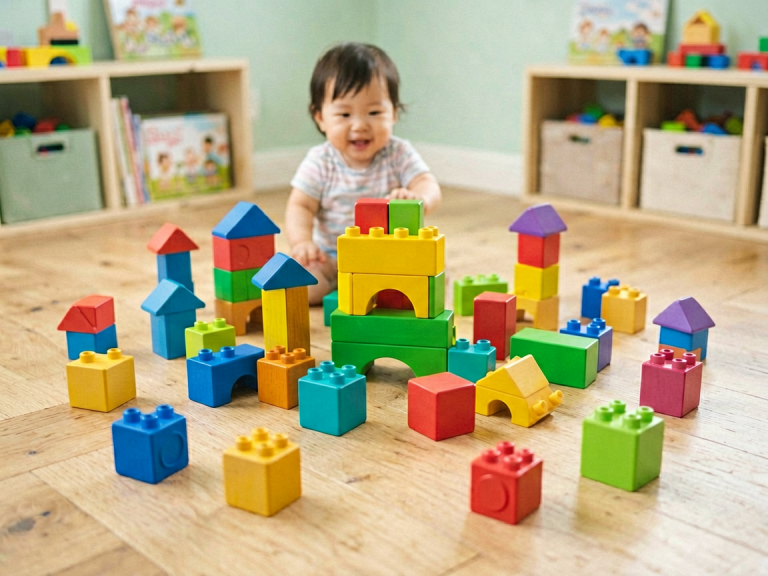
A four-year-old’s mind is a bustling construction site where neurons form connections at lightning speed. Toys that challenge logical thinking, pattern recognition, and cause-and-effect relationships are invaluable during this period. Puzzles remain a classic choice, but the complexity should match the child’s growing abilities. A 24-piece jigsaw puzzle featuring familiar animals or scenes requires spatial reasoning and persistence. When a child tries a piece that does not fit, rotates it, and finally slots it in, they are practising trial-and-error—a fundamental problem-solving strategy. Similarly, building blocks such as wooden unit blocks or interlocking plastic bricks (e.g., Duplo) encourage three-dimensional thinking. A four-year-old might construct a simple tower, then attempt a bridge by balancing two blocks with a third on top. This act demands planning, estimation, and fine motor control. More advanced sets include gears, ramps, or marble runs, which introduce basic physics concepts like gravity, momentum, and cause-effect loops.
Another excellent category is matching and sorting games. For instance, a set of cards with different shapes, colours, and numbers can be used for memory games, classification tasks, or simple addition. These toys teach categorisation—a precursor to mathematical thinking. Board games designed for this age, such as “Hi Ho! Cherry-O” or “The Sneaky, Snacky Squirrel Game,” combine counting, turn-taking, and strategic decision-making in a social context. Through repeated play, children internalise rules, learn to anticipate outcomes, and develop working memory. Importantly, these toys nurture a growth mindset: when a tower collapses or a puzzle piece does not fit, the child learns that failure is a step toward success, not a dead end. Parents can scaffold this learning by asking open-ended questions: “What do you think will happen if you put the big block at the bottom?” or “How could you make the car go faster down the ramp?” Such interactions turn a toy into a catalyst for critical thinking.
—
Language and Literacy Building Blocks
At age four, children typically have a vocabulary of 1,000 to 2,000 words and are starting to form longer sentences, tell simple stories, and ask endless questions. Learning toys that promote language development should encourage conversation, storytelling, and pre-reading skills. Alphabet toys are a natural starting point, but the best ones go beyond rote memorisation. Magnetic letter sets, for example, allow children to arrange letters on a fridge or board, spell their name, and eventually form simple words like “cat” or “dog.” Combining letters with picture cards reinforces the connection between symbols and sounds—a foundational skill for phonics. Puppets and storytelling props are another powerful tool. A hand puppet of a favourite animal can “speak” to the child, prompting dialogue: “What did you do today, Mr. Fox?” The child responds, creating a narrative. This role-play expands vocabulary, teaches narrative structure (beginning, middle, end), and builds confidence in verbal expression.
Books with interactive elements—lift-the-flap, textured surfaces, or sound buttons—keep four-year-olds engaged while exposing them to rhythm, rhyme, and print awareness. However, the toy itself does not need to be a book to foster literacy. Word-building games like “Zingo!” or simple Scrabble Junior versions let children match tiles to pictures or spell three-letter words in a playful competition. Similarly, magnetic poetry kits with simple nouns and verbs allow children to arrange silly phrases on a tray—a low-pressure way to explore syntax. For four-year-olds, the goal is not fluency but joy in language. Toys that spark giggles with nonsense rhymes (e.g., “The cat sat on a bat”) make learning memorable. Parents can enhance the experience by naming objects during play: “You’re putting the red square on the blue circle—that’s a pattern!” or “Wow, you built a garage for the truck. Can you tell me a story about where the truck is going?” Each interaction enriches the child’s linguistic world.
—
Fine Motor Skills and Creativity
Four-year-olds are refining their small muscle control—essential for later tasks like writing, drawing, and using scissors. Learning toys that target fine motor skills should require precise hand movements while also sparking imagination. Playdough is a timeless favourite. When a child rolls, pinches, cuts, and presses the dough, they strengthen the intrinsic hand muscles. Adding tools like cookie cutters, plastic knives, or a garlic press introduces new grips and motions. Moreover, playdough can become anything—a pizza, a snowman, a snake—which encourages creative storytelling. Beading and lacing toys are equally effective: threading large wooden beads onto a string demands hand-eye coordination and pincer grasp. Many sets include pattern cards that challenge children to replicate colour sequences, blending motor practice with cognitive work.
Art supplies such as washable markers, crayons, child-safe scissors, and glue sticks let four-year-olds experiment with mark-making and collage. The process—deciding what to draw, making intentional strokes, cutting along a line—builds both motor control and creative decision-making. For a structured option, consider sticker by number kits or dot-to-dot puzzles that combine number recognition with drawing. Construction sets with screws and bolts, like a take-apart toy drill or a wooden screwdriver board, teach rotational movements and bilateral coordination (using two hands together). These toys also instil a sense of achievement: tightening a bolt until the wheel stays on gives a concrete, satisfying result. Importantly, creativity flourishes when there is no single “right answer.” Open-ended materials like a box of recycled cardboard tubes, fabric scraps, and tape can inspire a four-year-old to build a rocket ship or a castle—all while honing fine motor skills and inventive thinking. Parents should resist the urge to correct or direct; instead, they can marvel at the child’s unique vision and ask, “What do you want to make next?”
—
Social and Emotional Learning Through Play
While cognitive and motor skills are vital, the emotional and social landscape of a four-year-old is equally significant. This is the age when children start to form genuine friendships, negotiate conflicts, and understand their own feelings—and those of others. Learning toys that facilitate social interaction and emotional regulation are indispensable. Cooperative board games (as opposed to competitive ones) teach teamwork. In a game like “The Little Orchard” or “Hoot Owl Hoot!”, players work together to collect fruit or help owls reach their nest before a certain event occurs. Children learn to share, take turns, discuss strategies, and celebrate collective success. Unlike win-lose games, cooperative play reduces anxiety and fosters empathy.
Dress-up costumes and pretend play sets (kitchens, doctor kits, tool benches) allow children to act out real-world scenarios. Through role-play, a four-year-old processes daily experiences—visiting the doctor, cooking dinner, driving a car—and practices emotional vocabulary. A child playing “parent” might soothe a crying doll, saying, “It’s okay, the doctor will fix your boo-boo.” This mirrors adult caregiving and builds nurturing instincts. Emotion flashcards or matching games with faces help children label feelings: happy, sad, angry, scared. When a child can say “I feel frustrated” instead of throwing a tantrum, they gain emotional intelligence that will serve them for life.
Furthermore, simple construction projects done in pairs—building a fort with cushions or assembling a puzzle together—require communication, compromise, and patience. Toys that intentionally encourage sharing, such as a set of colourful animal figurines where each child gets a few, teach negotiation: “I’ll trade you my giraffe for your lion.” For four-year-olds who are still learning impulse control, toys with clear rules and predictable outcomes (e.g., a memory card game) provide a safe structure for practicing self-regulation. Parents can model empathy during play: “I see you’re sad that your block tower fell. That is disappointing. Do you want to try again together?” Such moments transform toys into tools for heart-centered learning.
—
Choosing the Right Toys: Safety and Engagement
With so many options, selecting the best learning toys for a four-year-old requires careful consideration beyond the flashy packaging. The first priority is safety. At age four, children still mouth objects occasionally, so toys should be free of small parts that pose choking hazards. Look for labels indicating compliance with safety standards (e.g., ASTM in the U.S., CE in Europe). Avoid toys with sharp edges, toxic paints, or strings longer than 12 inches that could cause strangulation. For electronic toys, check that batteries are securely enclosed and that volume levels are not damaging to hearing.
The second criterion is open-endedness. The best learning toys can be used in multiple ways, growing with the child. A set of wooden blocks can be a tower today, a zoo enclosure tomorrow, and a math counting tool next week. In contrast, a single-purpose toy (e.g., a plastic cash register that only says “ka-ching” with one button) quickly loses appeal. Durability matters too—four-year-olds are energetic and often rough. Solid wood, thick cardboard, and high-quality plastic withstand years of play. Multi-sensory appeal is another valuable feature: toys that engage sight, sound, touch, and even smell (like scented playdough) deepen learning.
Finally, consider the child’s current interests. A four-year-old fascinated by dinosaurs will learn more from a dinosaur excavation kit (digging out fossil replicas) than from a generic matching game. Observing your child’s play patterns—do they love building, drawing, pretending, or sorting?—guides you toward toys that align with their natural curiosities. Avoid the temptation to overload the playroom. A moderate number of high-quality toys, rotated every few weeks, maintains novelty and prevents overwhelm. Parental involvement remains the secret ingredient. No toy, no matter how brilliant, replaces the value of a caring adult who sits on the floor, asks questions, and celebrates discoveries. A simple set of wooden blocks becomes a university of learning when a parent says, “Let’s see how high we can go before it wobbles!”
—
Conclusion
Learning toys for 4-year-olds are far more than pastimes—they are the laboratory equipment of childhood, where hypotheses are tested, languages are built, and hearts are shaped. From puzzles that sharpen logic to puppets that unlock vocabulary, from playdough that strengthens fingers to cooperative games that teach empathy, each toy holds the potential to transform a moment of play into a lesson for life. As parents and educators, our role is not to dictate play but to curate a thoughtful environment where curiosity can thrive. By choosing toys that align with a child’s developmental stage, prioritising safety and open-endedness, and, most importantly, joining in the fun, we give four-year-olds the greatest gift: the understanding that learning is joyful, hands-on, and never-ending. So the next time you see a child deeply engrossed in stacking blocks or mimicking a story with puppets, remember: this is not just play. This is the architecture of a brilliant mind.