The Power of Play: Why Screen-Free Toys Are Essential for 5-Year-Olds
In an age where digital screens dominate nearly every aspect of daily life, the simple joy of a wooden block, a set of crayons, or a plush animal might seem almost nostalgic. Yet for a five-year-old child, these screen-free toys are not relics of the past—they are powerful tools for cognitive, emotional, and physical development. At the age of five, children are at a critical crossroads: they have left toddlerhood behind and are entering the world of structured learning, social interaction, and independent exploration. At this stage, the toys they play with shape their brains, their habits, and their futures. This article explores why screen-free toys are not just beneficial but essential for 5-year-olds, and offers a comprehensive guide to choosing the best options for a child’s growth.
Why Screen-Free Toys Matter at Age Five
The 5-year-old brain is a sponge, absorbing information at an astonishing rate. Neuroscientists have long emphasized that hands-on, sensory-rich experiences are vital for building neural connections. Screen-free toys engage a child’s entire body and mind, encouraging them to touch, manipulate, build, and imagine. In contrast, most screen-based activities—whether educational apps, videos, or games—often limit engagement to visual and auditory stimulation. A child watching a cartoon or tapping a tablet is largely passive. Even interactive apps tend to follow a pre-determined script, offering little room for open-ended creativity.
Moreover, the American Academy of Pediatrics recommends that children aged 2 to 5 have no more than one hour of high-quality screen time per day, and that this time should be co-viewed with a parent. Yet many children far exceed these limits. Excessive screen exposure at this age has been linked to attention difficulties, delayed language skills, and reduced imaginative play. Screen-free toys offer a natural antidote, inviting children to slow down, focus, and engage deeply.
Types of Screen-Free Toys for 5-Year-Olds
Not all screen-free toys are created equal. The best choices for a 5-year-old are those that match their developmental stage: they are beginning to understand rules, enjoy cooperative play, and develop fine motor skills. Below are five categories of toys that excel in promoting growth without a single pixel.
1. Building and Construction Toys
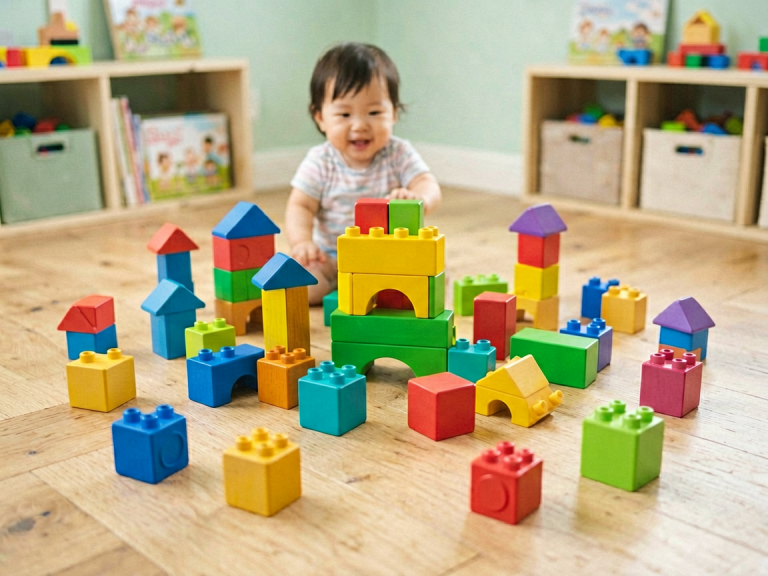
Building blocks, magnetic tiles, LEGO Duplo, and wooden train sets are timeless for a reason. These toys teach spatial reasoning, cause and effect, and problem-solving. A 5-year-old can spend hours constructing towers, bridges, or imaginary cities, learning how to balance weight and how to collaborate with friends. Unlike digital building games, physical blocks offer immediate tactile feedback: a block that is too heavy falls; a poorly placed piece wobbles. This real-world physics is irreplaceable.
2. Art and Craft Supplies
Crayons, washable markers, clay, playdough, scissors, glue, and paper might seem basic, but they are among the most powerful developmental tools. Art allows a 5-year-old to express emotions they cannot yet articulate. Drawing a family portrait or molding a snake from clay builds fine motor control and hand-eye coordination. Importantly, art is open-ended—there is no “right” way to create. This freedom fosters a growth mindset and resilience, as children learn to accept that their creation may not look exactly like they imagined.
3. Pretend Play and Role-Playing Toys
At five, children are deeply engaged in imaginative play. They love to imitate adults: cooking in a play kitchen, treating stuffed animals with a doctor’s kit, or driving a toy car to a pretend grocery store. Costumes, puppets, and dolls encourage storytelling and social skills. When two 5-year-olds pretend to be astronauts exploring Mars, they negotiate roles, resolve conflicts, and develop language. These interactions are far richer than any digital game where characters are pre-programmed.
4. Puzzles and Board Games
Simple jigsaw puzzles (20–50 pieces) and beginner board games like “Candy Land,” “Memory,” or “Zingo” teach patience, turn-taking, and strategic thinking. They also introduce the concept of winning and losing gracefully. In a world of instant gratification, a puzzle that takes twenty minutes to complete teaches delayed reward. Board games, especially those requiring cooperation rather than competition, build empathy and social understanding.
5. Outdoor and Gross Motor Toys
At age five, children need to move. Bicycles with training wheels, scooters, jump ropes, balls, and climbing structures develop gross motor skills, balance, and body awareness. Outdoor play also provides exposure to nature, which has been shown to reduce stress and improve attention. A simple game of catch, a scavenger hunt, or digging in a sandbox offers sensory input that no screen can mimic.
The Hidden Benefits of Unplugged Play
Beyond the obvious developmental advantages, screen-free toys confer a range of benefits that are often overlooked.
Improved Attention Span. When a child plays with a physical toy, there are no pop-up ads, no autoplay videos, no distractions. Their mind learns to focus on one activity for an extended period. This sustained attention is a skill that directly transfers to the classroom, where they must listen to a teacher or complete a worksheet.
Enhanced Creativity. A digital toy often tells a child what to do: “Tap here to make the rabbit jump.” A screen-free toy says nothing. A box of LEGO bricks can become a castle, a spaceship, a dinosaur, or a shoe—depending on the child’s mood. This freedom to invent forces the child to create their own narratives and solutions, which is the foundation of innovation.
Better Emotional Regulation. Five-year-olds are still learning to manage big feelings. When a tower of blocks falls, the frustration is real, but so is the opportunity to rebuild. Unlike a video game where failure means a “game over” screen and automatic restart, physical play allows children to experience disappointment and then actively choose to try again. This builds emotional resilience.
Strengthened Parent-Child Bond. Screen-free toys invite parents to play alongside their children. A parent building a castle with their child, or sitting on the floor playing “restaurant,” creates moments of genuine connection. These interactions are far more meaningful than a parent scrolling through a phone while a child watches an app.
How to Choose the Right Screen-Free Toys for Your 5-Year-Old
With so many options available, selecting the best toys can feel overwhelming. Keep these principles in mind:
- Prioritize open-endedness. A toy that can be used in multiple ways (like blocks, art supplies, or dress-up clothes) offers more long-term value than a single-purpose toy.
- Look for real-world materials. Wood, fabric, metal, and clay provide varied textures and weight. Avoid plastic toys that break easily or have flashing lights and sounds—those mimic screens.
- Consider social play. Toys that work well for solo play but also for group play (like board games or building sets) help children develop both independence and teamwork.
- Resist the urge to overstimulate. Some “educational” toys actually overwhelm children with sounds, colors, and buttons. Simple toys are usually best.
- Follow the child’s interests. A child who loves animals might enjoy wooden animal figures or a nature exploration kit. A child who loves vehicles will spend hours with a simple set of toy cars and a ramp.
Conclusion: A Gift of Time and Imagination
In a world rushing toward digital immersion, choosing screen-free toys for a 5-year-old is a deliberate act of rebellion—a commitment to protecting childhood’s most precious qualities: wonder, simplicity, and the joy of making something from nothing. These toys do not need batteries, updates, or Wi-Fi. They need only a child’s hands, a child’s mind, and a child’s heart. The blocks will be stacked and knocked down, the crayons will break, the play kitchen will be stuffed with odd objects. But in the process, a five-year-old will learn how to build, how to create, how to share, and how to persist. These are lessons no screen can teach. So put away the tablet, take out the wooden train set, and watch as your child discovers the endless possibilities of a world without pixels. That is a gift that lasts a lifetime.
(Word count: approximately 1,100 words)