Choosing Safe Toys for 5-Year-Olds: A Comprehensive Guide for Parents and Caregivers
Introduction
Selecting toys for a five-year-old is both a delightful and a daunting task. At this age, children are bursting with curiosity, creativity, and energy. They are no longer toddlers who put everything in their mouths, but they are still far from being cautious older children. Their motor skills are rapidly improving, their social interactions are becoming more complex, and their imagination knows no bounds. The right toy can foster cognitive development, encourage physical activity, and nurture emotional growth. However, the wrong toy—or an unsafe toy—can lead to injuries, toxic exposures, or choking hazards. This article provides an in-depth look at what constitutes safe toys for five-year-olds, covering safety standards, material considerations, recommended toy categories, and practical tips for parents. By understanding these factors, caregivers can make informed decisions that balance fun, learning, and above all, safety.
Why Toy Safety Matters for 5-Year-Olds
Five-year-olds are in a developmental sweet spot. They are old enough to manipulate complex toys—like building sets with small pieces, craft kits with scissors, or pretend-play accessories—but they still lack the judgment to recognize potential dangers. According to the U.S. Consumer Product Safety Commission (CPSC), thousands of toy-related injuries occur each year among children aged 4 to 6. Common incidents include choking on small parts, cuts from sharp edges, burns from overheated batteries, and chemical poisoning from paints or solvents. Moreover, five-year-olds often engage in rough-and-tumble play, testing the limits of their toys. A poorly constructed toy can break, exposing sharp edges or small parts that become choking hazards. Therefore, safety is not merely about avoiding obvious dangers; it is about anticipating how a child might misuse a toy and ensuring it remains safe in all scenarios.
Understanding Safety Standards and Certifications
Before purchasing any toy, parents should look for recognized safety certifications. In the United States, the CPSC enforces the Federal Hazardous Substances Act and the Consumer Product Safety Improvement Act (CPSIA). Toys must meet requirements for lead content, phthalates, small parts, and flammability. The ASTM F963 standard is the voluntary consensus standard for toy safety, covering mechanical, electrical, and chemical hazards. Internationally, the CE mark indicates compliance with European Union safety directives, while the EN 71 standard is specific to toy safety in Europe. For parents, the easiest way to verify safety is to look for labels such as “ASTM F963,” “CPSIA compliant,” or “CE mark.” Additionally, independent organizations like the Toy Association’s “Toxic-Free” seal or the “GreenGuard” certification for low chemical emissions can help identify safer options. Always avoid toys that lack any safety labeling, especially if they are from unknown brands or sold at discount stores.
Potential Hazards to Avoid
When assessing toys for five-year-olds, several common hazards require attention. First, choking is the leading cause of toy-related deaths. The small-parts test uses a cylinder with a diameter of 1.25 inches (31.7 mm) and a depth of 2.25 inches (57.1 mm); any toy or detachable part that fits entirely inside this cylinder is considered a choking hazard for children under three. However, even for five-year-olds, it is wise to avoid toys with very small parts that could be swallowed or lodged in a child’s ear or nose. Second, sharp edges, points, and pinch points can cause cuts or crushed fingers. A toy should be well-finished with no rough seams or protruding nails. Third, batteries—especially button batteries—pose a severe risk if swallowed. They can cause internal burns within hours. Toys with battery compartments should require a screwdriver to open. Fourth, long cords or strings can pose strangulation hazards; any cord longer than 12 inches (30 cm) should be avoided unless it is part of a supervised activity. Fifth, toxic materials such as lead, cadmium, phthalates, and bisphenol A (BPA) may be found in cheap plastics or painted surfaces. Opt for toys labeled “non-toxic” and “phthalate-free.”
Categories of Safe Toys for 5-Year-Olds
Now let us explore specific types of toys that are not only safe but also developmentally appropriate for five-year-olds. Each category supports different aspects of growth.
2.1 Building and Construction Sets
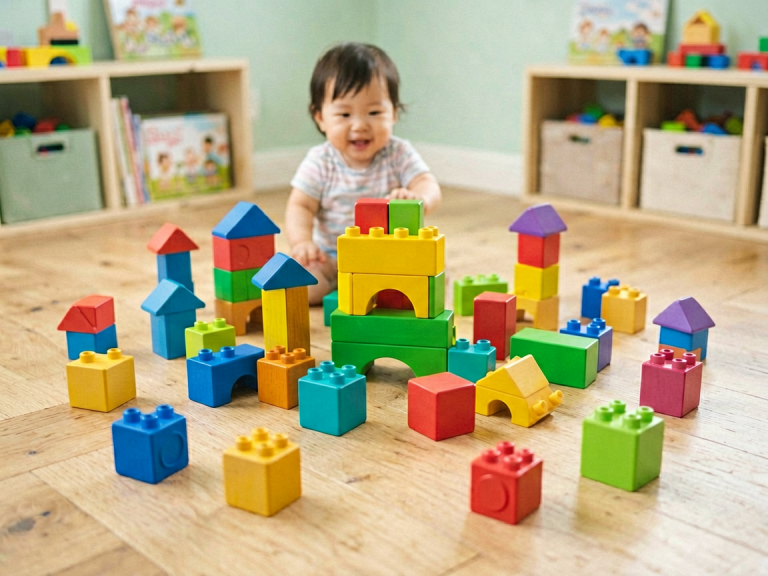
Construction toys like large LEGO Duplo sets, wooden blocks, magnetic tiles, or interlocking plastic bricks (with pieces larger than standard LEGO) are excellent choices. They enhance fine motor skills, spatial reasoning, and problem-solving. Safety tips: Look for sets that do not have sharp corners or splinters. Magnetic toys should have magnets securely enclosed so they cannot be swallowed. Avoid sets with extremely small pieces (less than 1.5 inches in any dimension) and always check for age recommendations—many building sets are labeled for ages 4+ or 5+.
2.2 Puzzles and Brain Games
Puzzles with 20 to 50 large pieces are ideal for five-year-olds. They improve hand-eye coordination, pattern recognition, and patience. Ensure that puzzle pieces are thick and sturdy, with smooth edges. Avoid puzzles with peeling paint or flimsy cardboard that can break into small shards. Jigsaw puzzles with wooden knobs or chunky pieces are especially safe. Additionally, simple board games that require counting or matching (like “Candy Land” or “Memory”) can be great, but check for small game components; replace them with larger tokens if necessary.
2.3 Art and Craft Supplies
Creativity flourishes at age five. Non-toxic crayons, washable markers, finger paints, watercolor sets, and modeling clay are excellent. However, supervision is key. Avoid art supplies that contain solvents, strong chemical odors, or lead. Look for the “ASTM D-4236” label, which indicates the product has been evaluated for chronic health hazards. Scissors should be blunt-tipped or safety scissors. Glue should be non-toxic and washable. Keep liquids away from electrical outlets and ensure children use play mats to protect surfaces.
2.4 Outdoor and Active Toys
Physical play is crucial for gross motor development. Safe options include tricycles, balance bikes, scooters with wide bases, bounce balls, and tossing games. Helmets are mandatory for anything with wheels. Avoid toys with sharp kickstands or protruding metal parts. Water toys like inflatable pools should be shallow (less than 12 inches) and always used with adult supervision. Trampolines are not recommended for five-year-olds due to high injury rates. Instead, consider a small slide or a plastic climbing structure designed for this age group.
2.5 Role-Playing and Imaginative Play
Dress-up costumes, play kitchens, tool sets, and doctor kits encourage social and emotional development. Ensure that costumes are flame-resistant (look for “flame retardant” labels) and free of long capes or cords that could strangle. Play food and utensils should be made of soft, non-breakable materials—avoid hard plastic that splinters. Check that toy tools do not have sharp edges; plastic hammers and saws with rounded tips are fine. For play jewelry, avoid beads that are too small or that have fragile clasps.
2.6 Electronic and Interactive Toys
Many electronic toys exist for five-year-olds, from talking storybooks to simple coding robots. Safety considerations include volume levels (should be limited to 85 decibels to prevent hearing damage), secure battery compartments, and no exposed wires. Avoid toys that require headphones unless they have volume-limiting features. Touch-screen devices should have durable cases and parental controls. Also, be wary of toys that use Wi-Fi or Bluetooth—they should have clear privacy policies if they collect data.
Practical Tips for Parents and Caregivers
Beyond selecting specific toys, parents can adopt a systematic approach to toy safety. First, always read the manufacturer’s age recommendations. These are based on safety and developmental appropriateness, not just skill level. Second, inspect toys regularly. Check for wear and tear: cracked plastic, loose screws, frayed fabric, or fading paint. Discard broken toys immediately. Third, store toys properly. Keep small items in a locked box or high shelf to prevent younger siblings from accessing them. Fourth, supervise play, especially with new toys or those that involve small parts, cords, or batteries. Fifth, educate your child about safety: teach them not to put toys in their mouths, not to throw hard objects, and to tell an adult if a toy breaks.
What to Avoid Completely
Some toys are inherently unsafe for five-year-olds and should be avoided entirely. These include:
- Balloons (latex balloons are a leading choking hazard—even broken pieces)
- Marbles and small balls (unless supervised and larger than 1.75 inches)
- Toys with long, loose strings or ribbons
- Projectile toys (dart guns, slingshots) that cause eye injuries
- Chemistry sets or science kits with chemicals
- Hoverboards or electric scooters (too fast and unstable for this age)
- Any toy that smells strongly of chemicals or has a greasy film
Conclusion
Choosing safe toys for five-year-olds does not have to be overwhelming. By understanding the common hazards, recognizing safety certifications, and selecting developmentally appropriate options, parents can provide a stimulating and secure play environment. Remember that safety is not about eliminating all risks—a certain amount of manageable risk helps children learn boundaries—but about preventing serious harm. When in doubt, trust your instincts: if a toy feels flimsy, looks questionable, or seems too complex, it is better to pass. Encourage your child to explore, create, and imagine with toys that are designed to inspire confidence and joy without compromising their well-being. A safe toy is one that a child can enjoy for years, free from worry, and full of laughter.