The Power of Open-Ended Toys: Nurturing Creativity and Critical Thinking in Elementary Kids
In an era dominated by flashing screens, pre-programmed robots, and toys that sing, dance, and solve problems for children, a quiet revolution is taking place in the world of play. Parents and educators are increasingly turning back to a timeless category of playthings: open-ended toys. These are the simple blocks, the plain wooden figures, the piles of magnetic tiles, the buckets of sand, and the boxes of loose parts that have no predetermined purpose. For elementary-aged children—those between six and twelve—open-ended toys are not just fun; they are essential tools for cognitive, social, and emotional development. This article explores why these toys matter, how they work, and how you can incorporate them into your child’s life to foster creativity, resilience, and a lifelong love of learning.
What Are Open-Ended Toys?
Open-ended toys are play materials that have no single, fixed outcome. Unlike a battery-operated race car that only goes forward or a puzzle with one correct solution, open-ended toys invite children to decide what to do with them. A set of wooden blocks can become a castle, a bridge, a spaceship, or a simple tower that crashes down. A bag of colorful fabric scraps can transform into a costume, a tent, or a treasure map. The defining characteristic is that the child is the director of the play; the toy is merely a prop.
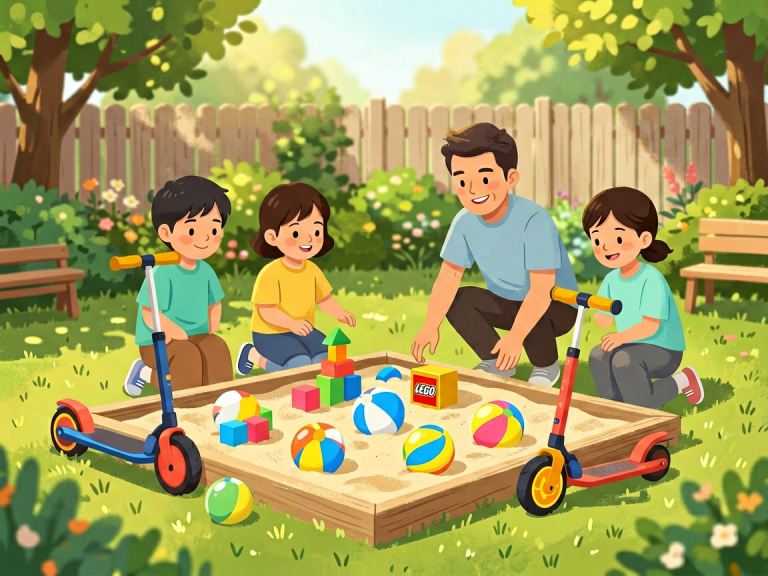
Classic examples include building bricks (like LEGO bricks in a basic set, not themed kits with step-by-step instructions), magnetic tiles, play dough, modeling clay, sand and water tables, art supplies (paper, paint, glue, scissors, recycled materials), dolls and action figures without accessories, dress-up clothes, and natural objects such as sticks, stones, and pinecones. Even household items like cardboard boxes, empty containers, and old sheets fall into this category. What makes them “open-ended” is the absence of a prescribed script. The child’s imagination fills the gaps.
For elementary kids, who are at a stage where they can plan, negotiate, and execute complex scenarios, open-ended toys offer the perfect level of challenge. They are not too simple (like a rattle for a baby) nor too structured (like a video game with a fixed storyline). Instead, they sit in a sweet spot where the child must engage higher-order thinking: hypothesizing, testing, revising, and collaborating.
Why Open-Ended Toys Matter for Elementary Kids
The elementary years—roughly ages six to twelve—are a critical window for developing executive function skills. According to developmental psychologists, this is when children begin to master self-regulation, working memory, and cognitive flexibility. Open-ended play directly strengthens all three.
Consider a child building a fort with pillows and blankets. She must first hold a mental image of what she wants (working memory). When the pillows keep slipping, she adjusts her approach (cognitive flexibility). She might become frustrated but then decides to use a heavy book to weigh down the blanket (self-regulation and problem-solving). This trial-and-error process is far more valuable than following a pre-written instruction booklet, because it forces the child to become an active creator rather than a passive consumer.
Moreover, open-ended toys level the playing field. In a classroom or a playgroup, children of different abilities can engage with the same materials at their own level. A child who struggles with reading can still excel at building a complex marble run. A child who is shy can express emotions through clay sculptures. This inclusive quality is especially important for elementary kids, who are acutely aware of peer comparisons and may feel pressure to perform in academic areas.
Another reason these toys matter is that they counterbalance the highly structured, outcome-oriented culture that many children face. School schedules, extracurriculars, and even some “educational” toys push children toward right answers and measurable results. Open-ended play provides a sanctuary where there are no mistakes, only experiments. A lopsided block tower is not a failure—it’s a learning opportunity about balance. A muddy, misshapen clay pot is not a mess—it’s a masterpiece of process.
Cognitive and Social Benefits
Let us delve deeper into the specific benefits that open-ended toys offer elementary-aged children.
Cognitive Development. When a child plays with open-ended materials, she engages in divergent thinking—the ability to generate multiple solutions to a single problem. This is the opposite of convergent thinking, which seeks one correct answer. In a world that increasingly demands creative problem-solving, divergent thinking is a crucial skill. For example, given a set of magnetic tiles, a child might first build a house. Then she might drop a small ball on top to see if it rolls off. Then she might combine tiles with a toy car to create a ramp. Each iteration is a new hypothesis. Neuroscientists have found that such unstructured exploration strengthens neural connections in the prefrontal cortex, the brain region responsible for planning and decision-making.
Furthermore, open-ended toys promote mathematical and spatial reasoning. Building with blocks requires an intuitive understanding of geometry, symmetry, and weight distribution. A child who repeatedly tries to balance a long plank on a single block is learning about center of mass—without a textbook. Similarly, creating patterns with colored beads or arranging natural objects in rows builds pre-algebraic thinking. These “hands-on, minds-on” experiences are far more effective than worksheets for cementing abstract concepts.
Social and Emotional Benefits. Playing with open-ended toys in a group setting teaches negotiation, compromise, and collaboration. Two children who both want to use the same red block must figure out how to share or combine their ideas. One may suggest, “Let’s use the red block as the top of the tower, and you can use the blue ones for the bottom.” This kind of communication builds empathy and social awareness. In contrast, a toy that plays a pre-recorded script (like an interactive plush that says scripted phrases) actually reduces opportunities for real conversation.
Additionally, open-ended play allows children to process emotions. A child who is feeling anxious about a test might build a fortress and pretend to defend it. A child who is angry might pound, smash, and reshape clay. Therapists have long used sand trays and other open-ended materials to help children express feelings they cannot yet put into words. For elementary kids, who are still developing emotional vocabulary, this non-verbal outlet is invaluable.
Language and Literacy. When children engage in pretend play with open-ended toys, they naturally create stories. They narrate actions, assign roles, and invent dialogue. “I am the wizard, and you are the knight. The dragon lives in the castle made of blocks. We have to use the magic stones to defeat him.” This kind of oral storytelling is a precursor to written narrative. It builds vocabulary, sentence complexity, and an understanding of plot structure. Studies have shown that children who engage in frequent pretend play score higher on measures of verbal comprehension and narrative recall.
How to Choose Open-Ended Toys for Your Child
Not all toys labeled “educational” are truly open-ended. When shopping or selecting toys for an elementary-aged child, look for these qualities:
- Simplicity of form. The toy should not have too many built-in features. A plain wooden train set is better than one with blinking lights and pre-recorded train sounds. Why? Because the plain set requires the child to imagine the sounds and actions, while the electronic one does the work for them.
- Potential for combination. The best open-ended toys can be combined with other objects. Magnetic tiles, for instance, can be used with toy animals, small balls, or even paper cutouts. Blocks can be supplemented with fabric scraps, string, and cardboard. The more ways a toy can be integrated, the longer it will hold a child’s interest.
- Durability and safety. Elementary kids can be rough. Look for toys made of high-quality materials like solid wood, non-toxic silicone, or sturdy plastic that can withstand being dropped, chewed, or stomped. Avoid small parts that could be a choking hazard for younger siblings, and check for sharp edges.
- Age-appropriate challenge. A toy that is too simple (e.g., large Duplo blocks for a ten-year-old) will bore the child. A toy that is too complex (e.g., a chemistry set with fragile glassware) may frustrate them. For elementary kids, building sets with small but manageable pieces (like LEGO Classic bricks or K’Nex) work well. Art supplies with a variety of materials (not just crayons, but also watercolors, pastels, and collage items) offer endless possibilities.
- Gender-neutral appeal. Avoid toys that are marketed exclusively to boys or girls. Open-ended toys should invite all children. A set of wooden blocks is neutral; a pink princess castle that only allows one kind of play is not. Of course, children may have their own preferences, but the toy itself should not impose a narrow narrative.
Also, consider the “loose parts” philosophy. Loose parts are any objects that can be moved, carried, combined, redesigned, and used in many ways. They include bottle caps, buttons, pebbles, fabric scraps, cardboard tubes, and more. You don’t need to buy expensive branded toys; a collection of loose parts from around the house can be more powerful than any store-bought item. Just ensure they are clean and safe.
Integrating Open-Ended Play into Daily Life
Many parents worry that open-ended toys require too much adult involvement or that children will grow bored without guidance. In reality, the opposite is true. Open-ended play is child-led; the adult’s role is to provide the materials, a safe space, and time. Here are practical tips for integrating this play into your family’s routine.
Create a play invitation. Set up a small tray or table with a few open-ended materials before your child arrives. For example, place a pile of magnetic tiles, a handful of small toy animals, and a piece of blue fabric (to represent water). Without any instruction, your child will likely begin to create a scene. This is called a “provocation” in Montessori and Reggio Emilia approaches—it invites curiosity without dictating the outcome.
Embrace mess. Open-ended play is rarely tidy. Clay gets under fingernails. Blocks scatter across the floor. Water spills. As a parent, you can minimize stress by designating a play zone (like a corner of the living room or a dedicated playroom) that can be messy. Use a large rug or vinyl tablecloth that is easy to clean. Also, involve your child in clean-up—make it part of the play cycle. When children help restore order, they learn responsibility.
Limit screen time and structured activities. This is the hardest but most important step. Children cannot engage in deep, immersive open-ended play if their schedule is packed with piano lessons, soccer practice, and homework, leaving only 20 minutes of free time. Allow at least one hour of uninterrupted, unstructured play each day. That means no TV, no tablets, no adult-directed activities. Let the child decide what to do with that hour.
Model open-ended thinking. Occasionally, sit down and play alongside your child—not as a teacher, but as a co-creator. Build something, then knock it down. Narrate your own thought process: “Hmm, I wonder if this block will stay on top if I put it here?” This models curiosity and a growth mindset. Avoid giving instructions like “You should build a house.” Instead, ask open questions: “What do you imagine this could be?” or “What happens if we try this?”
Rotate toys. If you have too many toys available at once, children become overwhelmed. Keep a small selection of open-ended toys in rotation. Put some away in a closet and swap them out every few weeks. The “new” toys will feel fresh and exciting, and children will rediscover old favorites with new ideas.
Value process over product. When your child proudly shows you a lopsided blob of clay that is supposed to be a dinosaur, resist the urge to say, “It looks like a potato.” Instead, say, “Tell me about your creation.” Ask what it does, where it lives, what it eats. By focusing on the story behind the object, you validate the child’s effort and imagination rather than the aesthetic outcome.
Conclusion
Open-ended toys are not a passing trend; they are a developmental necessity. In a world that increasingly pressures children to perform, achieve, and consume, these simple playthings offer a counterbalance—a space where imagination reigns, where failure is just another try, and where the child is the author of her own story. For elementary kids, who are at a pivotal age for building creativity, problem-solving, and social skills, open-ended toys provide the richest possible soil for growth. As parents and educators, our job is not to instruct, but to provide the seeds—the blocks, the clay, the fabric, the time—and then step back and marvel at what grows.
So next time you’re tempted by a flashing, beeping, “smart” toy that promises to teach your child to code in ten minutes, pause. Consider instead a set of plain wooden blocks or a bag of magnetic tiles. Your child might not build a perfect replica of the Taj Mahal on the first try. But they will build something far more enduring: a mind that knows how to dream, try, fail, and try again. That is the greatest gift any toy can give.