Learning Toys for 3-Year-Olds: Building the Foundation for Lifelong Learning
The age of three is a magical window of development. Toddlers at this stage are bursting with curiosity, energy, and a rapidly expanding vocabulary. They are no longer babies, yet not quite preschoolers; they exist in a delightful in-between where every day brings new discoveries. The right learning toys for 3-year-olds can channel this natural inquisitiveness into meaningful cognitive, social, and motor skill development. Far from mere entertainment, these toys serve as tools that shape how a child understands the world. In this article, we will explore what makes a toy truly educational for a three-year-old, the types that best support development, and how parents can choose wisely.
The Developmental Landscape at Age Three
Understanding why certain toys work for three-year-olds requires a quick look at what is happening inside their growing brains and bodies. At this age, children are developing fine motor skills more precisely—they can hold a crayon with a tripod grasp, turn pages one at a time, and manipulate small objects with increasing dexterity. Gross motor skills are also advancing: running, jumping, climbing, and balancing become more controlled. Cognitively, three-year-olds engage in symbolic thinking, which means they can pretend one object stands for another—a block becomes a phone, a stick becomes a sword. Their attention span stretches to about six to nine minutes for a single activity, though they can return to a favorite task multiple times. Socially, they are beginning to understand sharing and taking turns, though egocentrism still dominates. Language explodes: average vocabulary jumps from about 300 words at age two to nearly 1,000 words by age three and a half. Learning toys that align with these milestones—that challenge without frustrating—provide the richest benefit.
What Makes a Toy “Educational” for a Three-Year-Old?
Not every toy labeled “educational” truly earns that name. For a three-year-old, an educational toy must engage multiple senses, invite open-ended exploration, and grow with the child. It should not have a single “correct” way to play. For example, a set of wooden blocks can be stacked, knocked down, sorted by color, used as pretend food, or arranged into a story scene. That open-endedness builds creativity, problem-solving, and spatial reasoning. A battery-operated toy that sings the alphabet when a button is pressed is far less valuable: it teaches passive recognition, not active thinking. The best learning toys for 3-year-olds also incorporate cause and effect, encourage language use, and allow for trial and error without penalty. Safety is paramount—no small parts that could be swallowed, no toxic paints, and no sharp edges—but educational value comes from the child’s interaction, not the toy’s electronic complexity.
1. Building and Construction Toys: The Architecture of Thought
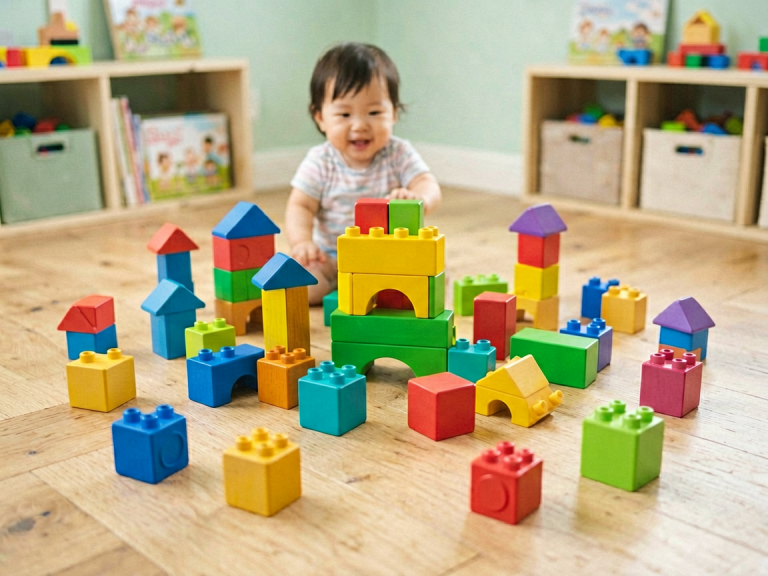
Blocks, magnetic tiles, and interlocking bricks are arguably the most powerful learning toys for this age. When a three-year-old stacks two wooden cubes and watches them tumble, she is learning physics—gravity, balance, and stability. When she connects magnetic squares to form a house, she practices spatial visualization and planning. Construction toys also support fine motor development as small fingers grasp, align, and press pieces together. They encourage persistence: a tower that falls becomes a problem to solve, not a failure. Young children who build regularly show stronger math skills later because they internalize concepts of symmetry, pattern, and measurement. For three-year-olds, choose sets with larger pieces to avoid choking hazards; classic wooden unit blocks are ideal, as are magnetic tiles with rounded corners. A set of 50 to 100 blocks provides enough variety without overwhelming. Adults can scaffold learning by asking questions: “What if you put the red block here?” or “Can you make a bridge for the toy car?” This language-rich play boosts vocabulary related to size, position, and comparison.
2. Pretend Play and Role-Playing Sets: The Theater of Social Learning
Three-year-olds live in a world of make-believe, and toys that support pretend play are vital for emotional and social growth. A play kitchen, doctor’s kit, tool bench, or dollhouse allows children to reenact real-life scenarios. When a toddler pretends to cook a meal and serve it to a stuffed animal, she practices sequencing (first chop, then stir, then serve), empathy (the teddy might be hungry), and language (naming foods, giving instructions). Role-playing also helps children process emotions: a child who has just visited the pediatrician might act out a checkup on her doll, gaining a sense of control over a potentially scary experience. The best pretend play toys are those with open-ended props—wooden food items that can be cut, a simple stethoscope, costume pieces like hats and scarves. Avoid overly specific playsets that dictate one story; a generic set of plastic animals and a few fabric blankets can become a farm, a jungle, or a rescue mission. For language development, parents can join the play gently, narrating actions and expanding vocabulary: “You’re pouring me a cup of tea. Is it hot? Let me blow on it.” This form of guided pretend play strengthens narrative skills, which underpin later reading comprehension.
3. Puzzles and Shape Sorters: Logic in the Hands
Puzzles might seem simple, but for a three-year-old, they are sophisticated cognitive challenges. Jigsaw puzzles with four to twelve large pieces require matching shapes, recognizing patterns, and understanding that a part fits into a whole. Shape sorters—where a child pushes a square block through a square hole—teach classification and problem-solving. These activities strengthen hand-eye coordination and the pincer grip needed for writing. More important, puzzles teach persistence and the satisfaction of completing a task. A child who struggles to fit a piece will try rotating it, looking at the picture, or asking for help—all valuable executive function skills. For three-year-olds, choose puzzles with knobs or thick pieces that are easy to grasp. Start with simple trays that have a single matching piece, then progress to interlocking puzzles. Themed puzzles (animals, vehicles, family scenes) also build vocabulary. The key is to let the child lead; if she wants to dump the puzzle pieces and sort them by color instead of assembling them, that is still valuable learning. Avoid rushing to “correct” her—the process matters more than the finished picture.
4. Art and Creativity Supplies: The Canvas of Expression
Three-year-olds are natural artists. They love to scribble, smear, squish, and cut. Providing safe, washable art supplies is one of the best investments in cognitive and emotional development. Crayons, finger paints, play dough, child-safe scissors, and large sheets of paper allow children to experiment with cause and effect (blue and yellow make green), develop fine motor control (rolling play dough into a snake), and express feelings they cannot yet put into words. Art also fosters decision-making: “Should I draw a rainbow or a monster?” When a child creates, she is practicing symbolic representation—a scribble “is” a dog—which is a precursor to reading and writing. The adult’s role is not to direct but to provide materials and offer neutral praise: “Tell me about your picture.” This encourages language. Play dough is especially valuable because it strengthens hand muscles needed for writing; add safe tools like plastic knives, rolling pins, and cookie cutters to extend play. Remember that process art—where the act of creating matters more than the product—is far more beneficial than coloring books. The open-ended nature of art supplies aligns perfectly with the three-year-old’s developmental need for exploration.
5. Musical Instruments and Sound Toys: Rhythm and Brain Development
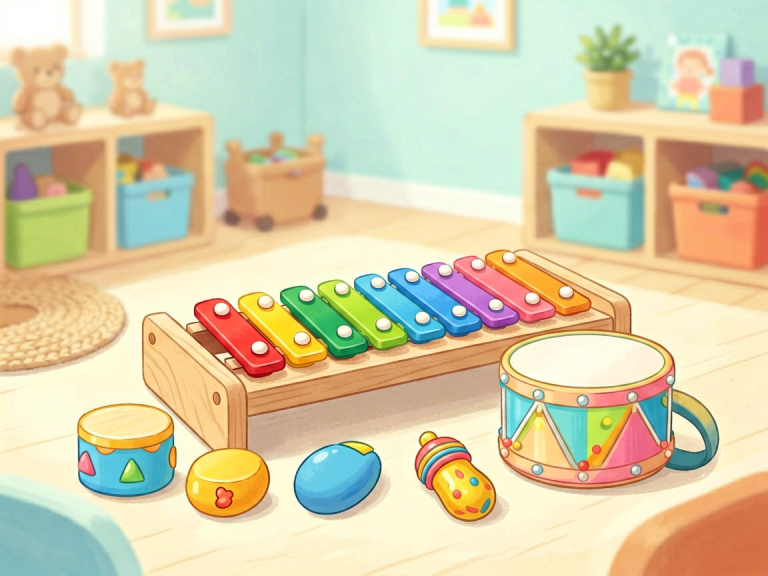
Music engages a child’s brain in unique ways. Simple instruments like drums, shakers, xylophones, and bells teach cause and effect (hitting a drum makes a sound), rhythm and pattern (tap-tap-pause), and auditory discrimination (high vs. low pitch). For three-year-olds, making music also supports gross motor skills (banging a drum) and fine motor skills (plucking a string). Singing along with a toy microphone or tapping a rhythm to a song enhances memory and language processing. Research shows that early musical play strengthens neural connections in areas related to language and mathematics. Choose instruments that are durable, lightweight, and produce pleasant sounds (avoid harsh, loud toys that might overwhelm a sensitive child). A simple set of two or three instruments—like a tambourine, a pair of maracas, and a wooden xylophone—provides hours of exploration. Parents can play alongside, modeling how to keep a steady beat or creating call-and-response patterns. The goal is not to teach music theory but to let the child discover sound. Even a homemade instrument—a box with rubber bands—can be a powerful learning tool.
6. Language and Literacy Toys: Words Take Flight
At age three, children are absorbing language at an astonishing rate. Toys that promote vocabulary, storytelling, and pre-reading skills are invaluable. Alphabet puzzles, magnetic letters, and picture books with simple narratives are excellent. However, the most effective language toys are those that invite conversation. A set of animal figurines, for example, can spark a discussion about where each animal lives, what it eats, and the sounds it makes. A simple felt board with shapes and characters allows a child to create her own stories. Reading to a child remains the single most important activity, but interactive books—those with flaps, textures, or sound buttons—engage multiple senses. For vocabulary building, toys that name objects when pressed (like a farm playset that says “cow” and “moo”) can be useful, but they should be used sparingly; passive listening is no substitute for active conversation. The best language toy is a responsive adult, but thoughtfully chosen toys can be conversation starters. Avoid electronic toys that quiz a child; they pressure performance rather than encourage exploration. Instead, choose toys that provide rich language models through open-ended scenarios.
How to Choose the Right Toys for Your Three-Year-Old
With so many products on the market, selecting learning toys for 3-year-olds can feel overwhelming. Here are practical guidelines. First, observe your child. Does she love to build? Is he fascinated by animals? Does she enjoy quiet, focused activities or energetic movement? A toy that matches the child’s current interests will hold attention longer. Second, look for open-endedness. A toy that can be used in many ways—blocks, play dough, dress-up clothes—offers far more value than a single-purpose gadget. Third, resist the urge to buy too many toys. A cluttered play space overwhelms a three-year-old and discourages deep, sustained play. Having a rotating selection of 10 to 15 well-chosen toys is better than a mountain of cheap plastic. Fourth, prioritize natural materials when possible. Wood, fabric, and metal not only feel better but also last longer and often engage the senses more richly than plastic. Finally, include your child in the choice when appropriate. Let her choose between two options at the store; this builds decision-making skills and ownership over her play.
The Role of Parents and Caregivers
Even the best learning toy cannot replace a loving, engaged adult. A toy is a tool; the parent is the guide. When a child struggles to fit a puzzle piece, a parent can model turning it around. When she builds a wobbly tower, a parent can ask, “What do you think will happen if you put another block on top?” The adult’s language—naming, describing, questioning—transforms a simple toy into a rich learning experience. Yet equally important is knowing when to step back. Undirected, child-led play is where creativity flourishes. The parent’s goal is not to teach but to facilitate. Set aside time each day for uninterrupted play, put away phones, and simply be present. The toy becomes a bridge for connection. A child who feels safe and supported will take more risks, ask more questions, and learn more deeply.
Conclusion: Play is the Work of Childhood
Learning toys for 3-year-olds are not about pushing academic skills prematurely. They are about honoring the natural way children learn: through hands-on exploration, repetition, imagination, and social interaction. The best toy is one that lights up a child’s eyes, invites her to try something new, and allows her to fail safely. Whether it is a set of wooden blocks, a collection of play dough tools, or a simple set of animal figures, the right toy can spark a passion for discovery that lasts a lifetime. As parents, we cannot control the future, but we can provide the tools for our children to build it themselves—one block, one puzzle piece, one pretend meal at a time. Choose wisely, play joyfully, and watch a three-year-old’s world expand.