Enduring Play: Choosing Toys That Last for Preschoolers
Introduction
In a world of flashing lights, instant gratification, and rapidly changing trends, the concept of “toys that last” has taken on a deeper meaning for parents and educators of preschoolers. A child between the ages of three and five is in a critical developmental stage: their fine motor skills are sharpening, their imagination is exploding, and their social-emotional understanding is beginning to take root. The toys they interact with during this period are not mere distractions—they are tools for learning, instruments of creativity, and anchors for emotional security. Yet, too many toys today are designed for short attention spans and quick obsolescence. They break within weeks, lose their appeal after one use, or become forgotten in the bottom of a plastic bin. This article explores the essential qualities of toys that genuinely endure for preschoolers—not just in terms of physical durability, but in their capacity to sustain engagement, foster growth, and withstand the test of time. From timeless wooden blocks to simple yet profound pretend-play props, we will uncover why certain objects become beloved companions for years, while others fade into the landfill of forgotten childhood.
The Pillars of Longevity: Why Some Toys Outlast Others
To understand what makes a toy “last” for a preschooler, we must look beyond the material. Durability is important, but it is only one part of the equation. A toy can be made of steel yet be ignored for months; conversely, a humble stuffed rabbit can be carried everywhere for three years. The true longevity of a toy rests on three interconnected pillars: physical robustness, open-ended play value, and emotional resonance.
Physical robustness means the toy can withstand the energetic handling of a preschooler—throwing, dropping, chewing, stepping on, and being dragged through mud. Toys that last often use solid wood, reinforced stitching, non-toxic paints that don’t chip, and simple mechanical parts that are easy to repair. Open-ended play value refers to the toy’s ability to be used in many different ways, rather than having a single function. A simple set of wooden blocks can become a castle, a bridge, a rocket ship, or a counting lesson, depending on the child’s imagination. Emotional resonance is subtler: a toy that a child develops a deep attachment to—perhaps because it was a gift from a loved one, or because it has a friendly face, or because it was present during a meaningful family moment—will be cherished far longer than any factory-standard plastic figure.
Material Matters: The Superiority of Natural and Sustainable Resources
When preschools and child development experts recommend “toys that last,” they almost always point toward natural materials. Wood, cotton, wool, and metal (in the form of safe, child-friendly alloys) offer tactile experiences that plastic cannot replicate. Wood, for instance, has a warmth and weight that feels satisfying in small hands. It also ages gracefully: a wooden train will develop a patina of wear, and a wooden dollhouse might acquire tiny crayon marks that become part of its story. Unlike plastic toys that often become brittle with age or break into sharp shards, wood can be sanded and re-oiled. Moreover, natural materials are safer for preschoolers who still explore with their mouths. They are free from the hormone-disrupting chemicals sometimes found in soft plastics, and they are biodegradable at the end of their long life.
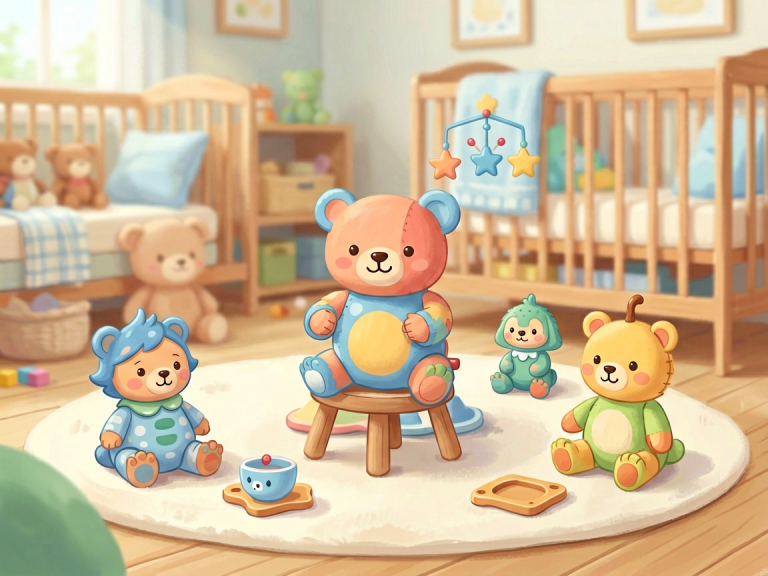
Cotton and wool, when used for stuffed animals or dress-up clothes, offer breathability and softness that synthetic fibers rarely match. A woolly sheep puppet that has been hugged a thousand times will still feel comforting, while a synthetic plush may have lost its fluff and developed scratchy seams. Metal, especially in the form of classic toy cars, sturdy kitchen utensils, or simple building components, provides a sense of permanence and heft that can ground a child’s play in reality.
The shift toward sustainable materials is not just an environmental statement—it is a practical strategy for creating toys that last. Many high-quality toy manufacturers now use Forest Stewardship Council (FSC) certified wood, water-based varnishes, and recycled metals. These toys may cost more upfront, but their lifespan—often outlasting the preschooler’s childhood and being passed to siblings or friends—makes them a wise investment.
Classic Categories: Toys That Have Proved Their Staying Power
Certain types of toys have been beloved by preschoolers for generations, and for good reason. Let us examine three categories that exemplify “toys that last.”
*Building Blocks and Construction Sets*
Nothing beats a set of simple wooden blocks. They are the quintessential open-ended toy. A two-year-old may stack them and knock them down; a three-year-old will build towers and then name the towers after family members; a four-year-old will create elaborate cities with roads and bridges. As the child grows, the blocks become part of more complex constructions, sometimes combined with other toys. The best block sets are made of solid hardwood, milled accurately so they stack without wobbling, and finished with a smooth, non-toxic surface. They come in simple shapes—rectangles, cubes, arches, triangles—without bright colors or characters that dictate a specific narrative. The child’s own story fills the void. Such blocks can last through multiple children and even grandchildren.
*Pretend Play Essentials*
Preschoolers learn about the world by imitating it. A toy kitchen, a set of plastic or wooden food items, a doctor’s kit, or a simple dollhouse are not just fun—they are cognitive and social development engines. The key to longevity in pretend play is simplicity. A wooden grocery cart with a few felt vegetables is more likely to hold a child’s interest than a battery-operated toy cash register that plays songs and beeps. Why? Because the former allows the child to invent the sounds, the prices, and the interactions. The latter becomes stale once the child has pressed all the buttons. A simple wooden train set—with locomotive, cars, and track pieces that connect without magnets or slots—can be rearranged endlessly. A doll with a neutral expression and soft, removable clothing invites the child to project emotions onto her. These toys last not only because they are well-made, but because they do not compete with the child’s imagination.
*Art and Sensory Materials*
Toys that encourage creative expression—crayons, modeling clay, finger paints, play dough, and construction paper—are rarely considered “toys” in the traditional sense, but they are among the most enduring. The trick is to choose high-quality versions. For example, beeswax crayons are less likely to break than cheap paraffin crayons, and they produce richer colors. Natural modeling clay that dries out can be revived with a few drops of water, while cheap polymer clay may crumble or stain. A set of sturdy, washable brushes and an easel that folds flat can serve a child from age two to six and beyond. The open-ended nature of art materials means that a single pack of colored paper can be used for cutting, folding, gluing, drawing, and storytelling. They do not wear out; they simply get used up, and when they do, they are replaced. But the tool—the paintbrush, the rolling pin for dough, the child-safe scissors—should be built to last.
The Science of Sustained Engagement: Why Less Is More
Psychologists and educators have long observed that preschoolers are drawn to toys that allow them to control the narrative. A battery-powered toy that moves on its own, sings a song, and lights up may captivate a child for a few minutes, but it quickly becomes a passive experience. In contrast, a toy that requires the child to push, pull, stack, sort, or imagine actively engages the prefrontal cortex, the area responsible for problem-solving and self-regulation. This is one reason why Montessori-based classrooms use mostly simple, natural materials. The child is the active agent; the toy is a tool.
Furthermore, too many toys can overwhelm a preschooler. Research on “choice overload” suggests that when a child is presented with a small, curated selection of high-quality toys, they play more deeply and for longer periods. A toy that lasts, therefore, is one that holds a place in a limited collection. It becomes familiar, a comfort object that the child returns to again and again. Over time, the toy becomes imbued with memories, stories, and even a kind of personality. This emotional attachment is the ultimate guarantee of longevity.
Practical Tips for Parents and Caregivers
Choosing toys that last for a preschooler is not about buying the most expensive product; it is about being intentional. Here are several actionable guidelines:
- Touch and test before buying. If a toy feels flimsy in the store, it will feel flimsy at home. Pay attention to hinges, seams, and edges. Does the paint rub off on your fingers? Will small parts snap off easily? These are red flags.
- Look for multi-generational designs. Some toy brands have been making the same basic wooden train or doll for decades. That is a testament to their design. If possible, ask grandparents what toys they remember loving—chances are those designs still work today.
- Avoid toys with many small plastic accessories. The pieces get lost quickly, and then the toy becomes incomplete and frustrating. Instead, choose toys that come with only a few essential pieces, or ones where you can replace lost parts.
- Consider “slow toys.” The term “slow toy” has gained popularity in recent years, referring to toys that do not have a predetermined function or end point. A slow toy invites the child to discover its uses over time. Examples include a simple wooden geometry puzzle, a set of nesting bowls, or a soft fabric ball. These toys reward patience and exploration.
- Invest in a few high-quality items rather than many cheap ones. A dozen low-cost plastic toys will likely break or bore the child within months. One or two well-crafted wooden toys, on the other hand, will often still be in the playroom when the child enters kindergarten.
- Embrace imperfection. A toy that lasts will show signs of use—scratches, faded paint, a slightly loose joint. This is not a defect; it is a testimony to the love it has received. Teach the child to care for their toys, but also allow them to play freely. A toy that can handle a little wear is a toy that will accompany them through many stages of growth.
Conclusion: Investing in Childhood, One Enduring Toy at a Time
When we choose toys that last for preschoolers, we are making a statement about the kind of childhood we want to nurture. We are choosing depth over novelty, imagination over automation, and sustainability over disposability. The toys that truly endure are not the ones that keep a child quiet for a few minutes—they are the ones that spark a conversation, a story, a lifelong love of building, or a memory of a rainy afternoon spent with a beloved doll. They are the toys that, years later, a teenager might find in the attic and hold in their hands with a mix of nostalgia and warmth.
In the end, the best toy is not the one that beeps the loudest or costs the most. It is the one that the child returns to again and again, the one that grows with them, the one that survives the chaos of preschool life. It is a small, quiet object that holds a universe of possibilities. For parents, educators, and everyone who cares for young children, choosing these toys is an act of love—a commitment to a slower, richer, and more meaningful kind of play. That is why toys that last for preschoolers matter, and why they will always be worth seeking out, preserving, and passing on.