Choosing Safe Toys for 4-Year-Olds: A Complete Guide for Parents and Caregivers
Introduction
The fourth year of a child’s life is a remarkable period of rapid growth in language, motor skills, imagination, and social interaction. At this age, children become more curious, energetic, and eager to explore the world around them. Toys are not just sources of entertainment; they are essential tools for learning, creativity, and emotional development. However, as parents and caregivers know all too well, the wrong toy can pose serious safety risks. Choking, poisoning, sharp edges, and entanglement are only a few of the hazards that lurk in poorly designed or age-inappropriate playthings. Selecting safe toys for a 4-year-old requires knowledge of developmental milestones, material safety, design standards, and parental vigilance. This article provides a thorough, evidence-based guide to choosing toys that are both fun and safe, ensuring that playtime remains a joyful and injury-free experience.
—
The Importance of Age-Appropriate Design and Size
At age four, children have outgrown many of the extreme choking hazards of infancy, but they still lack the impulse control and judgment of older kids. Toys that are too small or have detachable parts can easily find their way into a child’s mouth, nose, or ears. The American Academy of Pediatrics recommends that any toy or component smaller than 1.25 inches (about 3.2 centimeters) in diameter should be avoided for children under three, but even at four, caution is warranted. A four-year-old may still mouth objects when excited or tired, so it is wise to choose toys that are large enough to prevent accidental swallowing.
Sharp edges, points, and pinch hazards are equally concerning. Look for toys with smooth, rounded edges, especially those made of plastic, wood, or metal. Avoid toys that have thin, brittle parts that can break into shards. For example, inexpensive plastic cars or action figures from unknown manufacturers often have rough seams that can cause cuts. Similarly, toys with long cords, strings, or ribbons longer than 12 inches should be avoided because they pose a strangulation risk. Riding toys, such as tricycles or scooters, must have a stable base and low center of gravity to prevent tipping. Always check that any wheeled toy has non-slip handles and brakes that are easy for small hands to operate.
—
Material Safety: Non-Toxic and Durable
The materials used to manufacture toys are a primary safety consideration. Four-year-olds frequently put toys in their mouths, and even “non-toxic” labels can be misleading if the product isn’t properly tested. Always look for toys that meet recognized safety standards such as ASTM F963 (United States), EN71 (European Union), or AS/NZS ISO 8124 (Australia/New Zealand). These certifications indicate that the toy has been tested for harmful chemicals, flammability, and mechanical hazards.
Plastics should be free of Bisphenol A (BPA), phthalates, and lead. Many cheap imported toys contain high levels of these endocrine disruptors, which can affect a child’s hormone system and brain development. Instead, opt for toys made from high-quality, food-grade silicone, polyethylene, or polypropylene. Wooden toys are excellent choices if they are coated with water-based, non-toxic paints or natural oils. Avoid toys that smell strongly of chemicals, as this often signals high levels of volatile organic compounds (VOCs). For stuffed animals and plush toys, confirm that the fabric is hypoallergenic, the seams are double-stitched to prevent stuffing from coming out, and that any attached eyes or noses are securely fastened—buttons or beads that can be pulled off are a choking hazard.
Metal toys should be painted with lead-free paint, and any exposed metal parts should be free of rust or sharp edges. Art supplies like crayons, markers, and modeling clay should be labeled “non-toxic” and ideally conform to ASTM D-4236. Even “natural” clay may contain high levels of silica, so check for safe formulations. In short, every material that touches your child’s skin or mouth should be verified as safe through known certification marks.
—
Avoiding Mechanical and Electrical Hazards
As four-year-olds grow more dexterous, they become fascinated by toys that move, light up, or make sounds. Battery-operated toys are common, but they introduce unique risks. The battery compartment must be secured with a screw that requires a tool to open—never rely on a simple snap-on cover. Button batteries are especially dangerous; if swallowed, they can cause severe internal burns in less than two hours. Never purchase toys that use loose button batteries; instead, choose those with battery packs that are clearly shielded.
For electronic toys, examine all wires and connections. Wires should be thick, insulated, and anchored so that a child cannot pull them loose. Toys with heating elements, such as those that simulate cooking, should be avoided entirely because a four-year-old does not understand the concept of heat limits. Similarly, any toy that plugs into a wall outlet is inappropriate—only battery-powered or USB-rechargeable devices (with short, secure cables) are acceptable.
Mechanical hazards include gears, pulleys, or fan blades that can catch tiny fingers. Construction sets with interlocking pieces are great for fine motor skills, but ensure that the gaps between moving parts are too small for a finger to enter—or, conversely, wide enough to avoid pinching. For example, toy vehicles with rotating wheels should have axles that are fully enclosed. Kites and flying toys are fine, but their strings must be made of non-conductive material (avoid metallic string) and should be supervised to prevent tangling.
—
Encouraging Creativity and Skill Development through Safe Toys
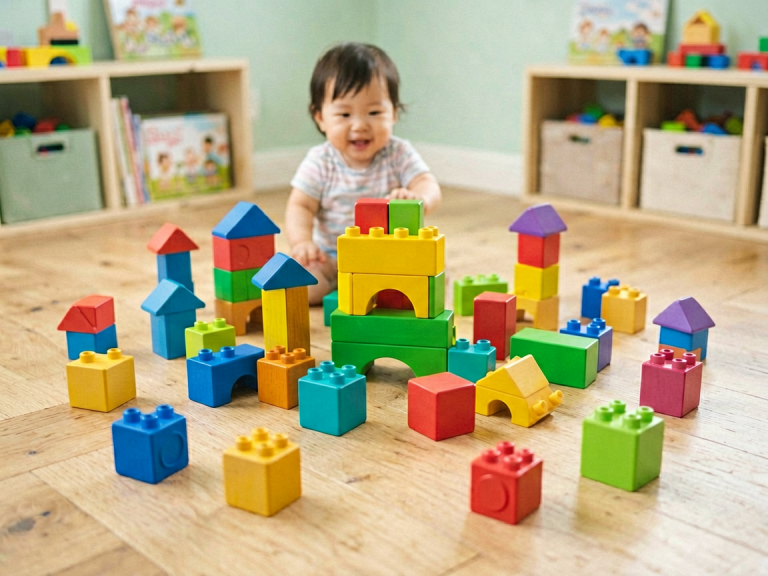
Safety does not mean sacrificing fun or learning. In fact, some of the safest toys for four-year-olds are also the most beneficial for their development. Building blocks—whether made of soft foam, solid wood, or interlocking plastic—promote spatial reasoning, problem-solving, and fine motor control. Choose blocks with beveled edges and non-toxic finishes. Classic wooden unit blocks are timeless and safe if they meet size standards (no smaller than one inch thick).
Puzzles with 10 to 20 large pieces are excellent for cognitive development. The pieces should be thick enough to grip easily and have no sharp corners. Look for puzzles with knobs or pegs for children who still need extra fine-motor support. Art and craft supplies, such as washable markers, finger paints, and safety scissors, invite self-expression. Just remember that play-dough and slime should be supervised to prevent ingestion, and ensure that any “glow-in-the-dark” or glittery products are non-toxic.
Role-play toys, such as kitchen sets, tool benches, and doctor kits, allow four-year-olds to imitate adults and practice social skills. The best versions are made of sturdy plastic or wood, with no small accessories (like pretend food pieces that could be swallowed). Toy food should be at least two inches in each dimension, and any “knife” or “tool” should have blunt, rounded edges. Ride-on toys, like balance bikes and push cars, are fantastic for gross motor development. Ensure they have a wide wheelbase, a low seat height, and no removable parts that could be ingested. Helmets should always be worn when using any ride-on toy outdoors.
—
The Role of Parental Supervision and Regular Inspection
No matter how carefully you select toys, no product is 100% safe without adult oversight. At age four, children still need guidance on how to use toys properly—for example, not throwing hard toys at others, not putting small pieces in their mouths, and not running with sharp objects. Set clear rules about where and when toys can be used. Supervise playtime especially when the toy involves moving parts, batteries, or small accessories.
Regularly inspect your child’s toy collection for wear and tear. Wooden toys can splinter over time; plastic can crack; stuffed animals can develop torn seams. Check for loose buttons, missing screws, frayed strings, or faded paint that might indicate lead leaching. Dispose of broken toys immediately, even if your child is attached to them. Remember that toy recalls happen frequently—sign up for safety alerts from the Consumer Product Safety Commission (CPSC) or your country’s equivalent agency. Brands that have a history of recalls should be avoided.
Finally, store toys properly. Keep small-piece games in sealed containers out of reach of younger siblings. Heavy toys should be stored on low shelves to prevent them from falling onto a child. Bookcases and toy bins should be anchored to the wall to prevent tip-overs. Rotate toys periodically to keep your child engaged, but always reintroduce them after a safety check.
—
Conclusion
Choosing safe toys for a 4-year-old is a responsibility that blends knowledge, intuition, and vigilance. By focusing on age-appropriate design, non-toxic materials, robust mechanical and electrical safety, and developmentally enriching features, you can create a play environment that nurtures your child’s growth without compromising their well-being. Remember that the most engaging toy is often the simplest: a ball, a set of blocks, or a cardboard box can provide hours of imaginative fun—and they are inherently safe when chosen properly. Always trust your instincts, read labels carefully, and never hesitate to ask questions of manufacturers. With careful selection and active supervision, playtime can be the happiest, healthiest part of your child’s day.