Choosing Safe and Age-Appropriate Toys for Children: A Comprehensive Guide
—
Introduction
Toys are more than just sources of entertainment for children; they are essential tools for learning, exploration, and development. From a colorful rattle that captures an infant’s attention to a complex building set that challenges a school‑age child’s problem‑solving skills, the right toy can nurture creativity, motor skills, social interaction, and cognitive growth. However, with the vast array of products on the market, parents and caregivers often face a daunting question: *What makes a toy truly safe and appropriate for my child’s age?* The answer lies not only in the toy’s physical safety features but also in its alignment with the child’s developmental stage. An age‑inappropriate toy can pose choking hazards, cause frustration, or fail to engage a child meaningfully, while an unsafe toy can lead to serious injuries. This article provides a thorough exploration of the principles behind selecting safe, age‑appropriate toys, offering practical guidance, developmental insights, and a checklist to help every adult make informed decisions.
—
Why Safety and Age Appropriateness Matter
The first and foremost reason to prioritize safe, age‑appropriate toys is the prevention of injury. According to the U.S. Consumer Product Safety Commission (CPSC), thousands of children are treated in emergency rooms each year for toy‑related injuries, many of which are preventable. Small parts, sharp edges, toxic materials, and strangulation hazards are common culprits. For instance, a toy designed for a 5‑year‑old may contain small magnets or batteries that, if swallowed, can cause life‑threatening internal damage to a toddler who puts everything in his mouth. Beyond physical safety, age appropriateness directly impacts a child’s emotional and intellectual development. A toy that is too advanced can lead to frustration and loss of confidence, while one that is too simple may bore the child and fail to stimulate growth. Developmentally aligned toys challenge children just enough to build new skills—whether it’s stacking blocks for fine motor control or playing a cooperative board game for social learning. Thus, choosing wisely is an investment in both safety and healthy development.
—
Understanding Age Labels and Developmental Stages
Toy manufacturers are required by law in many countries to place age‑recommendation labels on their products. These labels, such as “Ages 3+” or “Not for children under 36 months,” are not arbitrary; they are based on research into children’s physical abilities, cognitive milestones, and typical behaviors at each age. For example, children under three years old are still in the oral stage—they explore the world by mouthing objects. Therefore, toys for this group must be free of small parts that could be choked on, and they must be made of non‑toxic, durable materials. Between ages three and five, children develop more refined hand‑eye coordination and begin engaging in pretend play, so toys with small pieces, such as LEGO Duplo or simple puzzles, become appropriate—but only if the pieces are large enough to avoid choking. For school‑age children (6‑12 years), complex construction sets, science kits, and electronic devices may be suitable, provided they meet safety standards for batteries, heat, and sharp components. It is also important to consider not just the chronological age but the child’s individual developmental pace. A highly advanced four‑year‑old may enjoy a toy labeled for age five, but parents should still assess the toy’s physical safety features first.
—
Guidelines for Selecting Safe Toys
When shopping for toys, follow these essential guidelines to minimize risks:
- Check for certification marks. Look for labels such as ASTM (American Society for Testing and Materials) or CE (Conformité Européenne) which indicate that the toy has passed rigorous safety tests.
- Inspect for small parts. Use a small‑parts tester (or simply a toilet paper roll) to see if any detachable component can fit completely inside. If it can, it is a choking hazard for a child under three.
- Avoid toxic materials. Ensure paints, plastics, and fabrics are lead‑free, phthalate‑free, and BPA‑free. Opt for toys made from natural wood, organic cotton, or food‑grade silicone when possible.
- Examine for sharp edges and points. Run your fingers along the seams and contours of the toy. Any rough areas should be sanded or covered.
- Assess string and cord length. Any cord longer than 12 inches (about 30 cm) poses a strangulation risk for young children. Remove or avoid such toys for toddlers.
- Test for sturdiness. A toy that breaks easily can create sharp shards or release small parts. Squeeze, shake, and drop the toy (gently) to see if it holds up.
- Be cautious with batteries. Button batteries are extremely dangerous if swallowed; they can cause severe burns in as little as two hours. Toys with battery compartments should require a screwdriver to open.
- Consider noise levels. Some toys produce sounds over 85 decibels, which can damage a child’s hearing if held close to the ear. Test the volume yourself, or choose toys with adjustable sound.
—
Toy Safety Checklist for Parents
Before finalizing a purchase or allowing a new toy into your home, run through this quick checklist:
- Age label – Does the toy’s recommended age match your child’s current stage?
- Physical fit – Are there any small parts that could be detached or swallowed?
- Material safety – Is the toy free from known toxins? (Look for “non‑toxic” on the package.)
- Construction – Are all seams secure? Does the toy have any loose screws, wheels, or eyes?
- Cord length – Are any strings or ribbons shorter than 12 inches?
- Batteries – Is the battery compartment secured with a screw?
- Cleaning – Can the toy be easily washed? Soft toys should be machine washable to prevent germ buildup.
- Previous recalls – Check the CPSC or equivalent national authority’s website for any recall notices on the brand or model.
- Instruction manual – Does it include clear safety warnings and proper age information?
- Your child’s temperament – Does the toy match your child’s interests and abilities? A quiet child may be overwhelmed by a loud, flashy toy, while an active child might need something more physical.
—
Age‑Specific Recommendations
Infants (0–12 Months)
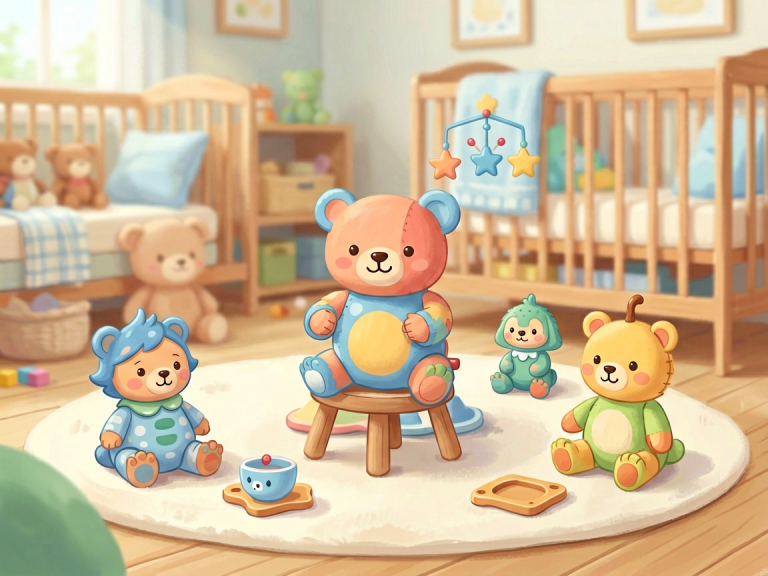
At this stage, babies explore primarily through their senses—sight, sound, touch, and taste. Safe toys include:
- Soft rattles and teethers (made of silicone or BPA‑free plastic, without liquid‑filled parts that could leak)
- Fabric books with high‑contrast patterns
- Unbreakable mirrors
- Activity gyms with hanging objects (ensure they are securely attached)
- Avoid: Anything with small parts, long strings, or batteries.
Toddlers (1–3 Years)
Toddlers are mobile and curious. They enjoy pushing, pulling, stacking, and dumping. Recommended toys:
- Large wooden blocks or stacking cups
- Push‑pull toys with sturdy handles
- Simple shape sorters and nesting toys
- Art supplies like chunky crayons and finger paints (non‑toxic)
- Ride‑on toys that are low to the ground (without pedals)
- Avoid: Toys with small magnets, projectile‑firing parts, or breakable plastic.
Preschoolers (3–5 Years)
Imagination blossoms. Children engage in pretend play and begin cooperative games. Good choices:
- Dress‑up costumes and play kitchens (check for loose buttons or small accessories)
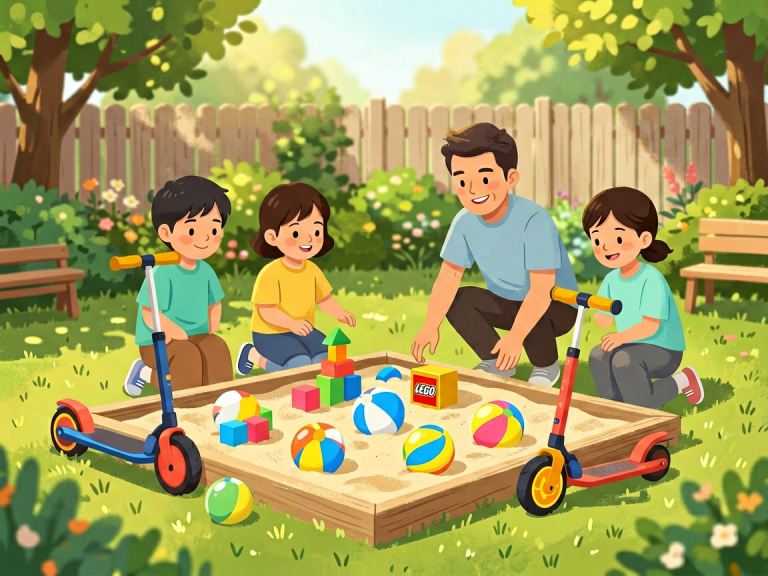
- Medium‑sized building sets (e.g., LEGO Duplo, Magna‑Tiles)
- Simple board games with large pieces
- Art kits with safety scissors (blunt tips)
- Tricycles or balance bikes with proper safety gear
- Avoid: Toys with sharp points, electrical components, or small parts that can be swallowed.
School‑Age Children (6–12 Years)
These children have better fine motor control and can handle more complex toys. Consider:
- Advanced construction sets (LEGO Technic, K’nex)
- Science experiment kits (with adult supervision)
- Sports equipment (check for appropriate size and weight)
- Electronic toys with volume control and secure battery compartments
- Craft kits (glue, beads, needles—ensure age‑appropriate supervision)
- Avoid: Toys with dangerous chemicals (some chemistry sets may contain hazardous materials unless labeled safe for children), overly loud devices, or toys with sharp edges.
Teens (13+ Years)
While older children still benefit from play, they often prefer hobbies, games, and tech. Safety concerns shift to digital safety and ergonomics. For example, if buying a drone, ensure it has propeller guards; for video games, set time limits and monitor online interactions.
—
Common Hazards to Avoid
Even with careful selection, some toys carry hidden dangers. Watch out for:
- Magnetic toys: High‑powered magnets (e.g., those in some building sets) can cause catastrophic internal injuries if swallowed. Avoid any magnetic toys for children under six.
- Button batteries: Found in many electronic toys, these small, coin‑shaped batteries can burn a hole in the esophagus if lodged. Ensure battery compartments are screw‑secured.
- Projectile toys: Darts, rubber‑band guns, and air‑soft toys can cause eye injuries. Never allow them without protective eyewear, and supervise closely.
- Toys that overheat: Some charging toys or battery‑operated devices can become hot. Check the temperature after use.
- Secondhand toys: Used toys may miss original safety labels, have loose parts, or contain older paints with lead. Always inspect thoroughly and check recall databases.
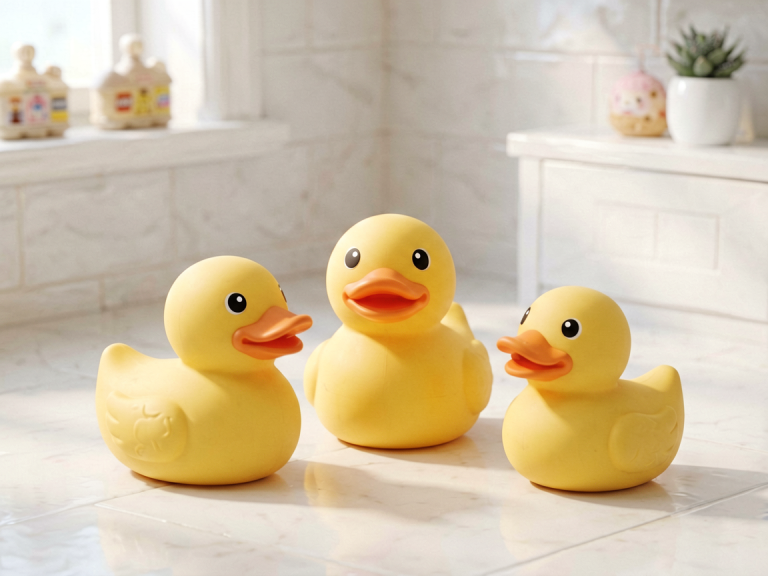
- Water toys: Inflatable pools, water wings, and bath toys can pose drowning risks. Never leave a child unsupervised near water, even with a toy.
—
The Role of Parental Supervision
No toy is 100% safe in the absence of adult supervision. Even the most carefully selected toy can become hazardous if used improperly. Parents should:
- Actively play with young children to model safe use.
- Check toys regularly for wear and tear—cracks, frayed edges, loose parts.
- Store toys appropriately (e.g., keep small‑part toys out of reach of younger siblings).
- Teach children basic safety rules, such as not putting toys in their mouths, not throwing hard objects, and not running with toys that have sharp corners.
- Stay informed about recalls by signing up for alerts from the CPSC or local consumer protection agencies.
Supervision also means observing how a child interacts with a toy. If a child seems frustrated or bored, the toy may not be age‑appropriate. If a child starts dismantling a toy, it may be too advanced or too fragile. Adjust accordingly.
—
Conclusion
Selecting safe, age‑appropriate toys is both a science and an art. It requires understanding developmental milestones, scrutinizing product labels, and using common sense to anticipate potential risks. The effort is well worth it: a well‑chosen toy can spark hours of joyful, meaningful play that supports a child’s growth without exposing them to harm. As parents, caregivers, and gift‑givers, we have the responsibility to look beyond the flashy packaging and marketing claims and focus on what truly matters—the child’s safety and developmental needs. By following the guidelines outlined in this article, you can build a toy collection that is not only fun but also nurturing and secure. Remember: when in doubt, always err on the side of caution. A simple, safe toy that engages a child’s imagination is far more valuable than a complex gadget that poses unnecessary risks. Let every toy be a stepping stone to learning, laughter, and a lifetime of healthy play.