Beyond the Screen: Why Educational Open-Ended Toys Are Essential for Childhood Development
Introduction
In an era dominated by flashing screens, pre-programmed robots, and single-purpose plastic gadgets, a quiet revolution is taking place in the world of childhood play. Parents, educators, and child development experts are increasingly turning away from toys that dictate a single outcome and embracing a more flexible, imaginative category: educational open-ended toys. These are not the noisy, battery-driven contraptions that flash lights and sing songs; rather, they are simple, often minimalist objects that invite children to create, experiment, and invent their own rules. From a set of wooden blocks to a pile of fabric scraps, open-ended toys possess a unique power: they grow with the child, adapt to their interests, and foster skills that last a lifetime. This article explores the philosophy behind open-ended play, its profound developmental benefits, practical examples, and guidance for parents seeking to enrich their children’s playrooms.
—
What Are Open-Ended Toys?
At its core, an open-ended toy is any plaything that has no fixed purpose, no predetermined outcome, and no “right” way to use it. Unlike a jigsaw puzzle that has a single correct arrangement, or a talking doll that repeats the same phrases, open-ended toys are blank canvases for the child’s imagination. A cardboard box can become a spaceship, a castle, a car, or a time machine—all within the span of an afternoon. A set of magnetic tiles can be built into a tower, a bridge, a robot, or a geometric sculpture. The possibilities are limited only by the child’s creativity and developmental stage.
These toys often feature simple designs, natural materials (wood, cloth, metal), and modular components that can be combined, stacked, sorted, or transformed. Examples include building blocks, loose parts (such as stones, pinecones, or buttons), art supplies (playdough, clay, paints), construction sets like LEGO Duplo, dollhouses with minimal furniture, and even everyday household items like measuring cups or empty spools. The key is that the toy does not dictate the play; the child does.
—
Why Open-Ended Toys Matter for Child Development
1. Cognitive Flexibility and Problem-Solving
Open-ended toys are natural incubators for cognitive growth. When a child must decide how to build a stable bridge with blocks, or how to make a “car” out of a cardboard tube and bottle caps, they engage in active problem-solving. There is no instruction manual to follow, so they must hypothesize, test, fail, and adapt. This iterative process strengthens executive function skills—working memory, inhibitory control, and cognitive flexibility. Research from the American Academy of Pediatrics highlights that unstructured play, especially with open-ended materials, enhances children’s ability to think divergently, generate multiple solutions, and persist through challenges.
2. Creativity and Self-Expression
In a world where many toys come with built-in storylines or voice commands, open-ended toys restore the child’s role as the author of their own narrative. A set of wooden animals, for instance, can star in a drama about a jungle rescue, a peaceful farm scene, or a magical forest kingdom—depending on the child’s mood. This freedom to create meaning is critical for developing creative thinking. According to a study published in *Thinking Skills and Creativity*, children who frequently engage with open-ended materials score higher on measures of originality and elaboration in creative tasks. They learn that there is no “wrong” way to play, which emboldens them to take risks and explore unconventional ideas.
3. Language and Social Skills
When children play together with open-ended toys, they are forced to communicate, negotiate, and collaborate. One child might declare, “Let’s make this block into a castle gate,” while another suggests, “No, it’s a rocket launchpad.” Through such interactions, they practice perspective-taking, compromise, and verbal expression. Unlike closed toys that often encourage parallel play (each child doing their own thing), open-ended materials invite joint construction of stories and worlds. This social dynamic is particularly valuable in early childhood education settings, where teachers use loose parts to promote cooperative learning.
4. Fine and Gross Motor Development
Open-ended toys also support physical development. Manipulating small blocks, threading beads, rolling clay, or balancing stones requires precise hand-eye coordination and fine motor control. Larger items like wooden planks or fabric tents encourage whole-body movement, crawling, stretching, and balancing. These activities build muscle strength, dexterity, and spatial awareness—far more effectively than pressing a button on a toy that does all the work.
—
Examples of Excellent Open-Ended Toys
To bring the concept to life, here are some tried-and-true open-ended toys that parents and educators highly recommend:
- Wooden Unit Blocks: Classic, unpainted, various sizes. They teach geometry, balance, and physics while allowing infinite construction.
- Magnetic Tiles (e.g., Magna-Tiles): Transparent, colorful, and magnetic. Children build 2D and 3D structures learning about symmetry, magnetism, and design.
- Playdough (and tools): Homemade or store-bought. Adding natural materials like twigs, shells, or cookie cutters expands possibilities.
- Loose Parts Kits: Collections of natural objects (acorns, pebbles, driftwood) and recycled items (bottle caps, fabric scraps, corks). These are the ultimate open-ended resource, often used in Montessori and Reggio Emilia classrooms.
- Dollhouses and Figures: Minimalist dollhouses with simple furniture allow children to create their own family dynamics and daily routines.
- Art Materials: Crayons, paints, paper, glue, and scissors—unstructured art supplies encourage self-expression and experimentation.
- Climbing Structures and Fort Kits: Simple wooden frames, blankets, and pillows can transform into caves, ships, or stages, promoting physical play and storytelling.
—
How to Choose and Incorporate Open-Ended Toys
Look for Simplicity and Versatility
When selecting open-ended toys, prioritize items that are “simple in form but rich in possibility.” Avoid toys with pre-recorded sounds, flashing lights, or specific characters (like a licensed superhero action figure that only fights that one villain). The best open-ended toys are those that do one thing—like stack, connect, or mold—and do it well. Natural materials often score high because they appeal to multiple senses and have no predetermined agenda.
Follow the Child’s Lead
Even the most brilliant open-ended toy will gather dust if it doesn’t match the child’s current interests. Observe what your child is naturally drawn to: a child obsessed with vehicles might enjoy a set of wooden wheels and axles rather than a finished car. Let their curiosity guide your purchases. Also, introduce toys gradually. A room full of open-ended options can overwhelm a child; a few carefully chosen items encourage deep engagement.
Rotate and Combine
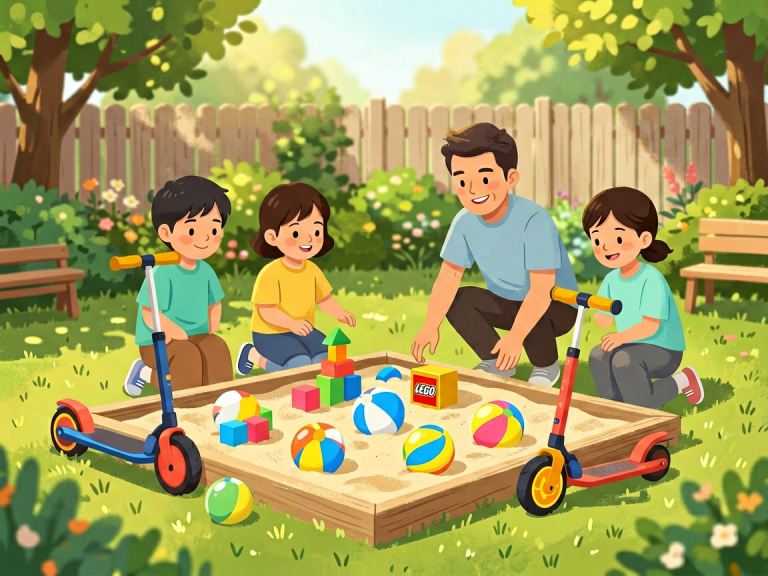
To keep play fresh, rotate toys every few weeks. Store some away and bring out others. This “less is more” approach prevents boredom and sparks new ideas. Even better, combine different open-ended materials: water, sand, and blocks together create a sensory-rich experience. The more diverse the materials, the more complex the play.
Embrace the Mess and the “Imperfect”
Open-ended play can be messy. Blocks topple, paint spills, and clay gets ground into carpets. But the learning that happens in those messy moments is invaluable. Resist the urge to correct or direct. Instead, ask open-ended questions: “What happens if you put that block here?” or “Can you tell me about your creation?” This validates the child’s process and encourages them to think aloud.
—
Conclusion
In a culture that often prizes efficiency, completion, and measurable outcomes, open-ended toys offer a refreshing counterbalance. They remind us that the most important learning happens not when a child follows instructions but when they ask questions, make mistakes, and imagine new worlds. Educational open-ended toys are not just playthings—they are tools for building resilient, creative, and curious minds. For parents seeking to nurture their child’s holistic development, the investment in a set of simple blocks, a basket of loose parts, or a ball of clay is one of the best decisions they can make. In the end, the most powerful “toy” is the child’s own imagination—and open-ended toys are simply the key that unlocks its infinite potential.