Beyond the Glow: The Enduring Value of Screen-Free Toys That Last
—
Introduction: A Quiet Revolution in Play
In an era dominated by glowing screens, beeping notifications, and ever-shortening attention spans, a quiet revolution is taking hold in homes, classrooms, and pediatricians’ offices. Parents, educators, and child development experts are turning back to something refreshingly simple: screen-free toys that last. These are not high-tech gadgets with rechargeable batteries or subscription services; they are objects of wood, cloth, metal, and paper — designed to be touched, manipulated, imagined with, and passed down from one generation to the next. The core idea is not merely to reduce screen time, but to embrace a philosophy of play that values depth over distraction, and durability over disposability. This article explores why these toys matter, what makes them last — both physically and conceptually — and how they shape the minds and hearts of children in ways that no app ever could.
—
The Timeless Appeal of Analog Play
Children have been playing for millennia without a single pixel. The urge to build, sort, pretend, and create is wired into the human brain. Screen-free toys tap directly into that wiring, offering open-ended possibilities rather than pre-scripted responses.
When a child picks up a set of wooden blocks, there is no “right” way to use them. The blocks do not congratulate or scold; they simply exist, waiting to become a castle, a rocket ship, a fence for toy animals, or a tower that inevitably tumbles with a satisfying clatter. This freedom is the heart of deep play — a state in which a child loses track of time, solves problems spontaneously, and develops resilience through trial and error. Unlike a digital game that resets automatically, a fallen block tower demands that the child choose: rebuild, redesign, or try something entirely new. That choice is a small but powerful lesson in agency and perseverance.
Moreover, screen-free toys engage multiple senses. The grain of unfinished wood, the weight of a cast-iron car, the soft warmth of a knitted doll — these tactile experiences are irreplaceable. Neuroscientific research suggests that rich sensory input during early childhood strengthens neural pathways associated with creativity, language, and emotional regulation. A screen may flash bright colors, but it cannot provide the texture of bark, the heft of a stone, or the scent of beeswax crayons. Toys that last — in the literal sense of their material integrity — also last in the cognitive and emotional development they foster.
—
Why Durability Matters: The Environmental and Economic Case
The phrase “toys that last” has a double meaning. First, it refers to physical longevity: toys built to withstand years of rough handling, dropped stairs, teething, and outdoor mud. Second, it implies lasting engagement: toys that do not become boring after a week, but instead evolve with a child’s growing abilities.
From an environmental perspective, the disposable toy culture is unsustainable. According to a 2022 report from the Environmental Protection Agency, millions of tons of plastic toys end up in landfills each year, many containing batteries that leak toxic chemicals. In contrast, a high-quality wooden train set or a set of stainless-steel cooking utensils for a play kitchen can last for decades, be repaired if broken, and eventually be donated or resold. The cost per hour of play for a durable toy often drops to pennies, while cheap plastic gizmos that break in two months cost far more in the long run — both financially and ecologically.
Economically, parents who invest in “toys that last” often find they save money over time. Instead of buying a succession of fad items tied to movie franchises, a family can curate a small collection of versatile, high-quality pieces. A set of magnetic tiles, for example, remains engaging from toddlerhood through early elementary school, used first for simple stacking and later for complex geometric structures and physics experiments. The same set may even be enjoyed by younger siblings and cousins. This kind of intergenerational use adds emotional value: a child playing with a dollhouse that once belonged to their mother feels a tangible connection to family history.
—
Top Examples of Screen-Free Toys That Truly Last
Not all screen-free toys are created equal. The following categories have proven their staying power across cultures and decades.
1. Wooden Building Blocks and Construction Sets
The quintessential durable toy. Simple, unpainted wooden blocks from brands like Grimm’s or Melissa & Doug (or even handmade sets from local artisans) encourage spatial reasoning, balance, and cooperative play. They do not require batteries, instructions, or Wi-Fi. Their weight and texture make them satisfying to handle, and they can be combined with other toys — a wooden block becomes a phone, a car, or a stepping stone in an imaginary world.
2. High-Quality Art Supplies
Not a single toy, but a category: beeswax crayons, watercolor palettes, clay, and thick paper. These consumables are not “forever,” but the act of creating art is a screen-free activity that lasts in a different sense. A child’s drawing taped to the refrigerator is a permanent record of their imagination. Moreover, the tools themselves — a set of well-made colored pencils or a sturdy easel — can outlast a dozen electronic tablets. They promote fine motor skills, color theory, and emotional expression without algorithm-driven suggestions.
3. Classic Board Games with Depth
Games like *Catan Junior*, *Ticket to Ride: First Journey*, or old standbys like *Checkers* and *Chess* provide structured yet screen-free social interaction. Unlike video games, these require face-to-face negotiation, turn-taking, and reading of social cues. A wooden chess set is a heirloom; a cardboard game board, if stored properly, can survive decades. The key is choosing games that offer replayability — strategic depth that doesn’t wear thin after a few rounds.
4. Role-Play and Open-Ended Figurines
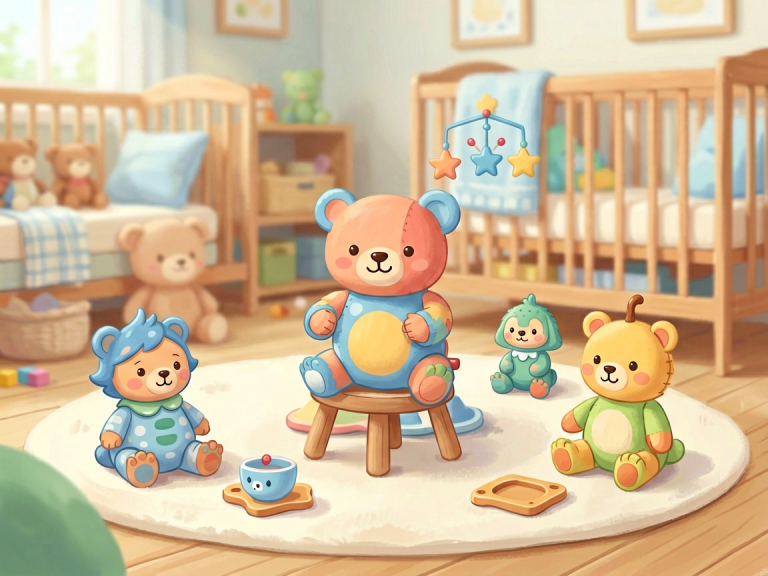
Wooden or rubber animal sets, doll families, and simple fabric costumes. These toys invite storytelling. A set of wooden farm animals can populate a barn built from blocks, or become characters in a child’s original narrative. Unlike figurines tied to a specific movie plot, generic animals and people allow the child to be the director, writer, and actor. The durability of well-made figurines (hard plastic, wood, or silicone) ensures they survive hours of being “rescued,” “fed,” and “put to bed.”
5. Musical Instruments for Little Hands
A small xylophone, a hand drum, a pair of maracas. Not only do these create noise (which children adore), but they also teach cause and effect, rhythm, and auditory discrimination. Instruments made from wood, metal, and skin (or synthetic substitutes) can last for years if cared for. They do not require a screen interface to produce sound — just a child’s curiosity and a willingness to make a joyful racket.
—
How to Choose Quality: A Practical Guide
Selecting toys that will last both in form and function requires a shift in mindset. Instead of asking “Will my child like this?” first ask three questions:
- Is it open-ended? Can the toy be used in many different ways, or does it dictate a single play pattern? A toy that can be a spaceship today and a submarine tomorrow offers far more value than one that only makes a specific noise when a button is pressed.
- Is it repairable? Can you tighten a screw, glue a broken piece, or replace a worn part? Many high-end wooden toy brands sell replacement parts. Avoid toys that are glued, sealed, or molded in a way that makes repair impossible.
- Is it made from safe, sustainable materials? Look for solid wood (not particleboard), water-based paints, organic cotton, and non-toxic finishes. Certifications like FSC (Forest Stewardship Council) and ASTM safety standards are helpful indicators.
Also, resist the temptation to overbuy. A cluttered playroom can overwhelm a child’s ability to focus. A smaller, carefully chosen collection of durable toys invites deeper engagement. Rotate toys every few weeks to keep novelty alive without buying new ones.
—
Conclusion: The Gift of Time and Imagination
In a world that constantly urges us to upgrade, swipe, and consume, choosing screen-free toys that last is an act of both rebellion and love. It says that we believe in the power of a child’s own mind — that we trust their ability to create worlds from a few wooden blocks, to find endless stories in a set of animal figurines, and to learn patience and joy from a handmade musical instrument. These toys do not shout for attention; they wait quietly, ready to be discovered anew.
And perhaps that is their greatest magic. They do not have on/off switches. They do not track data or prompt purchases. They simply *are* — inviting children to slow down, to touch, to think, and to imagine. In that pure, unhurried space, something lasting truly grows: a lifelong love of learning, a capacity for creativity, and the memory of childhood play that glows brighter than any screen.