Beyond the Button: Why Open-Ended Toys Outshine Single-Purpose Playthings in Childhood Development
Introduction
In the brightly colored aisles of toy stores and the infinite scroll of online marketplaces, parents and educators are confronted with an overwhelming choice: should they buy the sleek, battery-operated gadget that sings, flashes, and moves on its own, or the simple set of wooden blocks that sits quietly in a cloth bag? This question touches on a fundamental divide in the world of play—the contrast between open-ended toys and single-purpose toys. While both have their place, mounting evidence from developmental psychology, neuroscience, and early childhood education suggests that open-ended toys offer richer, more enduring benefits for a child’s cognitive, social, and emotional growth. This article explores the definitions, strengths, and limitations of each category, and argues that the humble, unstructured plaything often holds the key to deeper learning.
Defining Open-Ended Toys
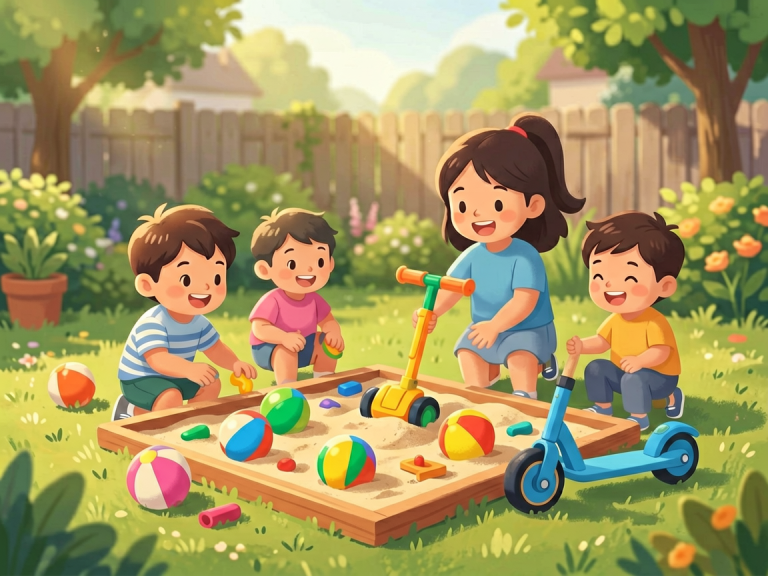
Open-ended toys are those that have no fixed purpose, no predetermined outcome, and no single “correct” way to play. They are, in essence, blank canvases for a child’s imagination. Classic examples include building blocks, LEGO bricks (when used without a specific instruction manual), modeling clay, sand, water, wooden trains, dolls without pre-scripted stories, and art supplies like paper and crayons. The defining feature is that the child directs the play; the toy responds to the child’s creativity, not the other way around.
A set of unit blocks, for instance, can become a tower, a castle, a spaceship, a bridge, a zoo enclosure, or a simple line of dominoes. The same blocks can be used differently by a two-year-old, a six-year-old, and a ten-year-old. This flexibility means that open-ended toys grow with the child, adapting to their changing interests and cognitive abilities. They invite exploration, trial and error, and divergent thinking—the capacity to generate many possible solutions to a single problem.
Defining Single-Purpose Toys
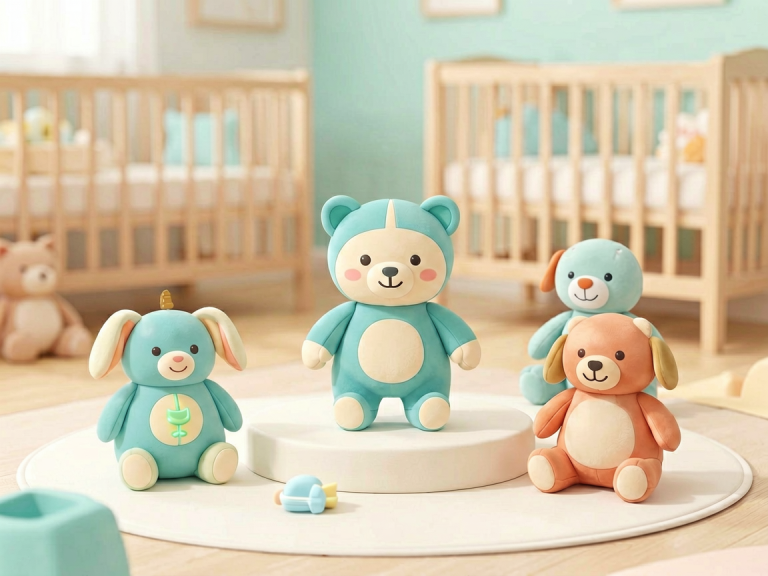
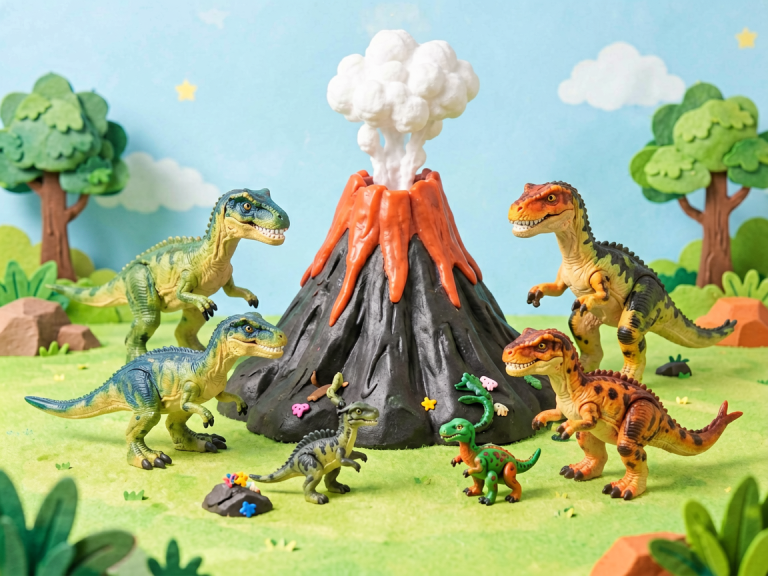
Single-purpose toys, by contrast, are designed to do one specific thing. They often incorporate lights, sounds, motors, or digital interfaces that dictate how the toy is supposed to be used. Examples include an electronic toy that plays a single song when a button is pressed, a battery-operated car that only drives forward, a remote-controlled dinosaur that only roars and walks, or a puzzle with exactly one solution. Many modern “smart” toys fall into this category: they talk, ask questions, and provide feedback based on pre-programmed responses.
The appeal of single-purpose toys is understandable. They often seem more engaging at first glance—they are noisy, colorful, and instantly gratifying. A child can press a button and receive immediate, predictable feedback. Parents may feel that such toys teach specific skills: a talking alphabet toy “teaches” letters; a shape-sorter “teaches” shapes. But the learning is often passive, shallow, and quickly exhausted. Once the child has learned the single function—pushing the same button to hear the same sound—the toy loses its novelty and ends up abandoned in a corner.
Comparative Benefits for Child Development
When we place these two categories side by side, the differences in developmental impact become stark.
Creativity and Imagination
Open-ended toys are the engines of creative thinking. Because there are no instructions, the child must invent scenarios, solve novel problems, and construct meaning. A cardboard box can become a car, a house, a time machine, or a turtle shell. This free-form play strengthens neural connections related to symbolic thinking, which is the foundation of literacy and abstract reasoning. Single-purpose toys, meanwhile, tend to channel play into a narrow corridor. The electronic train that only goes around a fixed track offers little room for the child to reimagine its use. Over time, repeated exposure to highly structured toys can actually reduce a child’s willingness to engage in imaginative play, as they become accustomed to being entertained rather than creating.
Problem-Solving and Executive Function
When a child plays with open-ended materials, they constantly face problems: “How can I make these blocks balance?” “How do I get the water to flow from this cup to that funnel?” “What happens if I put too much clay on one side?” These tiny experiments build executive function skills—planning, flexibility, self-regulation, and persistence. A child who fails to build a stable tower learns to revise their strategy, a lesson in resilience that no battery-powered toy can teach. Single-purpose toys, in contrast, remove the need for problem-solving. The toy does the work; the child is merely a spectator. The shape-sorter, for instance, only teaches one particular spatial relationship; once mastered, it offers no further challenge.
Language and Social Skills
Open-ended toys naturally encourage cooperative play and language development. When children build a city together with blocks, they must negotiate roles, explain their ideas, and use language to describe their creations: “This is the airport, and this is the control tower. You land the plane here.” These interactions are rich with vocabulary, narrative, and turn-taking. Single-purpose toys often isolate the child. An electronic toy that speaks in pre-recorded phrases may appear to teach words, but it does not require a back-and-forth conversation. Studies have shown that children learn language more effectively from responsive, human interaction than from passive listening to devices. Moreover, single-purpose toys rarely support group play unless they are explicitly multi-player, and even then, the scripted nature limits genuine collaboration.
The Pitfalls of Over-Structuring Play
One of the most insidious effects of a heavy diet of single-purpose toys is the erosion of intrinsic motivation. When a toy has a clear “right” answer—a button that makes the correct light flash—children learn to seek external validation. They may become less willing to engage in messy, ambiguous, open-ended play because it lacks a clear reward. This can lead to a preference for easy, predictable entertainment over challenging, creative exploration. In the long term, such patterns may discourage risk-taking and innovation.
Another practical concern is sustainability. Single-purpose toys have a short lifespan; once a child outgrows them, they become clutter. Open-ended toys, by contrast, can be used for years, passed down to siblings, and repurposed in countless ways. Economically and environmentally, they are a smarter choice.
Practical Considerations for Parents and Educators
Does this mean that all single-purpose toys are bad? Not necessarily. A well-designed puzzle, a board game with rules, or a simple musical instrument each has value in moderation. The key is balance and intentionality. A child who owns a few carefully chosen single-purpose toys—such as a high-quality xylophone (which is actually quite open-ended) or a set of magnetic tiles (open-ended in design but with a specific magnetic property)—can benefit from focused skill practice. The danger arises when the majority of a child’s toy collection consists of passive, battery-operated items.
Parents can evaluate a toy by asking: “Does this toy do more, or does the child do more?” If the child is mostly pressing buttons and watching, it is likely a single-purpose toy. If the child is arranging, stacking, creating, narrating, and experimenting, it is open-ended. The best toys are those that are 90% child and 10% object.
Conclusion
The debate between open-ended and single-purpose toys is not merely a matter of preference; it reflects deeper values about what we want childhood to be. In a world that increasingly prizes quick answers, standardized tests, and digital engagement, the humble open-ended toy stands as a quiet rebellion. It asks children to slow down, to wonder, to fail, and to try again. It invites them to be the authors of their own play. While single-purpose toys have their place—especially as occasional novelties or for specific skill-building—the evidence is clear: the blocks, the clay, the sand, and the empty box are not just toys. They are the raw materials of a creative, resilient, and curious mind. And that is a gift that no flashing light or pre-programmed song can ever replace.