Beyond the Box: The Toys Kids Actually Use and Why They Matter
Introduction: The Paradox of Play
Walk into any toy store today, and you are greeted by aisles of flashing lights, electronic sounds, and packaging promising “interactive learning” or “STEM skills in minutes.” Yet ask any parent, teacher, or child psychologist what toys children *actually* reach for day after day, and the answer is often surprisingly simple: wooden blocks, stuffed animals, crayons, cardboard boxes, and old-fashioned building sets. We spend billions on high-tech toys that promise to captivate, but the ones that end up chewed on, carried everywhere, and used in endless imaginary scenarios are rarely the most expensive or the most advertised.
This article explores the real-world dynamics of play—not the marketing fantasy—by examining which toys children genuinely use, why they prefer them, and how these choices shape their cognitive, social, and emotional development. Understanding “toys kids actually use” is not just a curiosity; it is essential for parents, educators, and toy designers who want to support meaningful growth through play.
—
1. The Universal Appeal of Open-Ended Toys
What Open-Ended Toys Are and Why They Dominate
The single most consistent finding across studies of children’s toy preferences is that open-ended toys—those that can be used in multiple, unscripted ways—are the ones children return to again and again. Toys like building blocks, wooden trains, play dough, and simple dolls have no pre-programmed outcome; they invite the child to become the director of their own narrative.
For example, a set of plain wooden blocks can become a castle, a spaceship, a bridge, or a pet bed depending on the child’s mood. This flexibility mirrors the way children think: fluid, exploratory, and ruled by imagination rather than instructions. A 2023 observational study published in *Child Development* found that preschoolers spent 73% more time with open-ended toys compared to single-purpose electronic toys, and that their language use during play was significantly richer—they narrated, explained, and negotiated roles.
Real-World Evidence: The Cardboard Box Test
Perhaps the most famous example of open-ended play is the humble cardboard box. Parents everywhere have witnessed a child receive an expensive robotic toy only to ignore it in favor of the box it came in. Why? Because a box is a blank canvas. It can be a house, a car, a helmet, a time machine. It requires the child to invent, not just react. This phenomenon is so universal that pediatric occupational therapists often recommend “box play” as a developmental tool.
Key takeaway: Toys that are *used* are those that let children do the work. They do not dictate; they suggest.
—
2. The Power of Sensory and Tactile Engagement
Why Fidget Toys, Sand, and Play Dough Keep Kids Hooked
Another category of toys that children actually use—often to the point of obsession—are those that engage the senses directly. Kinetic sand, water tables, slime, play dough, and simple fidget toys like stress balls or small squishy animals are not just passing fads; they fulfill a deep neurological need for tactile exploration.
Recent research in occupational therapy emphasizes that sensory play helps children regulate their emotions, improve fine motor skills, and build neural connections. The very act of squeezing, patting, rolling, or digging activates the brain’s somatosensory cortex and releases calming neurotransmitters. This explains why a child might chew on a silicone teether-style toy long after teething, or why a plastic dinosaur that rattles will be dropped in favor of a lump of play dough that can be poked and molded.
Case Study: The “Desk Toy” Revolution
In classrooms across the United States, teachers have noticed that students focus better when allowed to keep a small, non-distracting sensory toy at their desk. “Fidgets” that are silent and non-electronic (like a small piece of textured fabric, a ring, or a kneadable eraser) are used not as toys but as tools for self-regulation. One kindergarten teacher in Oregon reported that her students used a small, squeezable foam ball so consistently during story time that she now provides one for every child.
The lesson: Toys that children actually use often serve a regulatory or calming function. They are not about entertainment; they are about *feeling* the world.
—
3. Social and Imaginative Toys: The Backbone of Peer Play
Why Dolls, Action Figures, and Playsets Endure
When children play together, the toys they use are almost always those that support social scripts. Dolls, action figures, miniature animals, and themed playsets (such as a kitchen or a hospital) are not just props—they are the vocabulary of collaborative storytelling.
Consider a typical playdate: two four-year-olds might ignore a tablet game in favor of a bucket of plastic animals and a few toy fences. They negotiate who gets the lion, what the lion’s name is, and why the lion is sleeping or hunting. This process develops theory of mind, empathy, and turn-taking skills.
A longitudinal study by the University of Cambridge tracked children’s toy preferences from ages two to seven. The researchers found that the toys used most frequently in peer play were those that depicted everyday life or familiar roles—dolls, cars, cooking sets—rather than fantasy characters with fixed backstories (e.g., a specific movie superhero with a predetermined personality). Children preferred toys they could *adapt* to their own narratives.
The Rise of “Quiet Book” Play
Another interesting trend is the resurgence of quiet books—fabric books with interactive elements like zippers, buttons, pockets, and felt figures. These are not only used by children with sensory-processing differences; they are popular in Montessori classrooms and among parents who value open-ended, quiet, and portable play. The reason? They combine fine-motor practice with storytelling, and they can be used alone or with a friend.
—
4. The Surprising Resilience of Traditional Construction Toys
Why LEGO and Magnetic Tiles Never Go Out of Style
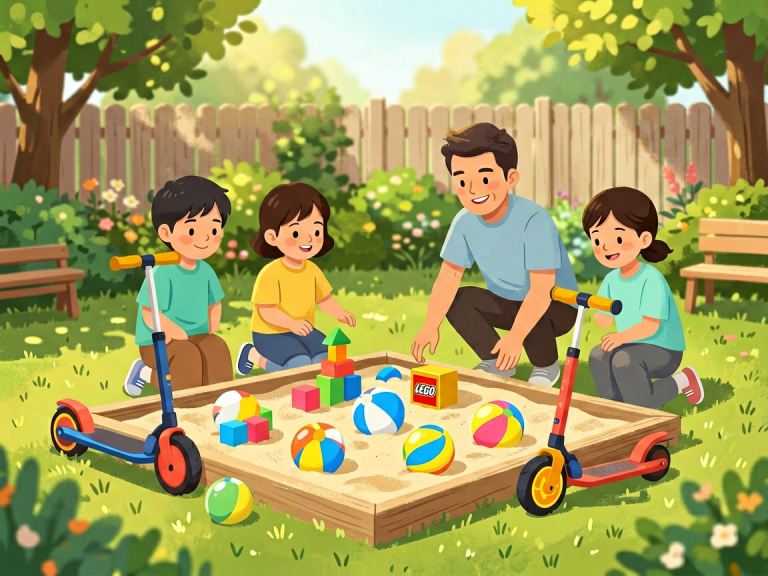
If there is one toy category that consistently survives fads, it is construction toys. LEGO, Mega Bloks, magnetic tiles (like Magna-Tiles), and wooden unit blocks are perennial favorites. Children actually use them because they offer a perfect balance of challenge and reward: you start with pieces and end with a creation.
Construction toys build spatial reasoning, planning, and perseverance. But perhaps more importantly, they allow children to fail safely. A tower that collapses is not a defeat; it is a lesson in balance, gravity, and redesign. This “productive failure” is something most electronic toys cannot simulate.
What About “Educational” Coding Toys?
Parents often ask: Should I buy a coding robot that teaches programming basics? The answer, according to many early childhood educators, is “only if the child shows genuine interest.” While toys like Botley, Scratch, or programmable wooden blocks can be wonderful, they are rarely the toys children *independently* choose for extended play. They require adult guidance, batteries, or a screen, which reduces their accessibility. In contrast, a set of magnetic tiles can be pulled out at breakfast, used for a few minutes, and then left on the floor for later—no setup, no instructions, no glowing screens.
—
5. The “Blankie” Effect: Transitional Objects as Toys
Why Soft Toys and Comfort Objects Are Used Most
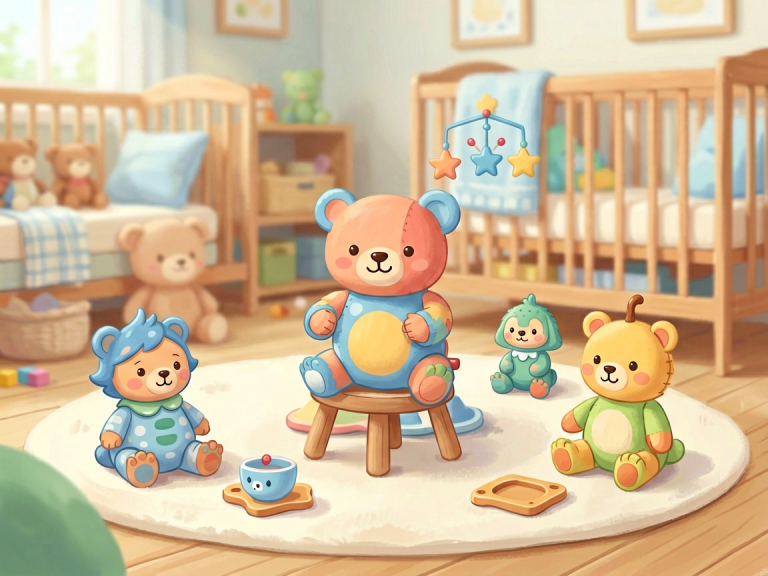
Ask any toddler what toy they want to bring to bed, and the answer is almost always a soft, small, well-worn stuffed animal or blanket. These are not “entertainment” toys; they are transitional objects, as psychologist Donald Winnicott famously described. They help children separate from parents, self-soothe, and navigate new situations.
A 2022 survey of 1,000 parents in the UK found that the most-used toy across all children under six was not a tablet or a car—it was a specific, often worn-out stuffed animal that the child had owned since infancy. These toys are used for sleep, for travel, for comfort during scary moments, and as companions for imaginary play.
The Qualities of a “Useful” Soft Toy
What makes a soft toy actually used? It must be: (a) easy to hold, (b) washable, (c) free of hard parts, (d) similar in size to a baby’s body, and (e) expressive but not too detailed. A teddy bear with a simple face allows the child to project emotions onto it. A highly detailed, licensed character restricts that projection.
—
6. The Digital Exception: When Screens Actually Serve Play
Tablets and Apps That Kids *Choose* Over Other Toys
No discussion of “toys kids actually use” would be complete without addressing digital play. While many parents fear screen time, some digital tools genuinely engage children in ways that physical toys cannot. For example, children with autism spectrum disorder often use simple drawing apps or music-making apps to express feelings they cannot verbalize. Similarly, digital sandbox games like Minecraft (in creative mode) offer infinite, unbounded construction that mimics the open-ended play of blocks—but with dynamic physics and a much larger canvas.
However, research shows that children use digital toys differently. They stop using an app after a few sessions unless it offers novelty or social interaction. The most-used digital toys are those that mimic real-world play: digital dollhouses, drawing tools, and simple music makers.
The 20-Minute Rule
Pediatricians recommend that digital toys be limited to short, interactive sessions—and many children naturally self-regulate. A child who has access to both magnetic tiles and a tablet will often choose the tiles after 20 minutes of screen time, because their hands and bodies crave physical activity.
—
Conclusion: The Toys That Last Are the Toys That Let Children Lead
The toys that children actually use—day after day, week after week—are not the ones that promise to teach them calculus or French. They are the ones that ask nothing in return. A cardboard box, a stuffed rabbit missing one eye, a jar of dried beans and a scoop, a set of plain wooden blocks: these humble objects are the real engines of childhood development.
Why? Because play is not about the toy. It is about the child’s desire to explore, to create, to connect, and to make sense of the world. The best toys are those that disappear into the child’s imagination, leaving no instruction manual, no batteries to replace, and no guilt for “not playing with it the right way.”
So the next time you are tempted by a flashy, multi-featured toy, remember: the toys kids actually use are the ones that leave room for them to do the playing. And that is the most powerful gift we can give.
*(Word count: 1,023)*