The Great Creative Divide: Art Toys vs. Craft Kits for Kids — Which Fuels Real Imagination?
—
Introduction: More Than Just Play
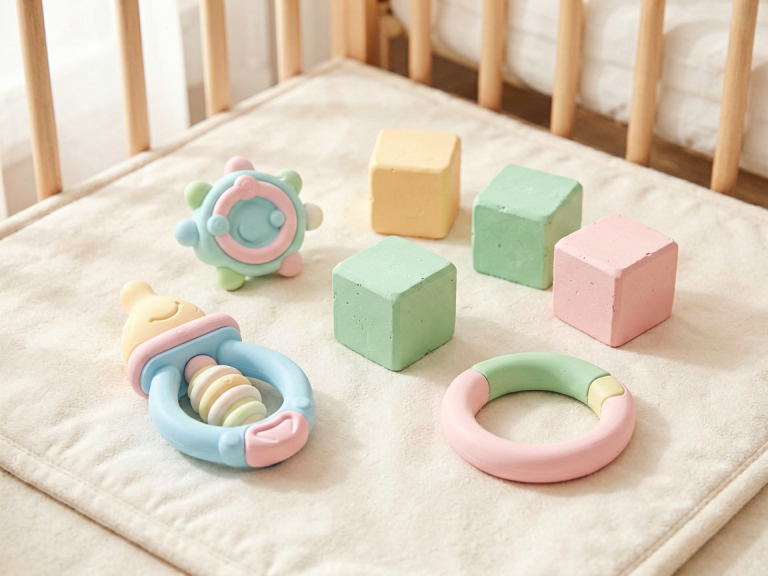
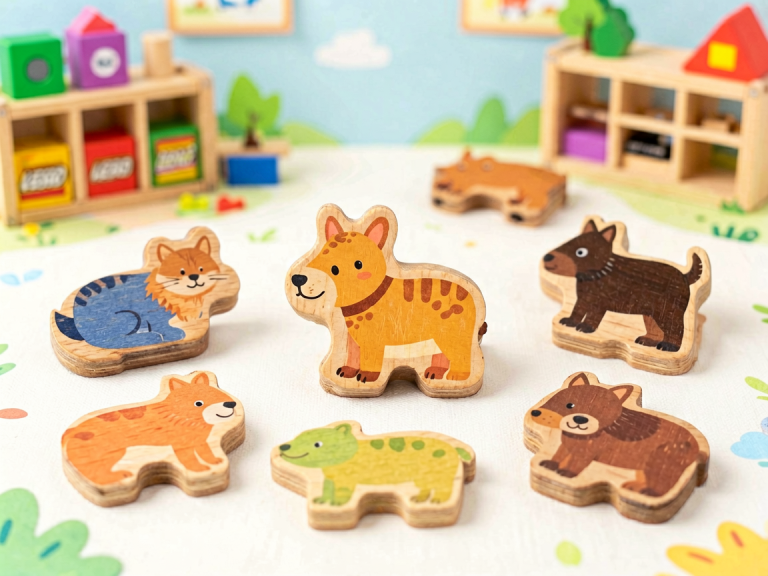
When parents walk into a toy store today, they are confronted with two powerful categories vying for their children’s attention: art toys and craft kits. Both promise creativity, both claim educational value, and both are packaged in bright, tempting boxes. Yet beneath the surface, these two types of play materials represent fundamentally different philosophies about how children should create, learn, and express themselves. Art toys—such as wooden blocks, magnetic tiles, clay that never dries, or open-ended drawing tools—invite children to invent their own rules. Craft kits, on the other hand—think pre-printed canvas paintings, bead-by-bead jewelry sets, or foam dinosaur models that must be assembled exactly as shown—offer guided, often predetermined outcomes. The debate between these two approaches is not merely about preference; it touches on core questions of childhood development, the nature of creativity, and the role of adult intervention in play.
This article explores the distinct characteristics, benefits, and potential drawbacks of art toys versus craft kits for kids. By examining them through the lenses of cognitive flexibility, fine motor skill development, emotional resilience, and long-term creative habits, we can better understand which choice—or better yet, which balance—serves a child’s whole being.
—
The Open-Ended Universe of Art Toys
Art toys are defined by their lack of fixed outcomes. A set of watercolor paints with a blank sheet of paper, a bucket of LEGO bricks without instructions, a bag of colorful felt shapes and glue—these are quintessential art toys. Their central virtue is ambiquity. The child must decide what to make, how to make it, and when it is finished. This process places the child in the driver’s seat of creation.
Fostering Divergent Thinking
Psychologists distinguish between divergent thinking (generating many possible solutions) and convergent thinking (narrowing down to one correct answer). Art toys overwhelmingly promote divergent thinking. When a four-year-old picks up a lump of modeling clay, she does not think, “I must make a perfect lion.” Instead, she squishes, rolls, flattens, and discovers. The clay might become a snake, then a pancake, then a face, then an alien. Each transformation is valid. This fluidity trains the brain to see multiple possibilities in a single material—a skill that translates directly to problem-solving in math, science, and life. Research from the University of Cambridge has shown that children who regularly engage with open-ended construction toys score higher on measures of creative fluency years later.
Intrinsic Motivation and Process Over Product
Art toys reward the *process* of making, not the final object. A child playing with kinetic sand might spend an hour building a castle, only to knock it down and start over. The joy lies in the tactile sensation, the trial-and-error, the sheer experimentation. This intrinsic motivation is critical because it teaches children that creativity is not about pleasing others or achieving a predetermined standard. It is about exploration. When children finish a craft kit, they often seek adult approval (“Look! I made it exactly like the picture!”). When they finish with an art toy, they may say, “Look what I discovered!” That subtle shift—from external validation to internal discovery—has profound implications for self-esteem and lifelong creative confidence.
Potential Pitfalls: Mess, Frustration, and Lack of Structure
Art toys are not without challenges. They can be messy—paint splatters, glue spills, scattered beads. They also demand tolerance for ambiguity, which some children find frustrating. A child who craves clear instructions may feel lost with a blank canvas. Additionally, without any scaffolding, some children may repeatedly make the same simple object (e.g., a single color scribble) and miss opportunities to stretch their skills. This is where adult facilitation becomes important. A caregiver who sits alongside, asking open-ended questions (“What would happen if you added blue here?”), can turn an art toy into a rich learning experience. But without that support, the child may become bored or overwhelmed.
—
The Guided World of Craft Kits
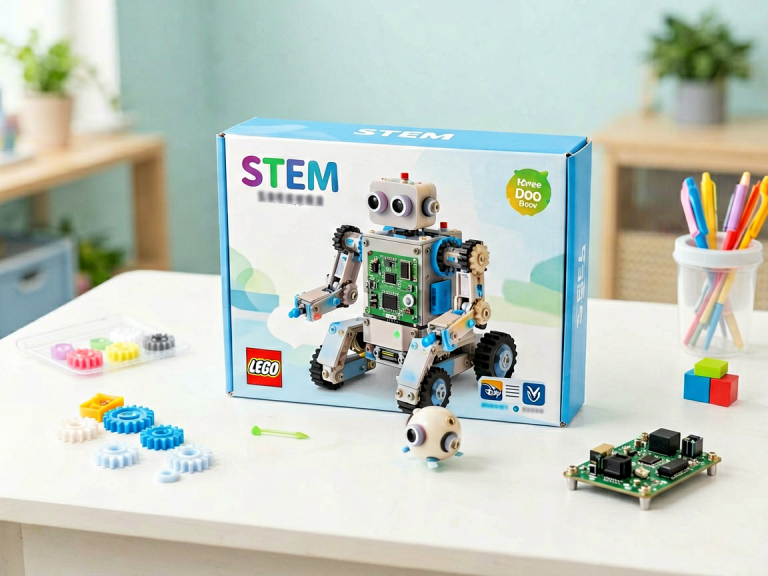
Craft kits, by contrast, offer a structured path to a specific creation. A typical kit includes all necessary materials, step-by-step instructions, and often a picture of the finished product. Examples include paint-by-number sets, friendship bracelet looms with pattern cards, origami paper with folding diagrams, and pre-cut wooden birdhouses that require assembly with glue and nails. These kits are enormously popular because they promise success: if the child follows the steps, a satisfying result is almost guaranteed.
Building Sequential Thinking and Fine Motor Precision
Craft kits excel at teaching procedural skills. A child assembling a 3D dinosaur puzzle must read the instructions, identify pieces, sequence steps, and execute precise hand movements. This exercise strengthens the prefrontal cortex, which governs planning and impulse control. Moreover, the fine motor demands—threading a needle, applying glue to a thin line, pressing a sticker into an exact position—develop hand-eye coordination and dexterity that prepare children for writing and other academic tasks. For children who struggle with free-form creativity, craft kits provide a safe harbor where the path to success is clear.
Cultivating Patience and Follow-Through
Because craft kits have a clear endpoint, they require persistence. A child who starts a 50-piece bead kit must continue until the bracelet is long enough to fit a wrist. This teaches delayed gratification and the satisfaction of completing a tangible goal. In a world of instant digital rewards, the slow, hands-on accomplishment of a craft kit can be deeply grounding. Many children experience a genuine sense of pride when they hold up a finished project that matches the box image. That pride can motivate them to tackle increasingly complex kits, building a sense of capability.
The Hidden Cost: Creativity by Numbers
The chief criticism of craft kits is that they can stifle originality. When every page must be colored inside the lines, when every stitch must follow a pattern, the child learns to copy rather than to invent. The Kit itself becomes the authority: “Am I doing this right?” the child asks, rather than “What else could I try?” Over-reliance on kits can create a fear of mistakes; if the child veers from the instructions, the final product will not look like the picture, and that is perceived as failure. In extreme cases, children become dependent on kits and freeze when presented with open-ended materials. This phenomenon is sometimes called the “I can’t draw” syndrome—a learned helplessness that emerges when creativity has been too tightly scripted.
Furthermore, many craft kits are inherently disposable. Once the project is complete—a glittery unicorn, a felt pillow, a plastic gem mosaic—the child often has little reason to play with it again. The materials are consumed, not reused. The joy is in the finish, not in revisiting. This contrasts sharply with art toys, where the same set of wooden blocks can be rebuilt into a thousand different structures.
—
Comparing Creative Outcomes: Which Develops Originality?
A key question is how each type of play influences a child’s ability to generate original ideas. A landmark 2015 study by researchers at the University of Plymouth gave children either a craft kit (with specific instructions) or a set of equivalent open-ended art materials (clay, markers, paper) and asked them to create a “fantasy creature.” The children with the craft kit tended to produce creatures that closely resembled the example picture. Those with open-ended materials produced a wider variety of shapes, colors, and features—many of which were entirely unique. The researchers concluded that open-ended materials promote cognitive flexibility, while craft kits reinforce pattern replication.
However, this does not mean craft kits are without creative value. Some kits incorporate elements of choice—for example, a perfume-making kit that lets the child mix scents, or a robotics kit that offers multiple programming paths. The best craft kits are those that treat the instructions as a starting point, not a cage. A truly excellent craft kit says, “Here is one way to make a robot. Can you modify it to make a robot that dances?” Such kits blur the line between craft and art toy.
—
Educational Perspectives in the Modern Classroom
Early childhood educators increasingly advocate for a play-based curriculum that privileges open-ended materials. The Reggio Emilia approach, for instance, uses “loose parts”—buttons, shells, fabric scraps, twigs—as core learning tools. These are essentially art toys. Teachers report that loose parts encourage collaboration, storytelling, and problem-solving in ways that pre-packaged kits do not. Yet many schools also use craft kits for specific lessons—such as assembling a model of the solar system to reinforce planetary order. The key is balance.
Montessori philosophy similarly favors self-directed, hands-on materials that are inherently corrective (children can see their own mistakes without a teacher’s intervention). While some Montessori materials are structured (like the pink tower), they are not craft kits because they invite endless repetition and variation. The emphasis is on the child’s own discovery, not on producing a commodity.
From a developmental perspective, the argument is not art toys *versus* craft kits, but rather art toys *for* open-ended exploration and craft kits *for* skill-building and confidence. Children need both. The danger lies in over-reliance on either extreme.
—
Choosing the Right Medium for Your Child
How should a parent or educator decide? First, consider the child’s temperament. A child who is easily frustrated by ambiguity might benefit from craft kits as a stepping stone toward more open-ended play. Once she has experienced success with a kit, she may feel safer experimenting on her own. Conversely, a child who already generates endless ideas with art toys may not need many kits—though an occasional structured project can teach follow-through.
Second, consider the context. A craft kit is ideal for a family road trip or a rainy afternoon when you need a contained, relatively clean activity. Art toys are better for long, unhurried afternoons when mess is acceptable and exploration can unfold.
Third, be mindful of the disposability factor. If you find that your child finishes a craft kit and immediately discards the result without further engagement, consider investing in higher-quality art toys that can be used again and again—such as a set of professional-grade watercolor paints, a real potter’s wheel clay kit, or a digital drawing tablet.
—
Conclusion: A Palette of Possibilities
The most creative children are not the ones who have the most craft kits or the most art toys. They are the ones who have learned to see both structure and freedom as tools. A paint-by-number set can teach color mixing, but the same child can later ignore the numbers and paint her own picture on the leftover canvas. A building-block set can be assembled according to instructions, but the same blocks can be transformed into a spaceship, a castle, or a time machine. The adult’s role is not to choose one camp over the other, but to curate a rich environment where both modes coexist.
Art toys honor the child’s inner inventor. Craft kits honor the child’s desire to master a skill. Together, they cultivate a full creative life—one that knows when to follow a pattern and when to break it. Let the child draw outside the lines, but also let her learn that lines can be guides, not prisons. The greatest art is born not from materials alone, but from the freedom and discipline to use them well.