Best STEM Toys for 11-Year-Olds: Building Critical Thinkers Through Play
At age 11, children stand at a fascinating crossroads. They have outgrown the simple cause-and-effect toys of early childhood, yet they are not quite ready for the abstract rigors of high school science labs. Their brains are hungry for challenge, their hands eager to build, and their curiosity desperate for real answers. This is the golden age for STEM toys – playthings that disguise complex lessons in engineering, coding, chemistry, and mathematics as thrilling, hands-on adventures. The best STEM toys for an 11-year-old do not just entertain; they ignite a passion for discovery, foster resilience through trial and error, and plant the seeds for future innovation. In this article, we explore the most effective categories of STEM toys that will engage, educate, and empower a child at this pivotal age.
Robotics and Coding Kits: Giving Life to Logic
For an 11-year-old, few experiences compare to watching a robot they built from scratch roll across the floor, follow a line, or pick up a small object. Robotics kits are the ultimate fusion of engineering and programming. The LEGO Mindstorms Robot Inventor Kit, for example, allows kids to construct five different robots using 949 pieces, then program them through a drag-and-drop coding interface based on Scratch. The intuitive visual language teaches fundamental coding concepts like loops, conditionals, and variables without the frustration of syntax errors. As children tweak the code to make their robot dance or navigate a maze, they learn the iterative cycle of design, test, and debug – a skill far more valuable than memorizing a programming language. For those who prefer a more open-ended approach, the Makeblock mBot Ranger offers three robot forms (a tank, a three-wheeled car, and a self-balancing robot) and compatibility with Arduino. This introduces them to real electronics and C-based coding, bridging the gap between playful tinkering and genuine engineering. The best part? These kits grow with the child, offering advanced challenges that can occupy them for years. An 11-year-old who masters a simple obstacle-avoidance program today might be designing a robotic arm with sensors tomorrow.
Engineering and Building Sets: From Blueprints to Bridges
While robotics taps into both hardware and software, pure engineering toys focus on structural integrity, physics, and mechanical advantage. At 11, kids can handle sophisticated building systems that go beyond stacking blocks. Consider the Thames & Kosmos Structural Engineering: Bridges & Skyscrapers kit. With 20 model builds and a 36-page manual, young engineers learn about tension, compression, and load distribution. They construct truss bridges, arch bridges, and cable-stayed bridges, then test them with weights to see which design holds the most. This hands-on physics lesson is far more memorable than a textbook diagram. For a more futuristic approach, the Engino STEM Mechanics: Levers & Linkages kit uses multi-dimensional construction pieces to create cranes, moving bridges, and mechanical arms. Children experiment with different lever classes and understand how simple machines amplify force. Another crowd-pleaser is the K'NEX Education STEM Explorations: Roller Coaster Building Set. As kids build a working roller coaster with a motor, they intuitively grasp concepts of potential and kinetic energy, friction, and gravity. They can tweak the track height or loop radius and observe real-time changes in the coaster car's speed. The iterative process of building, testing, failing, and rebuilding instills a growth mindset that is essential for all STEM fields. These sets also encourage patience and attention to detail – when a bridge collapses, the child must re-examine the instructions and figure out where they went wrong, a subtle but powerful lesson in error analysis.
Science Experiment Kits: The Joy of Controlled Chaos
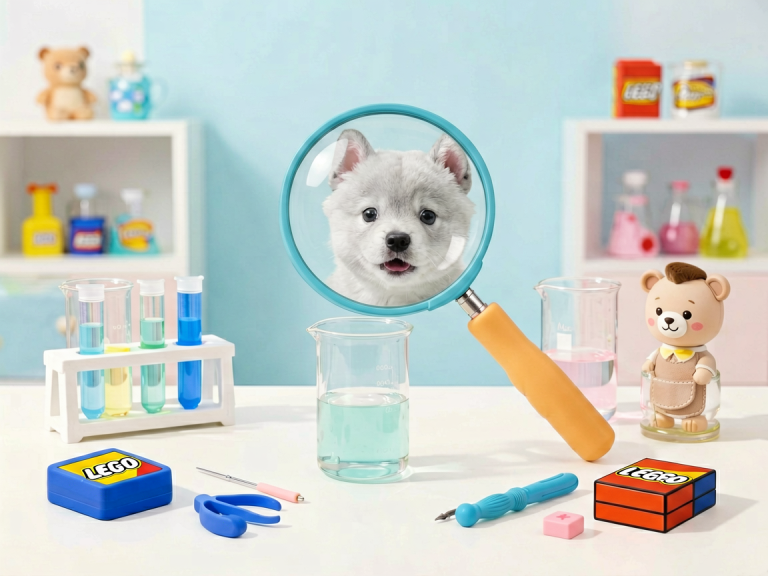
Eleven-year-olds are natural scientists. They ask "why" and "what if" constantly, and a good experiment kit channels that energy into safe, structured discovery. Chemistry sets have come a long way since the simple baking soda volcanoes. The National Geographic Ultimate Chemistry Set includes 45 experiments, from making glowing slime to growing crystals and creating pH indicator strips. The accompanying guide explains the chemical reactions in clear, age-appropriate language. What makes this kit special for 11-year-olds is the inclusion of "real" lab equipment like test tubes, beakers, and a pipette – giving them a sense of scientific professionalism. For those interested in physics, the Thames & Kosmos Physics Discovery Kit covers electricity, magnetism, optics, and thermodynamics through 12 hands-on experiments. Children build a simple motor, a magnetic levitation system, and a periscope. Each experiment includes a "the science behind it" section that satisfies the logical mind. The best hands-on science toy, however, might be the SmartLab Toys Squishy Human Body. While not strictly "chemistry" or "physics," it introduces biology through a gross-but-fascinating dissection of a squishy model human body. Kids remove and examine organs, learning anatomy in an unforgettable way. For the environmentally conscious child, the GeoSafari Jr. Bugnoculars with 3x magnification and a built-in LED light turns backyard exploration into a micro-safari. Science kits for 11-year-olds should encourage open-ended investigation; after the guided experiments, many kids start designing their own variations, a sign that true scientific thinking has taken root.
Math and Logic Games: Sharpening the Mental Toolkit
STEM education often overlooks the "M" – mathematics – when it comes to toys. Yet at age 11, children are developing the ability to handle abstract mathematical reasoning, making it the perfect time to introduce games that make numbers and logic fun. The ThinkFun Math Dice Jr. is a deceptively simple game where players roll three dice and try to combine them using addition, subtraction, multiplication, and division to reach a target number. It sharpens mental arithmetic and strategic thinking. For a more immersive experience, the Prime Climb board game combines strategic movement with arithmetic. Players move their pieces by solving math problems involving prime factors. It teaches number theory in a competitive, engaging context. Another excellent choice is the Logic Roots Ocean Raiders, a math board game that reinforces multiplication and division skills through a treasure hunt adventure. For logic and puzzle-solving, no tool beats the classic Rush Hour Traffic Jam puzzle, which challenges kids to slide cars and trucks to clear a path for the red car. It develops spatial reasoning and sequential thinking. The Gravity Maze by ThinkFun takes this to the next level by combining logic with marble-run mechanics: children build a tower that guides a marble to a target using falling blocks and gravity. Each puzzle requires planning and foresight. These toys prove that math and logic are not drudgery but playful challenges that reward creativity and persistence. The key for 11-year-olds is that the difficulty ramps up incrementally, so they never feel bored or overwhelmed.
Technology and Electronic Kits: Understanding the Digital World
Today's 11-year-olds are digital natives, but many are passive consumers of technology. The best STEM toys in this category empower them to become creators. The Snap Circuits Pro series is a legendary entry point. With over 500 projects, kids snap together components like resistors, capacitors, LEDs, and integrated circuit chips to build radios, doorbells, motion detectors, and even a lie detector. No soldering is required, so it's safe and frustration-free. The accompanying manual explains each component's function, demystifying the electronics inside every device they use. For those ready to go further, the Raspberry Pi 4 Starter Kit (with a beginner-friendly guide) opens up a world of possibilities: kids can learn Python programming, build a retro gaming console, create a weather station, or even set up a home media server. The modular nature of Raspberry Pi projects encourages self-directed learning. The littleBits Base Inventor Kit takes a different approach by using magnetic "bits" that snap together to create circuits without any wiring. Kids can build a sound-activated alarm, a scrolling marquee, or a remote-controlled car. The inclusion of pre-written code snippets and an app makes it easy to experiment. For the artistically inclined, the 3Doodler Start+ 3D printing pen allows children to draw in three dimensions, creating structures, toys, and models. It teaches spatial design and the concept of additive manufacturing, all while being safe for young hands (no hot parts). These technology kits do more than teach technical skills; they cultivate a sense of agency. When an 11-year-old builds a functioning FM radio from a box of electronic parts, they realize that the gadgets around them are not magic – they are engineering marvels built by people like them.
Conclusion: Choosing the Toy That Sparks a Lifelong Passion
The best STEM toy for an 11-year-old is not necessarily the most expensive or the most advanced. It is the one that aligns with the child's existing interests while gently pushing them into new territory. A child who loves building will thrive with a robotics kit; a curious tinkerer will adore Snap Circuits; a future biologist will treasure a dissection kit. Parents and gift-givers should look for toys that offer open-ended play, multiple difficulty levels, and a clear connection to real-world science or engineering. Avoid toys that are overly prescriptive or that limit creativity. The ideal STEM toy provides a scaffold – a starting point from which the child can experiment, fail, and discover. At age 11, the brain is highly plastic, and a single spark – the joy of making a light bulb glow, the triumph of a successful code, the beauty of a perfectly balanced bridge – can determine academic and career trajectories. By investing in high-quality STEM toys, we are not just buying a gift; we are building a foundation for critical thinking, problem-solving, and lifelong learning. The eight hundred words above only scratch the surface, but the message is clear: choose a toy that challenges the mind, delights the senses, and respects the intelligence of an 11-year-old. The world of tomorrow will be built by today's curious children, and the right toy is a blueprint for that future.