Science Toys vs. Engineering Toys: Which Foster Better Learning?
Introduction
In an age where STEM education is increasingly emphasized, parents and educators often face a delightful yet challenging question: which are better for children—science toys or engineering toys? Science toys, such as chemistry sets, microscope kits, and crystal-growing experiments, invite young minds to explore natural phenomena through observation and hypothesis. Engineering toys, like building blocks, robotics kits, and bridge-building sets, challenge children to design, construct, and solve practical problems. The debate is not merely about preference; it touches on fundamental differences in how children learn, think, and develop skills. This article will compare the educational benefits, cognitive impacts, and practical applications of both types of toys, ultimately arguing that neither is inherently superior—instead, their effectiveness depends on the child’s age, interests, and learning goals. By unpacking the unique strengths of each, we can help caregivers make informed choices that nurture well-rounded, curious, and capable future innovators.
The Nature of Science Toys: Exploration and Discovery
Science toys are designed to mimic the process of scientific inquiry. They often involve experiments that demonstrate principles from physics, chemistry, biology, or earth science. For instance, a classic volcano kit teaches about acid-base reactions, while a solar system model illustrates planetary motion. The core of science toys is observation: children mix substances, record results, and draw conclusions based on evidence. This hands-on approach cultivates patience, attention to detail, and a methodical mindset.
One of the greatest strengths of science toys is their ability to spark wonder. When a child watches a vinegar-and-baking-soda eruption for the first time, they experience a moment of genuine surprise that can lead to deep curiosity about why it happens. This aligns with the scientific method: ask a question, form a hypothesis, test it, and refine understanding. For example, a simple crystal-growing kit encourages a child to vary temperature or concentration to see how crystal size changes. Such activities develop critical thinking and the habit of questioning assumptions.
However, science toys also have limitations. They can be messy, require adult supervision for safety (especially with chemicals or flames), and sometimes produce predetermined results that leave little room for creative deviation. Moreover, children may become frustrated if an experiment fails without clear explanation—though this too can be a valuable lesson in the reality of scientific work. Science toys shine brightest when the child is already curious about “how things work” and enjoys the process of discovery rather than just the outcome.
The Nature of Engineering Toys: Creation and Problem-Solving
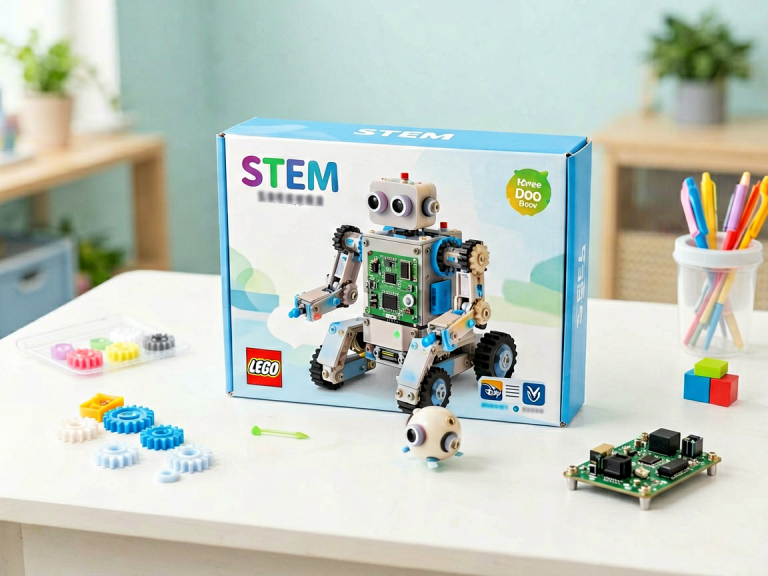
Engineering toys, by contrast, focus on design, construction, and optimization. From LEGO bricks and K’NEX to more advanced Arduino kits, these toys ask children to build something functional—a tower that can withstand wind, a bridge that holds weight, or a robot that follows a line. The emphasis is not on observing nature but on manipulating materials to achieve a specific goal. This process mirrors real-world engineering: define a problem, brainstorm solutions, prototype, test, and iterate.
The key cognitive benefit of engineering toys is spatial reasoning and systems thinking. When a child builds a truss bridge, they must understand how forces are distributed, the role of triangles in stability, and how to modify their design if it collapses. This trial-and-error approach builds resilience and persistence. Unlike many science experiments, engineering projects often have multiple correct answers, encouraging creativity and divergent thinking. For instance, two children using the same set of gears can build entirely different machines to lift a weight, each with a unique mechanism.
Engineering toys also tend to be more accessible to children who prefer tangible, hands-on creation over abstract reasoning. They can be less messy and more reusable—a set of blocks can be dismantled and rebuilt a hundred times. However, they sometimes lack the “wow” factor of a dramatic chemical reaction. Additionally, without proper guidance, children might focus only on building the tallest structure without learning the underlying principles of stability. The best engineering toys come with challenges that gradually introduce concepts like leverage, friction, and programming logic, bridging the gap between play and education.
Comparing Cognitive Benefits: Which Develops Which Skills?
To determine which is “better,” we must examine the specific skills each type of toy cultivates. Science toys excel at teaching analytical thinking and hypothesis testing. A child using a magnetic field experiment learns to predict which materials are attracted, test them, and categorize results—building foundational skills for scientific literacy. They also develop attention to controlled variables: if they want to test whether salt affects water’s freezing point, they must keep other conditions constant. This is a sophisticated cognitive process that translates well to fields like medicine, research, and data analysis.
Engineering toys, on the other hand, are champions of problem-solving and executive function. Building a complex structure requires planning, sequencing, and adapting when things go wrong. A child assembling a robotic arm must follow step-by-step instructions while also debugging connections and motors. This fosters computational thinking—breaking large problems into smaller steps, recognizing patterns, and designing algorithms. Moreover, engineering toys often involve collaboration, as children work in teams to design and build contraptions, enhancing communication and social skills.
It is also important to consider creativity. Both types of toys can stimulate creativity, but in different ways. Science toys encourage creativity in the form of “what if” questions (e.g., “What if I mix this substance with that one?”). Engineering toys encourage creativity as “how might I” questions (e.g., “How might I build a vehicle that can climb a ramp?”). Research suggests that children who engage with both types develop more flexible thinking because they learn to switch between open-ended exploration and goal-oriented construction.
Age and Developmental Considerations
The “better” choice often depends on the child’s developmental stage. For preschoolers (ages 3–5), simple engineering toys like large snap-together blocks or magnetic tiles are ideal. These toys build fine motor skills and basic spatial awareness without requiring abstract reasoning. Science toys for this age should be sensory and safe, like water tables or color-mixing cups. The goal is to build foundational curiosity.
For elementary-age children (ages 6–10), both types are valuable, but their roles diverge. Engineering toys like LEGO sets with gears or simple machines introduce mechanical principles in a concrete way. Science toys like butterfly growing kits or rock tumblers provide living experiences that connect classroom concepts to the real world. At this stage, it is helpful to rotate between the two to avoid overspecialization. A child who only builds may miss out on the wonder of natural phenomena; a child who only experiments may lack the skills to apply knowledge practically.
For adolescents (ages 11–14), the distinction blurs as advanced kits merge science and engineering. A robotics kit, for example, requires understanding electrical circuits (science) and structural design (engineering). Similarly, a chemistry set with a focus on making soaps or bath bombs involves both scientific reactions and product design. The best toys for this age are those that integrate disciplines, like a Raspberry Pi computer kit that teaches coding, electronics, and physical computing. At this stage, the question is not “science or engineering” but “how can both be combined to create meaningful projects?”
Practical Recommendations: Integrating Both for Holistic Development
Rather than declaring a winner, the most effective approach is to provide children with a balanced diet of science and engineering toys. This mirrors the real-world interplay between the two fields: scientists use engineering tools like microscopes and sensors, while engineers rely on scientific principles like thermodynamics and material science. A child who grows up with only one type may develop a skewed view of STEM.
Parents can create a “learning cycle” by starting with a science toy to spark curiosity. For instance, a child who observes how a simple lever works (science) can then be challenged to build a catapult with varying lever lengths (engineering). Conversely, a child who builds a sturdy bridge (engineering) can be asked to test its load capacity with different weights and graph the results (science). This cyclical approach reinforces both the “why” and the “how.”
Educators and caregivers should also consider the child’s personality. A child who loves reading and asking “why” may lean toward science toys; a child who loves constructing and tinkering may prefer engineering. Neither inclination is better, but if a child shows extreme preference, gentle exposure to the other type can round out their skills. For example, a budding engineer can be introduced to a biology kit that requires careful observation, while a science-loving child can be given a simple building challenge.
Conclusion: The Answer Lies in Synergy
After examining the distinct merits of science toys and engineering toys, it becomes clear that the question “which is better” is fundamentally flawed. Science toys cultivate a mindset of exploration, wonder, and evidence-based reasoning, while engineering toys nurture creativity, resilience, and systematic problem-solving. Both are essential components of a comprehensive STEM education. The most successful learners are those who can seamlessly move from asking “why does this happen?” to “how can I make this work?”—a skill that requires familiarity with both domains.
In today’s world, where complex challenges like climate change and healthcare demand interdisciplinary thinking, children need to be comfortable with both scientific inquiry and engineering design. The best toy is not the one that offers the most impressive reaction or the tallest structure, but the one that keeps a child engaged, challenged, and eager to learn more. So instead of choosing between science toys and engineering toys, provide both—and watch as a child’s natural curiosity builds bridges between them.