The Playful Divide: A Comparative Analysis of Science Toys and Engineering Toys
Introduction: More Than Just Playthings
Toys have always been more than mere objects of amusement. They are the unsung architects of childhood, silently shaping cognitive development, sparking curiosity, and planting the seeds of future careers. Among the vast universe of playthings, two categories stand out for their intellectual rigor and transformative potential: science toys and engineering toys. At first glance, they may seem synonymous—both involve building, experimenting, and problem-solving. Yet a closer examination reveals a fundamental dichotomy. Science toys are primarily concerned with discovery—uncovering the laws of nature through observation and experimentation. Engineering toys, in contrast, focus on creation—designing, constructing, and optimizing solutions to real-world problems. This article delves into the nuanced differences between these two families of toys, exploring their unique educational philosophies, skill sets they cultivate, and the distinct ways they prepare children for the challenges of a rapidly evolving technological society. By understanding these differences, parents and educators can make more informed choices, ensuring that playtime is not only fun but also purposefully aligned with a child’s developmental needs and aspirations.
1. Foundational Philosophy: Discovery vs. Design
The most profound distinction between science toys and engineering toys lies in their underlying epistemological orientation. Science toys are rooted in the *scientific method*—a cyclical process of questioning, hypothesizing, experimenting, observing, and concluding. A classic example is a chemistry set, where a child mixes baking soda and vinegar to witness a fizzy eruption. The toy does not prescribe a solution; it invites the child to ask “What will happen if I change the amount of vinegar?” The goal is to understand a natural phenomenon purely for the sake of knowledge. Science toys celebrate *why* things happen.
Engineering toys, on the other hand, are driven by the *engineering design process*—a set of iterative steps that include defining a problem, brainstorming solutions, prototyping, testing, and refining. Consider a set of plastic gears, pulleys, and axles. A child is asked to build a crane that can lift a small weight. The emphasis is not on understanding the physics of levers (though that happens implicitly) but on constructing a functional artifact that meets specific performance criteria. Engineering toys celebrate *how* to make things work.
This philosophical divergence shapes everything about the play experience. A science toy might encourage open-ended exploration with no right or wrong answer—a child can simply enjoy the rainbow of colors produced by a chromatography kit. An engineering toy typically has a clearly defined success condition: the bridge must hold 500 grams, the car must travel three meters, the robot must follow a black line. Science toys reward curiosity; engineering toys reward ingenuity and persistence.
2. Cognitive Skills: Analysis vs. Synthesis
Building on their different philosophies, science toys and engineering toys cultivate distinct cognitive muscles. Science toys primarily foster *analytical thinking*. A child using a microscope to examine a leaf’s cellular structure must observe carefully, compare patterns, and draw logical inferences. When a crystal-growing kit produces smaller crystals than expected, the child must hypothesize about temperature or impurities—a classic exercise in deduction. Analytical skills are crucial for breaking down complex problems into manageable parts and for understanding cause-and-effect relationships.
Engineering toys, conversely, emphasize *synthetic thinking* and *systems thinking*. When a child assembles a complex robotic arm from a kit of motors, sensors, and structural beams, they must integrate disparate components into a coherent, functioning whole. This requires understanding how each part interacts with others—a gear’s torque affecting motor speed, a sensor’s range limiting feedback accuracy. Engineering toys also demand *spatial reasoning* and *mental rotation*: envisioning how two connecting pieces fit together from different angles. Furthermore, engineering play is inherently iterative. The first tower collapses; the child must analyze the failure (a science moment) and then design a reinforced base (an engineering moment). But the dominant mode is creation: synthesizing new configurations.
Research in cognitive psychology supports this division. A 2020 study published in *Journal of Applied Developmental Psychology* found that children who played regularly with engineering construction sets showed significantly improved spatial visualization and problem-solving flexibility compared to those who used science-oriented kits, while science-kit users excelled in hypothesis generation and observational accuracy. Both skill sets are valuable, but they are not interchangeable.
3. Educational Outcomes: Conceptual Knowledge vs. Practical Competence
Science toys are exceptionally effective at building a deep, intuitive understanding of scientific concepts. A child who plays with a solar system model learns orbital mechanics not from a textbook but by physically rotating the planets around the sun. An electricity circuit toy reveals the difference between series and parallel connections through trial and error. These toys make abstract ideas tangible. They are particularly powerful for grasping what education researcher David Kolb calls “abstract conceptualization”—forming mental models of invisible forces, chemical reactions, and biological processes.
Engineering toys, by contrast, produce *procedural knowledge* and *technological literacy*. A child who repeatedly builds and rebuilds a marshmallow catapult learns about structural stiffness, energy transfer, and trajectory without explicitly naming them—but they acquire practical competence that can be transferred directly to real-world engineering challenges. Procedural knowledge is harder to articulate but deeply embodied. Moreover, engineering toys often incorporate constraints that mirror professional practice: limited materials, time pressure, and performance metrics. A bridge-building kit might require using no more than 100 popsicle sticks to span a 30-centimeter gap. This teaches resource optimization—a core engineering competency rarely addressed by science toys.
However, there is significant overlap. A well-designed science kit might include a small engineering challenge (e.g., build a simple motor from a coil and magnet), and an engineering set often reveals scientific principles (e.g., understanding gear ratios through construction). The distinction is one of emphasis, not exclusivity.
4. Social and Emotional Development: Wonder vs. Resilience
Beyond cognition, science toys and engineering toys shape emotional landscapes differently. Science toys tend to evoke *wonder, awe, and humility*. Watching a caterpillar metamorphose into a butterfly in a live insect habitat, or seeing a magnetic field visualized with iron filings, inspires a sense of the sublime—the realization that nature’s mechanisms are intricate and beautiful. This emotional response can fuel lifelong curiosity and a passion for fundamental research. Science play often encourages patience and careful observation; a crystal might take days to grow, teaching delayed gratification.
Engineering toys, on the other hand, cultivate *resilience, grit, and frustration tolerance*. The iterative nature of design means frequent failure. The robot’s wheels spin in place; the bridge collapses under its own weight. Each failure is a lesson, but it can also be emotionally taxing. Children learn to manage disappointment, analyze errors, and persist through difficulty. They also develop a strong sense of *agency*: the belief that they can shape their environment. When a child successfully programs a micro:bit to blink in a pattern, they experience the powerful emotion of *competence*. Engineering toys also promote collaboration; many sets are designed for group work, requiring negotiation and division of labor.
Interestingly, some research suggests that boys and girls may gravitate differently toward these toy types, with girls often preferring science toys that emphasize observation and narrative (e.g., nature kits) and boys favoring engineering toys with clear goals and competition (e.g., building sets). However, these are trends, not absolutes. Effective educators deliberately expose children to both to foster balanced development.
5. Real-World Examples and Practical Applications
Let us consider concrete examples to crystallize the comparison.
Science Toy: *The Thames & Kosmos Genetics & DNA Kit*. This kit allows children to extract DNA from fruits, build a model of the double helix, and learn about heredity. The primary mode is discovery: “How is DNA structured?” “What determines a trait?” The child engages in controlled experiments—varying salt concentration in extraction—and interprets results. The outcome is conceptual understanding.
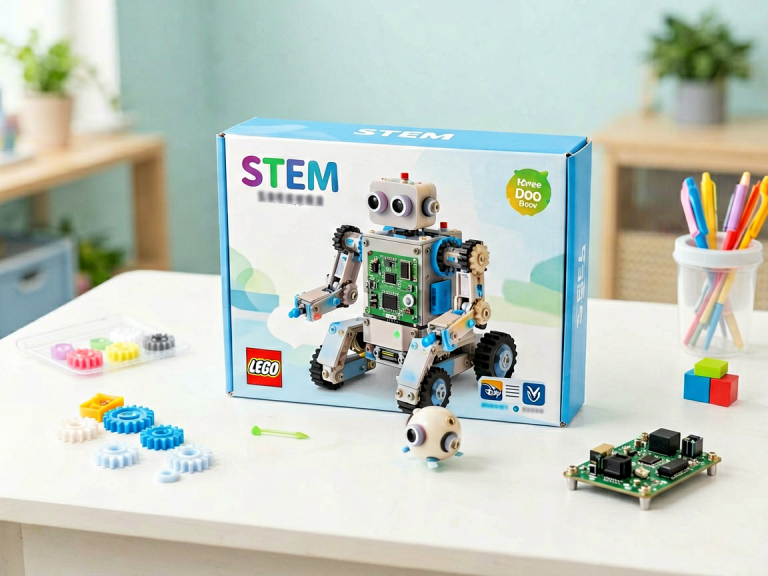
Engineering Toy: *LEGO Technic Fire Plane*. This set includes hundreds of pieces, pneumatic cylinders, and a working propeller mechanism. The child follows step-by-step instructions to build a functional model that can lift and tilt. The primary mode is construction: “How do I connect these gears to achieve the desired motion?” “How can I make the landing gear retract?” The outcome is a moving artifact and procedural knowledge of mechanical linkages.
A hybrid example is the *Snap Circuits* line. They teach electrical concepts (science) but also require designing working circuits to power lights and sounds (engineering). In Snap Circuits, the boundary blurs: the back of the manual explains Ohm’s law, but the activity is engineering-oriented—build a doorbell. This hybrid nature is increasingly common in modern STEM toys, reflecting a pedagogical shift toward integrated learning.
6. Choosing the Right Toy for Your Child: A Practical Guide
Given the differences, how should parents and educators select between science and engineering toys? The answer depends on the child’s temperament, interests, and developmental stage.
- For the Young Child (ages 3–6): Engineering toys like simple building blocks, magnetic tiles, and Duplo are ideal because they develop fine motor skills and spatial awareness. Science toys at this age should be sensory—water tables, magnifying glasses, and color-mixing kits—that encourage open-ended exploration without formal hypothesis testing.
- For the Middle Childhood (ages 7–10): This is a sweet spot for introducing both categories. Engineering toys like K’NEX roller coasters or simple robotics kits (e.g., LEGO WeDo) teach structured problem-solving. Science toys such as crystal-growing kits, weather stations, and solar system models build foundational knowledge. Alternating between the two prevents boredom and ensures balanced growth.
- For Pre-Teens and Teens (ages 11+): The line between hobby and career preparation becomes relevant. A student drawn to logic and patterns might thrive with advanced engineering toys—Arduino microcontrollers, programmable drones, or structural engineering sets. A student fascinated by the natural world might prefer biochemistry kits, telescopes, or field microscopes. At this stage, consider the child’s future aspirations: engineering toys lean toward applied STEM careers, while science toys prepare for research-oriented paths.
Conclusion: The Synergy of Science and Engineering Play
To pit science toys against engineering toys is to misunderstand their complementary roles. Science toys teach us to ask “Why?”—to marvel at the universe and seek its secrets. Engineering toys teach us to ask “How?”—to turn ideas into tangible solutions. A child who only plays with science kits may become a brilliant physicist who cannot build a functional circuit; a child who only builds with engineering kits may excel at construction but lack the theoretical depth to innovate. The most enriching playroom includes both. It includes a microscope for gazing at the microcosm and a set of gears for building a macro-world. It includes moments of quiet observation and moments of loud trial-and-error. In the end, these toys are not rivals; they are two halves of a whole—the yin and yang of human ingenuity. By honoring both, we raise children who are not only knowledgeable but also capable, not only curious but also creative. And that is the ultimate goal of play.