Art Toys vs. Craft Kits: Which Sparks More Creative Growth?
Introduction
In an age where children’s leisure time is increasingly structured by screens and scheduled activities, parents, educators, and gift-givers frequently face a deceptively simple question: should I buy an art toy or a craft kit? At first glance, both categories promise creativity, hands-on engagement, and hours of entertainment. Yet they embody fundamentally different philosophies of play. Art toys—such as magnetic building sets, wooden blocks, or reusable drawing boards—tend to be open-ended, inviting children to invent their own projects without predetermined outcomes. Craft kits, on the other hand, typically provide all necessary materials along with step-by-step instructions to create a specific finished product, from friendship bracelets to miniature terrariums. The debate over which is “better” is not merely a matter of personal preference; it touches upon deeper questions about how we value process versus product, freedom versus guidance, and long-term development versus immediate satisfaction. This article examines the two categories across multiple dimensions—creativity, education, age suitability, cost, sustainability, and emotional impact—to help readers make an informed choice. Ultimately, the answer is not a simple binary but a nuanced balance that depends on context, child temperament, and developmental goals.
The Nature of Creativity: Guided vs. Open-Ended
The most fundamental difference between art toys and craft kits lies in how they define and channel creativity. Craft kits are inherently product-oriented. The child’s creative role is to follow instructions, assemble pieces, and achieve a visual outcome that matches the package photograph. This process can be deeply satisfying: there is a clear finish line, a tangible sense of accomplishment, and often a decorative object to display or give as a gift. For children who feel overwhelmed by infinite possibilities or who lack fine motor confidence, craft kits provide a safe scaffold. They teach procedural thinking, patience, and the satisfaction of completing a task.
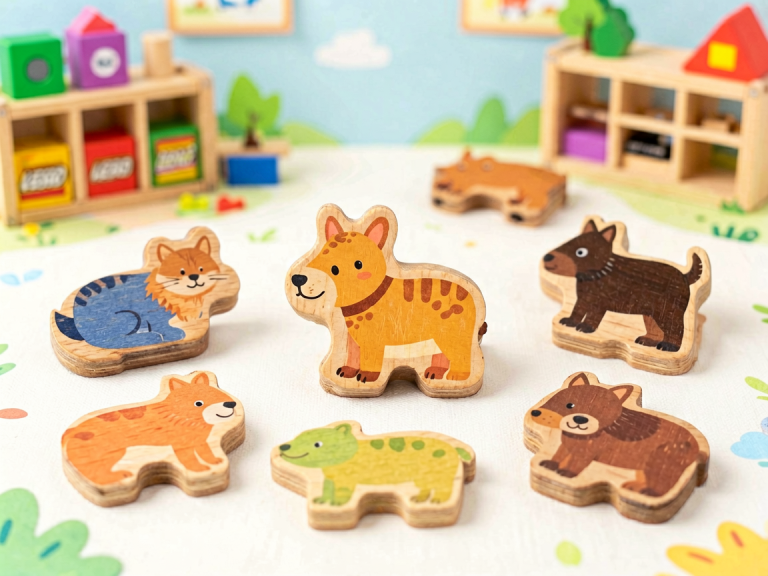
Art toys, in contrast, emphasize process over product. A set of simple wooden blocks, a pack of modeling clay, or a magnetic tile collection offers no instructions—only raw material and the invitation to build anything. This open-endedness is the very engine of divergent thinking, the cognitive ability to generate multiple solutions to a single problem. Research in developmental psychology consistently shows that unstructured play with art toys fosters executive function skills such as planning, flexibility, and self-regulation. A child constructing a tower with magnetic tiles must constantly test hypotheses: “Will this shape balance here? What happens if I move the base?” Mistakes are not failures but data points, and the creative journey is as important as—if not more than—any final creation.
Which is better for creativity? The answer depends on the child’s stage. For a preschooler who has never manipulated scissors or glue, a simple craft kit may be the gateway to feeling capable. For a seven-year-old who has mastered basic construction, an art toy stretches imagination further. The healthiest environment likely includes both, but when forced to choose one, art toys generally cultivate a more robust, self-directed creativity that transfers to other domains of life.
Educational Benefits: Skill Acquisition vs. Imagination
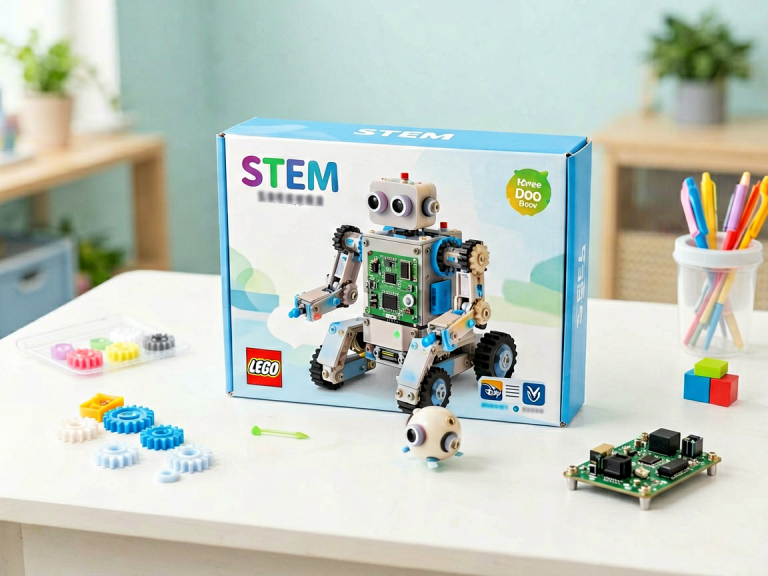
From a purely educational standpoint, craft kits excel at teaching specific, measurable skills. Beading a necklace improves hand-eye coordination; painting-by-numbers reinforces color recognition and brush control; assembling a model car teaches following multi-step instructions. These are valuable competencies, particularly for children who struggle with attention to detail or sequential reasoning. Moreover, many modern craft kits sneakingly incorporate STEM principles. A kit that builds a simple circuit lamp or a crystal-growing set teaches cause-and-effect in a concrete, memorable way.
Art toys, however, offer a different kind of learning—one that is harder to quantify but arguably more foundational. Open-ended materials encourage mathematical thinking in its rawest form: geometry emerges when a child stacks prisms and pyramids; physics arises from balancing a seesaw made of blocks; language develops as the child narrates a story about the castle they are building. The key educational advantage of art toys is that they force children to become the authors of their own problems. Instead of solving a puzzle designed by an adult (which is what a craft kit essentially does), the child must first invent the puzzle. This “problem-finding” skill is a hallmark of creative genius in adulthood.
Furthermore, art toys inherently tolerate and even celebrate failure. A collapsed tower is not a mistake; it is an opportunity to redesign. Craft kits, by contrast, often induce frustration if a piece doesn’t fit or glue dries poorly, because the success is measured against an external standard. For children with perfectionist tendencies, art toys can be liberating, teaching that the process is valuable regardless of outcome. For children who crave structure, craft kits may be the more reassuring choice. Neither is inherently superior; both address different learning styles.
Age and Developmental Suitability
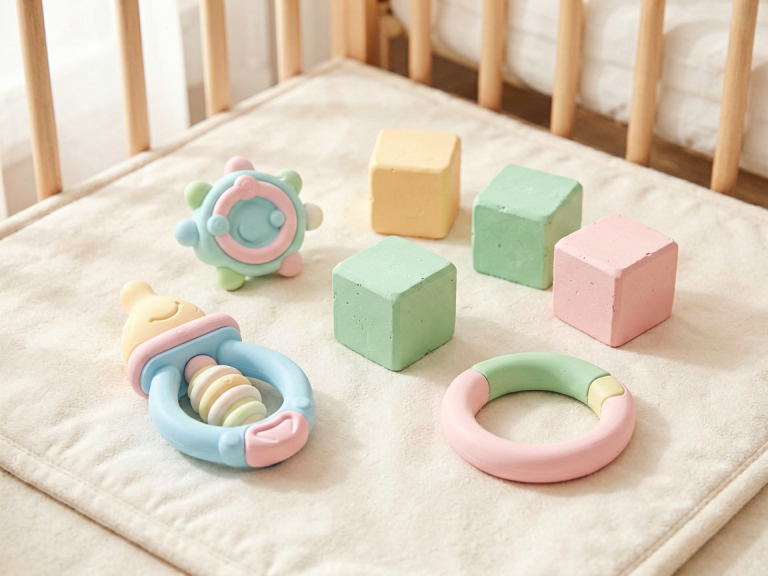
Age is a critical variable in the art toys versus craft kits debate. For toddlers and very young children (ages 2–4), craft kits are often inappropriate because they require fine motor skills that have not yet developed, and they impose a rigid outcome that the child cannot independently achieve. This leads to adult frustration or child passivity. Simple art toys—chunky wooden stacking rings, oversized interlocking blocks, or sensory play mats—are far better suited to this age group. They allow for exploratory mouthing, banging, and dropping, which are the legitimate ways infants learn.
For early elementary children (5–7), the lines blur. A basic lacing kit or a sticker-by-number craft can build hand strength and concentration. Yet even at this age, research suggests that children benefit more from at least 50% of their playtime being open-ended. A 2021 study published in *Early Childhood Research Quarterly* found that kindergartners who engaged more with unstructured building toys scored higher on measures of executive function than those who used primarily directed craft materials. The authors emphasized that direction-giving should be reduced as children gain mastery, not increased.
For preteens and teenagers (8–14), craft kits can be excellent hooks for hobbies. A knitting kit might spark a lifelong love of fiber arts; a robotics kit could lead to engineering interest. At this age, the social dimension also matters: crafting together with friends or parents builds cooperation and conversation. Art toys, however, remain valuable as stress relievers and creative outlets. A teen who spends an hour building something from magnetic tiles is engaging in a form of mindfulness that a structured kit does not provide. Ultimately, the younger the child, the stronger the case for open-ended art toys; the older the child, the more a mix of both is ideal.
Cost and Accessibility
Cost is often a deciding factor for families. Craft kits can seem deceptively cheap—a $10 bracelet-making set appear an easy purchase. However, they are single-use; once the materials are exhausted, the kit is played out. Art toys typically have a higher upfront cost—a set of 100 magnetic tiles might be $40–$60—but they are infinitely reusable. A wooden block set purchased for a one-year-old can still be used creatively at age eight for architectural challenges. The long-term cost-per-use of art toys is far lower.
Moreover, craft kits frequently require consumables: glue, paint, string, beads. Once these run out, the kit becomes worthless or requires additional purchases. Art toys rely on the child’s own imagination, not on material completeness. A child with a box of LEGO bricks (which, while arguably a craft-like building system, is often used in open-ended ways) can build a house today, a spaceship tomorrow, and a dinosaur next week. This reusability also has environmental benefits: fewer packages, less plastic waste, and longer product lifespan.
However, craft kits can be more accessible in terms of space. A small apartment may not have room for a large block collection or a permanent art table. A craft kit fits in a drawer and can be pulled out, used, and stored away. For families with limited storage or those who travel frequently, craft kits offer convenience. Additionally, craft kits are often easier for a child to complete independently if the parent is busy, whereas open-ended toys may require adult involvement to spark initial ideas. So cost and accessibility considerations are mixed, but for long-term value and sustainability, art toys generally win.
Social and Emotional Aspects
The social dynamics of play differ between the two categories. Craft kits are often solitary or cooperative in a specific way: two friends may work on their own identical kits side by side, or they might collaborate on a single larger kit, but the goal is to produce predetermined objects. This can foster parallel play and occasional sharing of materials, but creativity is limited because both are copying the same model.
Art toys, by contrast, naturally invite social negotiation. A group of children with a pile of wooden blocks must discuss, compromise, and coordinate: “You build the tower base, I’ll make the bridge.” This kind of cooperative construction is a rich context for developing social skills such as perspective-taking, turn-taking, and conflict resolution. A child who builds alone with blocks is still engaged in an internal monologue of planning and problem-solving, which is emotionally regulating.
Emotionally, craft kits provide a reliable shot of pride: “I made this!” The fixed outcome is easy to celebrate. Art toys, being open-ended, may not always produce a “display-worthy” item, but they build resilience. A child who builds a wobbly tower that collapses learns that impermanence is okay and that trying again is a form of success. For anxious children, craft kits can be calming rituals; for highly energetic children, art toys allow for messy, unbounded exploration. Neither is universally superior; the best choice aligns with the child’s emotional temperament.
Conclusion: A Balanced Perspective
After examining creativity, education, age, cost, and emotional factors, it becomes clear that there is no single answer to which is better—art toys or craft kits. They serve different purposes and suit different moments. A young child’s development is best served by a foundation rich in open-ended art toys that build imagination, problem-solving, and resilience. As children grow older, craft kits can be introduced strategically to teach specific skills, provide structure, and offer tangible rewards. The most creative, adaptable children are those who have exposure to both: the freedom to build a fort from blocks and the satisfaction of sewing a stuffed animal from a kit.
For parents and educators, the wisest approach is not to declare one category the winner but to curate a balanced library of play materials. Observe the child: Does she need guidance and a sense of accomplishment? She might benefit from a craft kit today. Does he seem stuck in routine and in need of imaginative freedom? Bring out the art toys. Ultimately, the “better” choice is the one that meets the child where they are, challenges them just enough, and leaves space for both joy and growth. In the great debate of art toys versus craft kits, the real victor is the child who gets to play—in all its messy, inventive, and glorious forms.