Screen-Free Toys vs. App-Based Toys: Reclaiming Childhood in the Digital Age
Introduction
In the past decade, the landscape of children’s play has undergone a seismic shift. Walk into any toy store, and you will be greeted by aisles of colorful plastic sets, building blocks, and plush animals — but also by shelves lined with tablets, smart robots, and interactive apps designed to “educate” and “entertain” children from the moment they can grip a stylus. The debate between screen-free toys and app-based toys has become one of the most pressing conversations for educators, psychologists, and parents alike. Do digital playthings enhance learning through gamification and instant feedback, or do they undermine the deep, unstructured creativity that traditional toys have fostered for generations? This article explores the nuances of both categories, examining their impact on cognitive development, social skills, emotional regulation, and the overall quality of childhood. By understanding the strengths and limitations of each, we can make more informed choices about how to fill our children’s toy boxes — and their minds.
The Rise of the Digital Playroom
App-based toys — from subscription-based learning games on iPads to Bluetooth-connected robots that teach coding — have exploded in popularity over the last decade. The global market for smart toys is expected to surpass $50 billion by 2030, driven by parents’ anxieties about preparing their children for a technology-driven future. Marketers pitch these products as “21st-century tools” that make learning fun, adaptive, and measurable. For instance, an app-based puzzle app can adjust its difficulty in real time based on a child’s performance, while a physical toy like a smart cube might sync with a smartphone to guide a child through increasingly complex challenges. The promise is irresistible: a toy that grows with the child, provides instant feedback, and offers endless variety without cluttering the living room floor.
However, this digital allure comes with hidden costs. Young children’s brains are still developing crucial neural pathways for focus, impulse control, and sensory integration. A 2019 study published in *JAMA Pediatrics* found that higher screen time in toddlers was associated with lower language and literacy scores at age three. Yet the toy industry continues to push app-based products as “educational,” blurring the line between passive consumption and active play.
The Allure of App-Based Toys: Interactivity and Convenience
Proponents of app-based toys often highlight their unparalleled interactivity. Unlike a static wooden train set, an app-based storytelling app can modulate its narrative based on a child’s choices, creating a personalized experience that can hold attention for longer periods. For parents juggling work and household duties, a tablet loaded with curated educational apps can offer a few minutes of respite. Moreover, many app-based toys incorporate principles of gamification — points, levels, and rewards — that tap into the brain’s dopamine system, motivating children to persist through challenging tasks. Coding toys like the Fisher-Price Code-a-Pillar or the Sphero Mini robot teach computational thinking without requiring a child to read lines of text.
Another advantage is adaptability. Apps can be updated with new content, reducing the frequency of toy purchases and potentially lowering the environmental footprint. For children with learning disabilities or sensory processing issues, some app-based tools offer customizable settings — slower pacing, reduced visual clutter, or text-to-speech support — that are difficult to replicate with physical toys. Yet these benefits must be weighed against the risk of overstimulation. Many app-based toys are designed to be “sticky” — intentionally engineered to keep children engaged through variable rewards, which can mimic addictive patterns. A child who spends 45 minutes with an app-based math game may not be practicing mindful problem-solving but rather chasing the next on-screen celebration.
The Unplugged Advantage: Why Screen-Free Toys Matter
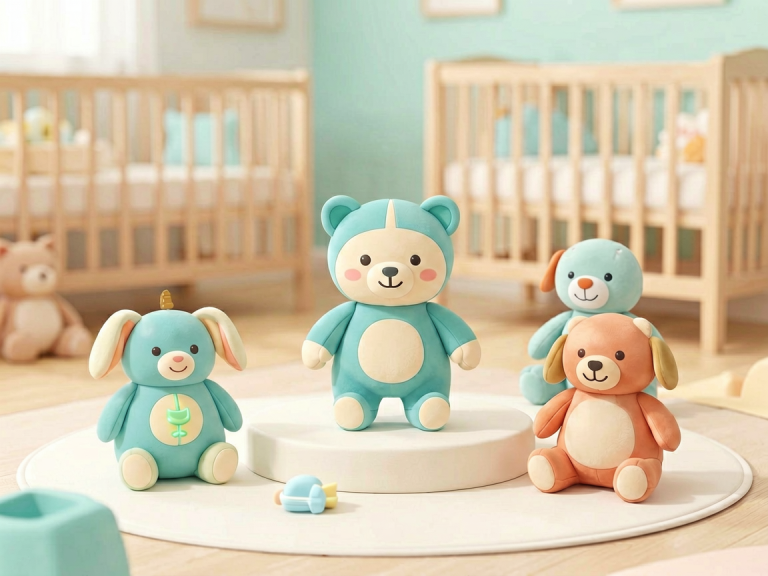
Screen-free toys — classic wooden blocks, play dough, dolls, puzzles, crayons, and building sets — have been the bedrock of childhood for centuries. Their greatest strength lies in their lack of instruction. A cardboard box can become a spaceship, a castle, or a time machine; a set of Lincoln Logs can be infinitely reconfigured. This open-ended play is what developmental psychologists call “divergent play”: it has no fixed goal, no right answer, and no built-in timer. Research consistently shows that divergent play fosters executive function — the ability to plan, self-regulate, and think flexibly. When a child builds a tower that keeps falling, they learn persistence, cause and effect, and frustration tolerance without a screen popping up to say “Try again!” with a cheerful jingle.
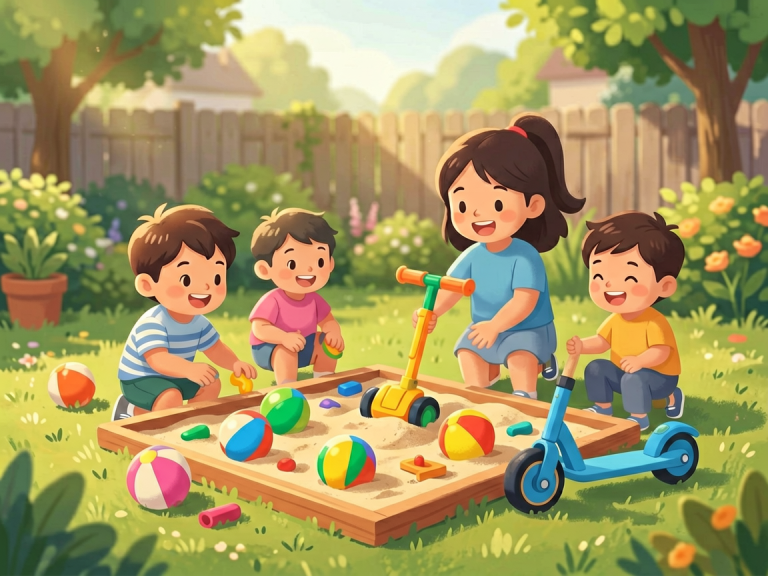
Screen-free toys also provide rich sensory experiences. The weight of a wooden block, the texture of clay, the sound of a rattle — these engage the tactile and proprioceptive systems that are critical for body awareness and fine motor control. In contrast, touching a smooth glass screen offers limited haptic feedback. Occupational therapists often warn that excessive tablet use in early childhood can delay the development of the pincer grip needed for handwriting. Furthermore, unplugged play encourages real-world social interaction. Two children sharing a set of train tracks must negotiate roles, resolve disagreements, and co-create narratives — skills that cannot be practiced on a single-user app.
Cognitive Development: Hands-On vs. Touchscreen
A nuanced examination of cognitive development reveals that neither category is universally superior; it depends on the nature of the activity. For rote memorization — learning letters, numbers, or vocabulary — repetitive app-based drills can be effective, especially when combined with immediate feedback. A 2020 meta-analysis in *Educational Research Review* found that well-designed educational apps improved early math and literacy skills compared to no instruction. However, the same study noted that these benefits often did not transfer to deeper conceptual understanding. A child who can “tap the correct number of apples” on a screen may not grasp the concept of one-to-one correspondence when faced with physical objects.
Screen-free toys excel at nurturing spatial reasoning, creativity, and problem-solving that requires multi-step thinking. A classic example is the construction toy. When a child builds a bridge from wooden planks, they must understand leverage, balance, and gravity through trial and error. An app that simulates bridge-building might show a digital collapse, but it cannot replicate the physical sensation of a plank wobbling under weight. Moreover, screen-free toys allow for “productive failure” — the process of making mistakes and learning from them without the shame of a low score or the distraction of a timer. Cognitive scientists argue that this type of self-directed exploration builds resilience and a growth mindset far more effectively than any gamified system.
Social and Emotional Skills: Solitary Screens vs. Shared Play
Perhaps the most significant divergence between screen-free and app-based toys lies in their social scaffolding. Most app-based toys are designed for individual use. Even when a child shares a tablet, the screen acts as a barrier — eye contact is directed downward, and verbal communication is often minimal. A 2018 study in *Pediatrics* observed that parent-child interaction during app use was qualitatively different from reading a physical book: parents tended to give more commands (“Tap here!”) and asked fewer open-ended questions. This reduces the “serve and return” interactions that are foundational for language development and emotional attunement.
Screen-free toys, by contrast, naturally invite collaboration. A set of animal figurines can inspire a two-year-old and a grandparent to create a noisy zoo. A board game teaches turn-taking and graceful losing. Even solitary play with a puzzle can be interspersed with self-talk and imagination. For children with social anxiety, physical toys offer a safe medium to role-play social scenarios — for example, using dolls to practice saying sorry or navigating a conflict. While some app-based toys claim to promote social skills through multiplayer features, these interactions are often mediated by avatars and limited by the app’s design, lacking the nuance of face-to-face body language and tone.
The Parent’s Dilemma: Finding the Right Balance
Given the evidence, the wise path is not to declare a winner but to recognize that both types of toys have a place in a balanced play diet. The American Academy of Pediatrics recommends that children under 18 months avoid screen-based play entirely (except video chatting), and that for older children, screen time should be high-quality, co-viewed with a caregiver, and limited to one hour per day. Yet many parents find these guidelines challenging to follow in a world where screens are everywhere — including inside the toy chest.
A practical strategy is to treat app-based toys as tools for specific purposes, not as the default. For example, a child who struggles with letter recognition might benefit from a well-designed phonics app for 15 minutes a day, followed by a physical activity like matching letter magnets to objects. For family time, screen-free board games or building sets create shared memories and conversations that no app can replicate. Parents should also pay attention to the “passive vs. active” distinction: a toy that requires physical manipulation (like a programmable robot that a child builds and controls) is vastly different from a toy that simply plays videos or requires tapping colored circles. The best app-based toys are those that bridge the digital and physical worlds — for instance, a smart drawing pad that captures analog scribbles and translates them into digital art, encouraging a seamless blend of both modes.
Conclusion: Beyond the Binary
Ultimately, the debate between screen-free toys and app-based toys is not a zero-sum game. Childhood is not a competition between wooden blocks and pixels; it is a canvas for exploration, connection, and growth. Screen-free toys offer the irreplaceable gifts of open-ended creativity, sensory richness, and genuine human interaction. App-based toys promise efficiency, adaptability, and engagement that can be harnessed for specific learning goals. The greatest danger lies in letting either category dominate. When a child’s play is dominated by screens, they lose the messy, tactile, slow-burn experiences that build patience and imagination. When a child is denied any digital tools, they may miss opportunities to engage with the technological literacy that today’s world demands.
As parents, educators, and caregivers, our role is not to choose sides but to curate a thoughtful mix. Let the blocks fall, let the clay squish, let the crayons roll off the table — and, in measured doses, let the screen illuminate a new idea. The goal is not to eliminate app-based toys but to ensure that they serve play, rather than the other way around. In that balance lies the true future of childhood: rich, varied, and wonderfully unscripted.