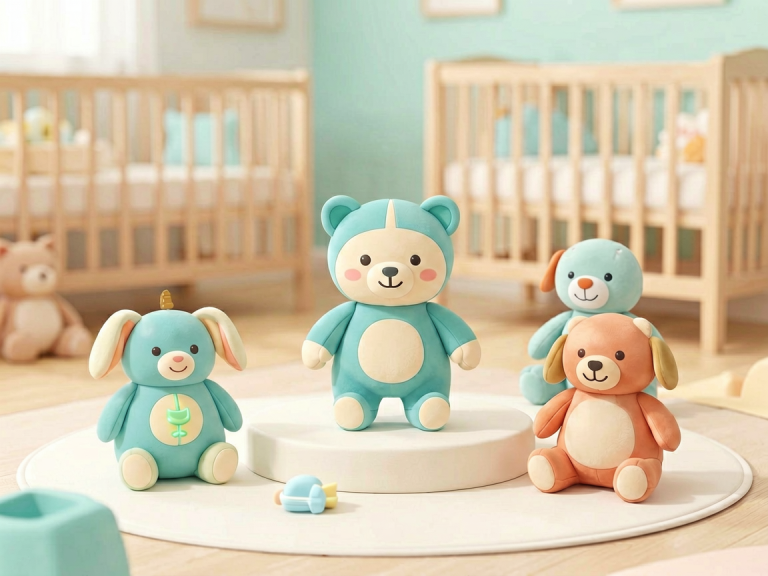
The Quiet Revolution: How Sensory and Fidget Toys Are Reshaping Focus and Well-Being
In a world that never stops buzzing—with notifications, deadlines, and endless streams of information—the human mind is often caught between the need to concentrate and the urge to move. Enter sensory toys, also known as fidget toys: small, tactile objects designed to be manipulated, squeezed, spun, or clicked. Once dismissed as mere novelties or classroom distractions, these tools have quietly undergone a remarkable transformation. Today, they are embraced by neuroscientists, occupational therapists, educators, and corporate executives alike as legitimate aids for focus, anxiety reduction, and sensory regulation. This article explores the science, history, benefits, and controversies surrounding sensory toys, revealing why they have become an essential part of modern life for millions of people.
The Science Behind Fidgeting: Why Movement Enhances Attention
To understand why fidget toys work, we must first examine the neuroscience of attention. The human brain is not designed for prolonged, motionless concentration. Studies in cognitive psychology have shown that for many individuals, especially those with attention deficits, light physical movement can actually stimulate the prefrontal cortex—the region responsible for executive functions like planning, decision-making, and impulse control. This phenomenon is often explained by the “optimal arousal theory.” When a person is under-stimulated (e.g., during a boring lecture), the brain searches for additional sensory input to reach a state of alertness. Fidgeting provides that input without requiring conscious attention. Conversely, when a person is over-stimulated (e.g., in a noisy environment), repetitive tactile actions can have a calming, grounding effect.
A landmark 2015 study published in the *Journal of Abnormal Child Psychology* found that children with Attention-Deficit/Hyperactivity Disorder (ADHD) who were allowed to fidget during a cognitive task performed significantly better than those who were required to sit still. The fidgeting movements—such as tapping a foot or twisting a small object—helped regulate their arousal levels, allowing them to channel excess energy into the task rather than being distracted by it. Similar research on neurotypical adults has demonstrated that simple repetitive hand movements, like squeezing a stress ball, can reduce cortisol levels and improve performance on attention-demanding tasks. These findings challenge the traditional notion that fidgeting is a sign of boredom or disrespect; instead, it may be a smart biological strategy for maintaining focus.
A Brief History: From Classroom Distraction to Mainstream Phenomenon
The modern fidget toy industry has deep roots in occupational therapy. For decades, therapists have used weighted blankets, textured balls, and chewable jewelry to help children with sensory processing disorders self-regulate. The term “fidget” itself originates from the mid-16th century, meaning to move restlessly, but the first wave of commercial fidget toys emerged in the 1990s with the popularity of Koosh balls and stress balls. However, the real breakthrough came in 2017, when the fidget spinner—a simple three-bladed device that spins on a bearing—became a global craze. Within months, sales reached hundreds of millions of dollars, and classrooms around the world were flooded with spinning gadgets.
The spike in popularity was not without controversy. Many schools banned fidget spinners because they were often used as toys rather than tools, creating noise and visual distractions. Yet the phenomenon opened a crucial conversation: If so many children and adults were drawn to these objects, perhaps there was an unmet need for sensory engagement. Since then, the market has diversified dramatically. Today, sensory toys range from silicone “squishies” and marble mesh nets to magnetic putty, textured rings, and sophisticated fidget keyboards. They are no longer limited to the children’s aisle; you can find them in corporate wellness kits, meditation studios, and even high-end design stores.
Types of Sensory Toys: A Spectrum of Tactile and Visual Stimuli
Sensory toys can be categorized by the type of sensory input they provide. Understanding these categories helps individuals choose the right tool for their specific needs.
Tactile Toys: These are the most common. They engage the sense of touch through texture, resistance, and temperature. Examples include stress balls, putty, squishy animals, and textured rolling rings. Some users prefer “chewelry”—chewable pendants made of food-grade silicone, which are especially popular among individuals with autism or oral sensory needs. The act of squeezing, stretching, or chewing provides proprioceptive input (feedback from muscles and joints) that can be deeply calming.
Visual Toys: Fidget spinners, infinity cubes, and liquid motion timers fall into this category. They rely on repetitive visual patterns to capture attention without requiring active manipulation. Watching sand fall through a narrow hourglass or a colored fluid bubble through oil can be mesmerizing, shifting the brain into a meditative state. These toys are particularly useful for individuals who are visually over- or under-stimulated.
Auditory Toys: Clicking, popping, or crinkling sounds serve as subtle acoustic anchors. Pop-it toys (silicone disks with bubbles that make a satisfying “pop” when pressed) are a modern classic. Some users find the sound grounding, while others prefer silent options to avoid disturbing others. Auditory toys can be effective for auditory seekers—people who unconsciously need sound to regulate.
Combination Toys: Many modern fidget toys incorporate multiple modalities. For example, a metal fidget spinner combines tactile spinning with visual motion and a quiet hum. The best toys often allow for varied interactions—twisting, pressing, sliding—so users can adapt them moment by moment.
Benefits for Neurodivergent Individuals: A Lifeline for Executive Function
For people with autism, ADHD, anxiety disorders, or sensory processing disorders, sensory toys are far more than gadgets—they are essential tools for daily functioning. In children with autism, self-stimulatory behaviors (stimming) like hand flapping or rocking serve to either calm an overwhelmed system or stimulate an under-aroused one. Fidget toys provide a socially acceptable outlet for these needs. A study from the University of California, Davis found that students with autism who used fidget toys during classroom instruction showed a 40% reduction in anxiety-related behaviors and improved focus on academic tasks.
For adults with ADHD, the benefits are equally pronounced. Many report that using a fidget tool during meetings, conference calls, or reading sessions helps them maintain sustained attention without zoning out. The key lies in the distinction between “active” and “passive” fidgeting. Active fidgeting—where a toy is manipulated in a deliberate, controlled manner—engages the motor cortex just enough to prevent the brain from wandering, but not so much that it competes with the primary task. This is why complex fidget toys (e.g., those requiring multiple finger movements) are often more effective than simple ones like a rubber band.
Adult Use in the Workplace and Beyond: Beyond the Classroom
The stereotype that fidget toys are only for children is rapidly crumbling. Major corporations such as Google, Microsoft, and Deloitte have integrated sensory tools into their wellness programs. In high-stress environments, employees are encouraged to keep small fidget objects at their desks. I spoke with a software engineer in Silicon Valley who keeps a “cobot”—a small, magnetic building kit—on his desk. “When I’m stuck on a bug, I’ll build a little cube while I think. It keeps my hands busy and my mind loose,” he said. Similarly, therapists now recommend fidget tools for patients with generalized anxiety disorder or panic attacks, as the tactile focus can serve as a grounding technique during episodes.
Even outside of work, adults are embracing sensory toys for their calming potential. Meditation apps now promote “mindful fidgeting” as a gateway to deeper relaxation. There is even a growing trend of “sensory jewelry”—necklaces, rings, and bracelets designed to be discreetly manipulated during social interactions. The stigma is fading as research continues to validate their effectiveness.
Controversies and Criticisms: When Tools Become Distractions
Despite the growing evidence, sensory toys are not without detractors. The most common criticism is that they become distractions rather than aids, especially when used improperly in classroom or meeting settings. A fidget spinner, if spun loudly or passed around, can derail an entire lesson. Critics argue that the very design of many commercial fidget toys—bright colors, spinning action, noise—makes them inherently distracting. This has led some schools to ban all fidget toys, even therapeutic ones.
Another concern is the lack of regulation. There is no universal standard for what constitutes an effective sensory toy. Some products are marketed as therapeutic but are no more than cheap novelties. Parents and teachers often struggle to differentiate between toys that genuinely support self-regulation and those that simply entertain. Occupational therapists recommend that individuals, especially children, be guided by a professional to select tools that match their specific sensory profile.
There is also a risk of over-reliance. If a person uses a fidget toy to avoid engaging with difficult emotions or tasks, the tool can become a crutch rather than a bridge. However, most experts agree that when used with intention, the benefits outweigh the downsides. The key lies in education: users must learn when and how to deploy their tools effectively.
Choosing the Right Toy: A Practical Guide
So how does one choose a sensory toy? The first step is to identify your primary need. Are you seeking focus, calm, or stimulation? For deep concentration, a small, quiet, and discreet toy—like a metal ring or a textured stone—works best. For anxiety relief, a soft, squeezable object that evokes a comforting sensation (e.g., a plush animal with heavy beads) can be helpful. For stimming or high-energy moments, a toy with varied movements—like a fidget cube with multiple buttons—offers more engagement.
Material matters too. Silicone is soft, non-toxic, and easy to clean—ideal for children. Metal or resin toys provide cooler temperatures and more resistance, which some users find grounding. Avoid toys with small parts that can break off. Finally, consider the environment. In an office, a silent toy is essential. At home, you might choose something with more sound or visual flair. The best sensory toy is the one that you naturally reach for, time and again, without it hijacking your attention.
Conclusion: A Tool for the Modern Mind
As our lives become more digitally demanding and our environments more chaotic, the ancient human need for tactile engagement is more pressing than ever. Sensory toys and fidget tools are not a cure-all, nor are they a sign of weakness. They are a simple, elegant solution to a complex neurological reality: our brains are not built for stillness. By providing an outlet for nervous energy, they help us stay present, focused, and calm.
From the child with autism who finds peace in a squishy ball, to the executive who clicks a silent pen during a board meeting, these small objects are quietly rewriting the rules of productivity and wellness. The revolution is not loud or flashy—it is a gentle, repetitive squeeze, a soothing spin, a quiet pop. And it is changing the way we work, learn, and live, one fidget at a time.