The Power of Play: How Learning Toys Shape the Mind of a 5-Year-Old
Introduction: Why the Right Toy Matters at Age Five
At five years old, a child stands at a remarkable crossroads. They are no longer toddlers, yet they are not quite school-age children. This is the age of blooming curiosity, rapid language development, and the first serious steps toward logical thinking. The brain of a five-year-old is forming new neural connections at an astonishing rate, and every experience—especially play—shapes that architecture. Learning toys designed specifically for this age group do not merely entertain; they scaffold cognitive, social, emotional, and physical growth. Yet with aisles of bright packaging and endless online listings, parents and educators often struggle to distinguish genuine educational value from fleeting distraction. This article explores what makes a learning toy truly effective for a five-year-old, the key categories of such toys, and how to choose them wisely. By understanding the developmental milestones of this age and matching toys to those needs, we can turn every play session into a building block for lifelong learning.
The Developmental Landscape of a Five-Year-Old
To appreciate why certain toys work, we must first understand the child. A typical five-year-old has a vocabulary of around 2,000 words and can speak in full, complex sentences. They ask endless “why” questions, demonstrating a hunger for cause and effect. Their fine motor skills have improved enough to hold a pencil with a tripod grip, cut with scissors, and manipulate small objects. Socially, they begin to understand rules, take turns, and engage in cooperative play, though they still struggle with losing or sharing for extended periods. Emotionally, they can name their feelings but need help regulating intense emotions like frustration or jealousy.
Cognitively, the five-year-old is entering what Piaget called the preoperational stage, characterized by symbolic thinking but still limited by egocentrism. They can sort objects by color, shape, or size, count to 20 or more, and recognize some letters and numbers. They love pretend play, which helps them process the world by acting out roles. A learning toy that aligns with these abilities challenges the child without causing overwhelming frustration. For example, a simple board game that requires counting spaces and following rules taps into emerging number sense and social cooperation. A set of interlocking building pieces that can form letters or animals blends creativity with pre-literacy skills. The best toys for five-year-olds are those that ride the edge of their current abilities, gently pushing them forward.
Category One: STEM and Building Toys – Fostering Logical Thinking
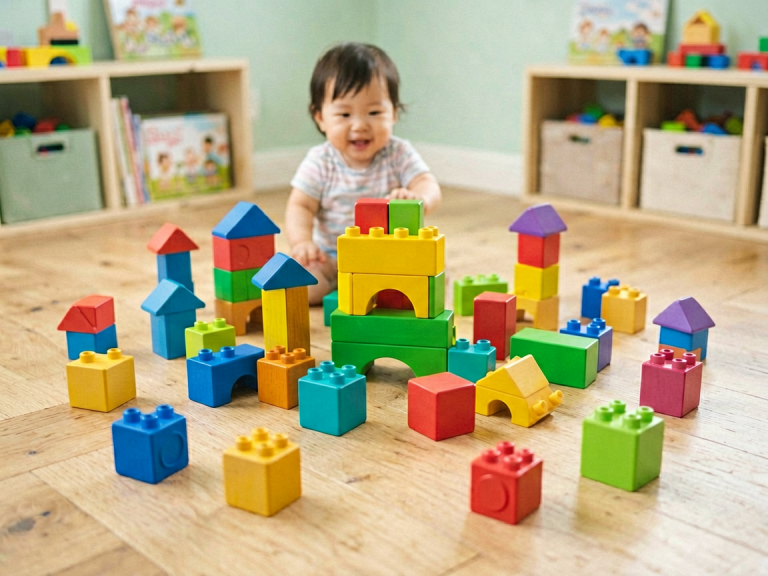
Among the most valuable learning toys for five-year-olds are those that introduce science, technology, engineering, and math (STEM) concepts through hands-on manipulation. Building sets, such as magnetic tiles, wooden blocks, or simple interlocking bricks designed for small hands, are perfect for this age. When a child stacks blocks to create a tower, they are unconsciously experimenting with gravity, balance, and structural integrity. When they connect magnetic tiles to form a 3D cube, they explore geometry and spatial reasoning. More advanced sets may include gears, pulleys, or simple ramps that demonstrate cause and effect. For instance, a set where a marble rolls through a track built by the child teaches planning, prediction, and trial-and-error problem solving.
These toys also nurture persistence. A five-year-old who watches their tower collapse learns that failure is a step toward success. They will rebuild, adjusting the base, until the structure stands. This iterative process is the heart of the scientific method. Parents can enhance the learning by asking open-ended questions: “What do you think will happen if you make the ramp steeper?” or “How can you make the tower taller without falling?” Such dialogue turns a simple play session into a mini lesson in physics and engineering. Furthermore, many STEM toys now come with story-based challenges, such as building a bridge for a toy car or a house for a doll, which integrate imaginative play with technical thinking.
Category Two: Language and Literacy Toys – Building the Bridge to Reading
The five-year-old brain is wired for language acquisition, and learning toys that focus on letters, sounds, and storytelling can accelerate early reading readiness. However, it is crucial to avoid flashcard drills or memorization-heavy games that feel like work. Instead, the most effective literacy toys are playful and multisensory. Foam letters for the bath, magnetic alphabet sets, and letter-matching puzzles allow children to see, touch, and manipulate symbols. A simple game where a child matches uppercase letters to lowercase, or identifies the first sound of a picture, turns abstract phonemes into concrete play.
Phonics-based toys that speak back are popular, but research suggests that the most powerful language development comes from social interaction. Therefore, toys that encourage conversation, such as puppets or storytelling cards, are invaluable. Puppets allow a child to practice dialogue, adopt different voices, and narrate a story, which strengthens narrative skills and vocabulary. Sets of picture cards that can be arranged in sequence to tell a story teach beginning concepts of plot, order, and cause-effect. For example, cards showing a boy planting a seed, then watering it, then a flower growing help the child understand temporal logic. Writing and drawing toys, like magnetic doodle boards or chunky crayons, let children scribble “letters” and “words,” which builds pre-writing muscle control and confidence. The goal is not to force reading but to create a positive emotional connection with written language.
Category Three: Creative and Imaginative Play – The Unsung Learning Tool
Often overlooked in discussions of “learning toys” are the open-ended props for pretend play. Yet for a five-year-old, a simple set of dress-up clothes, a play kitchen, a cash register, or a doctor’s kit can be more educational than the most sophisticated electronic gadget. Why? Because imaginative play is where children practice real-life skills: negotiation, empathy, problem-solving, and language. When two five-year-olds decide who will be the customer and who the shopkeeper, they must agree on roles, set rules, and resolve disputes. They invent scenarios: “I want to buy bread, but I only have three pennies.” The shopkeeper responds, “Then you need to save more money.” In this micro-drama, they explore mathematics (counting money), social studies (the concept of exchange), and emotional regulation (handling disappointment if the game doesn’t go as planned).
Role-playing toys can also be tailored to specific learning goals. A child playing “teacher” with a small whiteboard and markers is rehearsing literacy and numeracy from a new perspective. A set of toy tools and a workbench lets them practice fine motor skills and understand how things are constructed. Even a simple cardboard box can become a spaceship or a castle, fostering creativity and executive function as the child plans the game’s narrative. The key is that these toys do not have a single correct use. They invite the child to impose their own structure, which is far more cognitively demanding than following instructions on a screen. Parents should resist the urge to direct the play; instead, let the child lead and occasionally ask, “What happens next?” to extend the storyline.
Category Four: Social-Emotional and Cooperative Games – Learning to Navigate Relationships
Five-year-olds are beginning to play cooperatively but still need scaffolding to manage emotions like losing, sharing, and taking turns. Learning toys that are explicitly designed as cooperative games—where the players work together against a common challenge rather than against each other—are excellent for this stage. Examples include board games where everyone must complete a task together, such as moving a token through a maze by answering questions or solving a puzzle. These games teach teamwork, communication, and the idea that everyone’s contribution matters. Even competitive games can be modified: emphasize fun over winning, and celebrate effort rather than outcome.
Another vital category are toys that help children identify and express emotions. Emotion flashcards with faces showing different feelings, or puppets named “Happy” and “Sad,” allow a five-year-old to label what they feel. Some toys come with a “feeling wheel” or a “calm-down jar” (a bottle with glitter that settles slowly) which provides a visual tool for breathing and self-regulation. These are not just toys; they are emotional curriculum tools. By playing games that involve naming feelings or acting them out, children develop emotional vocabulary and empathy. For instance, a simple game like “Feelings Charades,” where one child acts out an emotion and others guess, builds social awareness and perspective-taking. In a classroom or playdate setting, such toys can prevent conflicts by giving children a shared language to express needs.
How to Choose the Right Learning Toy: A Practical Guide
With so many options, parents can feel overwhelmed. A few guiding principles can cut through the noise. First, follow the child’s interests. A child fascinated by dinosaurs will learn more from a dinosaur-themed counting game than from an abstract math app. Second, look for toys that offer multiple ways to play. A set of wooden blocks can be used for stacking, sorting, building letters, creating patterns, or as props in a story—this longevity ensures the toy doesn’t lose appeal after one use. Third, prefer toys that require active engagement rather than passive consumption. A toy that talks and lights up while the child just watches is far less beneficial than a simple puzzle that demands hands-on manipulation. Fourth, consider durability and safety: five-year-olds are still rough on toys, and small parts must be avoided. Finally, remember that the best learning toy is often the one that requires a parent or peer to interact with. Social interaction amplifies learning many times over. A toy that is played with alone is fine, but one that sparks conversation and collaboration is gold.
Conclusion: Play Is the Work of Childhood
In the end, the most important message about learning toys for five-year-olds is that they are not a substitute for love, attention, or real-world experiences. A child learns more from baking cookies with a parent (measuring ingredients, following steps, taking turns) than from any kitchen set. Yet well-chosen toys can enrich those experiences and provide structured opportunities for growth. When we give a five-year-old a set of magnetic tiles or a storytelling puppet, we are not just giving a gift; we are giving the tools to build a mind. We are saying: “I believe in your curiosity. I trust you to explore. And I am here to play with you.” That is the true power of learning toys—not to replace human connection, but to be a catalyst for it. So next time you walk down the toy aisle, look beyond the flashing lights and listen to the quiet click of blocks stacking, the laughter of a pretend kitchen, and the murmur of a child explaining their imaginary world. In those sounds lies the foundation of a lifetime of learning.