The Power of Building Toys for 8-Year-Olds: Nurturing Creativity, Problem-Solving, and Confidence
Introduction
At eight years old, children stand at a fascinating crossroads of development. They have outgrown the simple stacking blocks of toddlerhood, yet they are not quite ready for the complex engineering kits designed for teenagers. Their fine motor skills have improved dramatically, their attention spans have lengthened, and their imaginations are bursting with possibilities. This is precisely the age when building toys can have a profound impact—not just on play, but on cognitive, social, and emotional growth. Building toys for 8-year-olds are far more than mere entertainment; they are tools that teach patience, resilience, and the joy of creating something from nothing. In this article, we will explore why building toys matter at this age, what types work best, how to choose them wisely, and how to extend the play experience far beyond the box.
Why Building Toys Matter at Age 8
The developmental stage of an 8-year-old is unique. Children this age are increasingly capable of following multi-step instructions, visualizing three-dimensional objects from two-dimensional diagrams, and persisting through frustration. Building toys tap directly into these emerging abilities. When a child connects a plastic beam to a wheel or snaps a brick onto a baseplate, they are not just playing—they are practicing fine motor coordination, spatial reasoning, and logical sequencing. Moreover, building toys offer a safe environment for failure. A tower that collapses becomes a lesson in structural integrity, not a personal defeat. The iterative process of trial and error builds what psychologists call a “growth mindset,” where children learn that effort and strategy lead to improvement. This is especially crucial at age eight, when many children begin to compare themselves academically and socially. Building toys provide tangible, non-competitive feedback: the structure either stands or falls, and the child has the power to try again.
Beyond cognitive benefits, building toys foster independence. Unlike many digital games that offer instant gratification, physical building requires patience. The satisfaction of completing a model—whether it’s a simple car or a complex castle—gives an 8-year-old a genuine sense of accomplishment. This feeling of mastery directly feeds into self-esteem. Additionally, collaborative building (with friends or siblings) teaches negotiation, sharing of ideas, and teamwork. In a world where children are increasingly screen-bound, building toys offer a hands-on, tactile alternative that promotes deep focus and creative flow.
Types of Building Toys That Engage 8-Year-Olds
Not all building toys are created equal, and the best choices for an 8-year-old strike a balance between challenge and accessibility. Here are several categories that work exceptionally well:
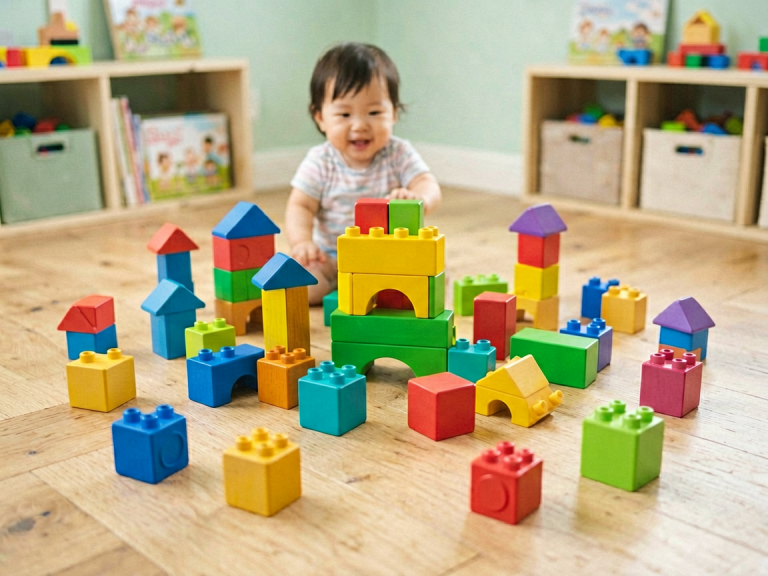
*Classic Construction Sets*: Brand-name plastic brick systems remain a staple for good reason. At age eight, children can handle smaller pieces and more intricate techniques, such as building moving parts, gears, and hinges. Sets with 500 to 1,000 pieces are appropriate, especially those that include figures, animals, or vehicles to spark narrative play. The open-ended nature of these bricks allows kids to follow instructions or invent their own designs.
*Magnetic Tile Systems*: These colorful magnetic blocks are not just for preschoolers. Advanced sets for 8-year-olds include special shapes like arches, spheres, and translucent panels. They allow for quick assembly and easy modification, making them ideal for children who get frustrated by pieces that don’t snap together perfectly. The magnets provide satisfying feedback and enable stunning structures like geodesic domes or magnetic towers.
*Wooden Block and Plank Sets*: Simple wooden planks (like KEVA planks or unit blocks) are deceptively powerful. Without any connectors, children must rely on balance, friction, and gravity. This forces them to think like structural engineers. 8-year-olds can build complex cantilevers, bridges, and even chain reactions. The lack of instructions encourages pure creativity and spatial problem-solving.
*Engineering and STEM Kits*: Purpose-built kits that introduce basic physics—such as pulleys, levers, and simple machines—are perfect for curious 8-year-olds. Many come with real tools, plastic nuts and bolts, and instructions for building a working crane, a catapult, or a windmill. These kits teach cause and effect in a concrete way and often include challenges that require adjusting angle or weight to achieve a goal.
*3D Puzzle and Model Building*: Foam or plastic 3D puzzles of famous landmarks, vehicles, or animals offer a different kind of challenge: precise alignment and patience. They are less about open-ended creation and more about following a systematic plan, which builds attention to detail and perseverance. For 8-year-olds, models with 100–200 pieces are ideal—complex enough to feel rewarding but not overwhelming.
Key Factors to Consider When Choosing Building Toys
Selecting the right building toy requires thinking beyond the box cover. Parents and gift-givers should consider the child’s personality, motor skills, and interests. A child who loves fast cars will engage more with a vehicle-building kit than with a castle set. Similarly, a child with shorter attention spans may benefit from magnetic tiles that allow quick demonstrations of success, while a more persistent child might thrive with a 1,000-piece brick set.
Quality and safety are paramount. Pieces should be free of sharp edges, non-toxic, and sturdy enough to withstand repeated assembly and disassembly. The best toys are those that can be used in multiple ways, not just one-time builds. Look for sets that offer online or printable alternate instructions, or that encourage hybridization between sets. Also, consider storage: a large collection of small pieces can quickly become overwhelming. A dedicated container or compartmentalized box helps children maintain order—itself a valuable organizational skill.
Another important factor is social potential. Building toys that work well in pairs or small groups (for example, a large magnetic tile set or a cooperative construction challenge) can turn a solitary activity into a shared experience. At eight, friendships are deepening, and collaborative play helps children learn to communicate their visions and compromise. Finally, avoid toys that are too prescriptive. If every build is predetermined, the child may lose the opportunity to experiment and innovate. The best building toys provide a framework but leave room for deviation.
Creative Ways to Play Beyond the Instructions
Once the kit is out of the box, the real magic begins. Many children follow the official instructions once or twice, then abandon the toy. To maximize the value, adults can introduce creative challenges that extend play. For example, after building the standard model, ask the child: “Can you modify it so it moves faster?” or “How can you make it taller without it falling?” These open-ended prompts encourage critical thinking.
Another approach is to combine building toys with other materials. A brick-built house can become a setting for a story with action figures. A magnetic tower can be decorated with paper flags or LED lights. Incorporating art—drawing plans before building, or painting completed models—adds another layer of expression. For group play, try a “mystery build” challenge: give each child the same set of pieces and a hidden goal (like “build the tallest tower that can hold a small apple”), then compare results.
Building toys can also be integrated into learning. An 8-year-old exploring fractions can use colored bricks to represent proportions. A child learning about simple machines can build a model of a lever and test different fulcrum positions. The toy becomes a concrete representation of abstract concepts. Finally, encourage documentation. Taking photos of each creation, drawing designs in a notebook, or even making a stop-motion animation using the models builds a sense of pride and record-keeping.
The Long-Term Benefits of Building Play
The skills developed through building toys at age eight do not disappear when the pieces are put away. The spatial reasoning practiced while figuring out how to connect two pieces translates into better performance in geometry and later in fields like architecture and engineering. The persistence learned from troubleshooting a wobbly base helps children tackle difficult homework problems without giving up. The creativity exercised during open-ended builds fuels innovation and self-expression in writing, art, and other domains.
Moreover, building toys can become a lifelong hobby. Many adults remember fondly the hours spent constructing with bricks or planks as children. That early engagement often leads to an interest in robotics, carpentry, or even coding (as seen in programmable building kits for older kids). The foundation laid at age eight is not just about play; it is about building a relationship with making, fixing, and improving—a mindset that is essential in an ever-changing world.
In conclusion, building toys for 8-year-olds are a powerful investment in a child’s development. They offer a blend of fun and learning that few other toys can match. By choosing high-quality, age-appropriate sets and encouraging creative, open-ended play, parents and educators can help children construct not only impressive structures but also the confidence and cognitive skills that will support them for years to come. So the next time you see a pile of bricks on the living room floor, remember: that is not a mess—it is a blueprint for a brilliant future.