Outdoor vs. Indoor Toys: Shaping Childhood Development Through Play
For generations, the debate over whether outdoor or indoor toys are better for children has sparked lively discussions among parents, educators, and child development experts. In an era where digital screens compete with backyard swings and building blocks, understanding the distinct advantages and limitations of each play category becomes crucial. Outdoor toys—such as bicycles, trampolines, sandboxes, and sports equipment—invite children into the open air, while indoor toys—including puzzles, board games, construction sets, and art supplies—create structured opportunities within the home. Rather than declaring a winner, a nuanced examination reveals that both types serve essential, yet different, roles in fostering a child’s physical, cognitive, social, and emotional growth. This article explores the comparative benefits and drawbacks of outdoor and indoor toys, offering a balanced perspective for parents striving to create a holistic play environment.
The Undeniable Appeal and Developmental Power of Outdoor Toys
Physical Health and Motor Skill Development
Outdoor toys are naturally aligned with physical activity. A tricycle or balance bike strengthens leg muscles and improves cardiovascular endurance, while a jump rope enhances coordination and agility. Climbing structures, such as jungle gyms and monkey bars, challenge upper-body strength and spatial awareness. According to the American Academy of Pediatrics, children aged 6 to 17 need at least 60 minutes of moderate-to-vigorous physical activity daily. Outdoor toys make this requirement feel like pure fun rather than a chore. Moreover, activities like throwing a frisbee or kicking a soccer ball refine gross motor skills—large muscle movements that form the foundation for more precise fine motor abilities later. The unstructured nature of outdoor play also encourages spontaneous running, jumping, and balancing, which cannot be replicated in a confined indoor space.
Sensory Stimulation and Connection with Nature
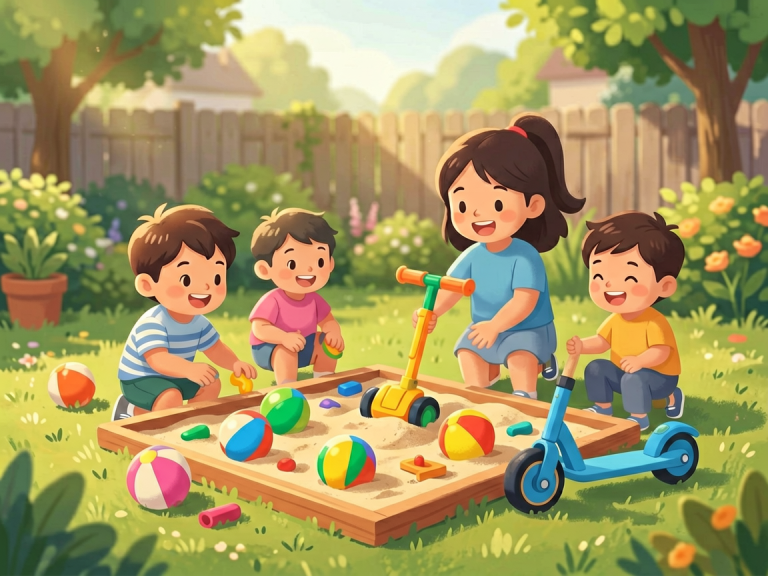
Outdoor toys immerse children in a rich sensory environment. The texture of sand, the sound of wind through a kite string, the sight of sunlight filtering through leaves—these experiences engage a child’s senses in ways that indoor toys rarely can. Playing with a water table or a garden set introduces concepts of cause and effect (e.g., pouring water from a cup makes a wheel spin) while also fostering an early appreciation for the natural world. Research published in *Frontiers in Psychology* suggests that regular exposure to nature reduces stress, improves attention spans, and even boosts creativity in children. Outdoor toys act as a bridge between play and environmental learning; a simple magnifying glass or bug-catching kit can transform a backyard into a living laboratory.
Social Interaction and Risk-Taking
Outdoor play often involves larger groups and less adult supervision, which promotes crucial social skills. A game of tag or hide-and-seek requires negotiation, rule-making, and conflict resolution. Team sports like basketball or soccer teach cooperation and shared goals. Additionally, outdoor toys naturally introduce an element of manageable risk—climbing a tree, balancing on a slackline, or riding a bike down a gentle slope. These experiences help children assess their own limits, build resilience, and develop confidence. Psychologist Ellen Sandseter famously argued that risky outdoor play is essential for healthy child development because it allows children to learn how to cope with uncertainty and fear in a controlled setting. Without outdoor toys, many such opportunities would be lost.
Potential Drawbacks of Outdoor Toys
Despite their benefits, outdoor toys come with challenges. Safety is a primary concern: trampolines cause thousands of emergency-room visits annually, and bicycles require helmets and safe riding areas. Weather can also be a limiting factor—extreme heat, cold, or rain may restrict outdoor play for days or weeks. Furthermore, outdoor toys often demand more parental supervision and maintenance. A swing set needs regular checks for rusted bolts, and a sandbox must be covered to keep animals out. In urban environments, lack of accessible outdoor space can make such toys impractical. Finally, outdoor play can be less structured, which some children find overwhelming or unappealing if they prefer quiet, focused activities.
The Structured World of Indoor Toys: Cognitive and Creative Growth
Fine Motor Skills and Cognitive Development
Indoor toys excel at targeting fine motor skills—the small, precise movements of fingers and hands. LEGO bricks, puzzles, lacing beads, and modeling clay all require children to manipulate tiny objects with control and dexterity. These activities strengthen hand-eye coordination and prepare children for writing, drawing, and other academic tasks. Cognitive benefits are equally profound. Board games like chess or checkers teach strategic thinking, pattern recognition, and delayed gratification. Construction sets (e.g., magnetic tiles or wooden blocks) introduce engineering principles such as balance, symmetry, and gravity. Educational toys—such as math cubes, alphabet magnets, or science kits—can turn play into a learning experience that aligns with school curricula. A 2020 study in *Child Development* found that children who engaged regularly with construction toys showed improved spatial reasoning and problem-solving abilities compared to those who played mostly with passive toys.
Encouraging Imagination and Solitary Play
Indoor environments often provide the quiet focus needed for imaginative play. A dollhouse, a set of action figures, or a dress-up trunk can spark elaborate storylines that last for hours. Unlike outdoor play, which is often disrupted by weather or other children, indoor play can be sustained and deeply immersive. Such solitary or small-group play is vital for developing a child’s inner world. Psychologist Lev Vygotsky emphasized that imaginative play is a leading factor in cognitive development because it allows children to practice adult roles and societal rules in a safe space. Indoor toys also support artistic expression: paints, crayons, clay, and craft supplies let children create tangible representations of their thoughts and emotions, which helps with emotional regulation and self-identity.
Accessibility and Year-Round Availability
One of the strongest advantages of indoor toys is their independence from external conditions. A child can build with blocks or work on a jigsaw puzzle regardless of rain, snow, or darkness. This reliability makes indoor toys a consistent resource for learning and entertainment. Furthermore, indoor toys can be easily stored and rotated, preventing boredom. A well-organized toy shelf allows parents to introduce new challenges periodically. Indoor play also tends to be safer in terms of injury risk—no falls from heights, no collisions with bikes—though parents must still watch for small parts that pose choking hazards. For families living in apartments or regions with harsh winters, indoor toys are not just an option but a necessity.
Limitations of Indoor Toys
Indoor play is not without its pitfalls. A major concern is the lack of physical activity. Unless a child is intentionally moving (e.g., dancing to music or using an indoor climber), most indoor toys encourage sedentary behavior. Prolonged sitting and screen-based play can contribute to childhood obesity and poor posture. Another issue is overstimulation from too many toys; a cluttered playroom can actually reduce a child’s ability to focus. Additionally, indoor toys often isolate children from peers and nature. A child who spends all afternoon assembling a model airplane might miss out on the social dynamics of group play. Finally, indoor toys can foster a dependence on structured activities—children may struggle to entertain themselves without a specific toy or game, whereas outdoor play often requires nothing more than imagination and a patch of grass.
A Comparative Analysis: When and How to Choose
Age and Developmental Stage
The ideal balance between outdoor and indoor toys shifts with age. Toddlers, for example, benefit immensely from both. Push-and-pull toys (outdoor) help with walking and balance, while shape sorters and nesting cups (indoor) build early cognitive skills. Preschoolers (ages 3–5) thrive on outdoor toys that involve running and climbing, but also need indoor toys that develop pre-writing skills, like crayons and scissors. School-aged children can engage in more complex activities: organized sports outdoors and board games or coding kits indoors. Adolescents may prefer outdoor sports for social bonding and indoor hobbies like model-building or musical instruments for creative expression. Parents should observe their child’s individual inclinations—some children are naturally more active and crave outdoor time, while others are introspective and prefer quiet indoor projects.
Balancing Screen Time with Active Play
In the modern digital age, indoor toys increasingly include electronic components—tablets, interactive robots, video games. While some educational apps have merit, excessive screen time is linked to delayed language development, attention issues, and reduced physical activity. The World Health Organization recommends no more than one hour of screen time per day for children aged 2–5, and even less for younger kids. Outdoor toys naturally counteract screen dependency by offering a more physically engaging and sensorily rich alternative. Parents can create a “play schedule” that allocates equal time for outdoor active play and indoor creative or cognitive play, ensuring that neither dominates. For instance, after 30 minutes of bike riding (outdoor), a child might spend 30 minutes doing a puzzle (indoor). This balanced approach respects the unique contributions of each toy category.
Space, Budget, and Safety Considerations
Practical factors also influence the choice. A family with a large backyard can easily accommodate a swing set or a climbing frame, whereas an apartment dweller might rely on rooftop play or public parks for outdoor experiences. Indoor toys, on the other hand, must fit within storage limits; a single large dollhouse can take up significant floor space. Budget is another variable: outdoor toys like trampolines or go-karts are often more expensive and require maintenance, while indoor toys like building blocks or art supplies can be more cost-effective and long-lasting. Safety checks differ as well—outdoor toys should be anchored securely and padded where falls are likely; indoor toys should be free of toxic materials and small parts for young children. Regardless of the choice, parental involvement remains key. A toy is only as beneficial as the guidance and interaction it inspires.
Conclusion: The Symphony of Play
To frame outdoor and indoor toys as opposing forces is to miss the bigger picture. They are not rivals but complementary instruments in a symphony of childhood development. Outdoor toys awaken the body, connect children to nature, and teach resilience through risk. Indoor toys sharpen the mind, nurture creativity, and provide refuge from the chaos of the outside world. A child who spends all day outdoors may develop strong muscles but miss out on the fine motor precision and imaginative depth that indoor play fosters. Conversely, a child who never plays outside may lack physical stamina, social confidence, and a sense of awe for the natural environment.
The most effective approach is intentional curation. Parents should aim for a diverse toy collection that includes both categories, rotating toys to maintain novelty and matching them to the child’s evolving interests. Structured indoor activities can be balanced with unstructured outdoor exploration. Most importantly, the quality of play matters more than the quantity of toys. A simple cardboard box can be an outdoor spaceship or an indoor castle—the same box embodies both worlds. By understanding the distinct strengths of outdoor and indoor toys, caregivers can create a play landscape that builds healthy, curious, and well-rounded children. In the end, the goal is not to choose sides but to embrace the richness of both realms, ensuring that every child has the opportunity to climb, create, compete, and dream—both under the sun and within the cozy walls of home.