Introduction
Title: Wooden Blocks vs. Screen Taps: A Comparative Analysis of Traditional Educational Toys and Electronic Learning Toys
The marketplace for children’s playthings has never been more diverse—or more confusing for parents and educators. On one side of the aisle sit the classic wooden blocks, stacking rings, puzzles, and sorting shapes that have entertained generations. On the other side, glowing tablets, interactive robots, and app-connected devices promise to “teach” letters, numbers, and even coding through touchscreens and gamified rewards. Both categories fall under the broad umbrella of “educational toys,” yet they operate on fundamentally different principles. Traditional educational toys rely on physical manipulation, open-ended play, and sensory feedback, while electronic learning toys (ELTs) leverage digital interfaces, immediate audio-visual responses, and algorithm-driven progression. This article compares the two types in terms of cognitive development, motor skills, social interaction, engagement patterns, cost, and long-term learning outcomes, drawing on research in developmental psychology and early childhood education. The goal is not to declare a definitive winner—because context matters—but to equip readers with a nuanced understanding that can inform better purchasing and pedagogical decisions.
What Defines a Traditional Educational Toy?
Traditional educational toys are materials that encourage learning through hands-on, unstructured play. They are typically made of natural materials like wood, fabric, or cardboard, and they do not require batteries, screens, or internet connectivity. Classic examples include unit blocks, Montessori sensorial materials, threading beads, counting frames (abacuses), pegboards, and simple matching games. Their educational value emerges from the child’s own experimentation: a set of wooden blocks becomes a tower, a castle, a bridge, or a balancing act, depending on the child’s imagination. The toy itself is a “scaffold” that provides constraints (e.g., gravity, shape, size) but does not dictate a predetermined sequence of steps. Learning happens through trial and error, spatial reasoning, and the integration of multiple senses—touch, sight, and even hearing when blocks clatter to the floor. Crucially, there is no “correct” answer in the traditional sense; the child defines the goal.
What Defines an Electronic Learning Toy?
Electronic learning toys incorporate digital technology to present content and interact with the user. They can range from simple battery-operated devices that play sounds when a button is pressed (e.g., a talking alphabet chart) to sophisticated tablets preloaded with educational apps or robots that respond to voice commands and gestures. Popular examples include LeapFrog’s LeapStart interactive books, VTech’s Kidibuzz smartwatches, and Osmo’s coding kits that blend physical blocks with an iPad screen. Unlike traditional toys, ELTs typically provide immediate, scripted feedback: a correct answer triggers a celebratory sound or animation; an incorrect one prompts a gentle redirection. The learning path is often linear, moving from simple to complex levels that are automatically unlocked as the child demonstrates mastery. Many ELTs also collect data on the child’s performance, claiming to tailor difficulty in real time. This personalized feedback loop is arguably their strongest selling point.
Cognitive Development: Open-Ended vs. Directed Learning
One of the most debated areas is how each toy type influences cognitive skills such as problem-solving, creativity, and executive function. Traditional toys excel at fostering divergent thinking—the ability to generate multiple solutions to a single problem. A child playing with unit blocks must constantly predict how stacking affects stability, adjust plans when a tower falls, and invent new structures. This process exercises working memory, inhibitory control (resisting the urge to just crash the tower), and cognitive flexibility (switching from building to pretending it’s a zoo). Research by the University of Delaware (2018) found that preschoolers who played with traditional blocks scored higher on measures of spatial visualization than those who used electronic building toys.
In contrast, electronic learning toys often promote convergent thinking—arriving at one correct answer. An app that asks “What letter comes after B?” rewards a single response. While this can efficiently drill foundational knowledge (phonics, number facts), it may inadvertently limit trial-and-error exploration. Moreover, the instant feedback from ELTs can create a dependency: children may become reluctant to attempt tasks without a digital prompt. A 2020 study in *Computers & Education* noted that children using tablet-based math games showed stronger immediate gains on standardized tests but weaker long-term retention compared to peers who used physical manipulatives, possibly because the physical interaction created richer neural connections through multi-sensory engagement.
Motor Skills and Physical Engagement
Traditional educational toys demand fine motor coordination: picking up a small wooden cube, twisting a puzzle piece into place, lacing a bead onto a string. These actions strengthen the intrinsic muscles of the hand, improve hand-eye coordination, and develop proprioception—the sense of where one’s body is in space. For toddlers and preschoolers, these are critical milestones that lay the foundation for writing, drawing, and self-care tasks like buttoning clothes.
Electronic learning toys, by contrast, typically require only gross motor actions (tapping, swiping, or pressing a single button). While some, like Osmo’s physical coding blocks, incorporate hand movements, many ELTs reduce motor demands drastically. The American Academy of Pediatrics has warned that excessive screen-based play can lead to delays in fine motor development, especially in children under three. Furthermore, physical toys allow for natural consequences: a block that falls teaches gravity; a puzzle piece that doesn’t fit teaches shape differentiation. Digital toys shield children from these physical realities, replacing them with virtual physics that may not translate to real-world understanding.
Social and Emotional Development
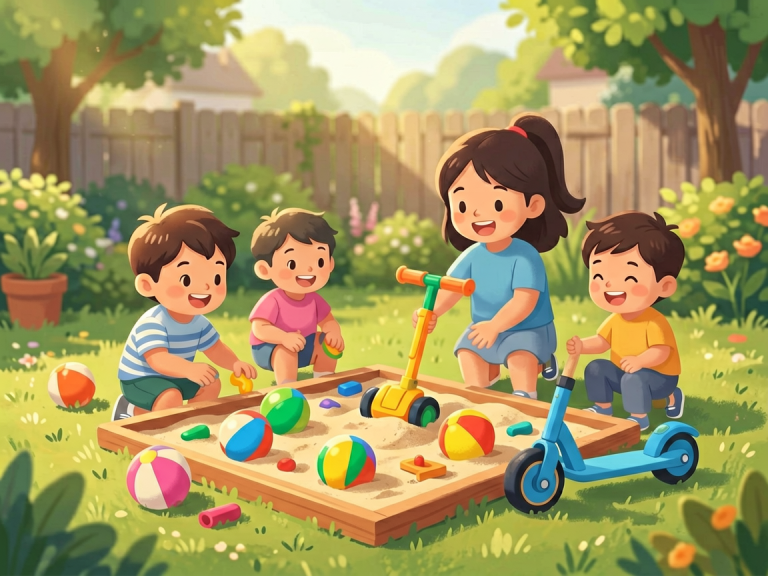
Traditional toys are inherently social catalysts. A set of wooden train tracks invites cooperative play: two children negotiate whose track goes where, share resources, and resolve conflicts when a bridge collapses. Even solitary play with traditional toys often involves imaginative scenarios (e.g., a child talking to a stuffed animal) that help develop theory of mind and emotional regulation.
Electronic toys, especially those designed for solo use, can be isolating. Many apps are structured as one-child activities; even when two children share a tablet, the small screen and limited input modes often encourage parallel play rather than collaboration. Some ELTs do incorporate multiplayer modes, but these still operate within a digital framework that lacks the rich nonverbal cues—facial expressions, body language—of face-to-face interaction. A 2022 meta-analysis in *Journal of Child Psychology* found that children who spent more than two hours per day on electronic educational games scored lower on teacher-rated social competence than those who engaged in unstructured physical play.
Engagement and Motivation: The Attention Trade-Off
Proponents of electronic toys argue that they captivate children who might otherwise resist learning. The bright colors, animations, sound effects, and reward systems (stars, coins, animated celebrations) trigger dopamine release, making repetition feel enjoyable. For children with attention difficulties, this can be a useful scaffold. However, the same mechanism raises concerns about “intrinsic motivation.” Decades of research suggest that when children are constantly rewarded with external stimuli, their internal drive to learn for its own sake diminishes. Traditional toys, which offer no programmed praise, force children to derive satisfaction from the act itself—the satisfying *click* of a puzzle piece, the pride of a tall tower. This builds a self-rewarding loop that is more sustainable for long-term learning.
Another issue is the phenomenon of “passivity.” Many ELTs are designed to keep children content with minimum effort: the toy does the work, and the child merely responds. In contrast, traditional toys demand active construction of meaning. A child cannot be passive with a set of wooden blocks; they must plan, lift, balance, and adjust.
Cost, Accessibility, and Practical Considerations
From a financial perspective, traditional educational toys often win on durability and longevity. A set of high-quality wooden unit blocks may last decades, be passed down among siblings, and require no software updates or battery replacements. Their cost per use quickly drops to near zero. Electronic toys, on the other hand, depreciate rapidly: batteries die, screens crack, operating systems become obsolete, and subscriptions to app content pile up. A single tablet-based learning system can cost three times as much as a complete set of Montessori sandpaper letters and number rods. Moreover, electronic toys demand screen time, which parents must monitor according to pediatric guidelines (no screens before 18 months, limited use before age 5). Traditional toys carry no such restrictions—a child can play with blocks for hours without risking digital eye strain or disrupted sleep.
Research Evidence: What Do Studies Say?
Multiple controlled studies have compared the two categories. A landmark experiment by Lillard et al. (2013) showed that preschoolers who played with traditional “non-electronic” toys (blocks, puzzles, play kitchens) exhibited longer sustained attention and more complex language use than those who played with electronic versions of the same toys (e.g., a digital puzzle app). A 2021 review in *Pediatrics* concluded that while electronic educational games can improve specific content knowledge in the short term, they do not outperform traditional methods for general cognitive development. However, the review also noted that a blend—using physical toys to introduce concepts and electronic games to reinforce them—may be optimal.
How to Choose: A Balanced Approach
The key takeaway is not that electronic toys are “bad” and traditional toys “good,” but that each serves a different purpose. Traditional educational toys should form the foundation of early play, especially for children under six. They build motor skills, creativity, social competence, and a deep, embodied understanding of how the world works. Electronic learning toys can be reserved for targeted practice (e.g., phonics drills) or as a supplement for older children who already have strong analog skills. Parents and educators should prioritize toys that allow open-ended play, require active participation, and encourage interaction with others. When selecting an ELT, look for features that mimic physical feedback (e.g., tactile buttons, tilt sensors) rather than pure touchscreen swiping. Above all, remember that the most educational toy is a present, engaged adult—whether that adult is stacking blocks alongside the child or discussing strategies during a digital game.
Conclusion
In the comparison of traditional educational toys versus electronic learning toys, the former offers unmatched advantages in holistic child development—fostering motor skills, creativity, social interaction, and intrinsic motivation. The latter provides efficiency in delivering specific content and can be motivating for some children, but comes with risks of reduced physical engagement, over-reliance on external rewards, and potential social isolation. The ideal playroom includes both, with a strong bias toward the simple, timeless, and hands-on. As we navigate a world increasingly saturated with digital stimuli, returning to the quiet power of a wooden block may be the most radical—and most educational—choice we can make for our children.