Ensuring Playful Safety: A Comprehensive Guide to Safe Toys for 6-Year-Olds
Toys are the building blocks of childhood—they spark imagination, develop motor skills, and foster social interaction. For six-year-olds, who are navigating the exciting transition from preschool to elementary school, play becomes more structured and adventurous. They ride bikes, build complex structures, and engage in pretend play with peers. Yet with this increased independence comes a greater need for vigilance. A toy that is perfectly safe for a ten-year-old might pose choking, chemical, or mechanical hazards for a younger child. This article offers a detailed examination of what makes a toy safe for six-year-olds, covering regulatory standards, material considerations, age-appropriate choices, and practical parental oversight. By understanding these guidelines, caregivers can create a play environment that is both joyful and hazard-free.
Why Safety Standards Matter at Age Six
At six, children are physically active, intellectually curious, and still developing their judgment. They may put small objects in their mouths out of habit, or run with toys that have long cords. Their fine motor skills have improved, but they are not yet fully coordinated. According to the U.S. Consumer Product Safety Commission (CPSC), thousands of toy-related injuries occur each year in this age group, with cuts, bruises, and choking incidents topping the list. The key danger zones are toys with small detachable parts, sharp edges, toxic paints, and batteries that can leak or be swallowed. Moreover, six-year-olds often imitate older siblings, wanting toys meant for children eight and up, which may include electrical components or complex magnets. Therefore, “safe” is not simply a label—it is a dynamic concept that depends on the child’s developmental stage. The World Health Organization emphasizes that toy safety requires a multi-layered approach: proper design, clear labeling, and adult supervision. For a six-year-old, that means a toy must be mechanically robust (no breaking into tiny pieces), chemically inert (no lead or phthalates), and appropriately sized (no parts smaller than 3 cm in any dimension). Understanding these factors empowers parents to make informed choices.
Key Safety Certifications and What They Mean
When shopping for toys, parents often encounter a confusing array of marks and logos. Familiarity with major safety certifications is the first step toward ensuring a safe purchase. ASTM F963 is the standard safety specification for toy safety in the United States, covering physical, mechanical, electrical, and flammability risks. Toys that meet ASTM F963 have been tested for small parts, sharp points, pinch hazards, and toxic substances. In Europe, the CE marking indicates conformity with the European Toy Safety Directive (2009/48/EC), which includes rigorous chemical limits and migration testing for heavy metals. Additionally, the TÜV Rheinland and EN 71 certifications are common in Europe and many Asian markets. For art supplies, look for the AP (Approved Product) seal from the Art and Creative Materials Institute, confirming that the product contains no materials in quantities sufficient to be toxic. An equally important but often overlooked certification is the UL mark for electronic toys, which tests for fire and electric shock hazards. While no certification is 100% foolproof, choosing toys with recognized marks significantly reduces risk. Parents should also check online recall databases (e.g., CPSC.gov for the U.S.) before purchasing second-hand toys. In the digital age, a quick search can reveal whether a particular toy has been reported for safety issues.
Recommended Types of Safe Toys for Six-Year-Olds
Construction and Building Sets
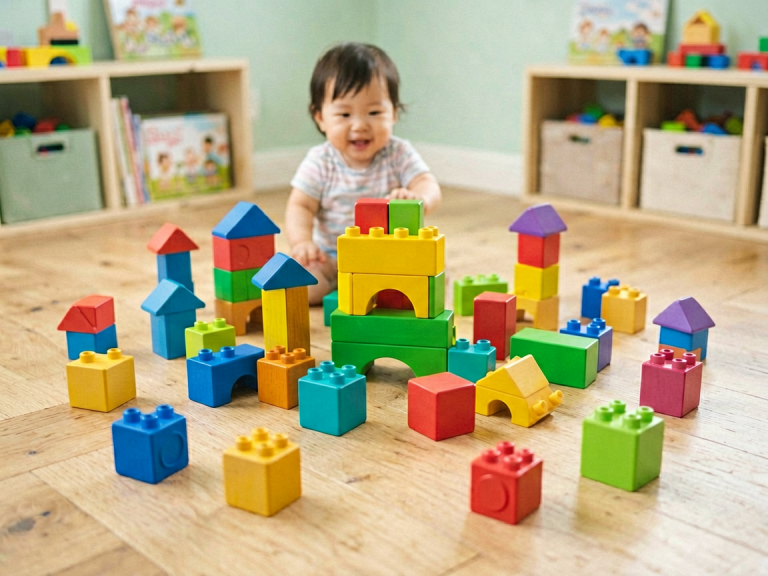
Six-year-olds thrive on creativity and problem-solving. Wooden blocks, interlocking plastic bricks (such as those from major brands that follow strict safety guidelines), and magnetic tile sets are excellent choices—provided the magnets are fully encased and cannot be dislodged. Look for sets with pieces larger than a standard dice (about 1.5 cm) to prevent swallowing. Avoid sets with very small decorative items like tiny flags or wheels that can break off. High-quality construction toys often have rounded edges and non-toxic coatings. They also encourage fine motor development and spatial reasoning. To be extra safe, always supervise play with magnetic sets, as swallowing multiple magnets can cause life-threatening internal injuries.
Art and Craft Materials
Artistic expression is vital at this age. Safe options include washable markers, crayons, colored pencils, and water-based paints. Choose products labeled “non-toxic” and “AP-certified.” For scissors, opt for blunt-tipped safety scissors designed for children. Avoid glue sticks that contain solvents; instead, use white school glue or glue sticks that are water-based. A common hazard in art kits is cheaply made clay or play dough that may contain boric acid or fragrances that irritate skin. Stick to well-known brands that disclose ingredients. For bead crafts, use large plastic beads with holes wide enough to string, but be careful of any sharp edges on the stringing material. A good rule: never leave a child under eight unattended with any art supply that comes in a liquid form, as spills can cause slips and ingestion risks.
Outdoor and Active Play
Physical activity is crucial for six-year-olds. Bicycles, tricycles, scooters, and roller skates are popular, but they must be paired with proper safety gear: a certified helmet, knee pads, and elbow pads. For riding toys, check for sturdy frames, reliable brakes, and tires that grip well. Avoid toys that have exposed chains or pinch points. Flying discs, soft foam balls, and lightweight bats are safe alternatives to hard baseballs. When purchasing a trampoline, experts recommend a model with a full enclosure net and padding over the springs, and only one child at a time. The American Academy of Pediatrics discourages trampolines for children under six due to the high risk of fractures. Instead, consider a small slide or a climbing dome made of powder-coated metal with no sharp edges.
Puzzles, Board Games, and Logic Toys
These toys encourage cognitive development and social skills. Choose board games with large pieces (e.g., chunky pawns or dice) that cannot be swallowed. Card games should use rounded corners and non-toxic ink. Puzzles with 24 to 100 pieces are appropriate; those with wooden knobs for easy gripping are especially safe. Keep an eye on laminate puzzles that may peel over time, creating small choking hazards. Electronic learning toys can be engaging, but they should have a secured battery compartment that requires a screwdriver to open, preventing a child from accessing button batteries—a serious ingestion risk. Always test the sound volume: toys that exceed 85 decibels can damage hearing. Many parents overlook that some musical toys play overly loud music; look for volume control buttons.
Toys to Avoid for Six-Year-Olds
Small Parts and Choking Hazards
Any toy that has detachable parts smaller than a standard ping-pong ball (roughly 4 cm in diameter) is a potential choking hazard. This includes collectible figurines, craft kits with tiny beads, and costume jewelry. Six-year-olds still explore with their mouths, especially when tired or distracted. The CPSC maintains a “small parts test cylinder” (1.25 inches in diameter by 2.25 inches deep) as the benchmark. Avoid toys that come with components that can fit inside that cylinder. Also beware of toys that have “eyes,” “buttons,” or other decorations glued on—these can pop off under stress.
Toxic and Chemical Hazards
Toys made from soft vinyl (PVC) may contain phthalates, which are endocrine disruptors. In the United States, the Consumer Product Safety Improvement Act (CPSIA) limits phthalates in children’s products, but imports from less regulated countries may still be sold. Avoid toys with a strong chemical smell, and always choose those labeled “phthalate-free” and “lead-free.” For painted toys, look for “non-toxic” labels; older wooden toys (especially those from garage sales) might have lead-based paint. Also avoid cheap costume makeup and face paints, which often contain heavy metals and allergens. If a child wants to dress up, choose natural fiber costumes and use makeup specifically formulated for young children.
Electrical, Magnetic, and Projectile Risks
Toys with exposed wires, open circuits, or poorly insulated batteries should be avoided. For magnetic toys, a strong magnet that can be detached is dangerous: if two or more are swallowed, they can attract through intestinal walls and cause perforations. The CPSC has issued multiple recalls for magnetic building sets. For toys that shoot objects—like dart guns, bow-and-arrow sets, or foam blasters—choose products that use soft, large projectiles (at least 3 cm in diameter) and have a low launch force. Avoid hard plastic bullets or anything that could cause eye injury. Also, never give a six-year-old a toy that uses lasers, even low-power pointers, as they can damage retinas.
Practical Tips for Parents and Caregivers
Even with the safest toys, adult supervision remains the single most effective safety measure. Establish a “toy check” routine: before each play session, inspect toys for broken parts, splinters, cracks, or frayed strings. Remove any toy that shows wear. For outdoor toys, check for rust, sharp edges, or loose screws. Teach children the basics of toy care—putting away pieces after use reduces the risk of stepping on stray parts. Store small-piece toys in separate, clearly labeled containers out of reach of younger siblings. Online purchases often come from third-party sellers; always verify that the listing includes safety certifications and check reviews for reports of quality issues. When in doubt, choose toys from established manufacturers that have a history of product safety. Finally, stay informed—subscribe to recall alerts from the CPSC or national safety agencies. Every parent wants to see their child smile while playing; by prioritizing safety, you ensure that smile lasts without interruption.