Building the Future: The Best Building Toys for 7-Year-Olds and Why They Matter
Introduction
At the age of seven, children stand at a remarkable crossroads of development. They have moved beyond the simple sensory exploration of toddlerhood and are now entering a phase where abstract thinking, problem-solving, and social cooperation begin to flourish. It is precisely at this age that building toys become more than just playthings—they become tools for learning, creativity, and emotional growth. Building toys for 7-year-olds are not merely about stacking blocks or following instructions; they are about constructing worlds, testing hypotheses, and discovering the joy of creation. In this article, we will explore the cognitive and developmental benefits of building toys, review the best options available on the market, offer guidance on how to choose the right set for your child, and provide practical tips for parents to enrich the play experience. Whether your child is a budding architect, an aspiring engineer, or simply a child who loves to create, the right building toy can ignite a lifelong passion for learning.
The Cognitive and Developmental Benefits of Building Toys
Before diving into specific products, it is essential to understand why building toys are so valuable for a seven-year-old. This age group is characterized by rapid growth in several key areas.
First, fine motor skills continue to develop. At seven, children are refining their hand-eye coordination and dexterity. Manipulating small blocks, snapping together pieces, and balancing structures require precise finger movements. Building toys provide a natural, engaging way to practice these skills without the tedium of repetitive exercises. For example, connecting LEGO bricks or magnetic tiles demands control and patience, which directly translate into better handwriting, tool use, and other daily tasks.
Second, spatial reasoning and mathematical thinking are strongly stimulated. When a child decides to build a tower or a bridge, they must visualize how pieces fit together, estimate distances, and understand basic geometry. Concepts such as symmetry, balance, and proportion become tangible through trial and error. Research in STEM education consistently shows that early exposure to construction play correlates with stronger performance in mathematics and science later in school. A seven-year-old who builds a sturdy base for a castle is unconsciously learning about load distribution and stability.
Third, creativity and imagination explode during the elementary years. Unlike many electronic toys that dictate a single narrative, building toys are open-ended. A set of wooden blocks can become a medieval fortress, a spaceship, or a city skyline depending on the child’s mood. This freedom encourages divergent thinking—the ability to generate multiple solutions to a problem. It also fosters storytelling and role-playing, as children often construct settings for their imaginary adventures. For a seven-year-old, the act of building is as much about the process as the final product.
Fourth, problem-solving and resilience are cultivated naturally. Building is rarely flawless. A wall collapses, a roof is too heavy, or a design simply doesn’t work. These moments of failure are actually powerful learning opportunities. Children learn to iterate, to modify their plans, and to persist in the face of frustration. The satisfaction of finally achieving a stable structure after multiple attempts builds confidence and a growth mindset—the belief that abilities can be developed through effort.
Finally, building toys can promote social skills when played with others. Seven-year-olds are increasingly capable of cooperative play. They can negotiate roles, share pieces, and collaborate on a common goal. These interactions teach communication, compromise, and teamwork. Building together also provides a natural context for peer learning, where one child may explain a technique to another.
Top Building Toys for 7-Year-Olds
With these developmental benefits in mind, let us examine some of the most effective and engaging building toys currently available for seven-year-olds. The market offers a vast array of options, but the best choices balance challenge with accessibility, durability with creativity, and safety with educational value.
1. LEGO Classic and LEGO Creator Sets
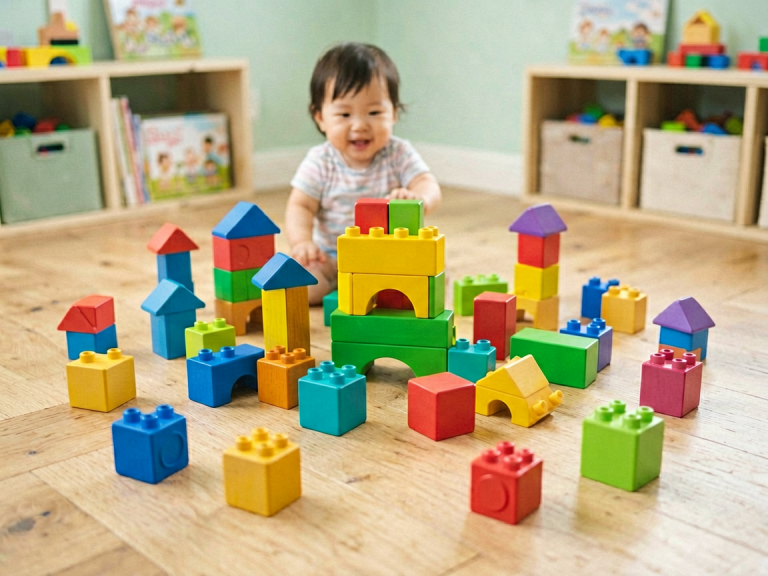
LEGO remains the gold standard for building toys, and for good reason. For a seven-year-old, the LEGO Classic series (such as the “Large Creative Brick Box”) provides a huge assortment of standard bricks, wheels, windows, and special pieces without a prescribed model. This encourages free building. Meanwhile, LEGO Creator sets feature three-in-one designs, allowing the same pieces to be reconfigured into different models—a plane, a helicopter, and a boat, for example. These sets teach systematic thinking and adaptability. The pieces are compatible with all other LEGO systems, so the toy grows with the child. The recommended age for most LEGO sets is 4–99, but the smaller pieces in advanced sets (over 500 pieces) are appropriate for a focused seven-year-old, especially with some adult supervision.
2. Magnetic Building Tiles (e.g., Magna-Tiles, PicassoTiles)
Magnetic tiles have become incredibly popular among educators and parents. These translucent, geometric shapes snap together with embedded magnets, allowing children to build 2D and 3D structures ranging from simple squares to complex geodesic domes. For a seven-year-old, magnetic tiles offer immediate gratification (they click together easily) but also require planning. They are excellent for teaching symmetry, fractions, and geometry. Unlike LEGO, they don’t require a lot of finger strength, which can be a plus for children who get frustrated with tiny bricks. Many sets also include wheels and specialty shapes, enabling the creation of moving vehicles. The open-ended nature of magnetic tiles supports both individual exploration and group projects.
3. Wooden Block Sets (e.g., Melissa & Doug, Grimm’s)
While blocks might seem too simple for a seven-year-old, high-quality wooden block sets challenge children in unique ways. Unlike plastic builders, wooden blocks have no interlocking mechanisms—they rely entirely on friction and balance. This forces children to think critically about gravity, weight distribution, and friction. Classic unit blocks (uniform in size) allow for architectural replication. Sets that include arches, cylinders, and triangles expand possibilities. Seven-year-olds can build complex bridges, castles, and even marble runs using ramps. The tactile natural material is also calming and durable. Wooden blocks are particularly good for collaborative play because they require careful negotiation of space.
4. Construction Systems with Gears and Motion (e.g., K’NEX, Engino)
For children who show an interest in mechanics, building toys with gears, pulleys, and motors are ideal. K’NEX sets, for instance, consist of rods and connectors that create moving models like cars, ferris wheels, and cranes. Engino offers STEM-focused kits that teach principles of physics. These toys introduce the concept of cause and effect: turning a crank makes a wheel spin; adding gears changes speed. They also require reading instructions and following sequential steps, which reinforces literacy and executive function. Many sets include a motor or solar panel for motion, adding an extra layer of excitement. A seven-year-old who successfully builds a working crane will feel immense pride and a sense of mastery.
5. Recycled and Household Building Materials
Not all building toys come from a store. Simple materials like cardboard boxes, tape, paper tubes, and string can become the most creative building tools. Encouraging a seven-year-old to build a fort from blankets and chairs, or a marble run from toilet paper rolls and tape, fosters resourcefulness. Parents can provide “loose parts”—buttons, bottle caps, craft sticks—to incorporate into block play. This approach teaches that creativity doesn’t require expensive kits; it requires imagination and the willingness to experiment.
How to Choose the Right Building Toy
Selecting the perfect building toy for a specific seven-year-old can be daunting. Here are key factors to consider:
- Interest and Temperament. Does your child love to follow detailed instructions or prefer to invent freely? For rule-followers, a LEGO Creator or K’NEX set with a clear model may be ideal. For free spirits, open-ended blocks or magnetic tiles are better.
- Fine Motor Skills. Some children have well-developed dexterity, while others struggle with small parts. If your child gets easily frustrated with tiny pieces, start with larger elements like Duplo (though it may be too simple) or magnetic tiles. You can always add smaller bricks later.
- Social Context. If your child often plays with siblings or friends, choose a building toy that supports multiple builders. Large sets with many pieces, like a bulk LEGO box or a 100-piece magnetic tile set, allow everyone to contribute.
- Safety. Always check the recommended age range. While seven-year-olds are generally safe with small parts, ensure no choking hazards for younger siblings. Also, look for non-toxic materials, especially in painted wooden blocks.
- Future Expandability. Some brands (LEGO, Magna-Tiles) are fully compatible across sets. Investing in a system that can be expanded over years provides long-term value.
- Storage and Organization. Building toys can quickly take over a room. Consider sets that come with storage boxes or bins. Teaching your child to sort pieces by color or shape reinforces organizational skills and extends the life of the toy.
Tips for Parents to Maximize the Play Experience
A building toy is only as good as the play it inspires. Parents play a crucial role in enriching the experience. Here are practical tips:
1. Create a Dedicated Building Space. Even a small corner with a tray or mat can define the play zone. This helps contain pieces and signals that building time is special. A low table or floor space works well.
2. Join In—But Don’t Take Over. Occasionally sit down and build alongside your child. Ask open-ended questions: “What if you added another floor?” or “How can we make this bridge stronger?” Your involvement validates the activity and models problem-solving. However, resist the urge to “fix” their structure. Let them discover solutions themselves, even if it means a collapse.
3. Encourage Documentation. Seven-year-olds love to see their progress. Take photos of finished creations, or better yet, keep a “building journal” where they can sketch future designs or write down what they learned. This turns play into a reflective and literacy-enhancing activity.
4. Integrate Other Subjects. Use building toys to reinforce school lessons. Build the Eiffel Tower while studying France. Create a model of the solar system with magnetic tiles to discuss planets. Count and sort bricks to practice math facts. The possibilities are endless.
5. Rotate the Toy Selection. To prevent boredom, rotate the available building sets every few weeks. Store some blocks away and reintroduce them later. This keeps the experience fresh and prevents overwhelm.
6. Embrace Mess. Building play can be messy, but it’s a sign of deep engagement. Set clear rules about clean-up times, but allow chaos during the creative process. A child who is allowed to spread out pieces across the floor is more likely to think big.
7. Normalize Failure. When a tower falls, celebrate the learning that happened. Say, “Wow, look at that! We found out that that design wasn’t stable. What could we try differently?” This reframes failure as data.
Conclusion
Building toys for 7-year-olds are far more than mere entertainments; they are the scaffolding for cognitive growth, creative expression, and social development. From classic LEGO bricks that teach systematic reasoning to magnetic tiles that illuminate geometry, from wooden blocks that demand delicate balance to moving construction sets that reveal mechanical principles—each type offers unique benefits. The key is to match the toy to the child’s current abilities and interests, remembering that the best toy is one that challenges without overwhelming, and inspires without prescribing.
As parents and educators, we can facilitate this development by providing a variety of building materials, by playing alongside our children, and by fostering an environment where curiosity is rewarded and mistakes are welcomed. In doing so, we are not just raising children who can build castles or cars; we are raising thinkers, creators, and problem-solvers. And the most beautiful structure they will ever build is their own future.