Beyond the Glow: The Essential Role of Screen-Free Toys for Two-Year-Olds
Introduction: The Digital Dilemma in Early Childhood
In an era where tablets, smartphones, and streaming services are marketed even to infants, the quiet rebellion of screen-free toys has never been more crucial. For a two-year-old, every moment is a sensory explosion of learning — a time when the brain forms more than one million new neural connections per second. Yet, the blue glow of a screen, however entertaining, cannot replicate the tactile, spatial, and social richness of a wooden block, a lump of modeling clay, or a cardboard box transformed into a spaceship. The choice between a glowing rectangle and a physical object is not merely one of preference; it is a developmental fork in the road. This article explores why screen-free toys are not just nostalgic relics but powerful tools for cognitive, motor, and emotional growth in two-year-olds, and offers a practical guide to selecting the best ones.
The Developmental Science Behind Unplugged Play
At age two, children are in the thick of what developmental psychologists call the "sensorimotor" and "preoperational" stages. They learn by doing, not by watching. A screen-based toy often offers passive consumption: a character dances, a sound plays, and the child merely taps. In contrast, a physical toy demands active participation. When a toddler stacks rings on a peg, she must judge size, coordinate her hand's grip, and apply just enough force to slide the ring down. This is not trivial — it is the foundation of hand-eye coordination, spatial reasoning, and cause-and-effect understanding.
Moreover, screen-free toys invite open-ended exploration. A set of wooden blocks can become a tower, a bridge, a castle, or, with a little imagination, a telephone. There is no "correct" way to play, which encourages divergent thinking — the kind that later fuels creativity and problem-solving. Screens, by contrast, often deliver linear narratives that limit a child's agency. The American Academy of Pediatrics recommends avoiding digital media for children under 18 months (except video chatting) and limiting screen time for two-year-olds to no more than one hour per day of high-quality programming, ideally co-viewed with a parent. Yet even that hour can displace critical hands-on play.
Beyond cognition, screen-free toys support emotional regulation. Two-year-olds are notorious for tantrums, and a screen can be a seductive pacifier. But quick fixes have long-term costs: children who rely on screens to self-soothe may struggle to develop internal coping strategies. A sensory toy — like a textured ball, a squishy stress-relief toy, or a set of nesting cups — offers a physical outlet for frustration. The child can squeeze, stack, or knock down, releasing energy while learning that she can influence her environment without a digital intermediary.
Top Categories of Screen-Free Toys for Two-Year-Olds
Selecting screen-free toys for a two-year-old requires balancing safety, durability, and developmental fit. Below are the most valuable categories, each with specific examples and the skills they nurture.
Building and Construction Toys: The Architects of Thought
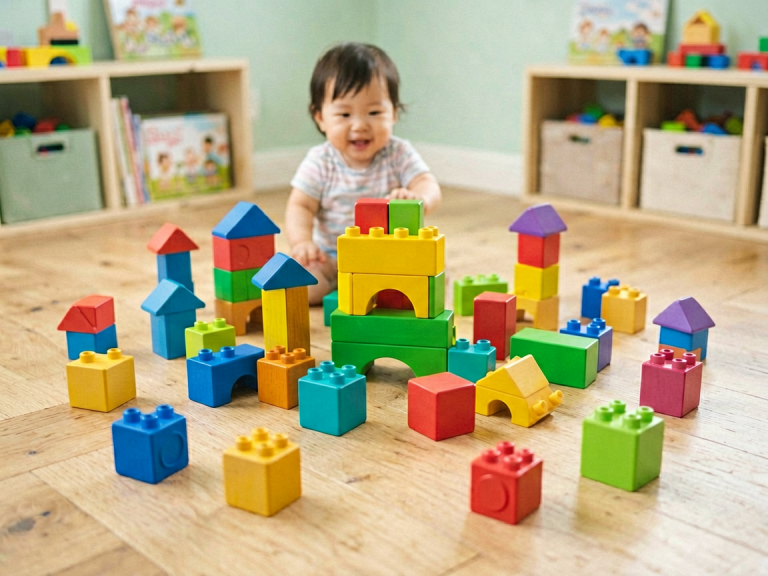
Nothing beats the versatility of building toys. Classic wooden blocks — simple, unpainted, or with natural edges — are a timeless investment. At two, a child might start by carrying blocks around, then progress to stacking two or three, and eventually create a wobbly tower. This process teaches balance, gravity, and patience. When the tower falls, it is not a failure but a lesson in resilience. Magnetic tiles, such as Magna-Tiles, offer a modern twist: the satisfying click of magnets snapping together provides immediate feedback, and the translucent colors delight the eyes. These tiles allow for vertical and horizontal construction, introducing basic geometry and symmetry. Look for sets with large pieces to prevent choking hazards, and always supervise play.
Sensory Play Materials: Messy, Marvelous, and Mind-Shaping
Sensory play is the secret engine of early learning. Two-year-olds are wired to explore texture, smell, and sound. Simple sensory toys include:
- Play dough: Store-bought or homemade, play dough strengthens hand muscles (pre-writing skills) and allows for endless shaping. Add tools like plastic rollers, cookie cutters, and safe plastic knives to extend play.
- Sensory bins: Fill a shallow container with dried rice, beans, or sand. Add scoops, funnels, small plastic animals, and cups. The child practices pouring, sifting, and sorting — foundational math and science skills.
- Water and sand tables: If you have space, a low table with interchangeable tubs for water and sand is a gold mine. Pouring water teaches volume, and wet sand holds shapes, introducing properties of matter.
These toys are messy, yes, but the mess is a small price for the cognitive feast. They also encourage focus: a child can spend twenty minutes transferring beans from one cup to another, a meditative activity that builds attention span.
Pretend Play and Role-Playing: The Theater of the Mind
Imagination blossoms at two. Simple pretend-play toys unlock entire worlds. A wooden kitchen set with pots, pans, and play food lets a child mimic adult routines — stirring, tasting, serving. This is not just cute; it is complex social learning. When she offers you a pretend cup of tea, she is practicing turn-taking, empathy, and narrative sequence. Other excellent choices include:
- Dollhouses with simple furniture: Figures that fit in the child's hand encourage storytelling. A doll might go to bed, eat breakfast, or ride a tiny car.
- Dress-up clothes: A hat, a scarf, a pair of oversized shoes. These items spark transformation. A child becomes a firefighter, a doctor, a superhero.
- Doctor or tool kits: Plastic stethoscopes, hammers, and wrenches let children act out scenarios they observe in real life, processing experiences and fears.
The key is to avoid electronic versions that dictate the story. A battery-operated kitchen set that says "time to bake a cake!" robs the child of her own narrative. The best pretend toys are silent — they wait for her voice.
Puzzles and Problem-Solving Toys: Quiet Challenges
At two, a child may be ready for simple puzzles with large knobs or chunky pieces. Wooden shape sorters, where a triangle block must find its triangular hole, teach categorization and perseverance. Peg puzzles with farm animals or vehicles build vocabulary and spatial orientation. More advanced options include:
- Magnetic fishing games: A small rod with a magnet "catches" wooden fish. This refines hand control and patience.
- Stacking cups: Nesting cups that fit inside each other teach size order. They can also be used in the bathtub for water play.
- Lacing beads: Large wooden beads and a soft string allow threading, which develops fine motor precision and bilateral coordination.
These toys are often self-correcting: the piece either fits or it doesn't. This gives the child clear feedback without adult intervention, fostering independence.
Active and Gross Motor Toys: Moving to Learn
Two-year-olds are in constant motion, and toys that channel that energy are essential. Push-pull toys, like a wooden shopping cart or a wagon, strengthen legs and core. Ride-on toys (without pedals) — such as balance bikes or simple foot-to-floor scooters — build balance and confidence. A small indoor slide or a set of soft foam blocks for climbing offers vestibular stimulation. Outdoors, a sturdy sandbox, a tricycle, or a simple ball for kicking and catching rounds out the physical development.
How to Select the Right Screen-Free Toys
Choosing toys for a two-year-old is not about buying the most expensive or the most colorful. Here are practical guidelines:
- Prioritize open-endedness: A toy that can be used in multiple ways (blocks, play dough, a cardboard box) offers far more play value than a single-function toy.
- Check for safety: No small parts that can be swallowed. Avoid sharp edges, toxic paints, and long cords that could strangle. Look for the ASTM or CE safety mark.
- Consider durability: Two-year-olds drop, throw, and chew. Wood, heavy-duty plastic, and cloth are better than fragile materials.
- Follow the child's interests: If she loves animals, get animal figurines and a farm playmat. If she is fascinated by cars, get a simple wooden car track. Intrinsic motivation drives deeper learning.
- Rotate toys: Having too many toys can overwhelm a toddler. Keep a small selection accessible and rotate every few weeks. This rekindles curiosity and reduces clutter.
Encouraging Independent and Shared Play
Screen-free toys shine in their ability to support both solitary and social play. A two-year-old may happily stack blocks alone for ten minutes, building focus and self-reliance. But the same blocks can become a shared project with a parent or sibling. When you sit on the floor and build alongside her, you model language: "I'm putting the blue one on top. Can you find a red one?" You also model cooperation: "Let's make a tower together."
Shared play with screen-free toys also fosters attachment. Unlike a screen that demands a child's attention away from you, a physical toy invites you in. The time spent rolling a ball back and forth is time spent reading each other's cues, laughing, and bonding. These moments are the antidote to the isolation that screens can create, even in the same room.
Conclusion: A Gift of Attention, Not a Digital Pacifier
In a world that constantly whispers to parents, "Here, hand them the tablet — it's easier," choosing screen-free toys for a two-year-old is an act of conviction. It is a belief that the sticky, noisy, sometimes frustrating business of real play is worth preserving. The block that wobbles and falls teaches more than any app. The play dough that leaves crumbs under the fingernails builds strength that will one day hold a pencil. The pretend tea party, where you both slurp imaginary tea, deepens the bond that no glowing screen can mimic.
The best toys for a two-year-old are not the ones with flashing lights and batteries. They are the ones that wait, silent and patient, for a small hand to reach out and imagine. In that human touch lies the beginning of a capable, creative, and connected child. So step away from the glowing rectangle and scatter some blocks on the floor. The real magic is about to begin.