The Ultimate Guide to the Best Toys for 9-Year-Olds: Fostering Creativity, Learning, and Fun
Introduction
At the age of nine, children stand at a fascinating crossroads of development. They are no longer little kids who need constant hand-holding, yet they are still years away from the complexities of adolescence. This is a golden age of curiosity, independence, and burgeoning social awareness. Nine-year-olds are capable of advanced reasoning, multi-step problem-solving, and sustained focus on projects that interest them. Their physical coordination has improved dramatically, allowing for more sophisticated sports and crafts. Emotionally, they start to value friendships and teamwork, and they develop a stronger sense of identity and personal preference.
Choosing the best toys for a 9-year-old, therefore, requires a delicate balance. The perfect toy should challenge without frustrating, educate without feeling like a lesson, and inspire creativity while also providing pure, unadulterated fun. It should tap into their growing cognitive abilities, encourage social interaction, and sometimes, simply let them be active and wild. In this comprehensive guide, we will explore seven categories of toys that stand out as exceptional choices for 9-year-olds, each designed to nurture different aspects of their development. From building blocks that teach engineering principles to board games that sharpen strategy, from coding robots that demystify technology to outdoor gear that fuels adventure — these are the toys that will capture their imagination and support their growth.
Building and Construction Toys: Engineering the Future
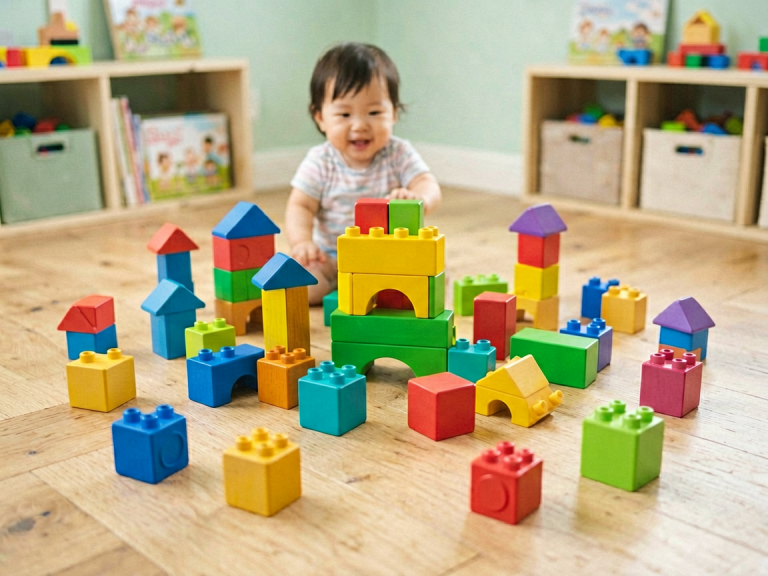
The appeal of building toys remains strong at age nine, but the complexity of the builds should match their advancing skills. Traditional LEGO sets, especially those themed around advanced mechanics (like LEGO Technic), are phenomenal choices. A 9-year-old can follow detailed instructions to construct a working crane, a car with a functional gearbox, or a replica of a famous landmark. These sets teach spatial reasoning, patience, and the satisfaction of creating something tangible from hundreds of small pieces. Moreover, they introduce basic physics concepts such as levers, pulleys, and torque without a single textbook.
Beyond LEGO, magnetic building tiles like Magna-Tiles or PicassoTiles offer an entirely different experience. Unlike LEGO’s rigid snap-fit, magnetic tiles allow for free-form, three-dimensional architecture. Nine-year-olds can build towers, bridges, geodesic domes, or even marble runs. The magnetic connection is satisfyingly tactile, and the translucent colors catch light beautifully, adding an aesthetic layer to the play. These toys encourage an open-ended exploration of geometry and structural integrity. Children learn instinctively why a triangle is stronger than a square, and they experiment with balance and weight distribution.
For a more realistic engineering challenge, consider a motorized building kit like the Engino Discovering STEM series or the Thames & Kosmos Structural Engineering kits. These sets include beams, gears, pulleys, and even small motors. A child can build a ferris wheel that actually rotates, a drawbridge that lifts, or a windmill that generates power. Such toys bridge the gap between play and early education, introducing concepts like mechanical advantage and energy transfer. They also require careful reading of instructions and sometimes troubleshooting when a model doesn’t work on the first try — a valuable lesson in resilience.
Science and STEM Kits: Igniting Curiosity
Nine-year-olds are natural scientists, constantly asking “why” and “how.” Science kits that let them perform real experiments are among the most rewarding toys at this age. A chemistry set with safe, non-toxic chemicals (like the Thames & Kosmos Chem C1000) allows them to mix colorful solutions, create fizzy reactions, and grow crystals. It’s hands-on learning that feels like magic. The best kits include clear instructions and background explanations, turning a messy lab session into a lesson on acids, bases, and chemical bonds.
Another standout category is robotics and coding kits. The Sphero Mini or the Botley 2.0 are excellent entry points. Sphero is a small, app-controlled robot ball that can be programmed using block-based coding (similar to Scratch). A 9-year-old can design obstacle courses, program the robot to navigate them, and even create simple games. This teaches algorithmic thinking, debugging, and cause-and-effect logic. For a more traditional robotics experience, the Makeblock mBot is a metal robot that children build from scratch, then program via a graphical interface. Assembling the hardware itself is a rewarding challenge — connecting wires, screwing parts, and attaching sensors.
Crystal growing kits, volcano eruptions, and solar system model kits are perennial favorites. However, I particularly recommend a microscope for a 9-year-old. A kid-friendly digital microscope (like the GeoSafari Jr. Talking Microscope or a simple USB microscope) opens up a hidden world. They can examine a leaf’s veins, a mosquito’s wing, or a grain of salt. This kind of exploration fosters a scientific mindset — observing, hypothesizing, and drawing conclusions. Pair it with a set of prepared slides and a blank slide set for their own specimens, and you have a toy that keeps giving for years.
Board Games and Strategy Games: Social Skills and Critical Thinking
At age nine, social play becomes increasingly important. Children begin to negotiate rules, manage emotions during competition, and cooperate toward a common goal. Board games are a perfect medium for this development. Classics like *Settlers of Catan* (the junior version is great, but many 9-year-olds can handle the full game) teach resource management, trading, and strategic planning. The game has a “luck plus skill” balance that keeps it exciting and fair.
For a more cooperative experience, *Forbidden Island* or *Pandemic: The Cure* require players to work together against the game itself. In *Forbidden Island*, teammates must collect treasures while the island sinks tile by tile. These games foster communication, shared decision-making, and empathy — when one player is struggling, others must adjust their strategies to help. They also teach that losing as a team is a learning experience, not a personal failure.
Another fantastic option is *Codenames* (the picture version for younger players), which challenges children to make clever associations and think about word meanings. It’s a language-enriching game disguised as a spy mission. *Ticket to Ride* (the US map version) is also excellent; it combines geography with route planning, and the risk-taking element of competing for key train routes teaches calculated decision-making.
Don’t overlook classic abstract strategy games like *Checkers*, *Chess*, or *Qwirkle*. Chess, in particular, is a phenomenal brain workout. Nine is a prime age to learn chess because children have enough patience for longer matches and can grasp concepts like forks, pins, and endgame strategies. Playing chess regularly improves focus, memory, and pattern recognition. Many schools have chess clubs, and a portable chess set is a gift that enables a lifetime of mental sport.
Creative Arts and Crafts: Unleashing Imagination
While some 9-year-olds lean toward logical and scientific toys, others are deeply creative. Art and craft supplies that allow for advanced techniques are ideal. A high-quality sketching set — with graphite pencils of different hardness, charcoal, erasers, and a blending stump — can transform a child’s casual doodling into serious drawing practice. Add a “how to draw” book for animals or manga characters, and you’ve given them tools to improve their craft.
For craft enthusiasts, a weaving loom or a knitting kit can be surprisingly engaging. The loop weaving looms (like the Knitting Loom from Creative Kids) let children create scarves, hats, or even small blankets. The repetitive motion is meditative, and the sense of accomplishment from wearing something they made is immense. Similarly, a jewelry-making kit with beads, cords, and clasps allows for creative expression and fine motor skill development.
Another brilliant option is a pottery or clay sculpting set. Air-dry clay is easy to use and doesn’t require a kiln. Children can sculpt animals, bowls, or decorative items. Painting them with acrylic paints adds another dimension. The process of planning a shape, forming it with hands, and then decorating it teaches patience and attention to detail.
For a modern twist, consider a stop-motion animation kit. With a simple app on a tablet or phone, a small figurine set (like LEGO minifigures or clay characters), and a tripod, a 9-year-old can create their own short films. This combines storytelling, art, and technology. They learn about sequencing, framing, and editing — skills that are increasingly valuable in the digital world. The final product can be shared with family and friends, boosting their confidence.
Outdoor and Active Toys: Physical Health and Adventure
Nine-year-olds have endless energy, and outdoor toys that channel that energy productively are essential. Bicycles remain a classic for good reason. At this age, children can handle larger bikes (20-inch or 24-inch wheels) and may want to try tricks or off-road trails. A mountain bike with gears and hand brakes gives them a sense of independence and adventure. It’s also a fantastic form of exercise that strengthens their legs, core, and cardiovascular system.
Another superb outdoor toy is the scooter. Razor scooters have evolved, and the pro-model kick scooters with larger wheels and a handbrake are perfect for a 9-year-old who wants to zip around the neighborhood. Electric scooters are an option, but I recommend starting with a manual one to build coordination and stamina. Pair the scooter with a helmet and knee pads, and you have a recipe for hours of outdoor fun.
For group play, consider a disc golf set or a lacrosse set. Disc golf is like golf with frisbees — you throw the disc into a basket-like target. It teaches accuracy and distance control, and it’s a low-impact sport that the whole family can enjoy. Lacrosse, with a lightweight stick and a soft ball, improves hand-eye coordination and running speed. Alternatively, a classic game of capture the flag or a giant parachute can be arranged with a few friends.
Don’t forget good old-fashioned sports equipment: a basketball hoop (adjustable height), a soccer ball and goal, or a baseball bat and tee. Many 9-year-olds are ready for organized team sports, but free play is just as important. A trampoline (with proper safety netting) is another high-energy favorite, promoting balance and full-body physical health.
Tech and Coding Toys: Preparing for the Digital Age
We live in a digital world, and 9-year-olds are growing up with screens. Rather than fighting that reality, we can choose tech toys that are educational and creative. A children’s laptop or tablet designed for learning (like the LeapFrog Epic or an Amazon Fire Kids Edition) can be loaded with coding apps, digital art tools, and e-books. However, more specialized coding toys provide a richer experience.
The Osmo system for iPad is revolutionary. It combines physical pieces with digital games. For instance, Osmo Coding Awbie uses magnetic coding blocks that children place physically; the camera reads the blocks and the character on the screen moves accordingly. This bridges the gap between concrete manipulation and abstract programming. Other Osmo games teach math, spelling, and drawing.
For a screen-free coding toy, consider the LEGO Boost Creative Toolbox. It allows children to build five different models (a robot, a guitar, a cat, etc.) and then program them through a simple drag-and-drop interface on a tablet. The models have sensors and motors, so the child can program the robot to avoid obstacles or the guitar to play sounds when a string is plucked. This hands-on experience demystifies how machines work and gives a solid foundation in computational thinking.
Another excellent choice is a 3D printing pen. While not strictly a “coding” toy, it introduces spatial design and technology. Children can draw in three dimensions, creating simple sculptures, phone stands, or even jewelry. The pen uses PLA filament (safe and biodegradable) and heats to a safe temperature with proper supervision. It’s a gateway to future skills in design and engineering.
Books and Educational Subscriptions: The Gift of Knowledge
Finally, never underestimate the power of a good book. At nine, children often develop specific reading interests — fantasy, science fiction, mysteries, or non-fiction about animals or space. A series like *Percy Jackson* by Rick Riordan, *Harry Potter* (if they haven’t read it yet), or *The Wild Robot* by Peter Brown can ignite a lifelong love of reading. But beyond single books, consider a subscription box like KiwiCo’s “Crate” (specifically the “Koala Crate” for ages 3-4, but the “Discovery” or “Tinker” crates for older children), or the “Little Passports” world subscription, which sends a package each month with activities and information about a new country. These subscriptions build anticipation and provide ongoing learning.
A subscription to a children’s magazine like *National Geographic Kids* or *Highlights* is also wonderful. Each issue arrives with puzzles, articles, and experiments. It encourages regular reading and satisfies the child’s curiosity about the world. For a 9-year-old who loves science, a subscription to *The Old Farmer’s Almanac for Kids* or a DIY science kit subscription (like “Science for Little Hands”) can be a highlight of the month.
Conclusion
Selecting the best toys for a 9-year-old is not about finding a single “perfect” item. It is about curating a collection that speaks to their unique personality, encourages growth across multiple domains, and most importantly, brings joy. The toys we have explored — from the structural logic of building kits to the collaborative spirit of board games, from the artistic freedom of crafts to the high-energy thrill of outdoor gear, from the digital literacy of coding toys to the timeless magic of books — each play a vital role. A 9-year-old who has access to a balanced mix of these will not only be entertained but will also develop critical thinking, creativity, social skills, physical fitness, and a love for learning. The best toy is one that invites a child to think, to build, to move, to connect, and to dream. And at nine years old, the capacity for all of that is wide open. So choose thoughtfully, and watch them grow.