Balance Bike or Scooter: Which Is the Better First Ride for Your Child?
Introduction: The Great Debate in Early Childhood Mobility
Every parent who has watched a toddler wobble on two wheels or glide on a kick scooter knows the feeling: pride mixed with a touch of anxiety. The decision between a balance bike and a scooter is not merely about which toy to buy; it is about which tool will best foster your child’s physical development, confidence, and love for active play. Both options have passionate advocates, and each offers distinct advantages that cater to different developmental stages, personalities, and environments. In this comprehensive article, we will dissect the physics, psychology, and practicalities of balance bikes versus scooters, helping you make an informed choice that aligns with your child’s unique needs. Whether you are navigating crowded sidewalks, planning family park outings, or simply hoping to teach your little one the joy of independent motion, understanding the nuances of these two popular riding devices is essential.
What Is a Balance Bike and How Does It Work?
A balance bike is a two-wheeled, pedal-less bicycle designed for children as young as 18 months. Its core principle is deceptively simple: by removing pedals and training wheels, the child learns to steer, balance, and brake using only their feet and body weight. The child sits on the seat, walks the bike forward, then gradually lifts their feet to coast. This natural progression teaches proprioception—the sense of how one’s body moves through space—in a way that is intuitive and safe. Most balance bikes have adjustable seats and handlebars, pneumatic or foam tires, and a lightweight frame that even a toddler can lift. The absence of pedals eliminates the distraction of coordinating leg rotation with balance, allowing the child to focus entirely on the most critical skill: staying upright.
The Developmental Benefits of Balance Bikes
Research in early childhood motor development consistently shows that balance bikes accelerate the transition to pedal bicycles. A study published in the *Journal of Physical Activity and Health* found that children who learned on balance bikes picked up pedaling an average of six months earlier than those who used training wheels. Why? Because training wheels create a false sense of balance—the child leans on the stabilizers rather than learning to counter-steer. Balance bikes force the child to engage their core muscles, improve spatial awareness, and develop the vestibular system, which controls equilibrium. Moreover, the ability to stop by simply putting feet down gives children an unparalleled sense of control. This empowerment boosts self-esteem and reduces the fear of falling. A child who masters a balance bike at age two or three often approaches a pedal bike at age four with confidence, not trepidation.
What Is a Scooter and How Does It Differ?
A scooter, in its most common form for young children, consists of a platform (deck) with two or three wheels, handlebars, and a mechanism for propulsion—usually by pushing one foot against the ground while the other foot remains on the deck. Three-wheeled scooters, also known as kick scooters, offer extra stability for beginners, while two-wheeled versions require more advanced balance. Unlike balance bikes, scooters demand a different kind of motor coordination: the rider must shift weight dynamically from the pushing leg to the standing leg, manage steering through handlebar tilting, and often use a rear brake. This asymmetric movement pattern is both a strength and a weakness, as it engages different muscle groups and coordination skills.
Why Scooters Appeal to Many Families
Scooters are incredibly popular for several practical reasons. First, they are compact and portable—many fold for easy storage in a car trunk or apartment closet. Second, they offer immediate gratification: a child can step onto a scooter and start moving within minutes, whereas a balance bike requires a short learning curve to master gliding. Third, scooters are excellent for urban environments where pavement is smooth and space is limited. A 2019 survey by the International Play Equipment Manufacturers Association noted that scooters are the second most popular non-motorized ride-on toy for children aged three to seven, trailing only tricycles. Parents appreciate that scooters encourage cardiovascular activity, leg strength, and quick reflexes. The rhythmic pushing motion also improves bilateral coordination, as the child must alternate legs or use a dominant leg consistently—a pattern that can later benefit sports like skating or skateboarding.
Comparing Key Factors: Balance Bike vs. Scooter
To decide which option suits your child, we must examine several dimensions: safety, skill development, age appropriateness, long-term utility, and environmental adaptability. Each factor reveals different strengths and trade-offs.
Safety and Risk of Injury
When it comes to falls, both balance bikes and scooters have their own risk profiles. Balance bikes have a lower center of gravity, and the child’s feet are always near the ground, allowing them to stop a fall quickly. The top speed is generally limited by the child’s running ability. Conversely, scooters can reach higher speeds on downhill slopes, and the platform’s height means the child’s whole body is further from the ground. A common scooter injury is the handlebar-to-abdomen impact (the "handlebar hernia" phenomenon) or wrist fractures from a forward fall. However, three-wheeled scooters significantly reduce tip-overs. According to the U.S. Consumer Product Safety Commission, emergency room visits for scooter-related injuries among children under five are slightly higher per capita than for balance bikes, but most injuries are minor abrasions and contusions. The key safety measure for both is proper helmet use and parental supervision.
Skill Development: What Each Teaches
Balance bikes are unmatched for teaching pure balance and steering. The child learns to lean into turns, correct wobbles, and maintain forward momentum without a fall-back mechanism. This skill directly transfers to bicycles, and surprisingly, to many other sports like skiing, skateboarding, and even horseback riding. Scooters, on the other hand, teach weight shifting and leg coordination in a different way. The pushing motion builds quadriceps and gluteal strength, while the standing leg develops stabilizing muscles in the ankle and knee. However, the balance skills acquired on a scooter do not transfer as cleanly to a bicycle because on a scooter the rider stands upright, not seated, and the steering is more responsive to handlebar tilt. Some experts argue that children who learn on scooters often struggle with the seated balance of a bicycle later on, requiring a reteaching phase.
Age and Developmental Readiness
For toddlers aged 18 months to 3 years, a balance bike is almost always the superior choice. The child’s gross motor skills are still developing, and the simple act of walking while straddling a balance bike builds strength without frustration. By age two, most children can coast a few feet. Scooters, in contrast, are typically recommended for ages three and up, as they require the ability to stand on one foot while pushing with the other—a skill that usually emerges around the third birthday. Even then, three-wheeled scooters are safer for younger beginners. A four-year-old who has never used a balance bike may take to a scooter quickly, but a four-year-old who has mastered a balance bike will likely ride a pedal bike within weeks. If your goal is to transition to a pedal bicycle efficiently, the balance bike wins hands down.
Long-Term Utility and Cost
Balance bikes have a relatively short window of use—roughly from 18 months to 4 or 5 years, depending on the child’s height. After that, the child outgrows the bike and moves to a pedal bike. However, a high-quality balance bike can be resold or handed down. Scooters have a longer lifespan: a child can use a three-wheeled scooter from ages 3 to 7, then upgrade to a two-wheeled scooter that lasts well into adolescence. Some scooters even convert into stunt scooters for older kids. In terms of cost, decent balance bikes range from $80 to $200, while good scooters span $40 to $150. The scooter is often cheaper initially and lasts longer, making it the more economical choice for families who want a single device that grows with the child. However, if you plan to teach cycling, the balance bike is an investment that pays off by reducing the need for training wheels and the associated frustration.
Psychological and Social Considerations
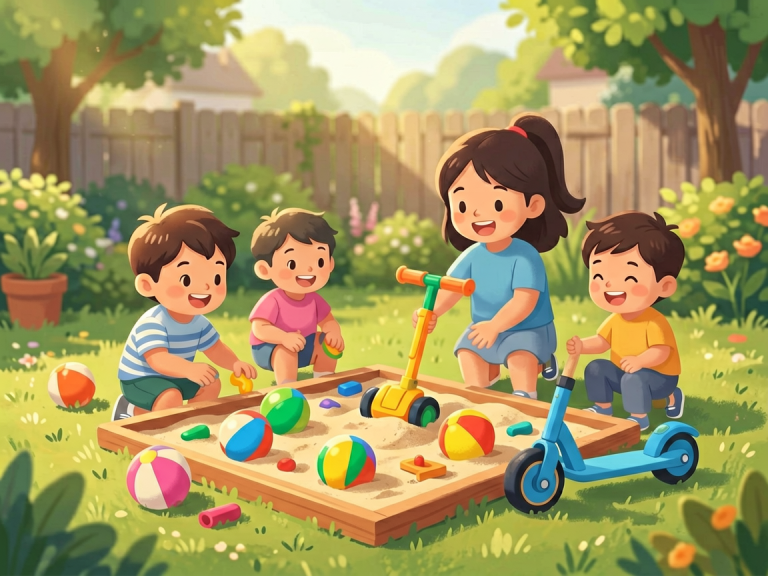
Beyond physical benefits, these devices shape a child’s emotional relationship with movement. Balance bikes encourage a calm, patient approach to learning: the child sets their own pace, falls are gentle, and success is gradual. This builds a growth mindset—the understanding that mastery comes through practice. Scooters, with their instant "go," can foster a more impulsive style. Kids often zoom off without scanning their environment, which requires more diligent supervision. Socially, scooters are popular in neighborhood playgroups because they allow group racing and games like "follow the leader." Balance bikes can also be used in groups, but the slower speeds make them less conducive to chasing games. On the playground, a child on a scooter may feel more integrated with older children who ride bikes, while a balance bike child might be limited to areas with smooth, flat pavement.
Environmental Factors: Where Will Your Child Ride?
Consider your local terrain. Balance bikes handle grass, packed dirt, and gravel better than most scooters because their larger tires (typically 12-inch) absorb bumps. A scooter’s small wheels (often 100-120mm) struggle on uneven surfaces; they can catch in cracks or tip over on loose gravel. If your family frequents parks with dirt paths or your driveway is uneven, a balance bike is more versatile. For urban sidewalks, shopping malls, and indoor play areas, a scooter is easier to maneuver through crowds and fits into tighter spaces. Also, think about storage: a balance bike takes up about as much floor space as a small chair, whereas a scooter can often be hung on a hook or folded.
Conclusion: Making the Right Choice for Your Child
There is no universal winner in the balance bike versus scooter debate—only the right fit for your child’s temperament, your family’s lifestyle, and your developmental goals. If you prioritize the most effective path to two-wheeled independence and want a tool that builds foundational balance and confidence, choose a balance bike. It is the Montessori of riding toys: slow, deliberate, and deeply educational. If, however, you value immediate fun, portability, and a device that can be used for years across different ages, a scooter is a practical and enjoyable option that still delivers excellent physical activity. Many families find that owning both—a balance bike for the toddler years and a scooter for later—offers the best of both worlds. Whatever you choose, remember that the true gift is not the toy itself but the hours of active outdoor play, the scraped knees that heal, and the triumphant grin when your child glides past you for the first time without holding your hand. In the end, both paths lead to the same joy: a child who loves to move.