The Power of Play: How Science and Engineering Toys Shape Future Innovators
In an age where technology evolves at breakneck speed, parents and educators alike are constantly searching for ways to equip children with the skills they need to thrive in a complex world. While traditional education emphasizes reading, writing, and arithmetic, a quieter revolution is taking place on living room floors and in classroom corners—a revolution driven by science and engineering toys. These are not merely playthings; they are miniature laboratories, tiny workshops, and gateways to critical thinking. By blending fun with foundational principles of physics, biology, and design, science and engineering toys offer children an immersive, hands-on experience that textbooks alone can never provide. This article explores the profound impact of these toys on cognitive development, creativity, and the cultivation of a lifelong passion for discovery.
The Educational Value of Science Toys
Science toys—ranging from chemistry sets and crystal-growing kits to magnetic building blocks and microscopes—serve as a child’s first introduction to the scientific method. Unlike passive screen-based entertainment, these toys demand active engagement. A child mixing baking soda and vinegar to create a volcanic eruption is not just playing; she is forming hypotheses (“What if I add more vinegar?”), making observations, and drawing conclusions. This process mirrors the very essence of scientific inquiry.
Take, for example, a simple magnifying glass or a bug-capturing kit. When a young child peers through the lens at the intricate veins of a leaf or the segmented body of an ant, curiosity is ignited. Such toys encourage children to ask “why” and “how”—questions that are the bedrock of scientific thinking. Moreover, science toys often come with instructions that explain the underlying phenomena, turning play into a self-directed learning experience. A child assembling a model of the solar system learns about planetary orbits and relative sizes without the pressure of a formal lesson. The knowledge sticks because it is discovered, not dictated.
Furthermore, science toys promote interdisciplinary learning. A weather station kit, for instance, teaches meteorology while also introducing concepts of data collection, graphing, and even basic statistics. Similarly, a biology dissection kit (age-appropriate, of course) blends life science with fine motor skills and ethical discussions about the natural world. This holistic approach prepares children for the interconnected challenges they will face in the real world, where science rarely exists in isolation.
Engineering Toys and Problem-Solving Skills
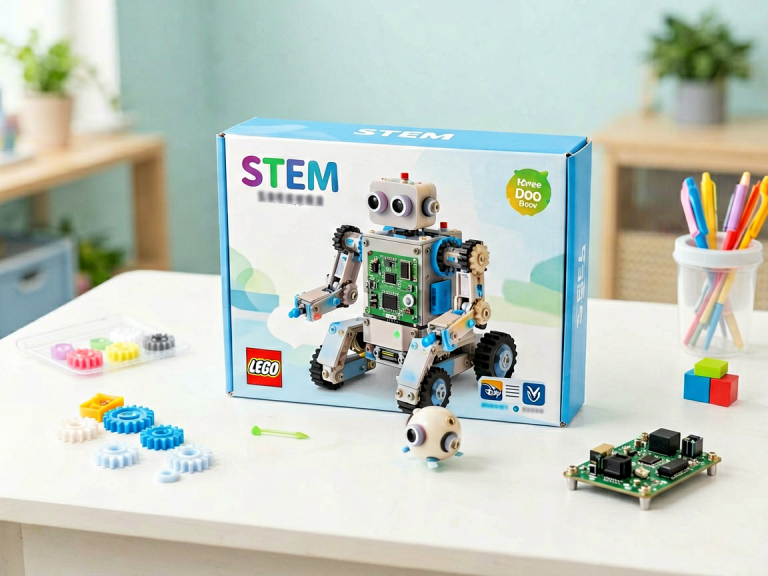
If science toys answer the question “why,” engineering toys are all about “how.” Engineering toys—such as LEGO Technic, K’Nex, building bridges with popsicle sticks, or more advanced robotics kits like Arduino or Makeblock—train children in the art of design, iteration, and resilience. These toys transform abstract concepts like load distribution, torque, and circuitry into tangible, manipulable objects.
Consider a child constructing a simple crane from a mechanical engineering kit. At first, the crane may topple over or fail to lift the intended weight. The child must then diagnose the problem: Is the base too light? Are the gears meshing correctly? Is the string too weak? This iterative process—design, test, fail, redesign—is the very heart of engineering practice. Through such play, children learn that failure is not an endpoint but a stepping stone. They develop grit, patience, and the willingness to try alternative solutions, qualities that are increasingly rare in an era of instant gratification.
Moreover, engineering toys often involve open-ended challenges. Unlike puzzles with a single solution, a set of gears, axles, and connectors can be assembled in countless ways. This unstructured creativity fosters divergent thinking—the ability to generate multiple solutions to a single problem. For instance, a child tasked with building a car that can travel down a ramp might try different wheel sizes, axle lengths, or body shapes. Each attempt yields new insights about friction, gravity, and momentum. These lessons are not taught but experienced, making them far more memorable.
The Role of Failure in Learning
One of the most underappreciated benefits of science and engineering toys is their ability to normalize failure. In many classrooms, getting the wrong answer is stigmatized. Children quickly learn to avoid risk and stick with what they know. But when a tower of blocks collapses or a homemade rocket fails to launch, the consequence is benign—a bit of mess, a moment of frustration, and then a fresh start. This low-stakes environment allows children to experiment freely, knowing that no grade or punishment hangs in the balance.
Psychologists have long recognized the importance of “productive failure.” Studies show that children who engage in constructional play are more likely to develop a growth mindset—the belief that abilities can be developed through effort and learning. When a child sees that adjusting the angle of a solar panel makes a toy car move faster, she internalizes the idea that her actions shape outcomes. Over time, this translates into a willingness to tackle complex problems rather than shying away from them. In a world that prizes innovation, the ability to persist through setbacks is arguably more valuable than raw intelligence.
Choosing the Right Toys for Different Ages
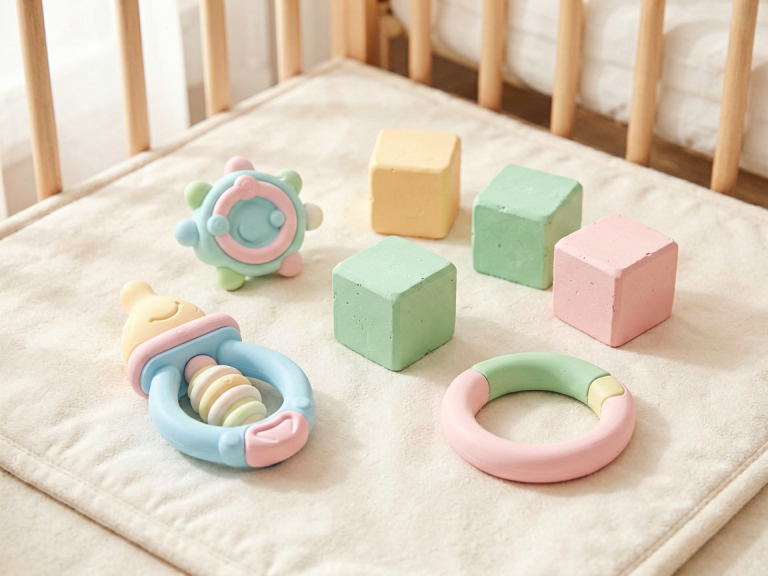
Not all science and engineering toys are created equal, and selecting the right ones for a child’s developmental stage is crucial. For toddlers and preschoolers, the focus should be on sensory exploration and cause-and-effect relationships. Simple magnetic wands, water tables, or colorful gears that snap together introduce basic concepts without overwhelming the child. These toys build foundational vocabulary—words like “push,” “pull,” “spin,” and “float.”
For elementary school children (ages 6–10), more structured kits become appropriate. Snap-circuit kits allow them to build working radios or doorbells, teaching electrical conductivity in a safe, intuitive manner. Building sets with interlocking beams and wheels encourage imaginative construction. At this stage, the goal is to bridge concrete manipulation with abstract reasoning—understanding why a circuit needs a closed loop, for example. Parents and educators should look for toys that balance guided instructions with space for free play.
As children enter middle school and beyond, advanced engineering toys such as 3D printers, programmable robot kits (e.g., LEGO Mindstorms or VEX Robotics), and chemistry sets with real compounds can provide deeper challenges. These toys often require reading manuals, following multi-step procedures, and troubleshooting software or hardware issues—skills that mirror real-world STEM careers. They also encourage collaboration, as many robotics or science fair projects are best tackled with a partner or team.
The Broader Implications for Society
The benefits of science and engineering toys extend far beyond the individual child. A generation that grows up comfortable with hands-on experimentation is more likely to produce innovators, problem-solvers, and critical thinkers. In an era of global challenges—climate change, medical breakthroughs, sustainable energy—we need citizens who are not afraid to ask questions and tinker with solutions. Encouraging play with these toys is a low-cost, high-impact investment in our collective future.
Moreover, these toys help democratize STEM education. High-quality science and engineering toys are increasingly affordable and accessible, and many libraries and community centers now offer lending programs. By providing children from all backgrounds with the same tools for discovery, we can help close the opportunity gap. A child from a low-income household who builds a working wind turbine from a basic kit may discover a passion that leads to a scholarship and a career in renewable energy.
Conclusion
Science and engineering toys are far more than temporary distractions. They are the fertile soil in which the seeds of curiosity, creativity, and resilience are planted. By allowing children to make a mess, break things, and try again, these toys teach lessons that no lecture can convey. They transform abstract concepts into tangible experiences, and they remind us that learning—at its best—is joyful, messy, and deeply human. As parents, educators, and policymakers, we should embrace these tools not as replacements for formal education but as its most powerful allies. So the next time you see a child elbow-deep in a pile of gears or staring through a magnifying glass at a blade of grass, take a moment to appreciate the humble but extraordinary power of play. The future may just be taking shape in that very moment.