Safe Toys for 4-Year-Olds: A Comprehensive Guide for Parents and Caregivers
Introduction
Choosing the right toys for a four-year-old is both an exciting and daunting responsibility. At this age, children are bursting with energy, curiosity, and a rapidly developing imagination. They are no longer toddlers but not yet full-fledged preschoolers in the formal sense. They run, jump, climb, question everything, and love to imitate adults. However, they still lack the judgment and motor control to always keep themselves safe. The wrong toy can lead to choking, poisoning, falls, or other injuries. Conversely, the right safe toy can nurture creativity, physical development, social skills, and cognitive growth. This article provides a detailed, research-based guide to selecting safe toys for four-year-olds, covering material safety, design considerations, developmental appropriateness, and practical tips for parents. By understanding what makes a toy safe and engaging, you can create a play environment that sparks joy without compromising well-being.
Why Toy Safety Matters Most at Age Four
Four-year-olds are notoriously adventurous. They put objects in their mouths, run while holding toys, and test the limits of physical durability. Their airways are still narrow, making choking a leading cause of injury. Moreover, they are beginning to play independently for longer periods, which means adult supervision may not be constant. According to the U.S. Consumer Product Safety Commission, thousands of toy-related injuries occur each year in this age group, with the majority involving falls, choking, and strangulation. Therefore, understanding the specific hazards for four-year-olds is the first step in making wise purchases. Toy safety is not just about avoiding sharp edges; it is about anticipating how a child might misuse a toy. The best safe toys are those that are designed with fail-safes, such as rounded corners, non-toxic paints, and pieces too large to swallow.
Key Safety Standards to Look For
When shopping for toys for a four-year-old, always check for certification marks. In the United States, look for the ASTM (American Society for Testing and Materials) label, which indicates the toy meets voluntary safety standards. The CPSC (Consumer Product Safety Commission) also regulates toys. In Europe, the CE mark is common. Additionally, the "non-toxic" label is crucial, especially for toys that might be chewed. Ensure that paints, coatings, and plastics are free from lead, phthalates, and BPA. For plush toys, verify that they are flame-resistant and that seams are double-stitched to prevent stuffing from becoming a choking hazard. Another often-overlooked safety feature is sound level. Some electronic toys can produce sounds over 85 decibels, which can damage a child's hearing over time. Look for toys with volume control or those that emit soft, pleasant sounds.
Material Safety: What to Choose and What to Avoid
The materials used in toys are a primary concern for four-year-olds. Wood is an excellent choice because it is durable, natural, and generally free from harmful chemicals. However, ensure that the wood is sanded smooth and finished with water-based, non-toxic sealants. Avoid painted wood toys from unverified sources, as some cheap paints may contain lead. Plastic toys are common, but not all plastics are equal. Hard, high-quality plastics (like ABS) are safer than brittle plastics that can shatter into sharp pieces. Avoid toys made from recycled plastics that may contain unknown contaminants. Fabric toys should be machine-washable and free from long strings or ribbons that could entangle a child. Metal toys are less common at this age, but if present, edges must be rolled or covered. Never give a four-year-old a toy made of glass or any other breakable material. Finally, avoid toys that contain small magnets, button batteries, or tiny beads—these are extreme choking and internal injury hazards even for older children.
Choking Hazard: The Critical Size Rule
The single most important safety rule for four-year-olds is the choking hazard test. A toy or part should be too large to fit inside a standard toilet paper roll (approximately 1.25 inches in diameter). For four-year-olds, the risk is slightly lower than for infants, but still significant. Many toys marketed for ages 3+ still contain small pieces that can be dangerous. For example, building blocks with small knobs, game pieces, or small action figures may be choking risks. Always check that any removable part is larger than the child's fist. Additionally, be wary of toys that break easily into smaller pieces. A four-year-old may intentionally or accidentally snap a thin plastic part. Consider the "chew test" as well: if a child can bite off a piece and swallow it, the toy is unsafe. Avoid toys with foam beads, tiny pellets, or glitter that can be inhaled.
Strangulation and Entrapment Hazards
Four-year-olds love to wrap things around their necks or limbs—they pretend to be superheroes, tie "ropes," or play dress-up. Any toy that includes cords, straps, or elastic strings longer than 12 inches poses a strangulation risk. This includes pull toys with long strings, costumes with ribbons, and even certain electronic toys with charging cables. Always cut short or remove any string longer than 7-8 inches, or ensure it is attached in a way that it cannot be pulled into a loop. Similarly, watch for toys with spaces that could trap a child's head, fingers, or limbs. For example, dollhouses with small windows, or toy cars with gaps between the wheels and body. The "head entrapment" test: a child's head should not be able to fit through any opening that could lock around the neck.
Age Labeling: Why "3+" Is Not Enough
Toy manufacturers use age labeling based on safety guidelines from the CPSC. "For ages 3+" generally means the toy is safe from choking hazards for children who are at least three years old. However, four-year-olds are not all the same. Some are more cautious, while others are more reckless. Even within the same age, development varies widely. So while the "3+" label is a baseline, parents should evaluate the toy based on their own child's behavior. For instance, a four-year-old who still puts everything in their mouth should not receive a toy with small parts—even if it is labeled for ages 3+. Conversely, a mature four-year-old might handle a toy labeled for ages 5+ if it does not contain sharp or dangerous elements. The key is to be present and observant. Also, be aware that some toys marked for older children (like craft kits with scissors or glue) can be safe for four-year-olds if used with supervision, but they should not be left unattended.
Recommended Types of Safe Toys for 4-Year-Olds
Building and Construction Toys
Large interlocking blocks (such as Duplo or Mega Bloks) are excellent. They are big enough to not be choking hazards, and they promote fine motor skills, spatial reasoning, and creativity. Wooden block sets with smooth edges are also a timeless choice. Avoid blocks with sharp corners or splinters.
Art and Craft Supplies
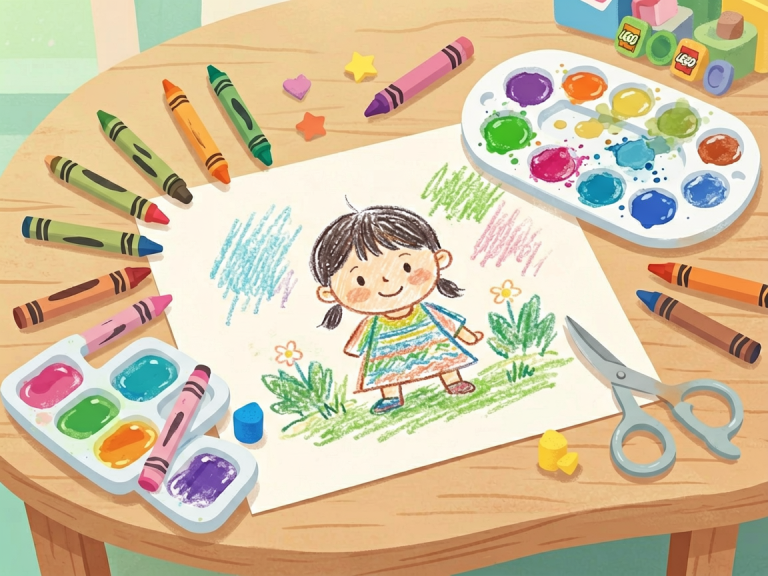
Non-toxic crayons, washable markers, thick paintbrushes, and finger paints are safe and engaging. Ensure that scissors are blunt-tipped and that glue is non-toxic and washable. Avoid small items like beads or sequins unless supervised.
Puzzles and Matching Games
Thick wooden puzzles with large knobs or peg pieces are ideal. Jigsaw puzzles with pieces that are at least 1.5 inches across are safe. They encourage problem-solving and hand-eye coordination.
Ride-On Toys and Tricycles
For active play, choose stable ride-on toys with a wide base and no sharp edges. Helmets are essential for any wheeled toy. Ensure that the seat is low enough that the child can put both feet flat on the ground.
Pretend Play Sets
Play kitchens, tool benches, doctor kits, and dress-up clothes are wonderful. Check that the accessories are oversized (e.g., plastic food items that are too large to swallow, toy tools that are blunt). Costumes should have short or no ties, and masks should allow clear vision and breathing.
Musical Instruments
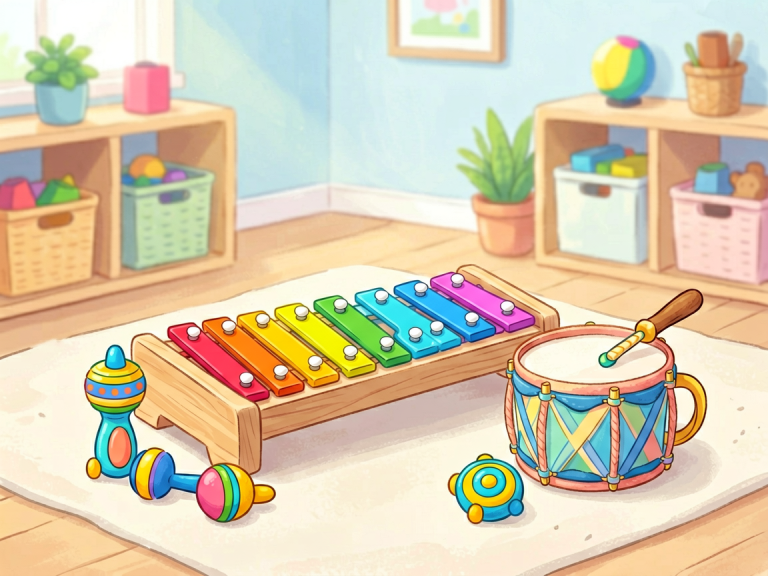
Simple instruments like maracas, tambourines, xylophones, and drums are safe if they are well-made. Avoid instruments with small removable parts like whistle mouthpieces that could be a choking hazard.
Active Outdoor Toys
Balls of at least 6 inches in diameter, flying discs (soft foam), bowling sets, and small tunnels or pop-up tents are great. Ensure that any nets or ropes are removed, and that the toys are free from sharp stakes or edges.
Toy Safety Checklist for Parents
Before giving a toy to a four-year-old, run through this checklist:
- No sharp edges or points. Run your fingers along all surfaces.
- No small parts. Use the toilet paper roll test.
- No long strings or cords. If present, trim them.
- Non-toxic materials. Check labels for certifications.
- Sturdy construction. Does it feel like it will break easily?
- No magnets or button batteries. These are extremely dangerous.
- Age-appropriate complexity. Can the child use it without frustration?
- Noise level. Is it too loud? Can you lower the volume?
- Washable or easy to clean. Children get toys dirty quickly.
- Supervision required? Be honest about whether the toy demands adult presence.
How to Teach a 4-Year-Old About Toy Safety
Even the safest toys can become hazardous if a child uses them incorrectly. Four-year-olds are old enough to learn basic safety rules. Teach them to never put toys in their mouths, to keep small pieces away from younger siblings, to not throw hard or heavy toys, and to tell an adult if a toy breaks. Use simple language like, "This toy is for playing, not for eating." Role-play scenarios, and praise them when they follow the rules. This not only keeps them safe but also builds their sense of responsibility. Regularly inspect their toy box for worn-out or broken items, and involve them in the process—show them why a broken toy needs to be thrown away.
Conclusion
Selecting safe toys for a four-year-old is a balance between encouraging exploration and minimizing risk. By prioritizing materials, design, and age-appropriate features, you can provide a rich play environment that supports their development while keeping them secure. Always remember that no toy replaces adult supervision. The safest toy in the world is one that is used with a caring adult nearby. With the guidance provided in this article, parents and caregivers can confidently navigate the colorful, often overwhelming toy market and choose items that will bring hours of safe, joyful learning to their four-year-old. Invest in quality, check labels thoroughly, and trust your instincts—if a toy feels unsafe, it probably is. Happy, safe playing!