independent play toys guide for parents
The Ultimate Guide to Independent Play Toys for Parents: Raising Self-Reliant Kids Through Smart Toy Choices
—
Introduction: Why Independent Play Matters More Than Ever
In today’s hyper-scheduled world, where children’s calendars are often packed with lessons, playdates, and screen time, the art of independent play is quietly disappearing. Yet research consistently shows that when children engage in self-directed, uninterrupted play, they develop crucial life skills: problem-solving, creativity, emotional regulation, and persistence. For parents, one of the most effective tools to nurture this skill is the right toy. But not all toys are created equal. A flashy electronic gadget might entertain for five minutes, while a simple set of wooden blocks can captivate a child for an hour—and teach them something profound in the process.
This guide is designed to help parents make informed decisions when selecting toys that genuinely foster independent play. We’ll explore the core characteristics of such toys, offer age-specific recommendations, discuss toy categories that work best, and share practical tips for creating an environment where self-reliance thrives.
—
1. The Core Characteristics of Toys That Encourage Independent Play
Before diving into specific products, it’s essential to understand what makes a toy “independent-play-friendly.” These toys share several key traits:
Open-Endedness
An open-ended toy has no single “correct” way to play. A set of plain wooden blocks can become a castle, a spaceship, a bridge, or a mountain. A pile of scarves can turn into a cape, a tent, or a river. This flexibility invites children to invent their own narratives and solutions, reducing the need for adult direction.
Low-Tech Simplicity
Toys that require no batteries, no screens, and no pre-recorded sounds often promote deeper engagement. When a toy doesn’t do the work for the child, the child must supply the action, imagination, and purpose. Simple toys like a ball, a set of cups, or a piece of fabric offer infinite possibilities.
Adjustable Difficulty
Great independent-play toys “grow” with the child. A set of magnetic tiles becomes more complex as the child’s spatial reasoning develops. A pegboard with different colors and shapes challenges fine motor skills at first, then later can be used for pattern-making or counting.
Sensory Richness
Toys that engage multiple senses—texture, weight, sound, smell—naturally draw children into concentrated play. Natural materials like wood, cotton, wool, and clay provide rich tactile feedback that plastic often lacks.
Portability and Storage
If a toy is too heavy, too messy, or too complicated to access independently, children won’t use it alone. Toys that can be carried in small hands, stored in reachable bins, and set up without adult help are far more likely to be used during solo play.
—
2. Age-Specific Recommendations for Independent Play Toys
Every developmental stage brings different abilities and interests. Here is a breakdown by age group, with concrete examples.
Ages 1–3: The Explorers
Toddlers are driven by cause-and-effect, object permanence, and sensory exploration. Ideal toys include:
- Stacking cups or nesting blocks – No rules, just stacking, knocking over, and beginning to understand size.
- Shape sorters – A classic that teaches spatial relationships and persistence.
- Push-and-pull toys – Like a wooden wagon or a magnetic butterfly on a stick; they encourage walking and motor planning.
- Simple puzzles with large knobs – These build confidence and hand-eye coordination.
- Fabric play scarves – Perfect for peek-a-boo, draping, and imaginary play.
*Tip for parents:* Put just a few toys out at a time. Too many choices overwhelm toddlers and can actually hinder independent play.
Ages 3–5: The Imaginative Builders
Preschoolers begin to create elaborate scenarios. Their toys should support storytelling, construction, and symbolic thinking:
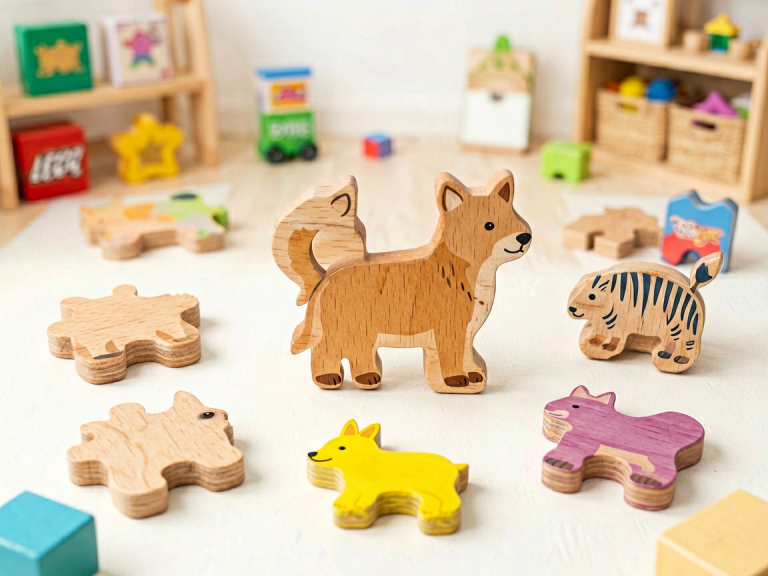
- Wooden blocks (unit blocks or hollow blocks) – The gold standard for open-ended construction.
- Magnetic tiles (e.g., Magna-Tiles or PicassoTiles) – They click together satisfyingly and can build 2D and 3D structures.
- Play dough with simple tools – Rolling pins, cookie cutters, and plastic knives allow endless sculpting.
- Dress-up clothes and props – A simple fabric cape, a dollar-store hat, and a cardboard crown can spark hours of role-play.
- Train tracks or car ramps – These require planning and can be reconfigured endlessly.
*Tip for parents:* Ask no questions while the child plays. If they say “Look, I made a castle,” simply smile and nod. Interruptions can break the flow.
Ages 5–7: The System Thinkers
Children start to understand rules, sequences, and more complex logic. Good toys include:
- Lego (classic bricks, not themed kits) – Theme kits have instructions; classic bricks have no limits.
- Simple board games without reading – Like “Candy Land” or “Hi Ho! Cherry-O” – these teach turn-taking and resilience.
- Art supplies – Quality crayons, watercolor sets, scissors, glue, and recycled materials (cardboard boxes, bottle caps) for collage.
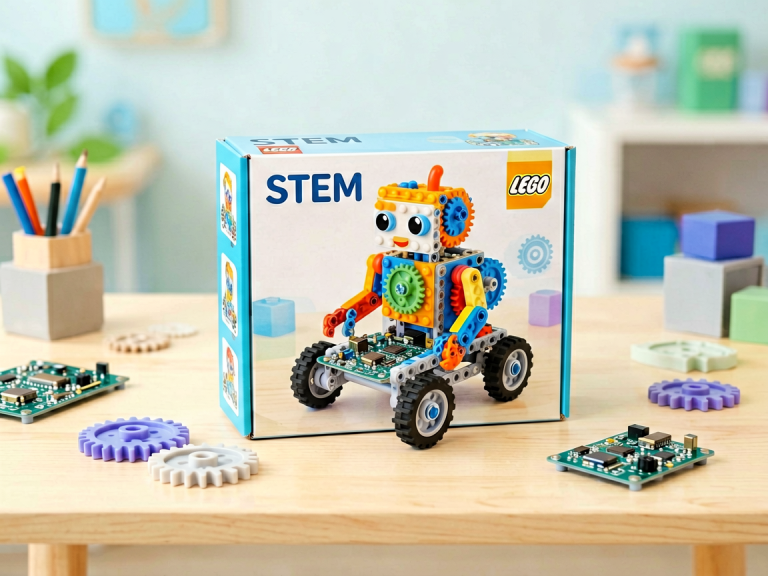
- Magnetic building sets with gears or wheels – These introduce mechanics and trial-and-error.
- Construction straws and connectors – Lightweight and easy to build into bridges, houses, or animals.
*Tip for parents:* Create a “creation station” – a small table with storage bins where the child can start and stop projects over days.
Ages 7–10: The Strategists and Designers
Older children thrive with more complex, project-based toys:
- Advanced building sets (K’Nex, Erector Set, or Meccano) – Great for engineering and following multi-step plans, or inventing original designs.
- Science kits with real experiments – Crystal growing, volcano kits, or simple circuits.
- Mosaic or bead craft kits – Encourage pattern-recognition and fine-motor skills.
- Marble runs (e.g., Q-BA-MAZE or Gravitrax) – Require precise planning and testing.
- Strategy board games (e.g., “Blokus,” “Ticket to Ride Junior”) – These develop logical thinking and patience.
*Tip for parents:* Let children fail. If a marble run crashes, resist the urge to “fix it.” Ask, “What do you think happened?” and let them try again.
—
3. Toy Categories That Excel at Fostering Independence
Beyond age, certain categories of toys are especially effective for independent play:
Construction Toys
From Duplo to Lincoln Logs, construction toys teach spatial reasoning, perseverance, and pride in accomplishment. They are inherently solitary-friendly: a child can build alone without needing a partner.
Pretend Play Props
Kitchen sets, doctor kits, cash registers, and dollhouses encourage children to mimic real-life scenarios, which helps them process experiences and build emotional vocabulary. The best props are simple and non-specific (a plain doll, a set of cloth fruits) because they leave more room for the child’s imagination.
Loose Parts
A “loose parts” collection – buttons, pebbles, bottle caps, yarn, sticks, fabric scraps – is perhaps the most potent independent-play tool of all. There are no instructions, no expected outcomes. Children sort, stack, line up, and transform loose parts into anything they dream of. Parents can put together a small basket of safe, clean objects (obviously avoiding choking hazards for young ones) and watch the magic unfold.
Art and Craft Supplies
Art is inherently self-directed. A child chooses the colors, the subject, the medium. Crucially, avoid giving them a “craft kit” that prescribes an end result. Instead, provide blank paper, paints, clay, and scissors, and let the child decide.
Nature-Based Toys
Sand, water, mud, leaves, rocks – the natural world is the ultimate open-ended toy. A sandbox or a water table (even a simple plastic tub) can occupy a child for hours. Outdoors, loose parts like a collection of acorns or smooth stones become treasures, counters, or characters in a story.
—
4. How Parents Can Cultivate an Independent Play-Friendly Environment
Buying the right toys is only half the battle. The environment and parental attitude are equally crucial.
Create a Accessible Play Space
Arrange toys on low shelves or in clear bins at the child’s eye level. Rotate toys every few weeks to keep them fresh. When a child can see and reach everything themselves, they can choose and start playing without asking for help.
Set Up a “Yes” Space
Designate a corner (or even a whole room) where nothing is off-limits. Cover the floor with a large rug or mat. Protect walls with washable paint. In this space, the child can be messy and chaotic without hearing “no.” This freedom is essential for deep play.
Resist the Urge to Interrupt
When a child is absorbed, do not compliment, correct, or redirect. Even praise (“Wow, that’s beautiful!”) can break concentration. Instead, observe quietly. If the child looks up, simply give a warm smile and turn away. The goal is to signal, “You are capable on your own.”
Model Independent Play Yourself
Children learn from watching. If you sit nearby reading a book, sketching, or knitting – engaged in your own solo activity – the child internalizes that solitary focus is a normal, valuable part of life.
Limit Screen Time
Screens are the enemy of independent play. A tablet offers instant gratification and passive entertainment, making the “effort” of building with blocks feel unappealing. Establish firm screen-time limits and keep toys easily accessible during “boredom” times.
—
5. Common Mistakes Parents Make (and How to Avoid Them)
Even with the best intentions, parents often undermine independent play. Here are pitfalls to watch for:
Buying Too Many High-Stimulation Toys
Toys that beep, flash, and talk are designed to capture attention, but they often rob the child of agency. The toy “plays itself.” Replace a few of these with simple, silent alternatives.
Over-Scheduling Playtime
If every hour is structured, a child never learns to fill their own time. Ensure there are “unstructured, unscheduled” blocks in the daily routine – at least an hour where the only option is to play with their toys without a plan.
Jumping In Too Quickly
When a child cries “I’m bored,” many parents rush to suggest an activity. Instead, pause. Ask them to think of three ideas themselves. Often, the boredom is just a transition between play phases; if you wait, they will eventually dive into something.
Storing Toys in Closed Containers
Toys in sealed plastic totes or high on closet shelves are effectively invisible. Lower everything, open the bins, and let the child see their options. This simple change can double independent play time.
—
Conclusion: The Gift of Self-Directed Play
Choosing toys for independent play is not about buying the most expensive or the most popular items. It is about selecting tools that give your child permission to think, create, fail, and try again – all on their own terms. When you provide open-ended, simple, and engaging toys, and when you create an environment where solo play is respected and protected, you are giving your child one of the greatest gifts: the confidence to be alone with their own thoughts and imagination.
As your child builds a tower that topples, or a fort that collapses, or a drawing that doesn’t look like anything recognizable, they are building something far more important: resilience, resourcefulness, and a quiet sense of capability. And you, as the parent, get to sit back, sip your coffee, and witness the beautiful unfolding of a self-reliant mind.
Start today. Put away one electronic toy. Bring out one open-ended one. Then step back and let the magic happen.