Introduction
Title: The Ultimate Guide to the Best Educational Toys for 11-Year-Olds: Fostering Curiosity, Creativity, and Critical Thinking
At the age of 11, children stand at a fascinating crossroads. They are no longer little kids, yet they are not quite teenagers. Their minds are rapidly developing, their interests are expanding, and their capacity for abstract thought, logical reasoning, and complex problem-solving is maturing. This is the perfect window to introduce educational toys that challenge them intellectually, spark their imagination, and build practical skills for the future. But with an overwhelming array of products on the market, how do parents, teachers, and gift-givers choose the best?
The best educational toys for 11-year-olds are those that go beyond simple entertainment. They should encourage active learning, foster a growth mindset, and provide opportunities for both independent exploration and collaborative play. Whether it's coding a robot, building a working circuit, strategizing in a board game, or designing a 3D model, the right toy can turn playtime into a powerful learning experience. This guide dives deep into the top categories and specific recommendations, ensuring that every toy we discuss not only educates but also excites.
—
1. Science & STEM Kits: Hands-On Experiments That Ignite Inquiry
For an 11-year-old, the world of science is an endless playground. STEM (Science, Technology, Engineering, and Mathematics) kits offer structured yet open-ended experiments that teach the scientific method, data analysis, and technical reasoning. The best kits in this category are those that allow the child to conduct real experiments—not just follow instructions, but also ask “what if” questions and modify variables.
Recommended Product: Thames & Kosmos Chemistry Chem C500
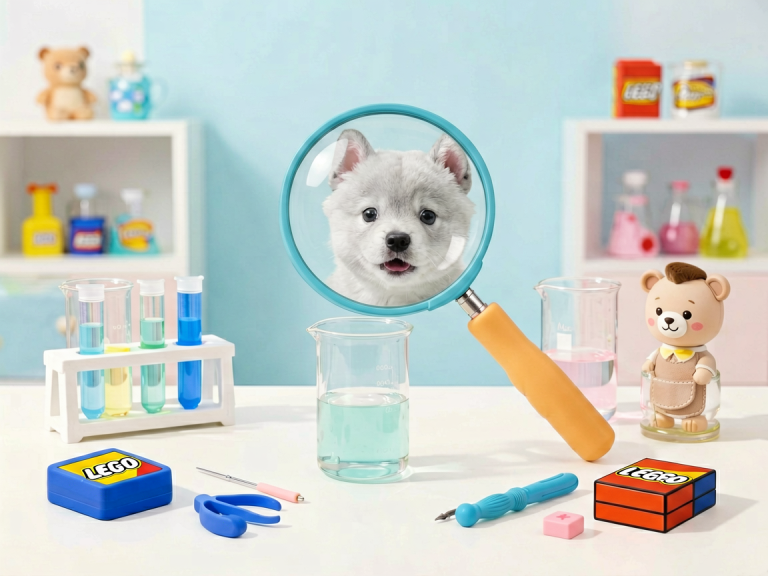
This kit is a classic for a reason. It includes over 28 experiments that cover basic chemical reactions, acids and bases, and crystal formation. Tweens can mix solutions, observe color changes, and learn about pH balances. Unlike many toy science kits, this one comes with real lab equipment (beakers, test tubes, measuring spoons) that makes the experience feel authentic. What makes it especially educational is the 48-page full-color manual that explains the underlying science in age-appropriate language. The child gains not only knowledge but also lab safety habits and a systematic approach to experimentation.
Why It Works for 11-Year-Olds
At this age, children begin to grasp cause-and-effect relationships at a deeper level. A chemistry kit allows them to test hypotheses—for example, “What happens if I add more vinegar to baking soda?” They learn that mistakes are part of discovery. Many kits also include extension activities that encourage the child to design their own experiments, thereby promoting initiative and creativity. The hands-on nature keeps them away from screens while building fine motor skills and patience.
Additional STEM Options
- Snap Circuits Jr. SC-100 – Introduces basic electronics. Kids build over 100 projects including a doorbell, a light sensor, and a sound-activated switch. The snap-together pieces are reusable and safe.
- 4M Crystal Growing Experimental Kit – A slower, more observational project. Children mix chemical solutions and watch crystals grow over days or weeks. It teaches patience, record-keeping, and the beauty of natural geometry.
—
2. Robotics & Coding Kits: Programming the Future
In today’s digital age, understanding the principles of coding and automation is a superpower. Robotics kits for 11-year-olds are designed to teach block-based or even text-based programming, while simultaneously engaging mechanical engineering skills. The best ones offer a clear progression from simple moves to complex autonomous behaviors.
Recommended Product: LEGO Mindstorms Robot Inventor (51515)
LEGO Mindstorms is the gold standard for robotics education. The Robot Inventor set includes 949 pieces and five distinct robot models (such as a walking robot, a rover, and a mechanical arm), plus a programmable hub with Bluetooth. Using the companion app, children drag and drop code blocks to control their creations. They can add sensors (ultrasonic, color, touch) to make the robot react to its environment. The real learning happens when the robot doesn’t work as expected—troubleshooting the code, adjusting gears, and refining the mechanical design teach persistence and logical thinking.
Why It’s Perfect for This Age Group
Eleven-year-olds are developmentally ready to grasp conditional statements (“if the color sensor sees green, then turn left”), loops, and variables. They also love the challenge of building something that moves and interacts. The modular nature of LEGO means they aren’t limited to the five official models; they can invent their own robots, blending art and engineering. Furthermore, the online community provides infinite inspiration and shareable projects.
Other Top Picks in Robotics
- Makeblock mBot2 – A more affordable alternative that uses Scratch-like programming. It comes pre-assembled in a basic form, but kids can add sensors and upgrade to Python coding later. It’s a great entry point for beginners.
- Sphero BOLT – A programmable robotic ball. Kids code its movements, light patterns, and sensor responses via an app. Because it’s durable and fast, it feels like a toy first, a learning tool second.
—
3. Engineering & Building Sets: From Blueprints to Reality
Not all learning happens inside a computer or a test tube. Building sets that require spatial reasoning, balance, and structural integrity are fantastic for developing engineering minds. The best options go beyond simple stacking—they encourage iterative design, weight distribution, and understanding of forces like tension and compression.
Recommended Product: K’NEX Thrill Rides – Roller Coaster Building Set
This set contains over 740 pieces that allow kids to build a fully functional motorized roller coaster. They construct the track, the supports, the gears, and the chain lift mechanism. Once completed, the coaster actually runs—and the child learns why certain support shapes work better, how gravity and momentum interact, and what makes a loop successful (or a crash inevitable). The challenge is significant: a single project can take several hours over multiple sessions, teaching planning and perseverance.
Educational Value for an 11-Year-Old
At this age, children are capable of following complex, multi-step instructions (and also ignoring them to invent their own designs). K’NEX encourages them to think like an engineer: “If I make the track steeper here, will the car go fast enough to complete the loop?” They learn that failure is part of the design process—a collapsed tower or a stopped coaster is a lesson in physics, not a defeat. Moreover, building sets improve hand-eye coordination and spatial visualization, skills that are critical for math and future technical careers.
Additional Building Toys
- Magna-Tiles 150-Piece Clear Colors Set – While often marketed to younger kids, magnetic tiles are surprisingly useful for 11-year-olds exploring 3D geometry, symmetry, and magnetic polarity. They can build complex structures like icosahedrons or domes.
- Engino Discovering STEM: Mechanics Levers & Linkages – Focused on mechanical principles. Each model teaches a specific mechanism—like a scissor lift or a drawbridge—with real moving parts.
—
4. Strategy & Logic Board Games: Mental Gymnastics in a Box
Board games are the unsung heroes of educational play. They teach patience, turn-taking, flexible thinking, and social skills. For 11-year-olds, the best games are those that require long-term strategy, resource management, and adaptive reasoning—skills that are directly transferable to schoolwork and life.
Recommended Game: Ticket to Ride
In Ticket to Ride, players collect sets of train cards to claim railway routes across a map of North America (or other continents in different editions). The rules are simple enough to learn in 15 minutes, but the strategy is deep. Children must plan routes, block opponents, weigh risks (should I grab a long route now or save for a shorter one?), and adjust when their plans are foiled. It teaches geography (the US edition has real cities and states), basic probability, and the concept of opportunity cost.
Why It’s a Top Choice for Tweens
Eleven-year-olds love competition, but they also need to learn gracious winning and losing. Ticket to Ride’s games last 30–60 minutes, which is the perfect attention span for this age. The game is non-violent and family-friendly, and it encourages quiet, focused thinking. There are no surprises of luck (except for drawn cards), so success comes from planning. Children develop “executive function” skills—the ability to hold multiple goals in mind, prioritize actions, and inhibit impulsive moves.
Other Great Strategy Games
- Catan (formerly Settlers of Catan) – Players collect and trade resources to build settlements and cities. It teaches negotiation, resource allocation, and long-term planning. The dice introduces a luck element, but the best players are those who adapt.
- Blokus – A pure spatial strategy game. Players place polyomino pieces on a grid, trying to block opponents while keeping their own pieces connected. It’s fast, visual, and teaches geometry and area coverage.
—
5. Creative Arts & Design Tools: Expressing Through Making
Not every 11-year-old is drawn to science or logic. For the artistically inclined, educational toys that combine creativity with technical skills are invaluable. The best options allow children to create tangible products—whether it’s a stop-motion movie, a woven bracelet, or a 3D-printed design—that boost confidence and self-expression.
Recommended Product: Stop Motion Studio Pro Animation Kit
This kit includes a mountable camera, a tripod, a green screen, a small stage, and clay or figurines. Using the Stop Motion Studio app (free but with pro upgrade), children can create their own animated movies, frame by frame. They learn about storyboarding, timing, lighting, and editing. The process requires meticulous attention to detail—moving a character a tiny fraction of an inch for each shot—which builds patience and precision.
Educational Benefits for Tweens
Creating a stop-motion film is a multi-disciplinary project. It combines art (character design, set building), language arts (story writing, dialogue), and technology (editing software, sound effects). For an 11-year-old, the sense of accomplishment from watching their own movie play is immense. It also teaches project management: planning the scenes, shooting in sequence, and editing the final product. This is a far more active and educational use of screen time than passive consumption.
Other Creative Toys
- Klutz LEGO Chain Reactions Craft Kit – A paper-engineering set that combines LEGO bricks with paper mechanisms to create chain-reaction machines. It blends art, physics, and tinkering.
- Artie 3000: The Coding Robot for Creative Kids – A robot that draws whatever patterns you code. Children can program Artie to create intricate geometric designs or write their names, merging art with coding.
—
6. Microscope & Nature Study Kits: Cultivating Scientific Observation
For the budding biologist or nature enthusiast, a high-quality microscope opens up an invisible world. The best educational microscopes for 11-year-olds are not just magnifiers; they come with prepared slides, blank slides, tools for collecting specimens, and a camera attachment for sharing discoveries.
Recommended Product: AmScope 120X-1200X Kids Beginner Microscope
This metal-body microscope offers 120X to 1200X magnification with LED lighting and a dual illumination system (top and bottom). It comes with over 25 prepared slides of insects, plants, and animal tissues, plus blank slides, cover slips, and tools like a pipette and a scalpel. Children can collect pond water, examine onion skin, or look at their own hair. The included smartphone adapter allows them to take photos and videos, which encourages documentation and further research.
Why It Matters for an 11-Year-Old
At this age, children are old enough to handle delicate instruments carefully. Using a microscope teaches the scientific method: forming a question, predicting what you’ll see, observing systematically, and recording results. It also builds vocabulary (cell, nucleus, chloroplast) and introduces the concept of scale. Many children develop a lifelong passion for biology after first seeing the intricate structure of a butterfly wing or the micro-organisms in a drop of pond water.
Alternative: Thames & Kosmos Biology Kit
A comprehensive kit that covers human biology, plant biology, and microbiology. It includes a microscope, dissection tools, and a manual with experiments like extracting DNA from a strawberry.
—
Conclusion: Choosing the Right Toy for Your 11-Year-Old
The best educational toy for an 11-year-old is one that aligns with their current passions while gently pushing them toward new skills. There is no single “perfect” toy—some children will lose themselves in a robotics kit, others in a chemistry set, and still others in a strategy game. The key is to look for toys that are open-ended, challenging but not frustrating, and hands-on. Avoid toys that are too simplistic (they will bore a preteen) or too advanced (they will cause discouragement).
Finally, remember the role of the adult. While these toys are designed for independent play, a parent or mentor’s involvement can amplify the learning. Asking questions like “Why do you think that happened?” or “What would you change next time?” turns a toy into a lesson in metacognition. Ultimately, the best investment is in toys that nurture curiosity—because a curious 11-year-old will never stop learning.