The Power of Play: Why Screen-Free Toys for 10-Year-Olds Are More Important Than Ever
Introduction: A Digital Dilemma
At ten years old, children stand at a fascinating crossroads. They are no longer little kids, yet they are not quite teenagers. Their brains are developing rapidly, their social awareness is sharpening, and their capacity for complex thought is expanding by the day. Yet, in many households, this critical developmental window is being filled with screens: iPads for homework, smartphones for entertainment, video games for social connection, and streaming services for passive relaxation. According to recent surveys, the average 10-year-old in developed countries spends between five and seven hours per day in front of a screen, not counting school-related computer use. This staggering statistic raises an urgent question: what are we losing when we replace physical, tangible play with digital interaction?
The answer is a great deal. Screen-free toys for 10-year-olds are not merely nostalgic relics of a pre-digital era; they are essential tools for fostering creativity, resilience, social skills, and cognitive flexibility. In an age where attention spans are shrinking and instant gratification is the norm, deliberately choosing toys that require patience, hands-on engagement, and real-world problem-solving is an act of radical parenting. This article explores why screen-free toys matter so much for this age group, what specific types of toys offer the greatest benefits, and how parents can successfully integrate them into a busy, screen-saturated life.
The Developmental Landscape of a 10-Year-Old
To understand why screen-free toys are so valuable, we must first appreciate what is happening inside a 10-year-old’s mind and body. At this age, children are in the throes of what developmental psychologist Jean Piaget called the “concrete operational stage,” but they are also beginning to edge toward formal operational thought. They can think logically about concrete events, understand cause and effect, and classify objects into categories. They are also developing a stronger sense of empathy, fairness, and moral reasoning. Peer relationships become increasingly important, and the desire for independence—within safe boundaries—grows significantly.
Physically, 10-year-olds are typically coordinated enough to handle intricate fine-motor tasks, yet they still need plenty of gross-motor activity to support growing bones and muscles. Their imaginations are still vibrant, but they now have the patience to pursue longer, more complex projects. They can follow multi-step instructions, work collaboratively with others, and even engage in strategic thinking that involves multiple variables.
Screen-free toys tap directly into these developmental needs. A construction set like a complex LEGO Technic kit or a magnetic building system, for example, challenges the child to follow blueprints, visualize spatial relationships, and persist through frustration when pieces don’t fit. A board game like *Settlers of Catan* or *Ticket to Ride* teaches resource management, negotiation, and the art of graceful losing, all while requiring face-to-face interaction. An art kit with high-quality materials—such as watercolor paints, clay, or calligraphy pens—invites self-expression and the satisfaction of creating something tangible from scratch. These are not passive experiences; they demand active participation, trial and error, and the kind of deep focus that screens often fragment.
The Hidden Costs of Excessive Screen Time
It would be unfair to demonize all screen time. Educational apps, coding programs, and carefully selected documentaries can certainly offer value. However, the sheer volume of screen exposure for the average 10-year-old often crowds out the very activities that build essential life skills. The problems are both subtle and profound.
First, screens are engineered for addiction. Platforms use algorithms designed to maximize engagement by delivering dopamine hits through likes, notifications, and ever-changing content. A 10-year-old’s developing prefrontal cortex—the part of the brain responsible for impulse control and long-term planning—is no match for these sophisticated designs. The result is a child who feels restless or irritable when offline, who craves the immediate reward of a game level rather than the delayed gratification of finishing a 500-piece puzzle.
Second, screens often replace unstructured play. Unstructured play—the kind where children invent their own rules, build forts, negotiate roles, and resolve conflicts without adult intervention—is crucial for developing executive function. Screen-free toys naturally lend themselves to this kind of play. A box of wooden blocks, a set of dominoes, or a simple chemistry kit can spark hours of self-directed exploration. Screens, in contrast, usually provide pre-structured experiences: the game tells you what to do, the video shows you what to see, and the app decides when you succeed.
Third, there is the social cost. While online games allow 10-year-olds to chat with friends, the quality of that interaction is fundamentally different from sitting across a table playing a card game. Digital communication lacks non-verbal cues—tone of voice, facial expressions, body language—that are essential for developing emotional intelligence. Screen-free toys that involve cooperation or competition in physical space teach children how to read a friend’s disappointment, share a victory high-five, and navigate the awkwardness of a disagreement without a mute button.
Top Categories of Screen-Free Toys That Captivate 10-Year-Olds
Choosing the right screen-free toy for a 10-year-old requires understanding their interests and maturity level. Here are several categories that consistently engage this age group, each with specific benefits.
1. Construction and Engineering Kits
LEGO Technic sets, magnetic tiles (like Magna-Tiles), and motorized building kits (such as those from Thames & Kosmos) are perennial favorites. A 10-year-old can spend hours constructing a working crane, a marble run, or a robotic arm. These toys teach spatial reasoning, mechanics, and the value of iterative design. When a structure collapses, the child learns to diagnose the flaw and try again—a lesson in resilience that no app can replicate. Advanced kits often include gears, pulleys, and even simple circuits, introducing early engineering concepts in a playful, hands-on way.
2. Strategy Board Games and Puzzles
Board games have experienced a renaissance, and many are perfectly pitched for 10-year-olds. Games like *Catan Junior*, *Azul*, *Kingdomino*, and *Codenames* require strategic thinking, memory, and social deduction. Unlike video games, which often guide the player through a narrative, board games demand that players make their own decisions and live with the consequences. Puzzles—especially 1,000-piece jigsaw puzzles or 3D puzzles of famous landmarks—offer a different kind of challenge: pattern recognition, patience, and the joy of a completed whole. Working on a puzzle as a family can also become a cherished ritual.
3. Science and Experiment Kits
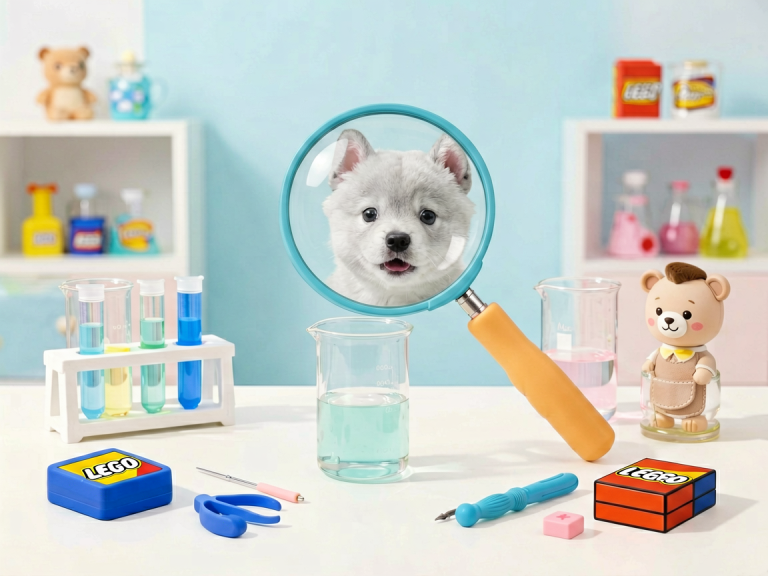
Ten-year-olds are naturally curious about how the world works. A chemistry set (with safe, non-toxic ingredients), a crystal-growing lab, a microscope, or a robotics kit can satisfy that curiosity while teaching the scientific method. These kits encourage hypothesis testing, observation, and documentation. When a volcano erupts or a crystal forms, the child experiences the thrill of discovery—an emotion that is far more satisfying than swiping through a virtual simulation. Many modern kits are designed with real-world applications, such as building a solar-powered car or testing water quality, which connects play to environmental awareness.
4. Creative and Artistic Supplies
At ten, many children have developed enough fine-motor control to enjoy sophisticated art projects. High-quality colored pencils, watercolor sets, polymer clay, knitting supplies, or embroidery kits allow for open-ended creation. Unlike digital drawing apps, physical media force the child to work with limitations—the paper tears, the paint dries, the clay cracks—and to adapt accordingly. This builds problem-solving skills and a tolerance for imperfection. Some children may gravitate toward model-building (like model airplanes or dollhouse miniatures), which combines craftsmanship with imaginative storytelling.
5. Outdoor and Active Play Equipment
Screen-free does not mean indoor-only. For 10-year-olds, active play is vital for physical health and emotional regulation. A high-quality frisbee, a slackline, a trampoline, a bicycle, or a set of sports gear (basketball, soccer, tennis) can provide hours of energetic fun. More importantly, outdoor play often involves negotiation—who gets the ball first, what the boundaries are, how to include a less-skilled player—which builds social competence. Gardening kits or nature exploration sets (like a bug catcher, compass, and field guide) turn the backyard into a laboratory for discovery.
6. Books and Audiobooks (Yes, They Count)
Books are the original screen-free toy. A 10-year-old who loves reading can travel to any world, learn any skill, and develop deep empathy for characters. Series like *Percy Jackson*, *Harry Potter*, *The Mysterious Benedict Society*, and *Amari and the Night Brothers* offer complex plots and moral dilemmas that stretch a child’s thinking. Audiobooks are also valuable, especially for children who struggle with reading or who like to multitask (e.g., drawing while listening). Building a personal library or creating a cozy reading nook can transform reading from a chore into a passion.
How to Successfully Introduce Screen-Free Toys
Despite the benefits, many parents struggle to get their 10-year-olds to put down their devices and engage with physical toys. The key is not to make screens the enemy but to make screen-free play irresistible. Here are practical strategies.
First, lead by example. If you are constantly on your phone, your child will view screen time as the default. Set aside family time for activities like building a model, playing a board game, or working on a puzzle together. Show genuine enthusiasm for the toy itself. Children are more likely to try something when they see their parents enjoying it.
Second, create an environment that invites play. Store screen-free toys in accessible, appealing bins or shelves. Rotate toys every few weeks to keep them fresh. Designate a specific area—like a playroom or a corner of the living room—where screens are not allowed. When the Wi-Fi is turned off during dinner or on weekend afternoons, the absence of digital distraction makes physical play more appealing.
Third, tie screen-free toys to existing interests. If your child loves video games about building cities, introduce a complex LEGO architecture set. If they are fascinated by dinosaurs, buy a fossil excavation kit. If they enjoy fantasy stories, get a tabletop role-playing game like *Hero Kids* or *Dungeons & Dragons*—a screen-free game that involves storytelling, math, and cooperative problem-solving.
Fourth, honor the child’s autonomy. Let them choose which toys to explore, even if that means they ignore a fancy kit in favor of a simple set of dominoes. The goal is not to prescribe play but to offer rich possibilities. Avoid making screen-free time feel like a punishment; frame it as an adventure or a challenge.
Finally, be patient. A child who is deeply habituated to screens may initially resist. That is normal. Start with short, structured screen-free periods—say, 30 minutes after school—and gradually extend them. Praise effort, not just success. When a child proudly shows you a crooked tower they built or a messy painting they created, celebrate the process, not the product.
Conclusion: Reclaiming the Tangible World
The rise of digital technology has brought incredible benefits, but it has also created a generation of children who are increasingly disconnected from the physical world. For 10-year-olds, screen-free toys are not a luxury; they are a necessity for balanced development. They build hands that are capable, minds that are resilient, and hearts that are empathetic. They teach patience, collaboration, and the deep satisfaction of creating something real with your own two hands.
As parents, educators, and caregivers, we have the power—and the responsibility—to make screen-free play a priority. It does not mean banning technology entirely. It means consciously choosing to fill a child’s life with experiences that are rich, tactile, and human. The wooden puzzle piece that clicks into place, the board game that sparks a family argument and then a laugh, the clay that transforms under stubborn fingers—these are the moments that shape a child’s character far more than any swipe or tap.
The next time you consider a birthday gift or a rainy-day activity for a 10-year-old, think twice before handing them a tablet. Choose the model rocket kit, the chess set, the art supplies, the outdoor adventure gear. Choose the toy that asks for their full attention, their creativity, and their patience. In a world that is increasingly virtual, the most powerful gift we can give a child is the permission to be fully, physically present. That is the true power of play.