The Power of Solitary Discovery: Why Educational Independent Play Toys Shape Brighter Futures
In an era of scheduled activities, screen-based entertainment, and constant adult supervision, the concept of independent play has become almost revolutionary. Yet the simple act of a child playing alone with thoughtfully designed toys is one of the most powerful catalysts for cognitive, emotional, and social development. Educational independent play toys are not mere distractions—they are tools for self-directed learning, resilience building, and creative exploration. This article explores the profound value of such toys, their defining characteristics, and practical guidance for parents and educators seeking to nurture capable, curious children.
The Fundamental Role of Independent Play in Child Development
Independent play is far more than a convenience for busy adults. It is a critical developmental phase during which children learn to regulate their own emotions, solve problems without external prompting, and develop a sense of agency. When a child engages with an educational toy alone, they are not simply passing time—they are constructing their own understanding of the world.
Building Self-Reliance and Confidence
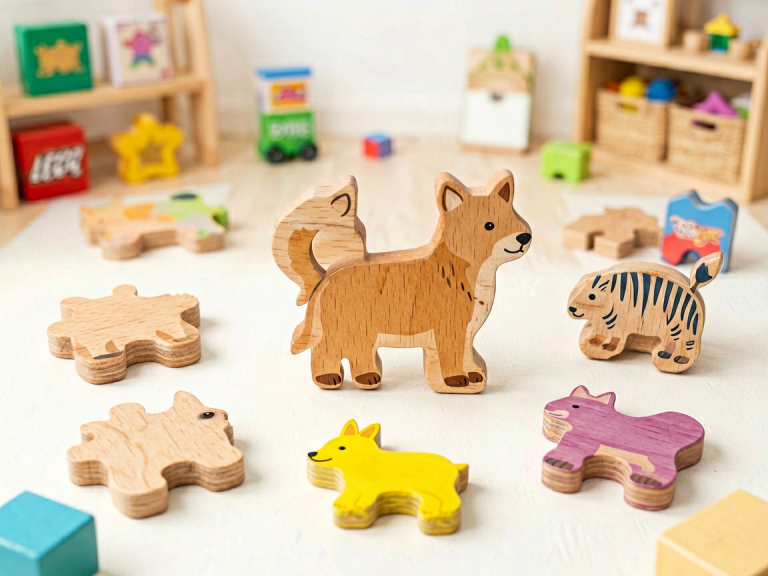
A child who successfully completes a wooden puzzle without help experiences a genuine sense of accomplishment. This internal reward system is vastly different from receiving praise from an adult. Educational independent play toys are designed to offer just enough challenge to stretch a child’s abilities without causing frustration. As children navigate these challenges alone, they build what psychologists call “self-efficacy”—the belief in one’s own ability to succeed. This foundational confidence later translates into academic persistence, social courage, and life resilience.
Enhancing Executive Function Skills
Modern neuroscience confirms that independent play strengthens executive functions—the brain’s management system responsible for focus, working memory, and cognitive flexibility. When a child decides to build a tower with magnetic blocks, then changes plans midway to create a bridge, they are practicing planning, inhibition (resisting the urge to knock everything down), and mental shifting. Educational toys that require sequencing, pattern recognition, or cause-and-effect reasoning provide natural, enjoyable workouts for these critical neural pathways.
Fostering Deep Concentration and Flow
In a world of relentless notifications and quick dopamine hits, the ability to sustain deep attention is increasingly rare. Independent play with engaging toys can induce a state of “flow”—a psychological state of complete absorption. Toys that offer open-ended possibilities, such as construction kits or art materials, invite children to lose themselves in the process. This deep concentration is not only satisfying but also trains the brain to resist distractions, a skill that directly supports later academic achievement.
Key Characteristics of Truly Educational Independent Play Toys
Not all toys marketed as “educational” actually fulfill that promise. True educational independent play toys share several distinct features that set them apart from passive entertainment or overly prescriptive learning gadgets.
Open-Ended Design Over Scripted Outcomes
The most valuable toys do not dictate a single correct answer. A set of wooden blocks can become a castle, a spaceship, a farm, or a mountain range. This open-endedness is essential for independent play because it invites the child to be the director of their own play narrative. In contrast, toys that only flash lights when the right button is pressed limit creativity and quickly lose their appeal. Open-ended toys grow with the child—a toddler may stack blocks randomly, while a six-year-old builds symmetrical structures and tests engineering principles.
Self-Correcting Mechanisms That Encourage Autonomy
Effective educational toys often include built-in feedback systems that do not require adult intervention. A shape sorter, for example, “tells” the child when a piece does not fit because it will not go through the hole. A puzzle piece either locks into place or does not. This immediate, non-judgmental feedback allows children to experiment, fail, and try again independently. The toy becomes the teacher, and the child becomes the persistent learner.
Multi-Sensory Engagement and Natural Materials
High-quality independent play toys engage multiple senses—sight, touch, hearing, and even smell. Natural materials like wood, cotton, and wool provide rich tactile experiences that plastic cannot replicate. The slight resistance of a wooden peg being pushed into a hole, the satisfying click of magnetic tiles connecting, or the texture of a woven basket for sorting—all these sensory inputs help build neural connections and keep a child’s attention anchored in the physical world, away from screens.
Appropriate Challenge Level and Gradual Complexity
The Montessori concept of “the prepared environment” emphasizes that toys should match a child’s developmental stage while offering a slight stretch. A one-year-old benefits from a simple stacking ring; a three-year-old thrives with a more complex shape-sorting box; a five-year-old may need a multi-step construction kit. Educational independent play toys often come in graduated sets or can be used in increasingly sophisticated ways. This prevents boredom and frustration, sustaining engagement over months or years.
Practical Guidance for Selecting and Supporting Independent Play
Choosing the right toys is only half the equation. The environment and the adult’s role are equally important in nurturing sustained, productive independent play.
Curate a Minimal, Intentional Toy Collection
Research consistently shows that children play more deeply with fewer toys. An overwhelming number of choices leads to shallow, scattered play. Instead, parents should curate a small collection of high-quality, versatile educational toys that align with the child’s current interests and developmental stage. Rotating toys every few weeks keeps them fresh without requiring constant purchasing. This approach also teaches children to value and care for their possessions.
Create a Dedicated Play Space That Invites Independence
The physical environment should signal to the child that this is *their* space for focused activity. Low shelves with clearly visible toy bins, a small table and chair, and a soft rug define the area. Toys should be displayed in an orderly, accessible way so the child can choose, retrieve, and later return them. A simple basket for incomplete projects allows children to pause and resume their work, fostering sustained attention across multiple sessions.
Resist the Urge to Intervene Too Quickly
Perhaps the greatest challenge for modern parents is knowing when to step in and when to stay silent. When a child struggles with a toy, the natural instinct is to help. However, true learning happens during the struggle. Experts recommend waiting at least 10–15 seconds before offering assistance, and even then, asking guiding questions rather than giving direct answers. “What do you think would happen if you turned that piece around?” is far more empowering than “Here, let me do it for you.”
Model Independent Play and Respect the Child’s Focus
Children learn by imitation. When adults occasionally engage in their own focused, screen-free activities—reading a book, gardening, knitting—children absorb the message that independent concentration is valuable. Furthermore, once a child is deeply engaged in play, interrupting them for trivial reasons (a snack, a photo, a comment) undermines their developing attention span. Respecting their flow state communicates that their work is important.
Examples of Outstanding Educational Independent Play Toys
While the specific toy matters less than how it is used, certain categories have proven exceptionally effective for fostering independent learning.
Building and Construction Sets
Classic wooden unit blocks, magnetic tiles, and interlocking bricks are foundational. They teach physics (balance, gravity, stability), geometry (symmetry, shapes), and creativity. Unlike electronic construction toys, these require no batteries and no instructions—just imagination.
Practical Life and Sensory Materials
Montessori-inspired pouring activities, spooning beads, and dressing frames develop fine motor skills and concentration. Simple sensory bins filled with rice, sand, or water, combined with scoops and containers, offer endless independent exploration. These activities are especially effective for toddlers and preschoolers learning to regulate their own behavior.
Logic Puzzles and Pattern Games
Wooden pegboards with pattern cards, tangrams, and simple jigsaw puzzles (age-appropriate piece counts) teach spatial reasoning, persistence, and pattern recognition. Self-correcting puzzles (each piece fits only in one place) are ideal for independent play because they eliminate the need for adult verification.
Art and Open-Ended Creation Supplies
High-quality drawing materials, modeling clay, and collage supplies allow for pure self-expression. The goal is not to produce a recognizable object but to explore color, texture, and composition. Resist providing coloring books or step-by-step craft kits; instead, offer blank paper, natural clay, and a variety of tools.
Conclusion: Investing in Solitude and Self-Discovery
Educational independent play toys are not a luxury—they are an essential investment in a child’s long-term development. In a culture that often prioritizes structured learning and adult-directed activities, reclaiming the value of solitary, self-directed play is both radical and necessary. These toys do not replace parental love or interaction; they complement it by giving children the gift of their own company, their own ideas, and their own victories. As parents and educators, our role is to provide the tools, create the space, and then step back with trust. The child will do the rest—building not only towers and puzzles but also the foundations of a resilient, creative, and independent mind.